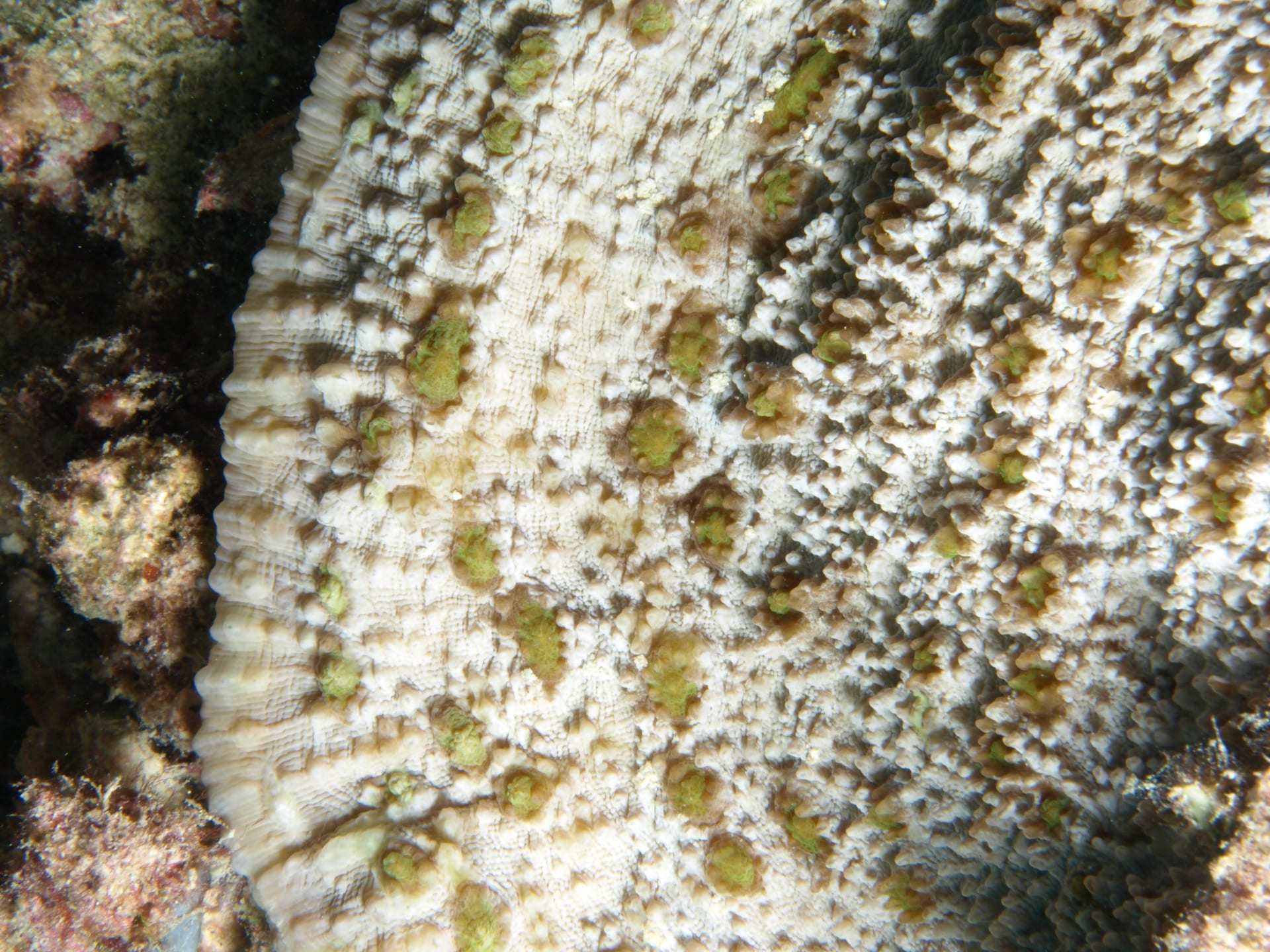
 © Paul Muir / CC BY 4.0
Oxypora
Oxypora, known in Japanese as Anakikka Coral, is a large-polyp stony coral from the Merulinidae family that grows into broad, thin plates. Its surface is dotted with small pits, while fine spines line the underside — a distinctive skeletal structure. Most colonies show a grayish-brown base with red or green oral disks, giving them a striking presence in a reef tank. Colonies rarely exceed 30cm across, so they tend not to overwhelm a layout as they grow. This coral is generally considered suitable for intermediate keepers, but watching it spread into its signature plate shape makes it a rewarding long-term centerpiece. It's also sometimes called the Ragged Chalice Coral.
View Oxypora encyclopedia →0% commission on your first sales!Register by September 30, 2026 and your first 2 sales are commission-free!
Breeder Wanted!
List on BreederDirect and sell directly to customers nationwide!
Br-Choku's 6 Transparency Standards
Our Breeder sellers disclose detailed care specs for all Coral listings. We prioritize Aquacultured/CB specimens, verify WYSIWYG photos, and provide difficulty ratings—avoiding wild-caught.
- Aquacultured
- WYSIWYG Photo
- Difficulty Disclosed
- Frag/Colony
- Care Info Included
- Trade name shown
Browse all 210 breeds
Difficulty
Verified breeders wanted for Coral
Breeders are signing up now ahead of launch. Subscribe to be notified when new listings go live.
Getting alerts is free with a member account. When new listings match your saved search, we'll notify you by email and in-app.
Browse other categories
Verified breeders (preview)
About Oxypora
Oxypora (Anakikka Coral) is a large-polyp stony coral in the Merulinidae family that spreads into thin plates, with a grayish-brown base and red or green oral disks — an intermediate-level species that rarely exceeds 30cm across.
7 things to know before welcoming a Oxypora
1Placement & Water Flow
Strong current hitting the polyps directly can damage the tissue, so place this coral where gentle flow circulates rather than a direct blast. Moderate lighting, not overly intense, suits it best.
2Expands in Flat Plates
Its thin skeleton spreads outward as a flat plate, so it needs plenty of clearance from neighboring corals. As it grows, its tentacles can sting nearby corals it comes into contact with.
3Feeding Helps Condition
It doesn't rely on photosynthesis alone and extends its polyps at night to catch small food particles. Regular target feeding is thought to help maintain its condition.
4Sensitive to Water Swings
It tends to be sensitive to sudden changes in temperature, salinity, and other water parameters, so frequent water changes and stable management matter. Take extra care with slow acclimation right after introducing it.
5Watch Tissue Condition
Bleaching on the plate surface or tissue recession can be early signs of environmental stress. If you notice changes, reconsider water quality or placement.
6Acclimate Slowly at Intro
It's sensitive to the stress of shipping and acclimation, so a slow drip method is recommended. Avoiding abrupt shifts in water parameters helps it settle in more reliably.
7Best for Intermediate Keepers
This coral is generally rated for intermediate-level keepers who can balance lighting, flow, and feeding as needed. It's a good next step for those extending beyond their first LPS corals.
Frequently asked questions about Oxypora
- Q.Is this coral suitable for beginners?
- A.This coral is generally rated as suitable for intermediate keepers. Managing flow, lighting, and feeding takes some experience, so it's best introduced after you've gotten comfortable with other corals.
- Q.How large does it grow?
- A.Colonies rarely exceed 30cm in diameter. Since it spreads outward as a flat plate, it's a good idea to leave enough space for future growth when placing it.
- Q.Is it safe to place near other corals?
- A.As the plate expands, its tentacles can sting neighboring corals on contact, causing damage on both sides. It's best to leave generous spacing to account for how far it will eventually spread.
- Q.Does it need to be fed?
- A.It doesn't rely on photosynthesis alone and extends its tentacles at night to catch tiny food particles. Regular feeding is thought to help maintain its condition.
- Q.Can I choose the coloration or oral disk color?
- A.Most colonies have a grayish-brown base with red or green oral disks. Since coloration varies between individual colonies, it's a good idea to check photos at the time of purchase.
Useful tools for Oxypora care
Learn more about Oxypora in the encyclopedia
View Oxypora encyclopedia entry →
Care difficulty, lifespan, size and diet — all basics covered.
Oxypora related articles
See more Oxypora articles →More in this category
Can't find the one you're looking for?
Post your wishes for free and breeders with matching animals will contact you with introductions.