Source: Wikimedia Commons
Cynarina (Button Coral)
IntermediateCynarina lacrymalis
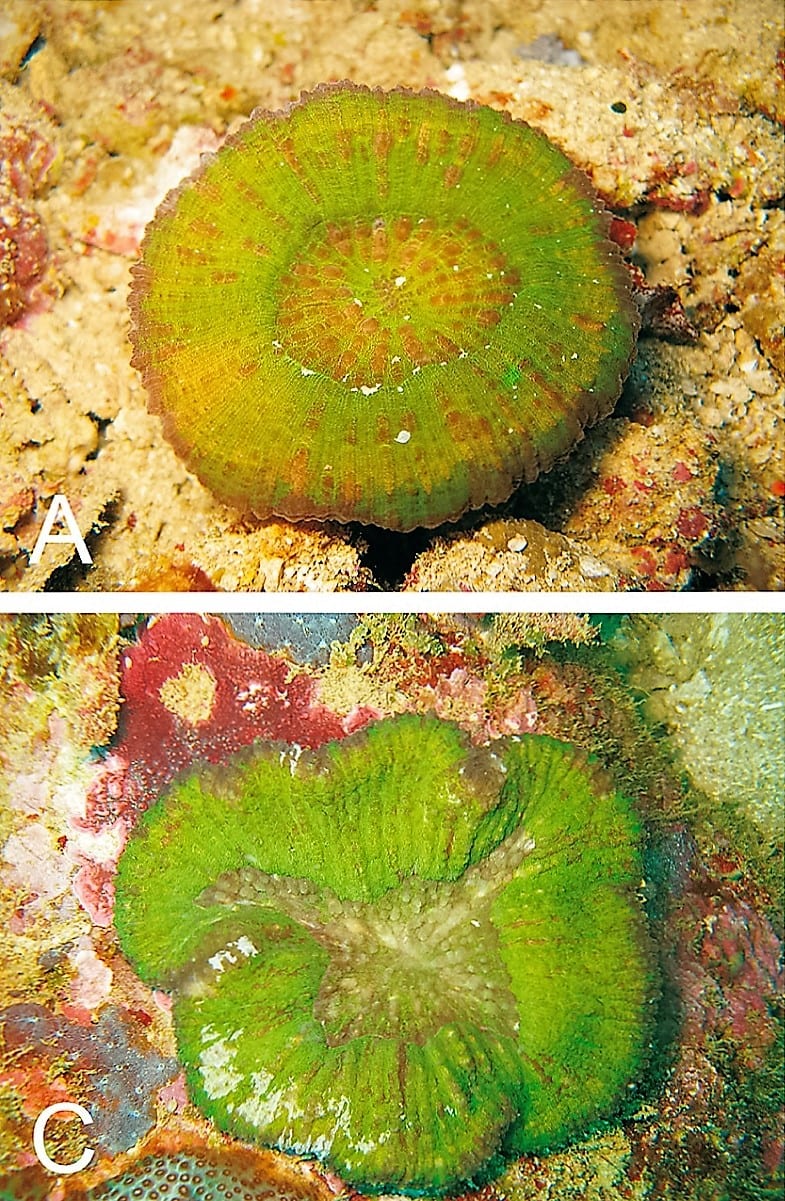
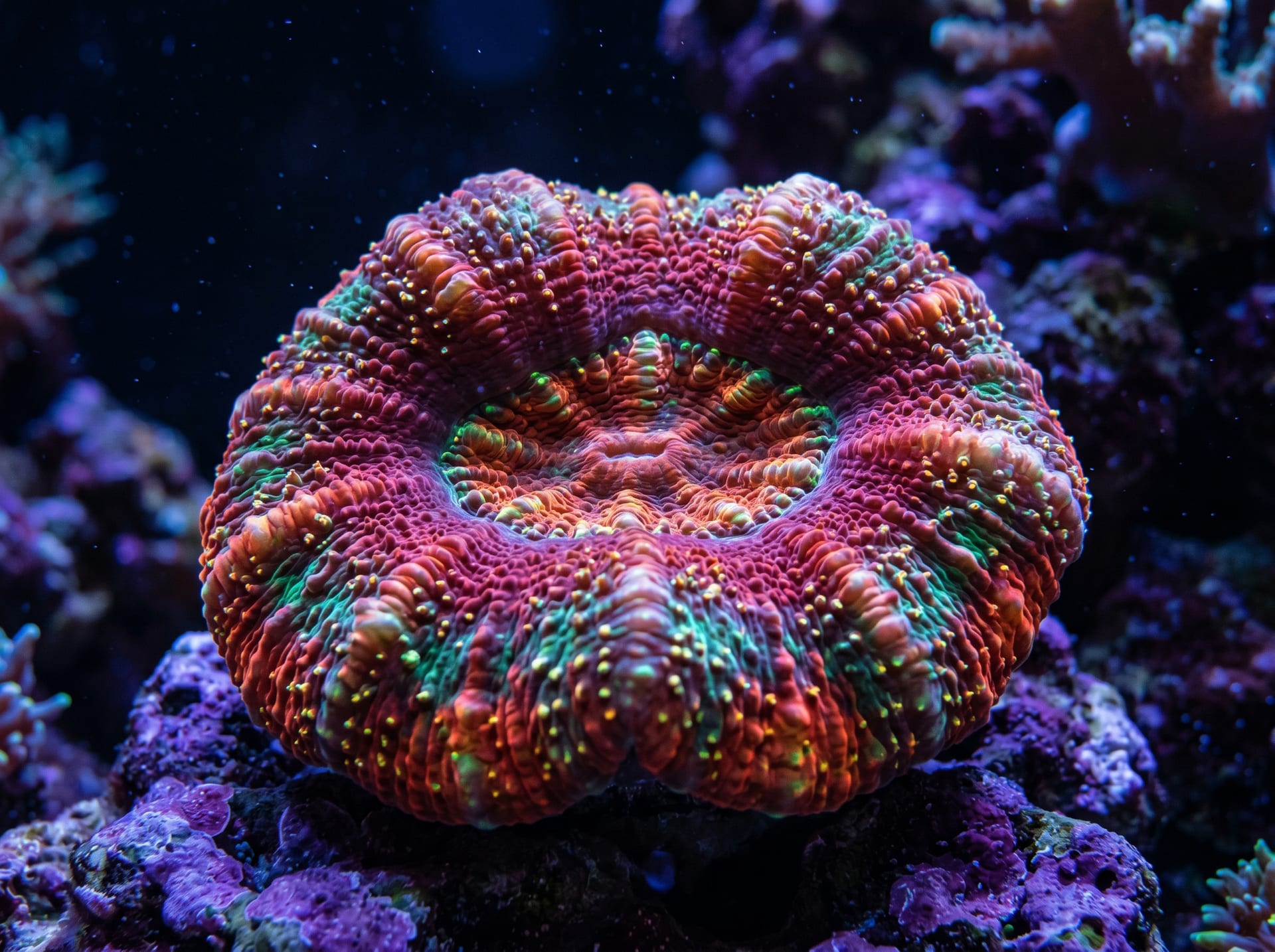
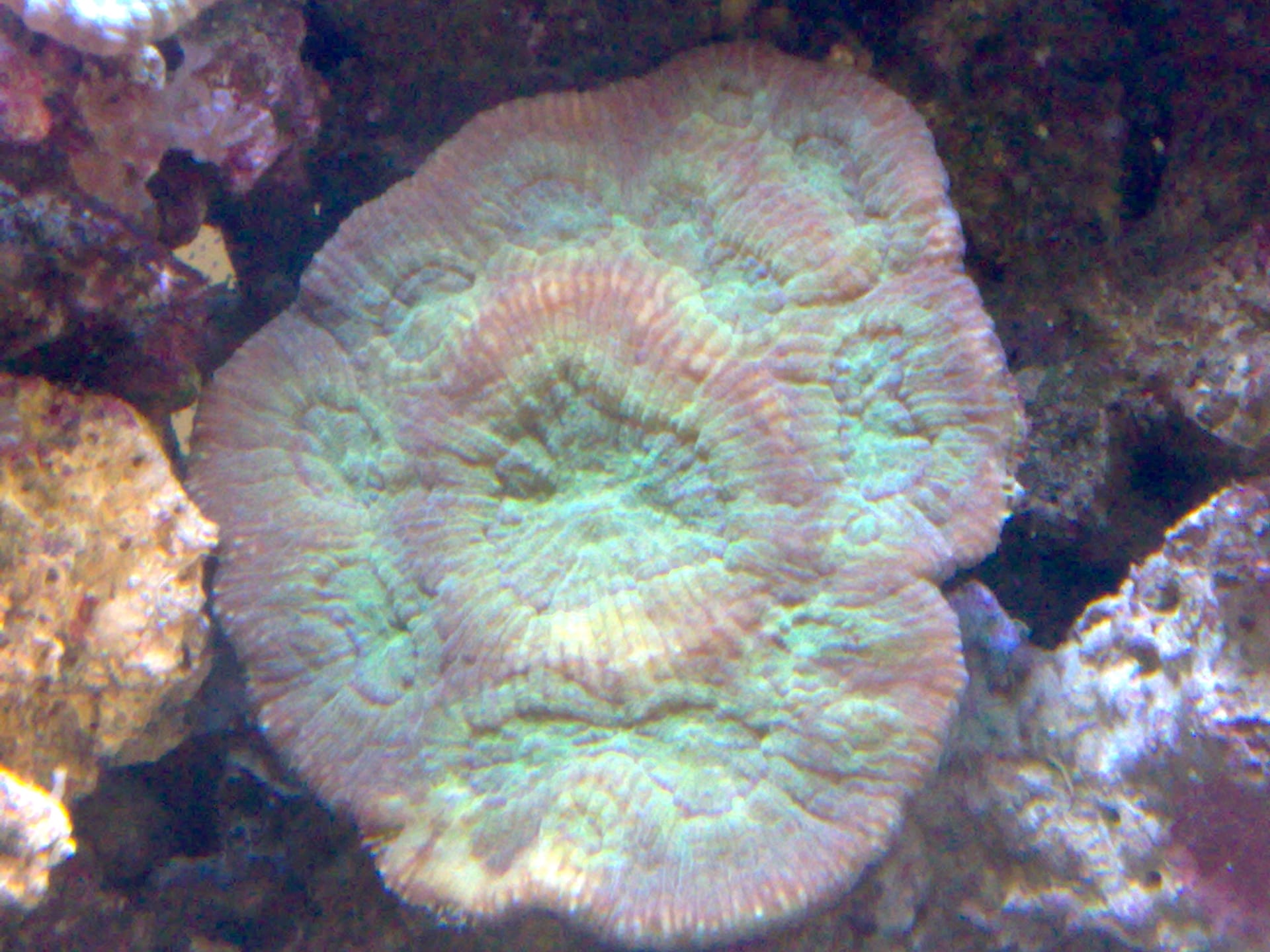
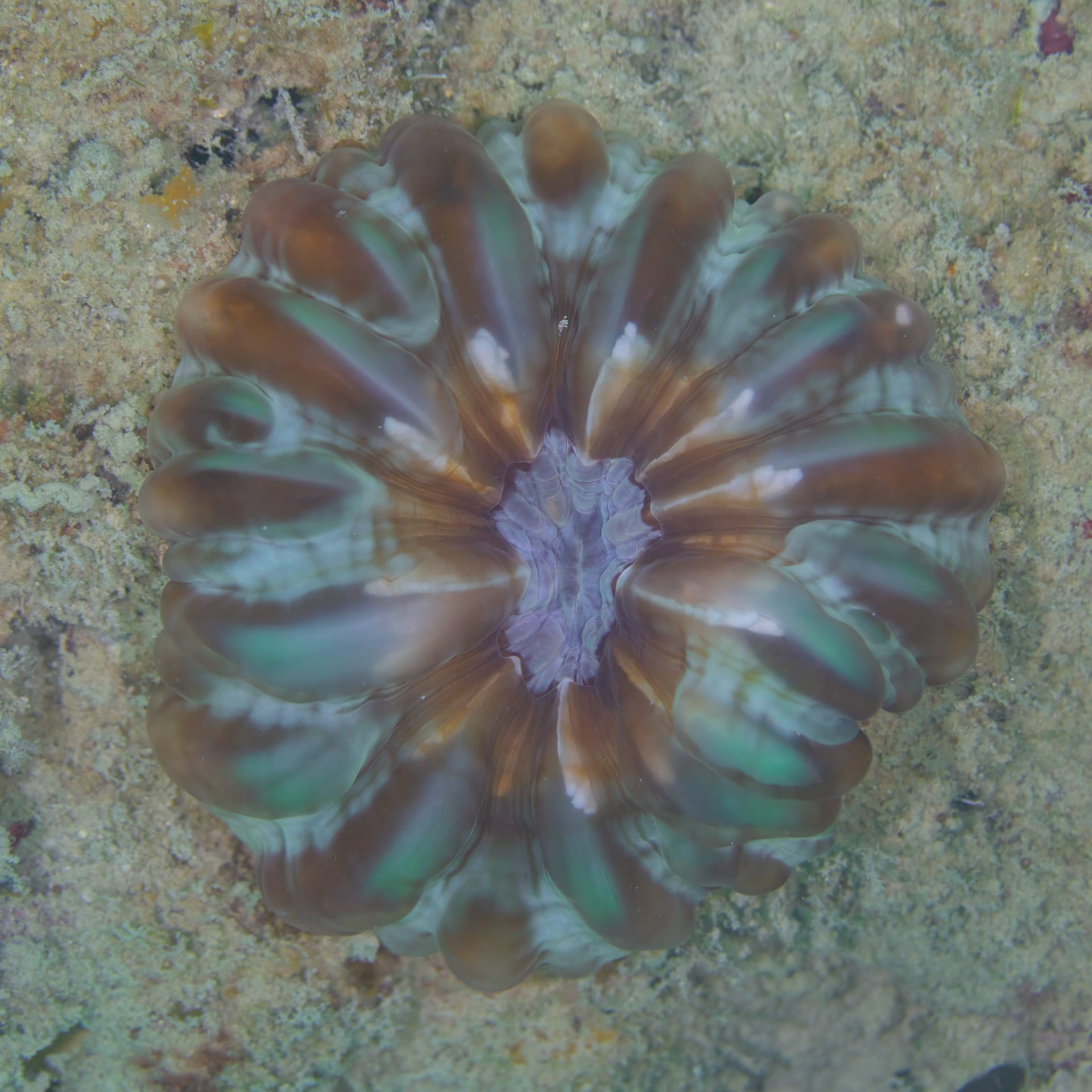
A solitary large stony coral of the western Indo-Pacific. By day translucent tissue inflates to cover the skeleton, and some specimens show a cat's-eye pattern.
Difficulty
Intermediate
Temperature
24〜27℃
Diet
Photosynthesis via zooxanthellae plus meaty foods
About
Cynarina lacrymalis is a solitary stony coral of the family Lobophylliidae from the western Indo-Pacific, known variously as the flat cup coral, solitary cup coral, button coral, doughnut coral and cat's eye coral. The skeleton is a single circular cup covered by translucent tissue. By day the tissue takes on water and inflates markedly, and the septa show through as radiating lines, giving it a distinctive texture. Colour includes red, green, orange and brown, and specimens that shift colour from centre to margin or show a cat's-eye pattern are favoured for display. At night the inflation subsides and feeding tentacles extend. Moderate or lower lighting with gentle flow suits it, and it is normally placed directly on sand. Strong current can tear the inflated tissue, so position it carefully. As a scleractinian it falls under CITES Appendix II.
Source: Wikipedia (CC BY-SA 4.0)
Temperature & humidity for the Cynarina (Button Coral)
The ideal temperature for the Cynarina (Button Coral) is 24〜27℃.
Basic Info
Origin
Western Indo-Pacific (Australia, the Maldives, Papua New Guinea and elsewhere)
Temperature
24〜27℃
Diet
Photosynthesis via zooxanthellae plus meaty foods
Care Guide
Lighting
Moderate or lower LED lighting; start low and acclimate, since too much light causes fading.
Care Specifications
- Carbonate (KH)
- 7–12 dKH
- Water Temp.
- 24–27℃
- Specific Gravity
- 1.023–1.025
- Salinity
- 33–35 ppt
- Calcium (Ca)
- 400–450 ppm
- Magnesium (Mg)
- 1300–1400 ppm
LPSLight: Medium (PAR 50-150)Flow: LowPlacement: Bottom
Sources: Wikipedia: Reef aquarium (water parameters) / AlgaeBarn: A Quick Guide to LPS and SPS / Wikipedia
References & Sources
Edited & verified by: BreederDirect editorial team
The taxonomic, regulatory, and husbandry data on this page are compiled and verified against the authoritative primary sources below.
Taxonomy & Authority
Accepted name: Cynarina lacrymalis (Milne Edwards & Haime, 1849)
Synonyms: Antillia grandiflora, Antillia japonica, Antillia nomaensis, Caryophyllia carduus, Caryophyllia lacrymalis, Cynarina lacrimalis, Cynarina savignyi, Lithophyllia lacrymalis
Authority databases: WoRMS
Nomenclature follows global taxonomic authority databases.
Regulations & Conservation Status
CITES Appendix II
Scleractinia (Cynarina lacrymalis, Lobophylliidae). CITES Appendix II.
Sources: DOC NZ / CITES-listed corals (Scleractinia spp. = App. II)
Regulations may change. Always verify the latest information with the relevant authorities.
Cynarina (Button Coral) Listings
Loading latest listingsFind listings for this species