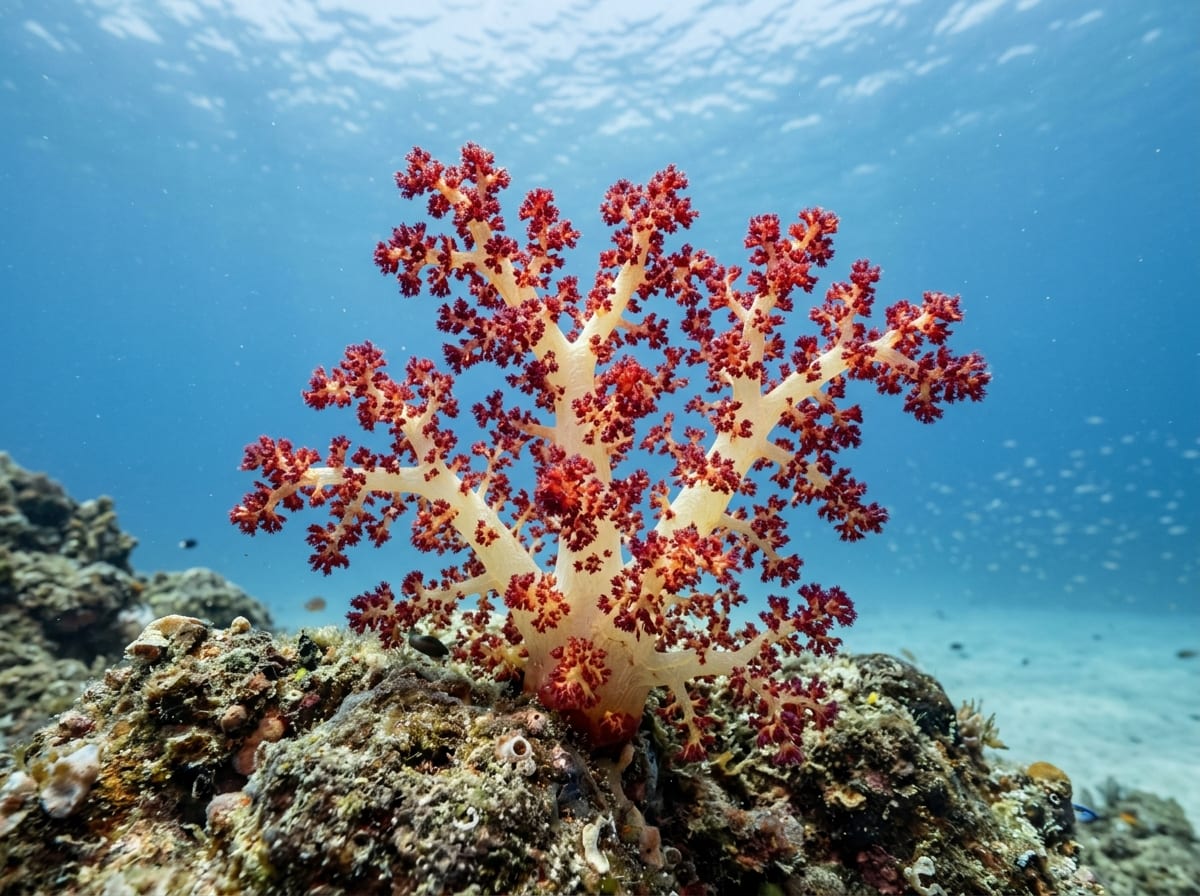
Red-flowered Soft Coral
The Red-flowered Soft Coral (Akabana-tosaka) is a Stereonephthya soft coral with white to yellow branches tipped with red polyps. The tiny skeletal elements (sclerites) in its polyp heads are red to reddish-purple, so the whole colony looks reddish. It is a Japanese species whose type locality is Tanabe Bay in Wakayama Prefecture. Its care level is rated advanced, and little is documented about its lifespan or adult size. Almost nothing has been found on whether it has zooxanthellae or how to keep it in an aquarium, so plan on feeding it for its nutrition and manage flow and temperature with care. If you are new to corals, learn the basics of its care before deciding.
View Red-flowered Soft Coral encyclopedia →0% commission on your first sales!Register by September 30, 2026 and your first 2 sales are commission-free!
Breeder Wanted!
List on BreederDirect and sell directly to customers nationwide!
Br-Choku's 6 Transparency Standards
Our Breeder sellers disclose detailed care specs for all Coral listings. We prioritize Aquacultured/CB specimens, verify WYSIWYG photos, and provide difficulty ratings—avoiding wild-caught.
- Aquacultured
- WYSIWYG Photo
- Difficulty Disclosed
- Frag/Colony
- Care Info Included
- Trade name shown
Browse all 241 breeds
Difficulty
Verified breeders wanted for Coral
Breeders are signing up now ahead of launch. Subscribe to be notified when new listings go live.
Getting alerts is free with a member account. When new listings match your saved search, we'll notify you by email and in-app.
Browse other categories
Verified breeders (preview)
Red-flowered Soft Coral key facts
- Care level
- Advanced
- Lifespan
- Little data available
- Size
- Little data available
- Diet
- Little data available (plan on feeding)
- Lighting
- No source shows whether it can rely on photosynthesis. Use viewing light and plan to nourish it by feeding.
- Flow & Placement
- It lives on relatively shallow rock (Kuroshio Biological Research Foundation). Give flow that sways the colony so food reaches the polyps, and fix it to rock.
- Water Temperature & Quality
- A temperate species from Sagami Bay to Kyushu. There is little guidance on temperature figures; keep it near the temperature of its origin and avoid summer heat. Salinity 33-35 ppt (SG 1.023-1.025).
- Diet & Feeding
- Little is published on feeding. Offer small amounts of fine particulate or liquid food while the polyps are open.
- Health & Cautions
- Care information is scarce and temperature control is demanding. It may be sold mixed with S. japonica, so check for red to red-purple polyp-head sclerites.
About Red-flowered Soft Coral
Meet the Red-flowered Soft Coral, a Stereonephthya soft coral with red polyps on white to yellow branches. A Japanese species first described from Tanabe Bay, Wakayama, it is rated for advanced keepers.
7 things to know before welcoming a Red-flowered Soft Coral
1Rated for advanced keepers
Its care level is rated advanced. If you have little experience with corals, it is safer to first get comfortable running a stable tank with easier species before considering this one.
2Feeding is the key
No sources have been found on whether it has zooxanthellae or can rely on photosynthesis. Plan on feeding it for its nutrition, with fine foods offered on an ongoing basis. Think carefully about whether you can keep up with that routine before bringing one home.
3Flow and water quality
The polyps at the branch tips catch food carried along by the current, so aim for gentle flow that keeps the branches swaying. More feeding also means water gets dirty more easily. Leave some margin in your water changes and filtration.
4Watch out for summer heat
This is a Japanese species, and its type locality is Tanabe Bay in Wakayama. High water temperatures may stress it, so have a way to cool the tank ready before summer. It is also worth asking the seller what water temperature the coral is kept at now.
5Why it looks red
The branches are white to yellow, with red polyps at the tips. Because the sclerites in the polyp heads are red to reddish-purple, the whole colony looks reddish. Colors can look different in photos than in person, so ask the seller if you have questions.
6What to check before buying
Read the listing photos and description closely, and ask the seller about anything unclear. In particular, find out what foods the coral has been eating and how it has been kept, since that helps you manage the move to your tank.
7Observe the polyps daily
Soft corals can change in shape or in how they open when something is wrong. Check how open the polyps are and how firm the branches look each day so you know what is normal. If you notice a change, start by reviewing water quality, temperature, and feeding.
Frequently asked questions about Red-flowered Soft Coral
- Q.Can a beginner keep it?
- A.Its care level is rated advanced, so it is hard to recommend as a first coral. It suits experienced keepers who can keep up careful feeding and water management, so get comfortable with the basics first.
- Q.What should I feed it?
- A.There is little published guidance on feeding, but the basic approach is to offer small amounts of fine particulate or liquid food while the polyps are open. The best food depends on what the individual is used to and on your tank, so ask the seller what it has been fed recently. Overfeeding can foul the water, so adjust based on how the coral responds.
- Q.How long does it live and how big does it get?
- A.There is little documentation on either its lifespan or its adult size, so no clear figures can be given. Use the listing details and information from the seller as a guide, and leave some spare room in your tank.
- Q.Does it need strong lighting?
- A.No sources show whether it can rely on photosynthesis, so keep the lighting at a level for viewing and plan on feeding it for its nutrition. Prioritize feeding, water flow, and stable temperature and water quality over light intensity. For a specific individual, it is best to confirm details with the seller.
- Q.Why does it look red?
- A.The sclerites in the polyp heads are red to reddish-purple, which makes the whole colony look reddish. The branches are white to yellow, and the contrast with the red polyps at the tips is a defining feature.
Useful tools for Red-flowered Soft Coral care
Learn more about Red-flowered Soft Coral in the encyclopedia
View Red-flowered Soft Coral encyclopedia entry →
Care difficulty, lifespan, size and diet — all basics covered.
More in this category
Can't find the one you're looking for?
Post your wishes for free and breeders with matching animals will contact you with introductions.