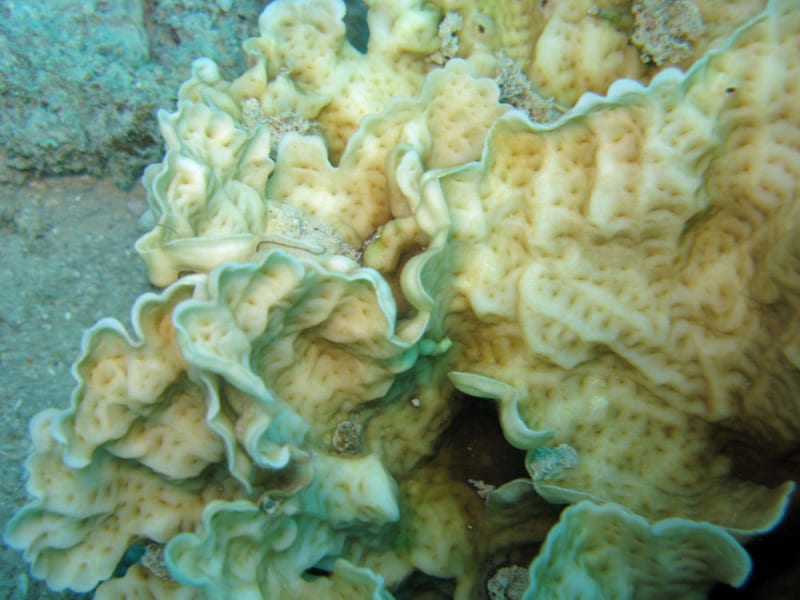
 © Anne Hoggett / CC BY 3.0
Yabe's Leptoseris
Yabe's Leptoseris (チヂミセンベイサンゴ) forms plate-like colonies that curl into whorls, stack into tiers, or rise in vase shapes. Its polyps sit in rectangular depressions bounded by radiating ridges and low walls parallel to the colony edge, which sets it apart from other Leptoseris. Wild colonies often exceed 1 m across, and the layered plates make a striking centerpiece in a reef tank. It is rated for intermediate keepers, so it suits people who can hold water quality, light, and flow steady and adjust patiently. Little is documented about its lifespan, so it is best treated as a long-term project.
View Yabe's Leptoseris encyclopedia →Breeder Wanted!
List on BreederDirect and sell directly to customers nationwide!
BreederDirect's 6 Transparency Commitments
Our Breeder sellers disclose detailed care specs for all Coral listings. We prioritize Aquacultured/CB specimens, verify WYSIWYG photos, and provide difficulty ratings—avoiding wild-caught.
- Aquacultured
- WYSIWYG Photo
- Difficulty Disclosed
- Frag/Colony
- Care Info Included
- Trade name shown
Browse all 241 breeds
Difficulty
Verified breeders wanted for Coral
Breeders are signing up now ahead of launch. Subscribe to be notified when new listings go live.
Getting alerts is free with a member account. When new listings match your saved search, we'll notify you by email and in-app.
Browse other categories
Verified breeders (preview)
Yabe's Leptoseris key facts
- Care level
- Intermediate
- Size
- Wild colonies are commonly over 1 m across
- Temperature
- 24〜27℃
- Diet
- Photosynthesis (zooxanthellae) plus plankton
- Lighting
- It hosts zooxanthellae (Reeflex). Leptoseris are common in dim settings, so avoid intense light and start at moderate or lower levels.
- Flow & Placement
- It usually grows on flat substrates (Corals of the World). Lay it horizontally on a flat, stable spot with gentle flow so the thin plates do not break.
- Water Temperature & Quality
- 24-27°C, salinity 33-35 ppt (SG 1.023-1.025); Reeflex also gives 24-27°C.
- Diet & Feeding
- Besides photosynthesis it takes plankton (Reeflex); feed small amounts of fine particulate food.
- Health & Cautions
- No successful long-term keeping has been reported (Reeflex). When buying, check that the corallites sit in rectangular pockets to separate it from other Leptoseris.
About Yabe's Leptoseris
Learn about Yabe's Leptoseris (チヂミセンベイサンゴ), an intermediate-level coral whose plate-like colonies form whorls, tiers, or vase shapes. Covers how to identify it and how to prepare before bringing one home.
7 things to know before welcoming a Yabe's Leptoseris
1How to Identify It
Look for radiating ridges and low walls running parallel to the colony edge. Together they form rectangular depressions that hold the corallites, and this pattern separates it from other Leptoseris. Check the surface pattern in the photos before you commit.
2A Plate That Keeps Spreading
The colony grows as plates that whorl, tier, or rise into a vase shape as they spread. Wild colonies often exceed 1 m in diameter, so plan the placement with the grown-out size in mind.
3Adjust Light Gradually
The coral relies on light, but avoid putting it under strong lighting all at once. Watch its color and how open the polyps are, and adjust the lighting in small steps.
4Flow and Debris
Broad plates tend to collect debris on their surfaces. Set up gentle flow that moves water across the plate, and check from time to time that nothing is settling on it.
5Space From Neighbors
Because the plates overlap as they spread, a growing colony can shade or touch nearby corals. Leave generous room around it when you plan the layout, and later maintenance gets easier.
6Acclimation and Stability
This is an intermediate-level coral, so avoid sudden shifts in water quality. Acclimate it slowly when it arrives, and watch its polyp opening and color for a while afterward.
7Lifespan Is Unclear
There is little documentation on its lifespan, so no clear figure can be given. Keeping notes on the date you added it and any changes in its condition will help over the long term.
Frequently asked questions about Yabe's Leptoseris
- Q.Can a beginner keep it?
- A.It is rated for intermediate keepers. It is safer to bring one home once you are comfortable managing water quality, light, and flow, and gaining experience with easier corals first is a reasonable route.
- Q.How large does it get?
- A.Wild colonies often exceed 1 m in diameter. How large it grows in a tank depends on the setup, but it is wise to reserve space assuming the plates will overlap and spread.
- Q.How long does it live?
- A.Little is documented about its lifespan, so no clear number can be given. Plan for long-term care and keep records of its condition as you go.
- Q.How do I tell it from other Leptoseris?
- A.Check whether the polyps sit in rectangular depressions bounded by radiating ridges and low walls parallel to the colony edge. Zooming in on the colony surface in the listing photos helps you confirm this.
- Q.Is it listed under CITES?
- A.Yes, this species is listed in CITES Appendix II. If you have questions, you can message the seller.
Useful tools for Yabe's Leptoseris care
Learn more about Yabe's Leptoseris in the encyclopedia
View Yabe's Leptoseris encyclopedia entry →
Care difficulty, lifespan, size and diet — all basics covered.
More in this category
Can't find the one you're looking for?
Post your wishes for free and breeders with matching animals will contact you with introductions.