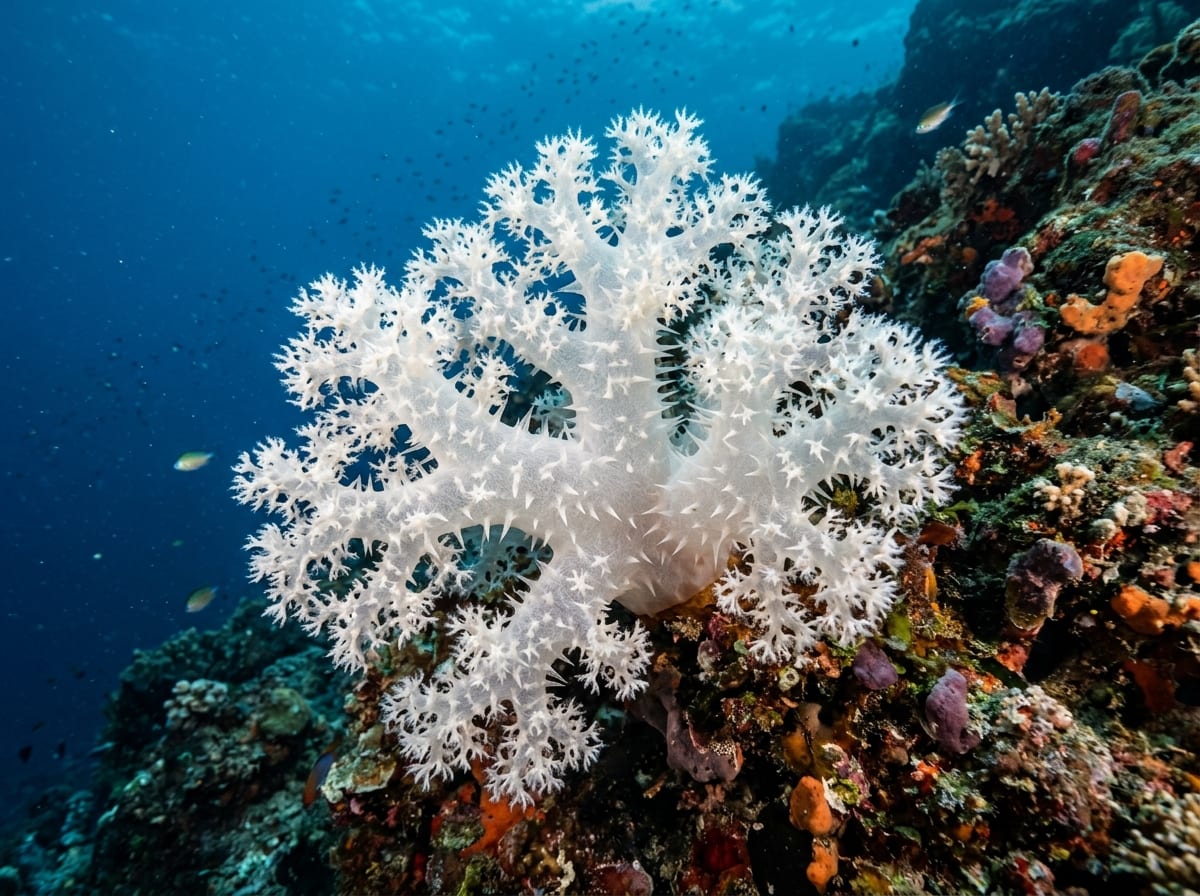
Velvet Carnation Coral
The Velvet Carnation Coral is a spiny-looking soft coral whose polyps are arranged like an umbrella-shaped umbel, forming a rounded, cauliflower-like colony. Sclerites protrude from the body wall, giving it a prickly texture, and many colonies are white. It has no zooxanthellae, so feeding is essential. It is rated for advanced keepers, and little is documented about its lifespan. Colonies of around 40 cm have been recorded. It suits reef keepers with solid experience who are ready to keep up a feeding routine.
View Velvet Carnation Coral encyclopedia →Breeder Wanted!
List on BreederDirect and sell directly to customers nationwide!
BreederDirect's 6 Transparency Commitments
Our Breeder sellers disclose detailed care specs for all Coral listings. We prioritize Aquacultured/CB specimens, verify WYSIWYG photos, and provide difficulty ratings—avoiding wild-caught.
- Aquacultured
- WYSIWYG Photo
- Difficulty Disclosed
- Frag/Colony
- Care Info Included
- Trade name shown
Browse all 241 breeds
Difficulty
Verified breeders wanted for Coral
Breeders are signing up now ahead of launch. Subscribe to be notified when new listings go live.
Getting alerts is free with a member account. When new listings match your saved search, we'll notify you by email and in-app.
Browse other categories
Verified breeders (preview)
Velvet Carnation Coral key facts
- Care level
- Advanced
- Lifespan
- Little data available
- Size
- Colonies of about 40 cm recorded (Ito Diving Service)
- Diet
- Feeding only (plankton); no zooxanthellae
- Lighting
- It has no zooxanthellae and does not photosynthesise (Reeflex); subdued viewing light is enough.
- Flow & Placement
- In Izu it is commoner on somewhat deeper rock. Provide flow that sways the colony so food reaches the polyp clusters, and fix it to an overhang or rock.
- Water Temperature & Quality
- Reeflex gives 24-26°C, but in Japan it also lives in temperate waters such as Izu. Keep near the temperature of its origin and salinity at 33-35 ppt (SG 1.023-1.025).
- Diet & Feeding
- A plankton-dependent food specialist (Reeflex). Give liquid and fine particulate foods in small, frequent doses.
- Health & Cautions
- For advanced keepers only, with tanks of 500 L or more recommended (Reeflex). Heavy feeding fouls water, so provide strong filtration and water changes.
About Velvet Carnation Coral
Velvet Carnation Coral: a rounded, cauliflower-like, often white colony with no zooxanthellae, so feeding is essential. For advanced keepers. Key points and FAQ.
7 things to know before welcoming a Velvet Carnation Coral
1Advanced-level care
Our species guide rates it as suited to advanced keepers. It is best considered after you have built up experience with corals and can keep your tank stable. It is not a good choice as a first coral.
2Feeding is essential
It has no zooxanthellae, so unlike photosynthetic corals it depends on being fed. Research food types and feeding methods beforehand, and make sure you can keep up a feeding routine before bringing one home.
3Cauliflower-like colony
The polyps are arranged like an umbrella-shaped umbel, forming a rounded colony that resembles cauliflower. Sclerites protrude from the body wall, giving it a spiny look, and many colonies are white.
4Colony size
Colonies of around 40 cm have been recorded (Ito Diving Service). A colony in a home tank may not reach that size, but leave generous room for it and keep some distance from neighboring corals.
5Lifespan is unclear
Little documentation exists on its lifespan, so there is no reliable figure to give. Because information on long-term keeping is limited, it helps to keep your own care records and observe the colony closely.
6Daily observation
Get to know how the polyps open and how firm the colony looks in its normal state, so changes are easier to notice. Watching how it responds after feeding also helps you work out a routine that suits that particular colony.
7Prepare before buying
Decide how you will feed it and set up a tank that holds stable water conditions before the colony arrives. If anything is unclear, ask the seller about the rearing setup and feeding before you decide.
Frequently asked questions about Velvet Carnation Coral
- Q.Can beginners keep it?
- A.Our species guide rates it as suited to advanced keepers, so it is not recommended as a first coral. It has no zooxanthellae and needs regular feeding, so it is best considered after you have gained coral-keeping experience.
- Q.Can it live on light alone?
- A.No. It has no zooxanthellae, so light alone is not enough and feeding is essential. Adjust the type and amount of food by watching how the colony responds.
- Q.How large does it get?
- A.Colonies of around 40 cm have been recorded. A colony in a home tank may not reach that size, but it is wise to plan your tank with room to spare.
- Q.How long does it live?
- A.Little is documented about its lifespan, so there is no clear estimate. After bringing one home, keep care records and observe the colony over time.
- Q.What does it look like?
- A.Its polyps are arranged like an umbrella-shaped umbel, forming a rounded, cauliflower-like colony. Sclerites protrude from the body wall, giving it a spiny look, and many colonies are white.
Useful tools for Velvet Carnation Coral care
Learn more about Velvet Carnation Coral in the encyclopedia
View Velvet Carnation Coral encyclopedia entry →
Care difficulty, lifespan, size and diet — all basics covered.
More in this category
Can't find the one you're looking for?
Post your wishes for free and breeders with matching animals will contact you with introductions.