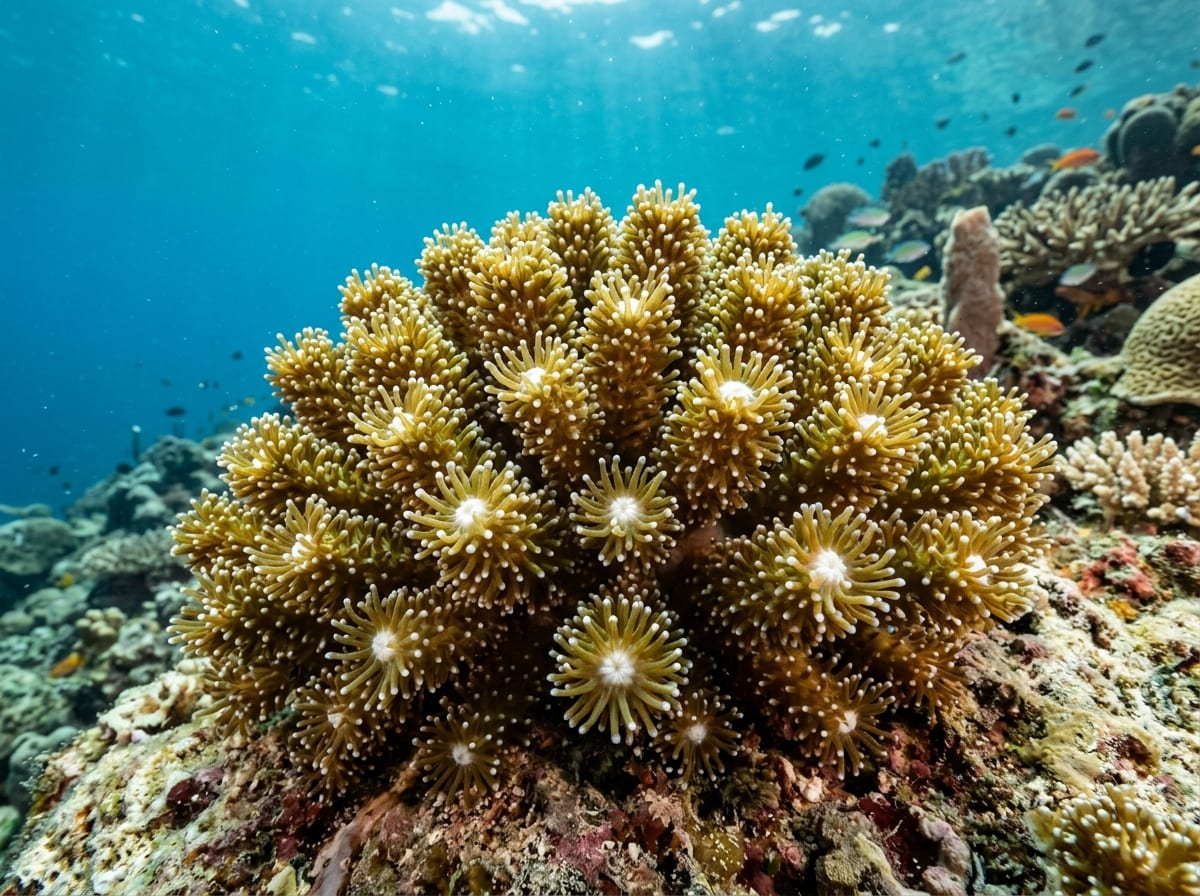
Branching Alveopora
Branching Alveopora starts out as an encrusting sheet and grows up into rounded, short knobs or columns. Its long polyps sit densely packed, with slightly swollen tentacle tips, and white mouths stand out against a yellow, green or brown base. It is said to live on calm reefs, so gentle water movement likely suits it best. Little is documented about its size or lifespan. It is rated for advanced keepers, so stable water quality and careful feeding matter. Softly swaying polyps can make it a real centerpiece in the right tank.
View Branching Alveopora encyclopedia →0% commission on your first sales!Register by September 30, 2026 and your first 2 sales are commission-free!
Breeder Wanted!
List on BreederDirect and sell directly to customers nationwide!
Br-Choku's 6 Transparency Standards
Our Breeder sellers disclose detailed care specs for all Coral listings. We prioritize Aquacultured/CB specimens, verify WYSIWYG photos, and provide difficulty ratings—avoiding wild-caught.
- Aquacultured
- WYSIWYG Photo
- Difficulty Disclosed
- Frag/Colony
- Care Info Included
- Trade name shown
Browse all 241 breeds
Difficulty
Verified breeders wanted for Coral
Breeders are signing up now ahead of launch. Subscribe to be notified when new listings go live.
Getting alerts is free with a member account. When new listings match your saved search, we'll notify you by email and in-app.
Browse other categories
Verified breeders (preview)
Branching Alveopora key facts
- Care level
- Advanced
- Lifespan
- Little data available
- Size
- Up to about 25 cm (Reeflex)
- Temperature
- 24〜27℃
- Diet
- Photosynthesis (zooxanthellae) plus plankton
- Lighting
- It hosts zooxanthellae (Wikipedia). As a species of sheltered reefs, acclimate it at moderate light and set its position by how well the polyps extend.
- Flow & Placement
- It lives in protected reef environments (Corals of the World). Give gentle flow that sways the polyps and avoid strong direct currents.
- Water Temperature & Quality
- 24-27°C, salinity 33-35 ppt (SG 1.023-1.025). It bleaches easily, so watch for heat and sudden changes.
- Diet & Feeding
- It also takes plankton and fine particulate food (Reeflex); feed small amounts while the polyps are open.
- Health & Cautions
- Not for beginners (Reeflex). If the polyps stay closed for days, reconsider light and flow.
About Branching Alveopora
Branching Alveopora is an advanced-level coral with long, densely packed polyps and conspicuous white mouths. Learn about its growth form, care needs and what to know before buying.
7 things to know before welcoming a Branching Alveopora
1For Advanced Keepers
Branching Alveopora is considered a coral for advanced keepers. If your coral experience is still limited, it is safer to first gain experience with an easier species and a stable tank.
2How to Recognize It
It starts out encrusting, then rises into rounded short knobs or columns. Long polyps are packed closely together and the tentacle tips are slightly swollen, which helps set it apart. The base color is yellow, green or brown, with a conspicuous white mouth.
3Gentle Flow Is the Base
Because it lives on calm reefs, it is safer to avoid aiming strong flow directly at the colony. Polyps that open naturally are one useful sign that the placement suits it.
4Water Stability Comes First
Sudden swings in temperature, salinity or nutrients are hard on corals in general. For a species rated for advanced keepers, avoid changing values all at once and build a habit of regular testing.
5Thinking About Feeding
Light alone may not be enough, and offering fine foods is sometimes suggested for this kind of coral. Adjust the amount and frequency by watching the colony and the tank, and be careful that overfeeding does not foul the water.
6Space for Growth
Adult size is poorly documented, but a colony that grows into knobs or columns takes up room. Long polyps can touch neighboring colonies, so plan generous spacing from the start.
7Settling In After Arrival
When it arrives, check that the polyps open naturally and that the tissue shows no peeling or discoloration. Polyps may stay closed at first, so avoid strong light and flow, let the colony settle in gradually, and keep watching its condition afterward.
Frequently asked questions about Branching Alveopora
- Q.Can beginners keep it?
- A.It is rated for advanced keepers and is a difficult species for those with little coral experience. It is safer to consider it once you are comfortable with water management and can keep a tank stable.
- Q.How large does it get?
- A.Its size is poorly documented, so no clear figure can be given. Since it grows from an encrusting form into short knobs or columns, leave plenty of room where you place it.
- Q.How long does it live?
- A.Little is documented about its lifespan, so no clear figure is known. How long you can keep it likely depends on stable water quality and regular observation.
- Q.Is it listed under CITES?
- A.Branching Alveopora is listed in CITES Appendix II. Please also check the description on each listing page for details.
- Q.What should I watch for with other corals?
- A.It is important to keep a gap so the long polyps do not touch neighboring colonies. To avoid contact that could weaken either coral, allow for how far the colony will spread as it grows.
Useful tools for Branching Alveopora care
Learn more about Branching Alveopora in the encyclopedia
View Branching Alveopora encyclopedia entry →
Care difficulty, lifespan, size and diet — all basics covered.
More in this category
Can't find the one you're looking for?
Post your wishes for free and breeders with matching animals will contact you with introductions.