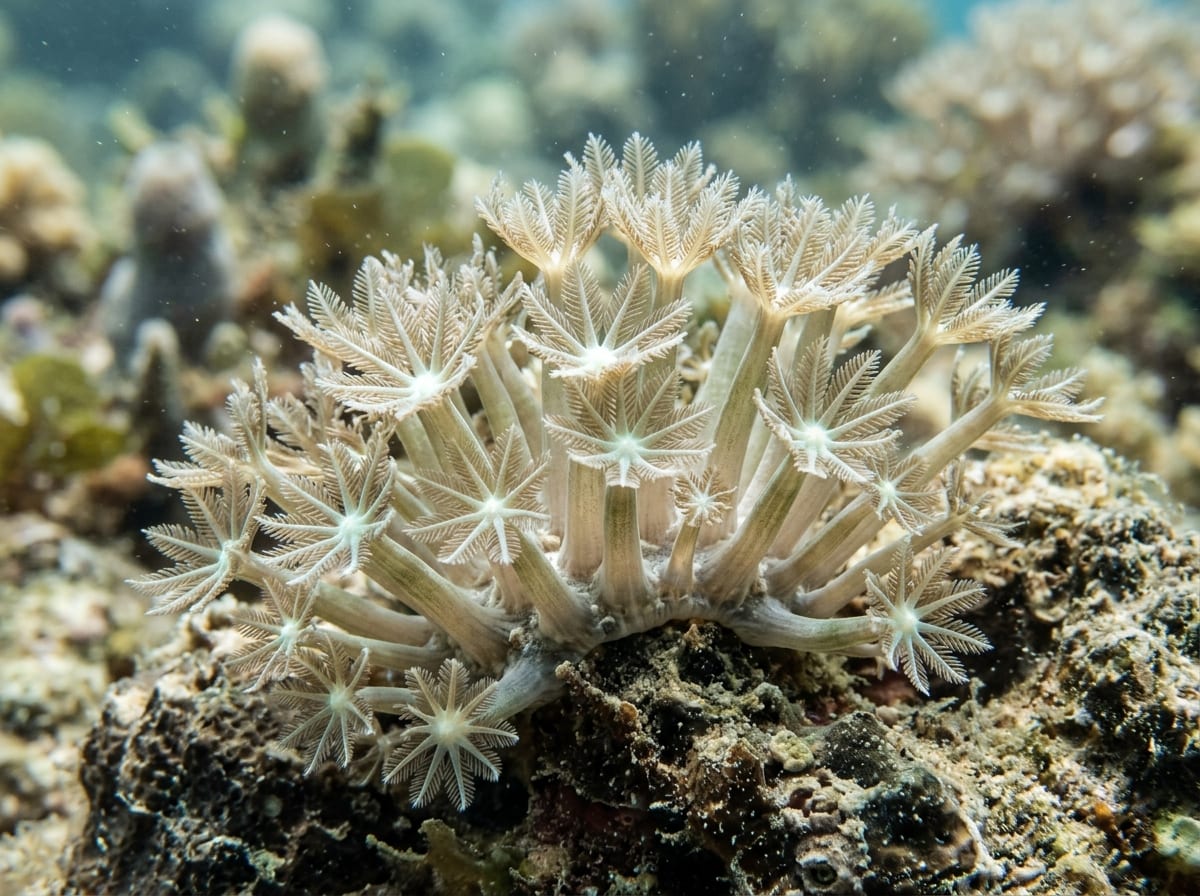
Tubular Clove Polyp
Tubular Clove Polyp is a soft coral in the clove polyp group. Single polyps, each with eight feathery tentacles, rise one by one from a stolon that creeps across the rock. It lives in symbiosis with zooxanthellae and grows on light, so it is easy to keep once lighting and water quality are dialed in, and it is a beginner-friendly coral that is widely available in Japan. The polyps sway in the water flow and add soft movement to a reef tank. The colony spreads gradually along its stolons, so it helps to leave some open space in your aquascape.
View Tubular Clove Polyp encyclopedia →Breeder Wanted!
List on BreederDirect and sell directly to customers nationwide!
BreederDirect's 6 Transparency Commitments
Our Breeder sellers disclose detailed care specs for all Coral listings. We prioritize Aquacultured/CB specimens, verify WYSIWYG photos, and provide difficulty ratings—avoiding wild-caught.
- Aquacultured
- WYSIWYG Photo
- Difficulty Disclosed
- Frag/Colony
- Care Info Included
- Trade name shown
Browse all 241 breeds
Difficulty
Verified breeders wanted for Coral
Breeders are signing up now ahead of launch. Subscribe to be notified when new listings go live.
Getting alerts is free with a member account. When new listings match your saved search, we'll notify you by email and in-app.
Browse other categories
Verified breeders (preview)
Tubular Clove Polyp key facts
- Care level
- Beginner-friendly
- Lifespan
- Little data available
- Size
- Colonies up to about 30 cm (Reeflex)
- Temperature
- 24〜27℃
- Diet
- Photosynthesis (zooxanthellae) plus plankton
- Lighting
- It hosts zooxanthellae and feeds on light (Reeflex). Find a spot bright enough for the polyps to open fully.
- Flow & Placement
- It spreads over rock by stolons and can overgrow neighbouring corals, so attach it to a separate rock or isolated stone.
- Water Temperature & Quality
- 24-27°C, salinity 33-35 ppt (SG 1.023-1.025). Reeflex gives 26.5°C as the upper limit, so watch for heat.
- Diet & Feeding
- It relies mainly on photosynthesis and also uses dissolved nutrients and plankton (Reeflex); it grows without special feeding.
- Health & Cautions
- Easy to keep and propagate by division (Reeflex). The shop name may cover other Clavularia species, so check the scientific name too.
About Tubular Clove Polyp
Tubular Clove Polyp: a beginner-friendly soft coral with eight-tentacled polyps rising from a creeping stolon. Grows on light and spreads slowly along its stolons. Key care tips inside.
7 things to know before welcoming a Tubular Clove Polyp
1A coral that grows on light
Because it lives in symbiosis with zooxanthellae, light is the key to keeping it healthy. Weak lighting can make the polyps open poorly, so place it where enough light reaches and change brightness gradually.
2It spreads by stolons
New polyps rise from the stolon that creeps across the rock, and the colony spreads gradually over time. It can also creep onto surfaces other than rock, so leave some room between it and the glass or neighboring corals. Watching it spread is part of the appeal, but it pays to plan your layout early.
3Plan for spread
There is little documentation giving a clear size for colonies, but they spread gradually along their stolons. Even if you start with a small colony, plan your tank size and placement around how far it may spread. Growth pace varies with conditions.
4Rated beginner-friendly
Its care difficulty is rated beginner-friendly, making it an easy first coral to consider. Still, like any coral, it is stressed by sudden changes in temperature, salinity, or water quality. Set up a stable tank before bringing one home.
5Water flow and open polyps
The polyps sway gently in the water flow. A strong current hitting them directly can keep them from opening well, so choose a spot with soft, steady water movement. If the polyps stay closed for a long time, take it as a cue to review lighting, flow, and water quality.
6Give it time after arrival
After shipping or a change of environment, the polyps may stay closed for a while. Avoid moving it around repeatedly; acclimate it carefully and give it time to settle.
7What to check in a listing
Colony size, the rock or base it is attached to, and how well the polyps open differ from one listing to the next. Check the photos and description, and ask the seller about anything unclear before you buy. It also helps to confirm that the size suits your tank.
Frequently asked questions about Tubular Clove Polyp
- Q.Can a beginner keep Tubular Clove Polyp?
- A.Its care difficulty is rated beginner-friendly, and it is an easy-to-keep soft coral that grows on light. That said, it assumes a stable tank with suitable lighting and flow, and no sudden swings in water quality.
- Q.How large does it get?
- A.There is little documentation giving a clear size, but because the colony spreads gradually along its stolons, leave some room between it and nearby corals or the glass.
- Q.How long does it live?
- A.There is little documentation on its lifespan, so we cannot give a definite number of years. The basics are keeping light, flow, and water quality stable and watching how well the polyps open each day.
- Q.Is it a problem if the polyps do not open?
- A.Right after arrival or a change in the tank, the polyps may stay closed, and that does not always mean something is wrong. First check for sudden changes in lighting, flow, or water quality, then give it some time. If it does not improve, review its placement and conditions.
- Q.Can I keep it with other corals?
- A.Its stolons can extend and touch nearby corals or rock, so it is safer to give it some space. Compatibility also depends on your tank conditions, so watch how things develop and adjust as needed.
Useful tools for Tubular Clove Polyp care
Learn more about Tubular Clove Polyp in the encyclopedia
View Tubular Clove Polyp encyclopedia entry →
Care difficulty, lifespan, size and diet — all basics covered.
More in this category
Can't find the one you're looking for?
Post your wishes for free and breeders with matching animals will contact you with introductions.