AI-generated image
Tubular Clove Polyp
BeginnerClavularia inflata
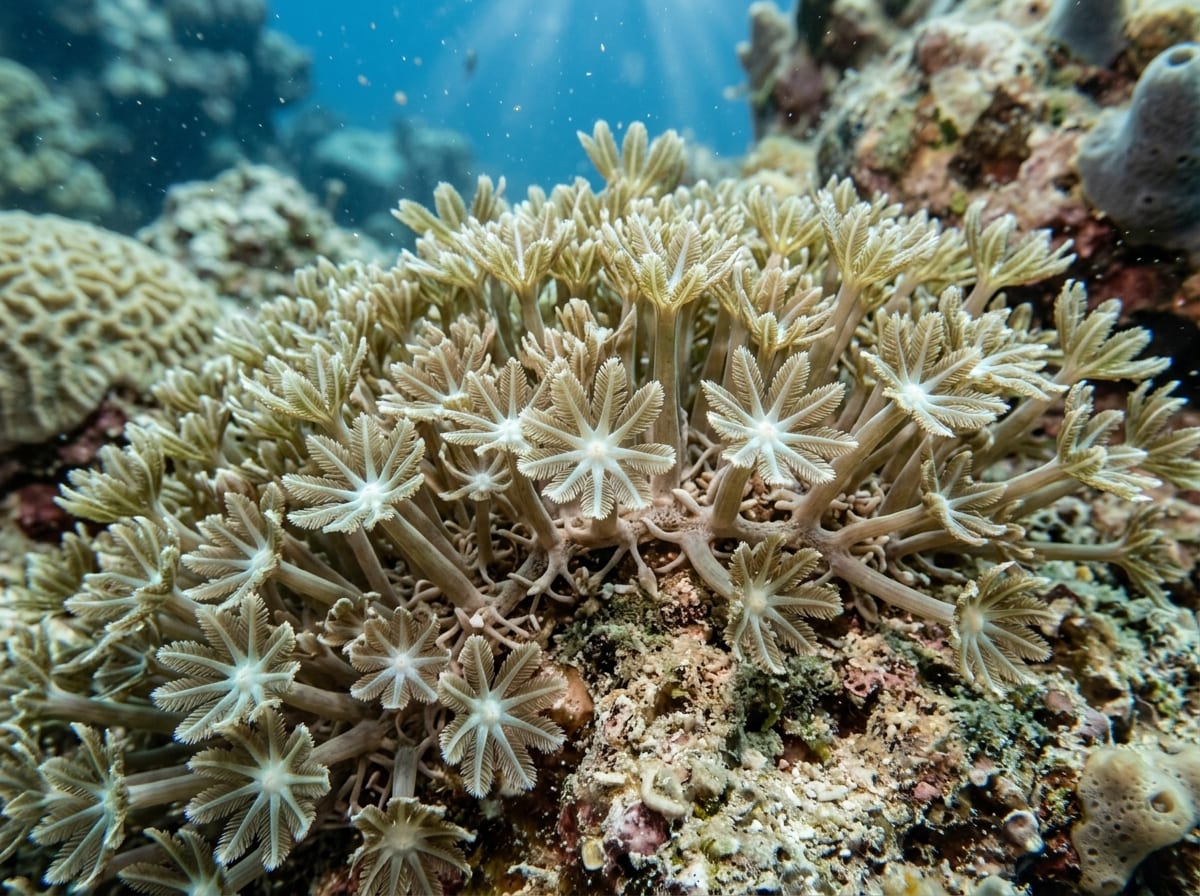
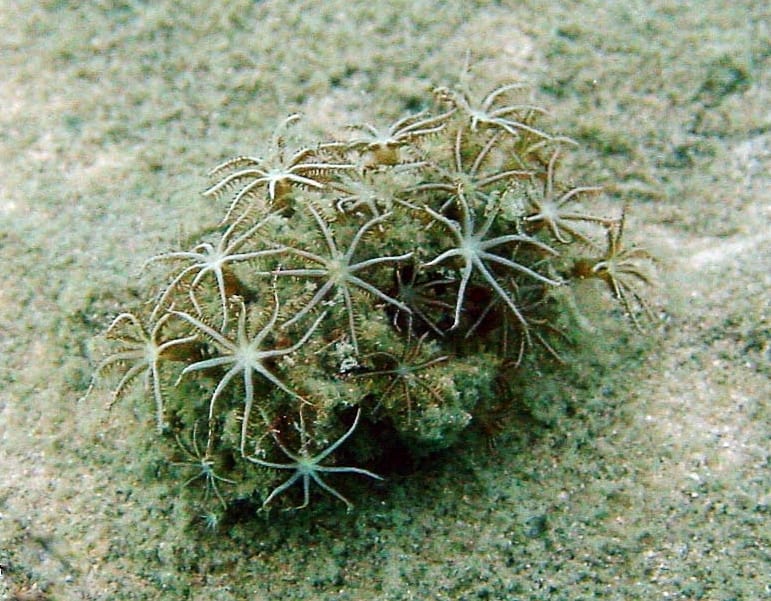
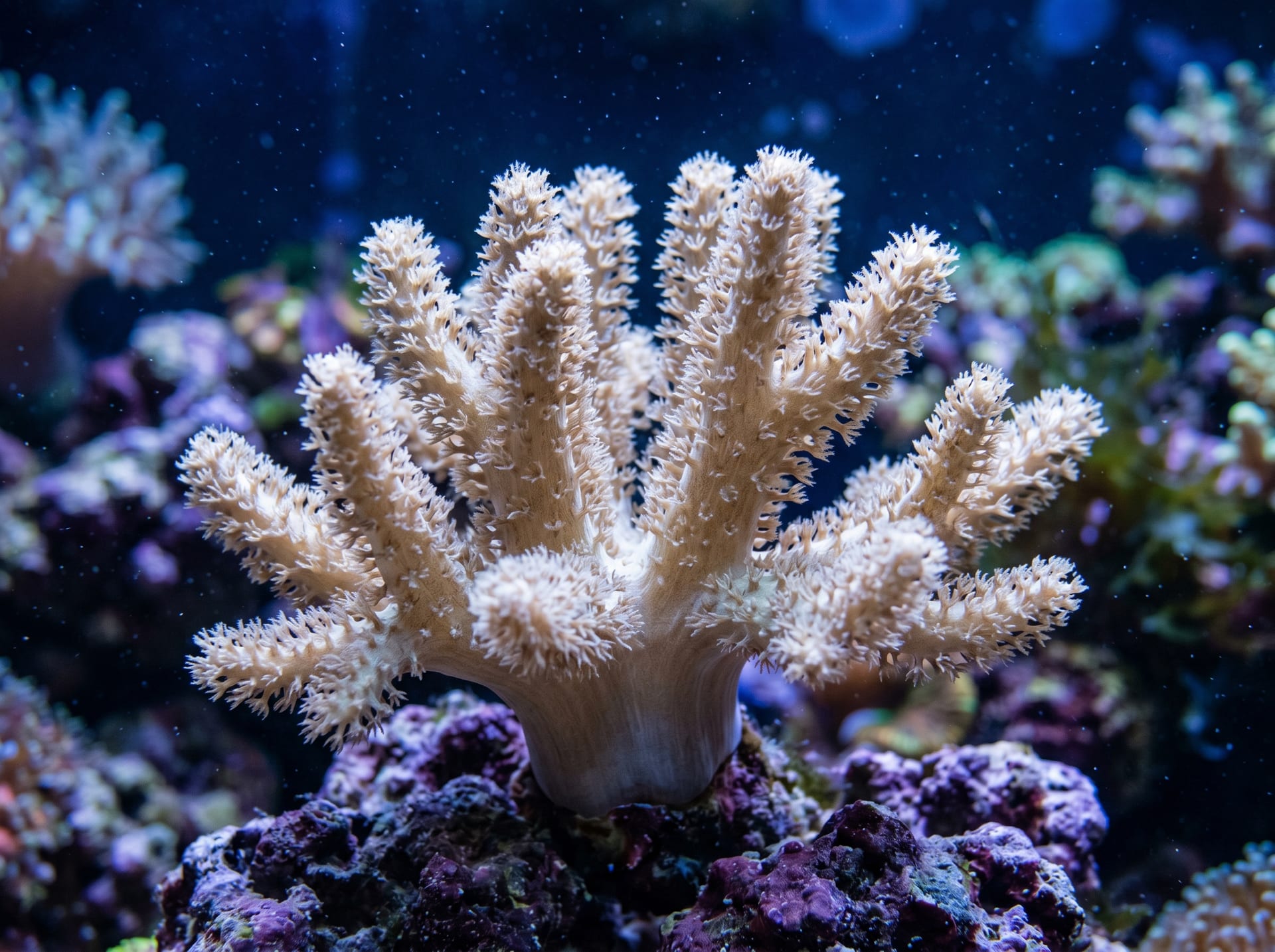
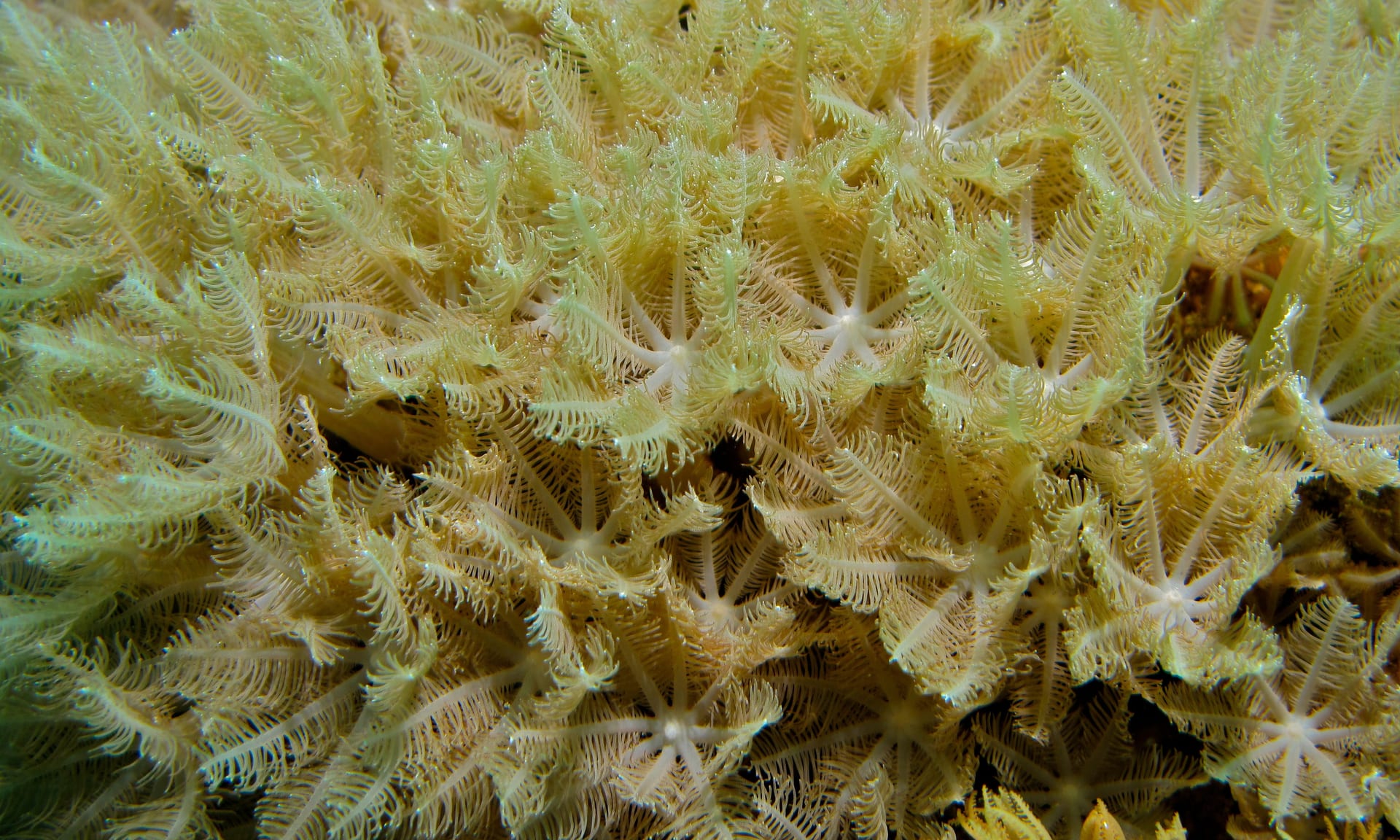
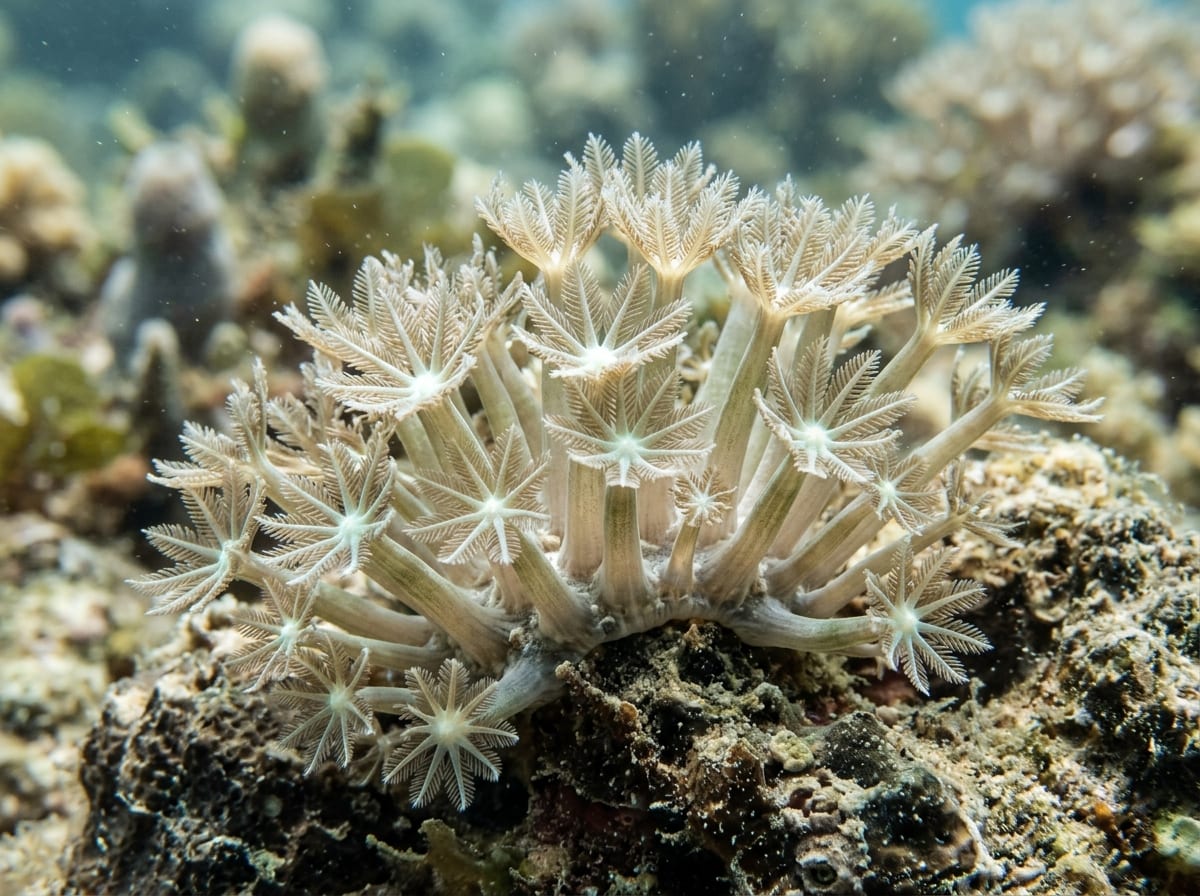
A clove polyp whose individual polyps, each with eight feathery tentacles, rise one by one from a stolon creeping over rock. It lives on light via zooxanthellae and is one of the most widely sold easy soft corals in Japan.
Difficulty
Beginner
Temperature
24〜27℃
Lifespan
Little data available
Size
Colonies up to about 30 cm (Reeflex)
Diet
Photosynthesis (zooxanthellae) plus plankton
About
Clavularia inflata is an octocoral of the family Clavulariidae, formerly placed in the stoloniferan soft corals (University Museum, University of Tokyo). Colonies in this family consist of separate retractable polyps growing from a creeping stolon or basal membrane, with tissues stiffened by sclerites (Wikipedia), and each polyp carries the eight feathery tentacles typical of octocorals. It is recorded from Australia and the Great Barrier Reef, the Philippines, Taiwan, the South China Sea, Micronesia and Japan including the Ryukyus, at 1-31 m (Reeflex). Because it hosts zooxanthellae and feeds by photosynthesis, it grows well in lit reef tanks; Reeflex rates it easy and notes it can be propagated by division. It is a standard soft coral in Japanese specialist and online shops, though it is often labelled only as Clavularia sp., and clove polyps are hard to identify to species by appearance. This site also has an entry for the genus Clavularia as a whole.
Size of the Tubular Clove Polyp
The Tubular Clove Polyp grows to Colonies up to about 30 cm (Reeflex).
Temperature & humidity for the Tubular Clove Polyp
The ideal temperature for the Tubular Clove Polyp is 24〜27℃.
Basic Info
Origin
Reefs of the western Pacific and eastern Indian Ocean (Australia, Philippines, Taiwan, Ryukyus and elsewhere)
Lifespan
Little data available
Size
Colonies up to about 30 cm (Reeflex)
Temperature
Care Specifications
- Water Temp.
- 24–27℃
- Specific Gravity
- 1.023–1.025
- Salinity
- 33–35 ppt
Soft coral
Sources: Reeflex (Clavularia inflata) / University Museum, University of Tokyo: soft coral specimen database (Clavularia inflata) / Wikipedia (Clavulariidae) / AlgaeBarn: Water Parameters 101
References & Sources
Edited & verified by: BreederDirect editorial team
The taxonomic, regulatory, and husbandry data on this page are compiled and verified against the authoritative primary sources below.
Primary sources
- Species+ (CITES search)
- Ministry of the Environment: List of Designated Invasive Alien Species
- Okinawa Prefecture: Collection of reef-building corals is prohibited
- e-Gov: Natural Parks Act (Art. 22, marine park zones)
- Reeflex (Clavularia inflata)
- University Museum, University of Tokyo: soft coral specimen database (Clavularia inflata)
- Wikipedia (Clavulariidae)
- AlgaeBarn: Water Parameters 101
Taxonomy & Authority
Regulations & Conservation Status
Not CITES-listed
Domestic law: Soft corals of this group are not included in the 'reef-building corals' whose collection Okinawa prohibits (stony corals, blue coral, sea fans and others). Collecting in the sea may still fall under fishing rights or prefectural fisheries rules, and taking designated species in marine park zones requires a permit (Natural Parks Act, Art. 22).
Not listed in the CITES Appendices (checked on Species+). Not designated as an Invasive Alien Species under Japanese law.
Sources: Species+ (CITES search) / Ministry of the Environment: List of Designated Invasive Alien Species / Okinawa Prefecture: Collection of reef-building corals is prohibited / e-Gov: Natural Parks Act (Art. 22, marine park zones)
Regulations may change. Always verify the latest information with the relevant authorities.
Tubular Clove Polyp Listings
Loading latest listingsFind listings for this species