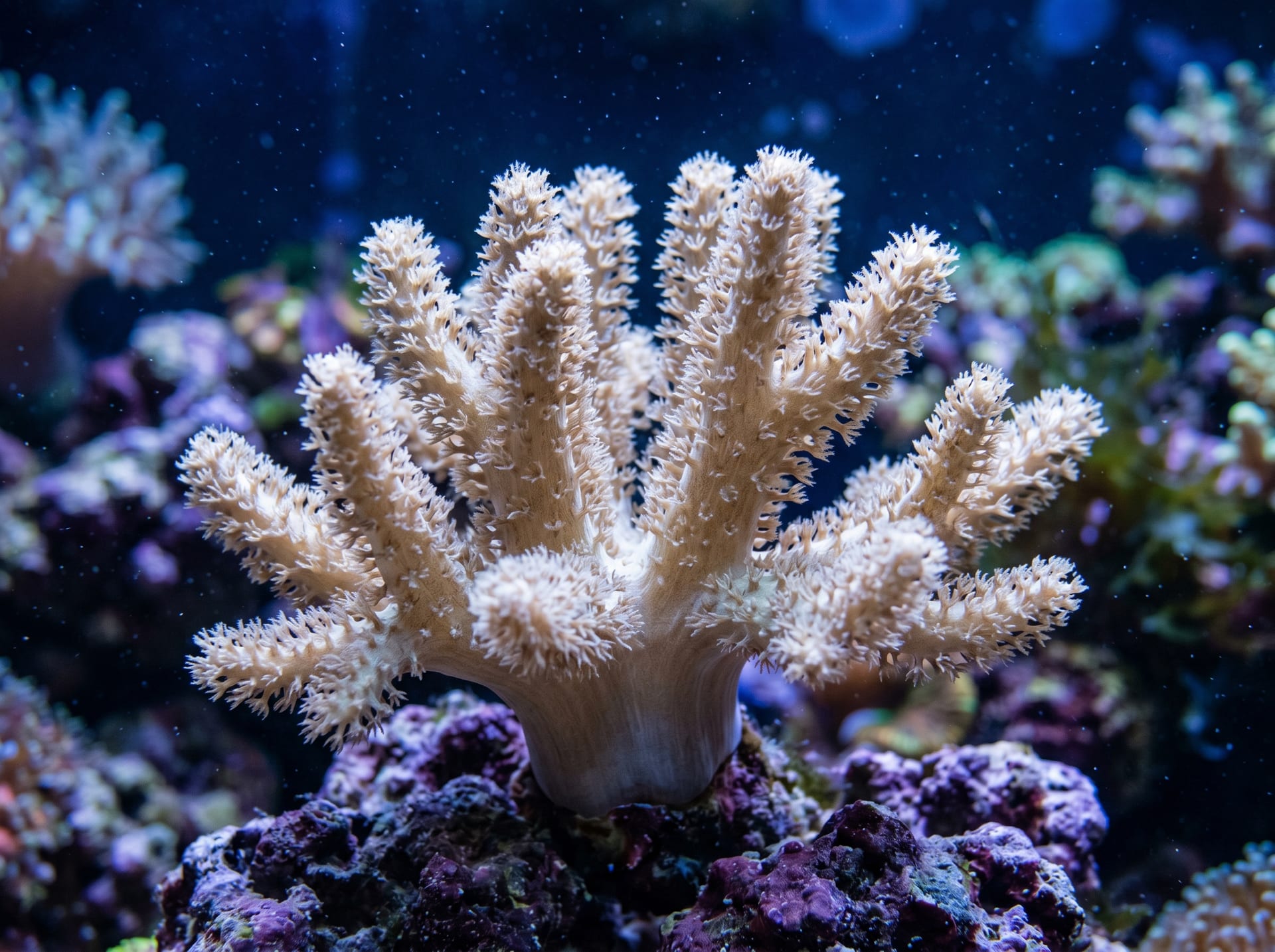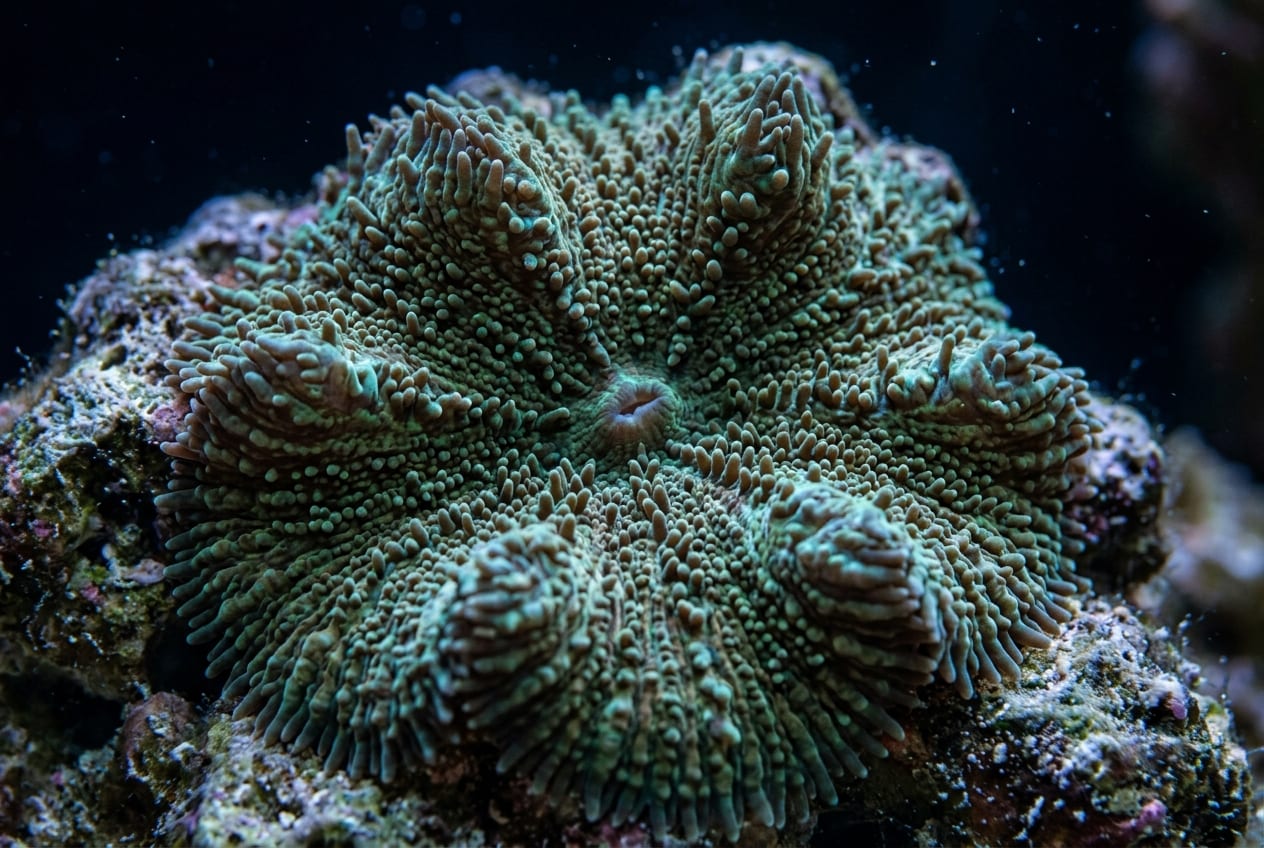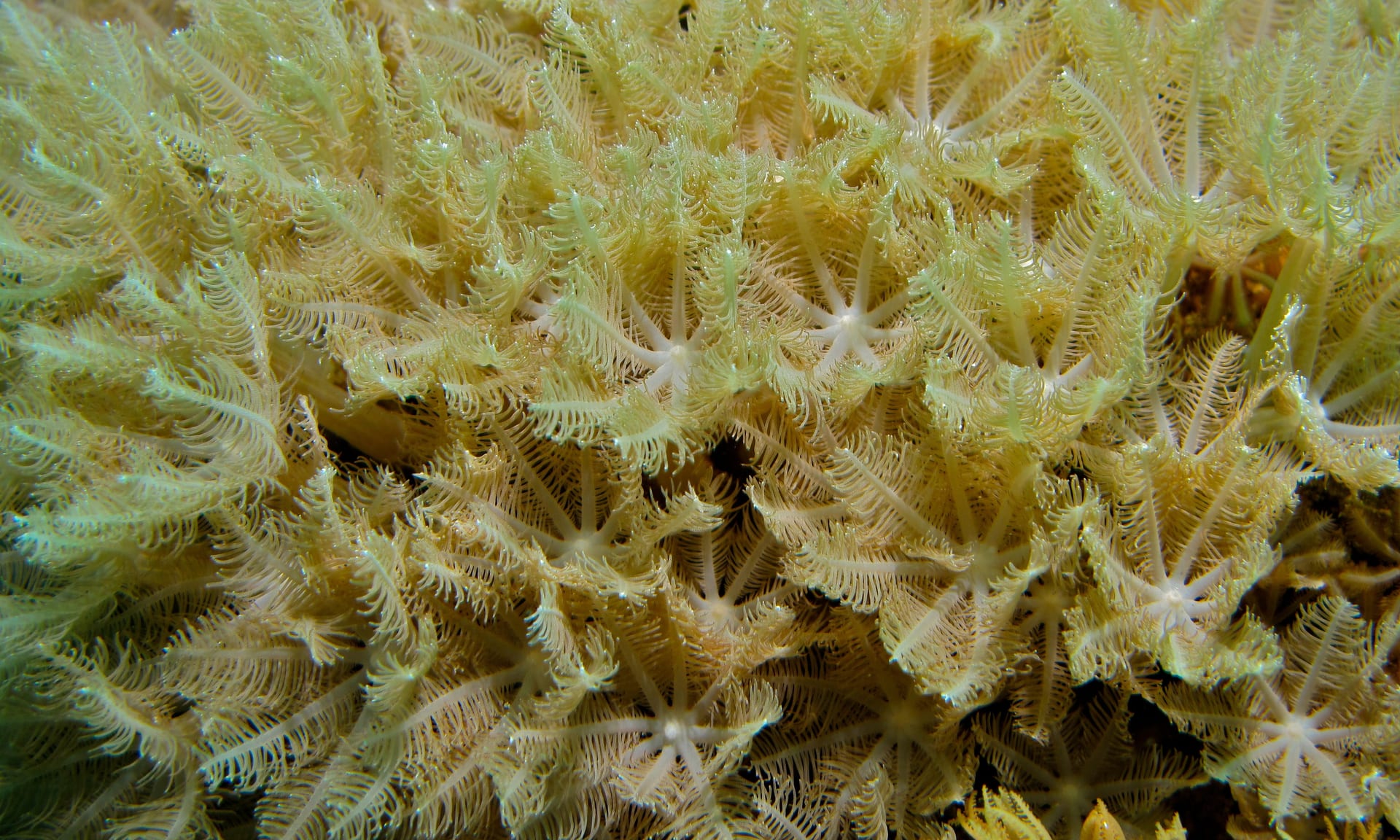
Source: Wikimedia Commons
Clove Polyps (Clavularia)
BeginnerClavularia spp.
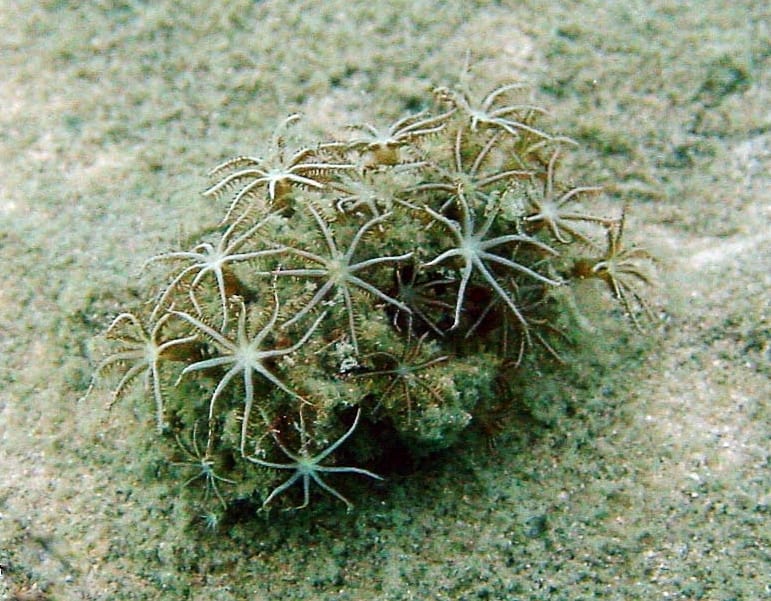
A clavulariid soft coral whose polyps, each with eight pinnate tentacles, rise from a creeping base. Colour varies through brown, tan, pink, green and white, and it spreads quickly by encrusting rock.
Difficulty
Beginner
Temperature
24〜26℃
Diet
Mainly nutrition from its zooxanthellae, with micro-plankton or foods for filter-feeding invertebrates offered about once a week.
About
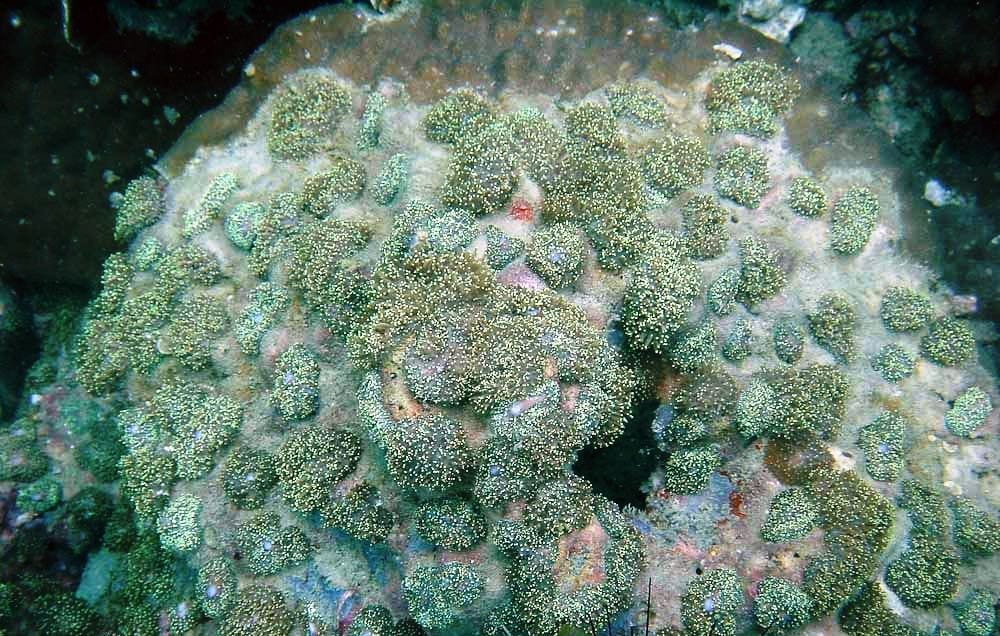
Clavularia is a genus of octocoral soft corals in the family Clavulariidae, order Malacalcyonacea, sold for aquariums as clove polyps, eight tentacle polyps or encrusting polyps. Individual polyps rise from a creeping base and open the eight pinnate tentacles common to all octocorals. Colour varies through brown, tan, pink, green and white. Colonies are handled as several polyps attached to one piece of live rock, and when conditions suit they spread rapidly, encrusting adjacent rock and even other corals. The genus is zooxanthellate and draws most of its nutrition from photosynthesis. The tissue is soft and is often stung and damaged by aggressive corals, so it needs generous clearance. It is easy to keep, doing well under moderate light and moderate flow. As a soft coral with no stony skeleton it is not covered by the CITES coral listings.
Source: WoRMS
Temperature & humidity for the Clove Polyps (Clavularia)
The ideal temperature for the Clove Polyps (Clavularia) is 24〜26℃.
Basic Info
Origin
Shallow reefs of the Indo-West Pacific, growing in groups on live rock and rubble.
Temperature
24〜26℃
Diet
Mainly nutrition from its zooxanthellae, with micro-plankton or foods for filter-feeding invertebrates offered about once a week.
Care Guide
Lighting
Care Specifications
- Carbonate (KH)
- 8–12 dKH
- Water Temp.
- 24–26℃
- Specific Gravity
- 1.023–1.025
- Salinity
- 33–35 ppt
Soft coralLight: Medium (PAR 50-150)Flow: MediumPlacement: Middle
Sources: LiveAquaria (Glove Polyp (Clavularia)) / WoRMS (World Register of Marine Species)
References & Sources
Edited & verified by: BreederDirect editorial team
The taxonomic, regulatory, and husbandry data on this page are compiled and verified against the authoritative primary sources below.
Taxonomy & Authority
Accepted name: Clavularia spp. Blainville, 1830
Authority databases: WoRMS
Nomenclature follows global taxonomic authority databases.
Regulations & Conservation Status
Not CITES-listed
Sources: CITES Appendices (taxon not listed)
Regulations may change. Always verify the latest information with the relevant authorities.
Clove Polyps (Clavularia) Listings
Loading latest listingsFind listings for this species