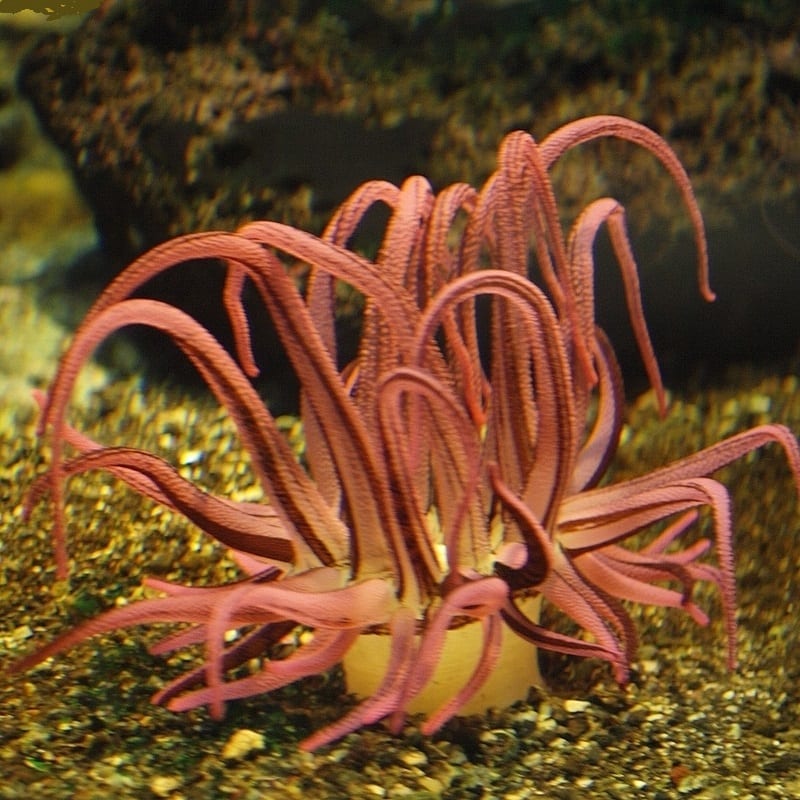
 © Mutsu-sango / CC BY-SA 2.5
Armed Anemone
The armed anemone (スナイソギンチャク) is a large anemone that buries its body in sand and spreads thick, striped tentacles. Fully open, it measures about 15–20 cm across, and tentacles up to 50 cm long have been recorded. Its colors vary enormously from one individual to the next, which is a big part of its appeal. The spots on the tentacles are clusters of stinging cells, and a sting is intensely painful and can sometimes take months to heal. It is rated for experienced keepers, and little is documented about its lifespan. It has no zooxanthellae and feeds on fish and crustaceans, and Reeflex regards it as unsuitable for aquarium keeping. Because it cannot share a tank with fish or other animals, think carefully before taking one on.
View Armed Anemone encyclopedia →0% commission on your first sales!Register by September 30, 2026 and your first 2 sales are commission-free!
Breeder Wanted!
List on BreederDirect and sell directly to customers nationwide!
Br-Choku's 6 Transparency Standards
Our Breeder sellers disclose detailed care specs for all Coral listings. We prioritize Aquacultured/CB specimens, verify WYSIWYG photos, and provide difficulty ratings—avoiding wild-caught.
- Aquacultured
- WYSIWYG Photo
- Difficulty Disclosed
- Frag/Colony
- Care Info Included
- Trade name shown
Browse all 242 breeds
Difficulty
Verified breeders wanted for Coral
Breeders are signing up now ahead of launch. Subscribe to be notified when new listings go live.
Getting alerts is free with a member account. When new listings match your saved search, we'll notify you by email and in-app.
Browse other categories
Verified breeders (preview)
Armed Anemone key facts
- Care level
- Advanced
- Lifespan
- Little data available
- Size
- Crown 15-20 cm across (Kushimoto undersea guide); tentacles up to 50 cm recorded
- Diet
- Carnivore (small fish, crustaceans); no zooxanthellae
- Lighting
- It has no zooxanthellae and gains nothing from light (Reeflex); viewing light is enough.
- Flow & Placement
- It buries its body and attaches to pebbles in the sand, living on sandy bottoms at 10-50 m (Nipponica). Provide sand deep enough to bury it and pebbles to anchor on.
- Water Temperature & Quality
- It ranges from the tropics to temperate Japanese coasts; Reeflex gives a wide 12-28°C. Match the temperature of its origin and keep salinity at 33-35 ppt (SG 1.023-1.025).
- Diet & Feeding
- A carnivore that eats small fish, shrimp and snails (Reeflex). Offer pieces with long tongs by touching them to the tentacles.
- Health & Cautions
- Its venom is strong; stings are very painful and can take months to heal (Wikipedia, Reeflex). Never put bare hands in its tank and keep it away from fish and other animals. Rated unsuitable for aquarium keeping (Reeflex). Tentacles are readily shed at the base when disturbed but regrow quickly (Nipponica).
About Armed Anemone
Armed anemone: a large sand-dwelling anemone with thick striped tentacles, 15–20 cm across. Many color variations and a painful sting; for experienced keepers.
7 things to know before welcoming a Armed Anemone
1Buries Itself in Sand
This anemone buries its body in sand and spreads thick, striped tentacles above it. Provide a sand substrate it can sink into, and avoid packing the tank with rock so that plenty of open sand remains.
2Tentacle Reach and Spacing
Fully open, it measures about 15–20 cm across, and tentacles up to 50 cm long have been recorded. Its venom is strong enough to sting tankmates, so do not house it with fish or other animals; keep it alone in a tank with room for the tentacles to spread fully.
3A Painful Sting
The spots on the tentacles are clusters of stinging cells. A sting is intensely painful and can sometimes take months to heal. Wear gloves when working in the tank rather than touching the animal bare-handed, and consult a doctor if symptoms persist.
4For Experienced Keepers
Its difficulty is rated for experienced keepers. Documentation on its lifespan is scarce, so nothing definite is known, and information on long-term keeping is limited as well. Reeflex regards it as unsuitable for aquarium keeping, so even hobbyists with anemone or coral experience should think carefully before buying one.
5Wide Color Variation
Color variation is very wide, so individuals can look quite different from one another. Study the listing photos carefully, and message the seller about anything you are unsure of.
6Movement and Intakes
Anemones in general may relocate when conditions do not suit them. Fit strainer covers or similar protection so that tentacles cannot be drawn into pump intakes or overflow openings.
7Prepare Before You Buy
Before the animal arrives, get the tank set up, prepare the sand, keep protective gloves on hand, and leave open space for the tentacles to spread. Ask the seller about anything unclear, and plan realistically given that this species is rated for experienced keepers.
Frequently asked questions about Armed Anemone
- Q.Can a beginner keep an armed anemone?
- A.It is rated for experienced keepers. The stinging cells on its tentacles are potent and documentation, including on lifespan, is scarce, so it is safest to gain experience with anemones or corals first. Ask the seller about any concerns.
- Q.What happens if I get stung?
- A.The spots on the tentacles are clusters of stinging cells, and a sting is intensely painful and can sometimes take months to heal. Protect your hands with gloves when working in the tank, and see a doctor if symptoms persist.
- Q.How large does it get?
- A.Fully open, it is about 15–20 cm across, and tentacles up to 50 cm long have been recorded. Keep it on its own, in a tank with enough room for the tentacles to spread fully.
- Q.How long does it live?
- A.There is little documentation, so its lifespan is not clearly known. Information on long-term keeping is also limited, so observe it daily to catch any change in condition.
- Q.Can I keep it with other corals and fish?
- A.No. Its venom is potent, so keep it alone in its own tank rather than with fish or other animals, and never put your bare hands in the tank.
Useful tools for Armed Anemone care
Learn more about Armed Anemone in the encyclopedia
View Armed Anemone encyclopedia entry →
Care difficulty, lifespan, size and diet — all basics covered.
More in this category
Can't find the one you're looking for?
Post your wishes for free and breeders with matching animals will contact you with introductions.