Source: Wikimedia Commons
Armed Anemone
AdvancedDofleinia armata
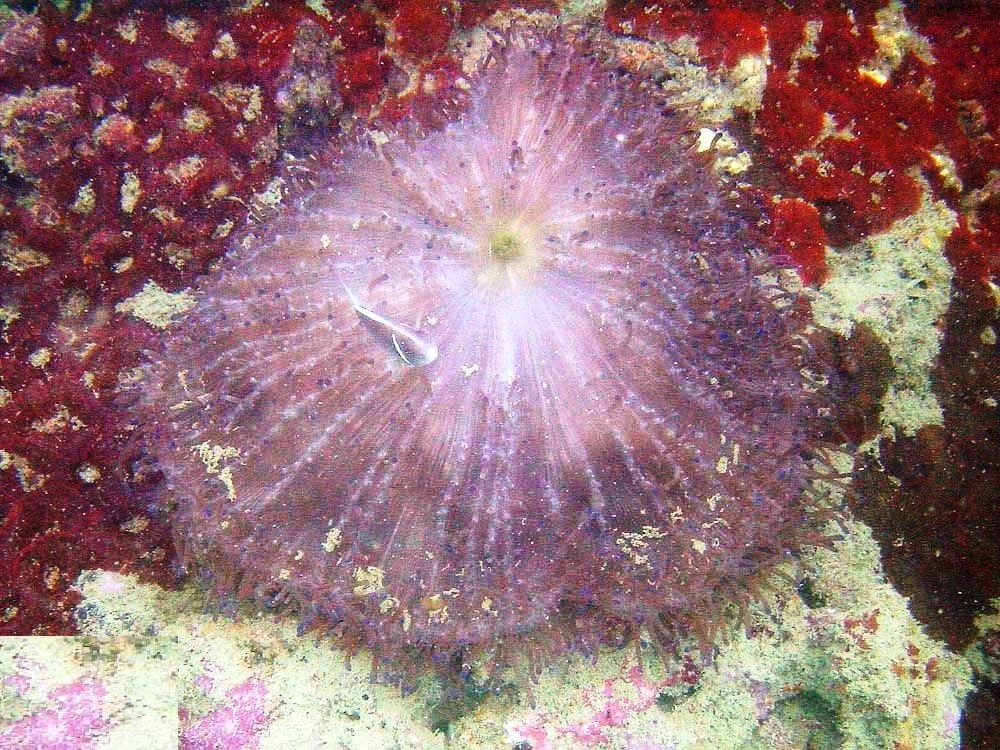
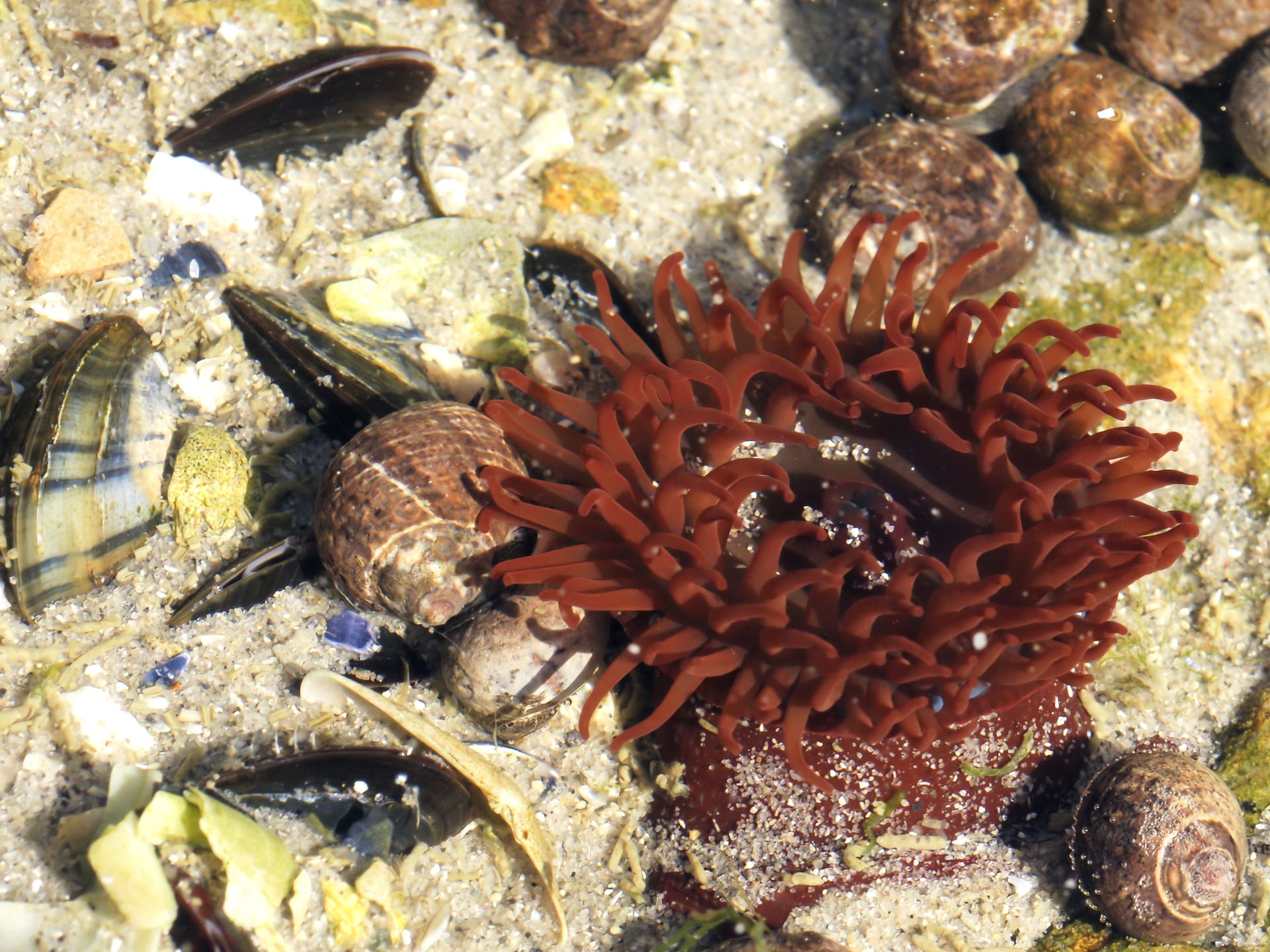
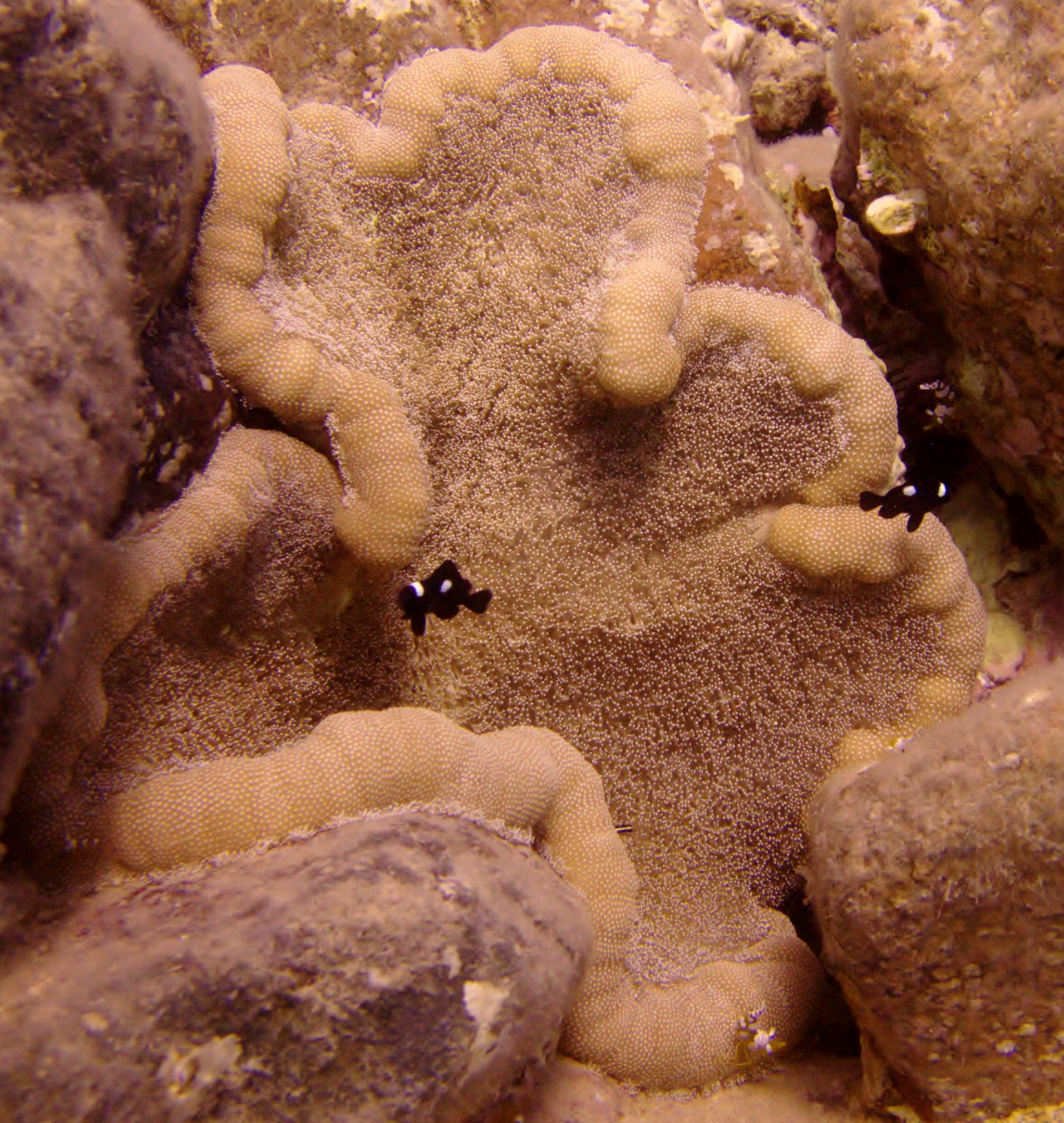
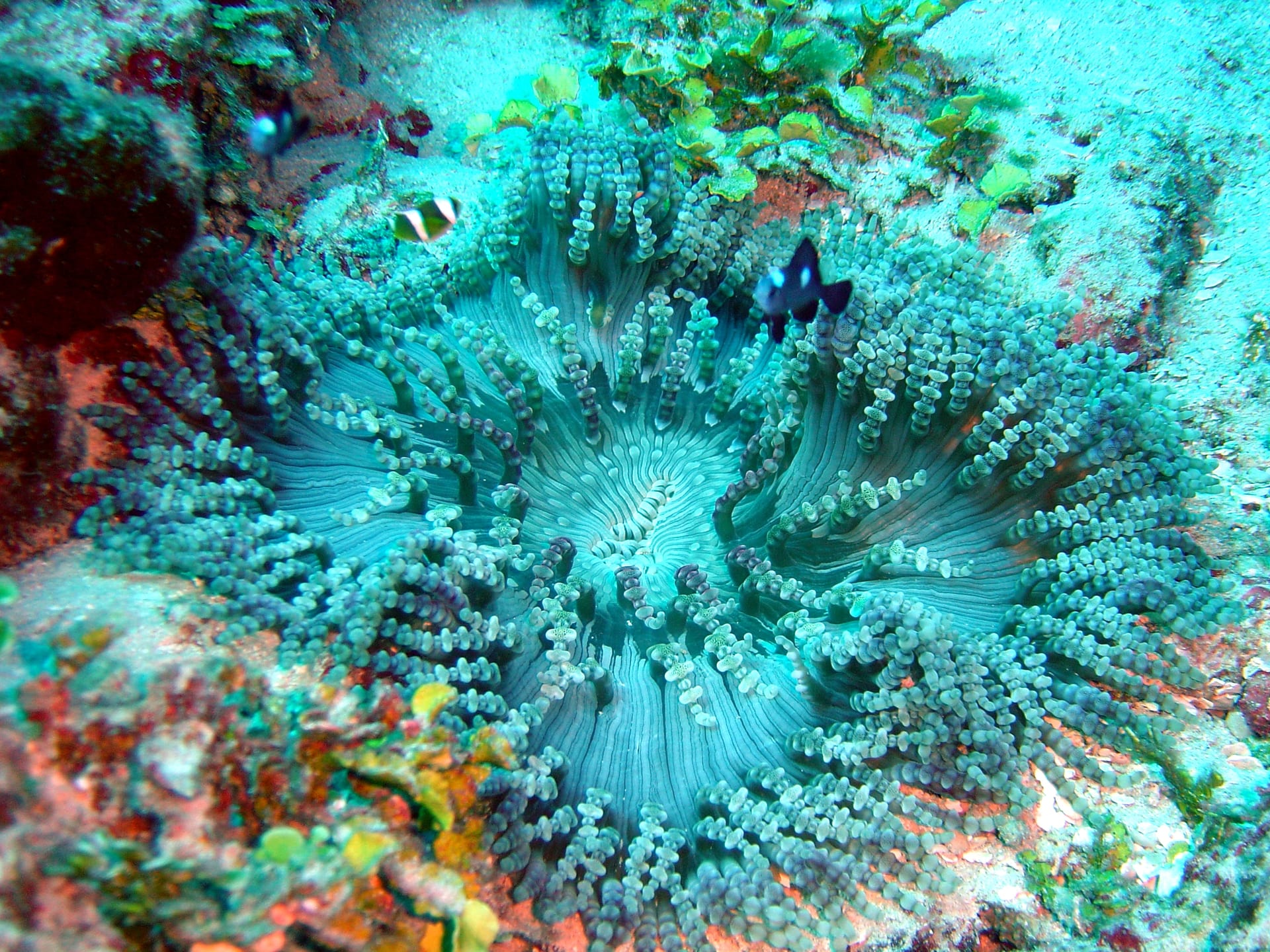
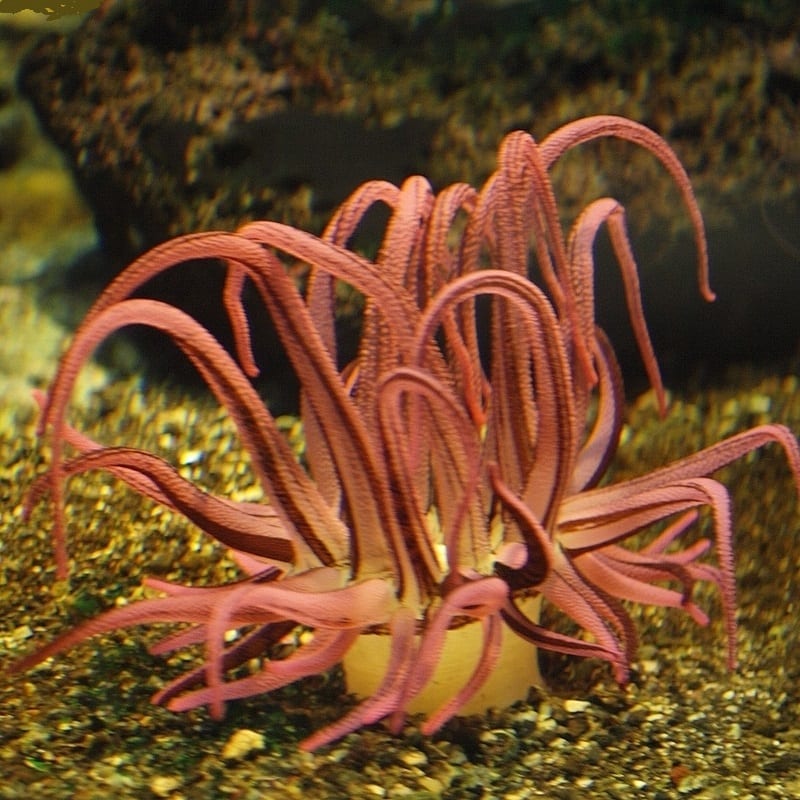
A large anemone that buries its body in sand and spreads thick, striped tentacles. The spots on the tentacles are clusters of stinging cells; its sting is very painful and can take months to heal. Colour varies enormously.
Difficulty
Advanced
Temperature
24〜27℃
Lifespan
Little data available
Size
Crown 15-20 cm across (Kushimoto undersea guide); tentacles up to 50 cm recorded
Diet
Carnivore (small fish, crustaceans); no zooxanthellae
About
Dofleinia armata is a sea anemone of the family Actiniidae and the only species in its genus. It is widespread in the Indo-West Pacific, and in Japan it is found on the Boso Peninsula, at Kushimoto and elsewhere. The body is buried in sand with the foot attached to buried pebbles, and 48 thick tentacles spread over the surface. The crown reaches 15-20 cm across (Kushimoto undersea guide), and in Australia it is said to reach 20 cm across with tentacles up to 50 cm long. The inner tentacles are at least twice as long as the outer ones, striped, and studded with papillae holding very large stinging cells (Wikipedia). These long, powerful nematocysts can inject venom through human skin; stings are very painful and can take months to heal. Colour variation is extraordinary, with pink animals among the most striking. Commensal shrimps sometimes live on it (Coastal Branch of Natural History Museum and Institute, Chiba). It has no zooxanthellae and eats small fish and crustaceans, and Reeflex rates it unsuitable for aquarium keeping. In Japan it reaches specialist shops only occasionally.
Source: Wikipedia (CC BY-SA 4.0)
Size of the Armed Anemone
The Armed Anemone grows to Crown 15-20 cm across (Kushimoto undersea guide); tentacles up to 50 cm recorded.
Basic Info
Origin
Sandy and muddy bottoms of the Indo-West Pacific (in Japan the Boso and Kii peninsulas and elsewhere)
Lifespan
Little data available
Size
Crown 15-20 cm across (Kushimoto undersea guide); tentacles up to 50 cm recorded
Temperature
24〜27℃
Care Specifications
- Specific Gravity
- 1.023–1.025
- Salinity
- 33–35 ppt
Not reef safe
Sources: Shingu City Kumano studies: Kushimoto undersea guide (Dofleinia armata) / Coastal Branch of Natural History Museum and Institute, Chiba (Dofleinia armata) / Reeflex (Dofleinia armata) / Kotobank (Nipponica, Britannica Japan): Dofleinia armata / Wikipedia (Dofleinia armata)
References & Sources
Edited & verified by: BreederDirect editorial team
The taxonomic, regulatory, and husbandry data on this page are compiled and verified against the authoritative primary sources below.
Primary sources
- Wikipedia
- Species+ (CITES search)
- Ministry of the Environment: List of Designated Invasive Alien Species
- e-Gov: Natural Parks Act (Art. 22, marine park zones)
- Shingu City Kumano studies: Kushimoto undersea guide (Dofleinia armata)
- Coastal Branch of Natural History Museum and Institute, Chiba (Dofleinia armata)
- Reeflex (Dofleinia armata)
- Kotobank (Nipponica, Britannica Japan): Dofleinia armata
Taxonomy & Authority
Regulations & Conservation Status
Not CITES-listed
Domestic law: Collecting on the shore or in the sea may fall under fishing rights or prefectural fisheries rules, and taking designated species in marine park zones requires a permit (Natural Parks Act, Art. 22). Check local rules before collecting.
Not listed in the CITES Appendices (checked on Species+). Not designated as an Invasive Alien Species under Japanese law.
Sources: Species+ (CITES search) / Ministry of the Environment: List of Designated Invasive Alien Species / e-Gov: Natural Parks Act (Art. 22, marine park zones)
Regulations may change. Always verify the latest information with the relevant authorities.
Armed Anemone Listings
Loading latest listingsFind listings for this species