Source: Wikimedia Commons
Hemprich's Sea Anemone
AdvancedHeterodactyla hemprichii
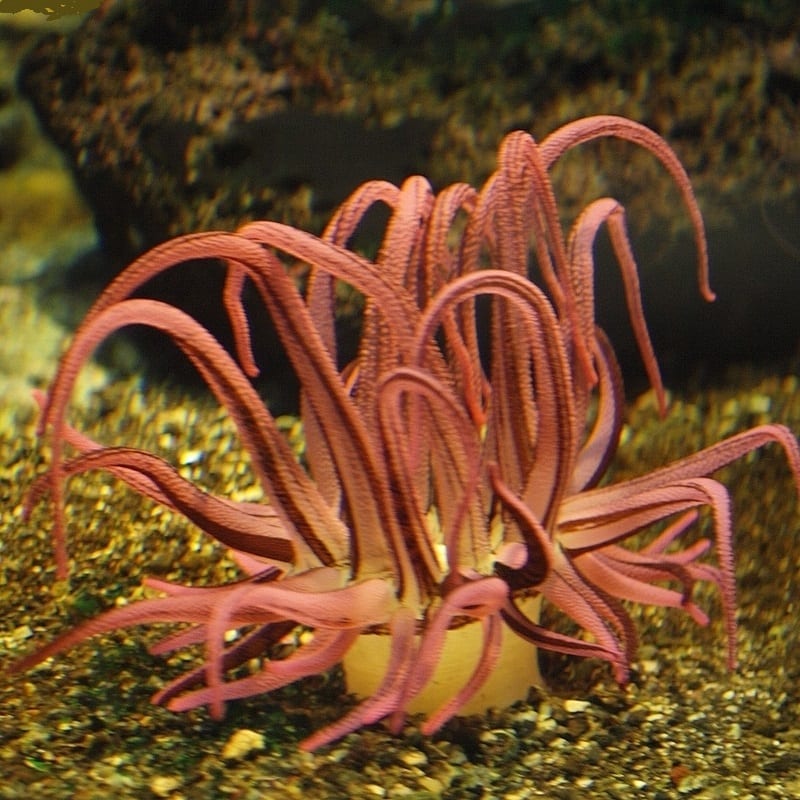
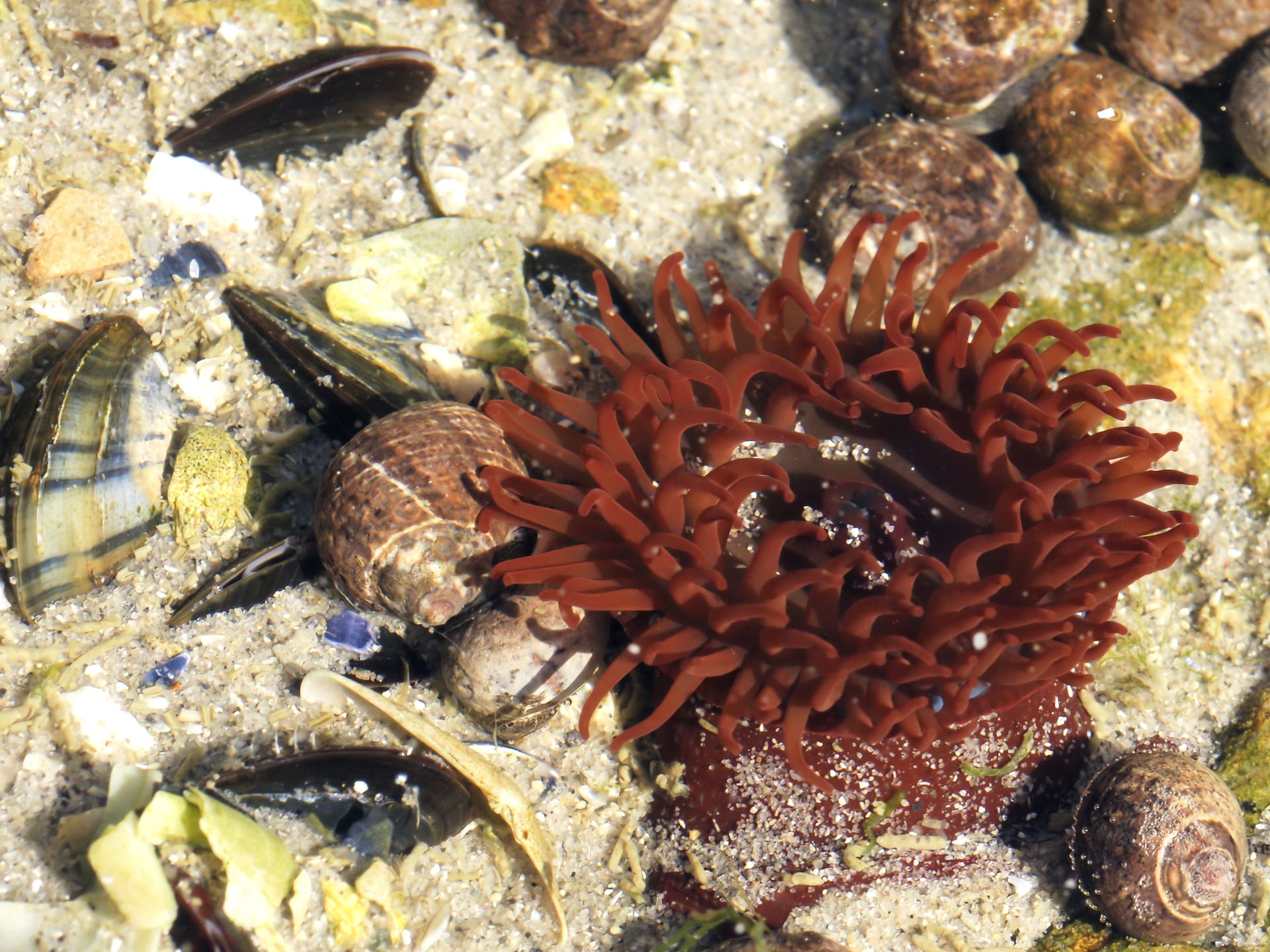
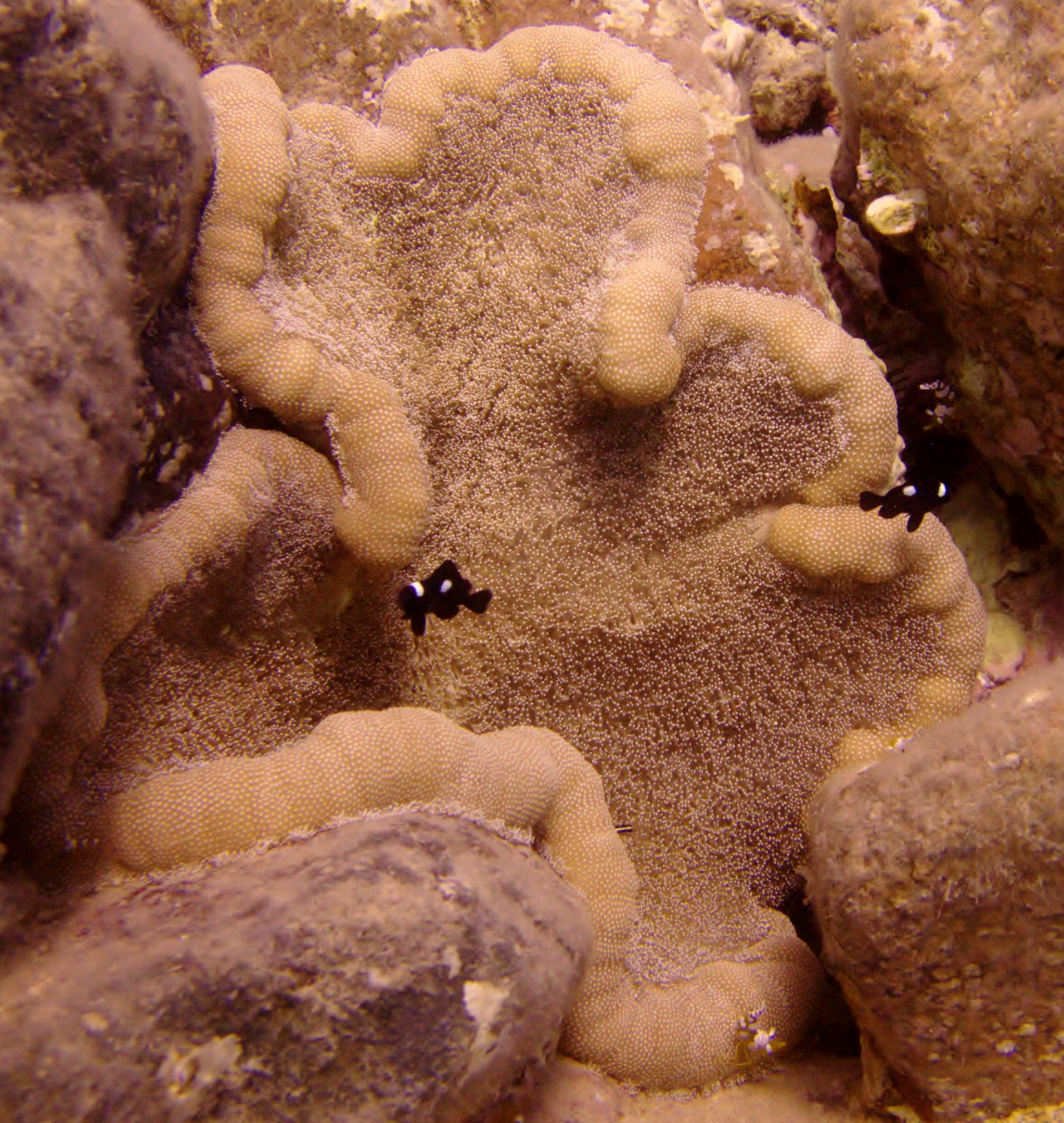
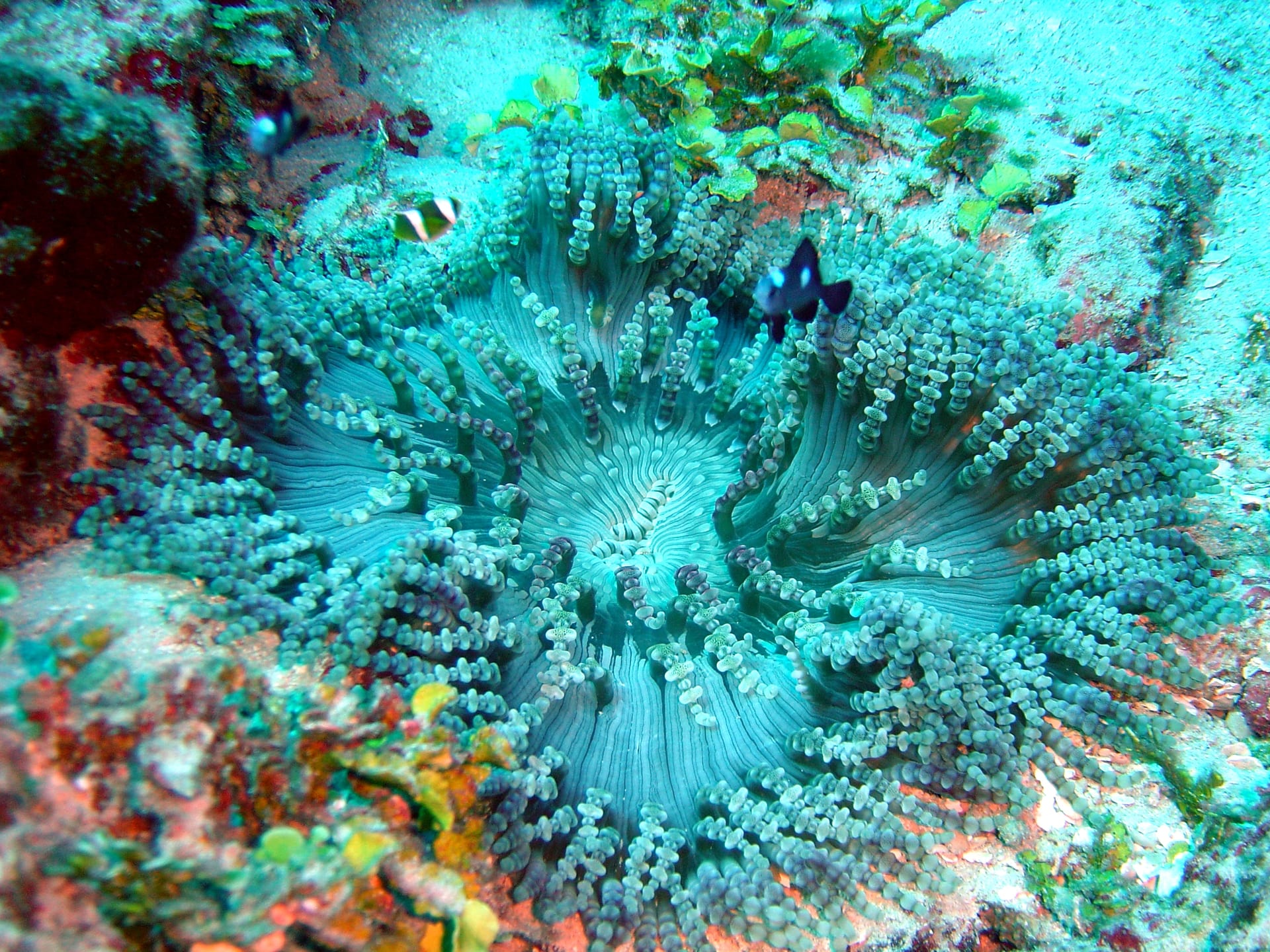
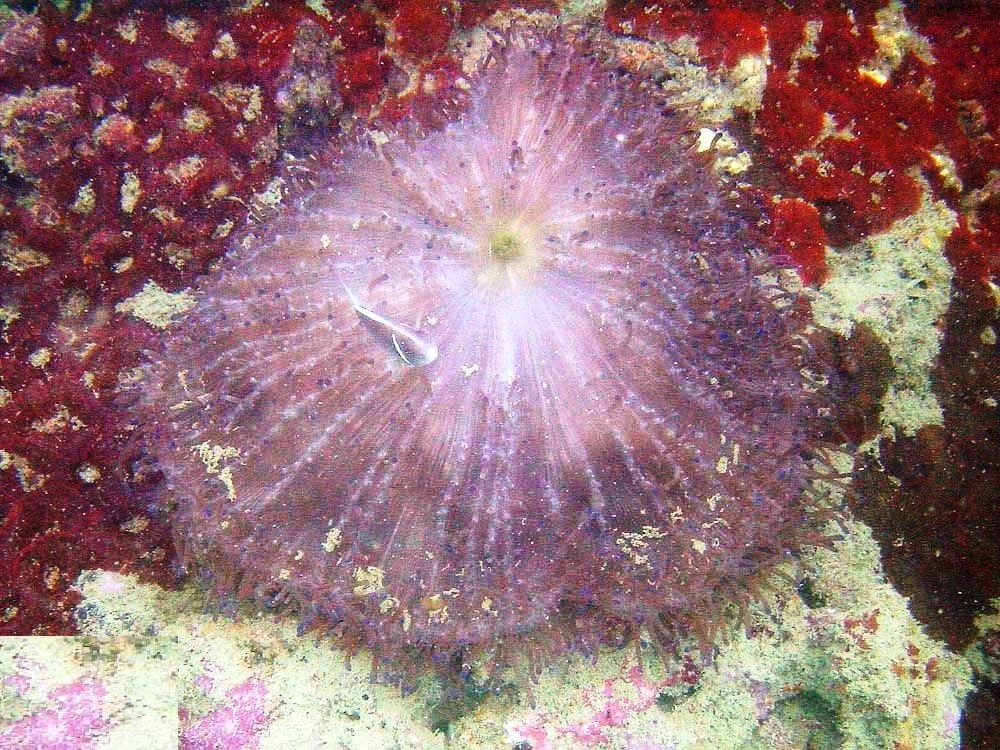
A large anemone whose oral disc is covered in finely branched brown tentacles, with a ring of grape-like sticky tentacles coloured purple and green just inside the margin. Clownfish do not live in it.
Difficulty
Advanced
Temperature
24〜27℃
Lifespan
Little data available
Size
Oral disc 20-30 cm across (Kushimoto Marine Park, Ugui Visitor Center)
Diet
Photosynthesis (zooxanthellae) plus carnivorous feeding
About
Heterodactyla hemprichii is a sea anemone of the family Thalassianthidae. It is widespread on reefs from the Red Sea across the Indian and Pacific Oceans; in Japan it occurs in shallow water to 10 m from the Kii Peninsula to Okinawa, with Kushimoto as its northern limit (Kushimoto Marine Park, Ugui Visitor Center). The disc-shaped oral disc is densely covered with short, tree-like branched brown tentacles, and just inside the margin sits a ring of grape-like tentacles coloured purple and green. These are sticky tentacles with strong adhesive power. The oral disc reaches 20-30 cm across. Clownfish do not live in it, but commensal anemone shrimps may (Wikipedia, Reeflex). Anemones of this family contain sodium-channel toxins lethal to crabs (Wikipedia). The adhesive anemone Cryptodendrum adhaesivum, also on this site, belongs to the same family. Reeflex notes that no successful long-term keeping has yet been reported, so it is for experienced keepers only. In Japan it reaches specialist shops only occasionally.
Source: Wikipedia (CC BY-SA 4.0)
Size of the Hemprich's Sea Anemone
The Hemprich's Sea Anemone grows to Oral disc 20-30 cm across (Kushimoto Marine Park, Ugui Visitor Center).
Temperature & humidity for the Hemprich's Sea Anemone
The ideal temperature for the Hemprich's Sea Anemone is 24〜27℃.
Basic Info
Origin
Reefs from the Red Sea across the Indo-Pacific (in Japan from the Kii Peninsula to Okinawa, to 10 m)
Lifespan
Little data available
Care Specifications
- Water Temp.
- 24–27℃
- Specific Gravity
- 1.023–1.025
- Salinity
- 33–35 ppt
- Min. Tank
- 500 L
Not reef safe
Sources: Kushimoto Marine Park (Heterodactyla hemprichii) / Ugui Visitor Center nature guide (Heterodactyla hemprichii) / Reeflex (Heterodactyla hemprichii) / Wikipedia (Thalassianthidae)
References & Sources
Edited & verified by: BreederDirect editorial team
The taxonomic, regulatory, and husbandry data on this page are compiled and verified against the authoritative primary sources below.
Primary sources
- Wikipedia
- Species+ (CITES search)
- Ministry of the Environment: List of Designated Invasive Alien Species
- e-Gov: Natural Parks Act (Art. 22, marine park zones)
- Kushimoto Marine Park (Heterodactyla hemprichii)
- Ugui Visitor Center nature guide (Heterodactyla hemprichii)
- Reeflex (Heterodactyla hemprichii)
- Wikipedia (Thalassianthidae)
- WoRMS
Taxonomy & Authority
Regulations & Conservation Status
Not CITES-listed
Domestic law: Collecting on the shore or in the sea may fall under fishing rights or prefectural fisheries rules, and taking designated species in marine park zones requires a permit (Natural Parks Act, Art. 22). Check local rules before collecting.
Not listed in the CITES Appendices (checked on Species+). Not designated as an Invasive Alien Species under Japanese law.
Sources: Species+ (CITES search) / Ministry of the Environment: List of Designated Invasive Alien Species / e-Gov: Natural Parks Act (Art. 22, marine park zones)
Regulations may change. Always verify the latest information with the relevant authorities.
Hemprich's Sea Anemone Listings
Loading latest listingsFind listings for this species