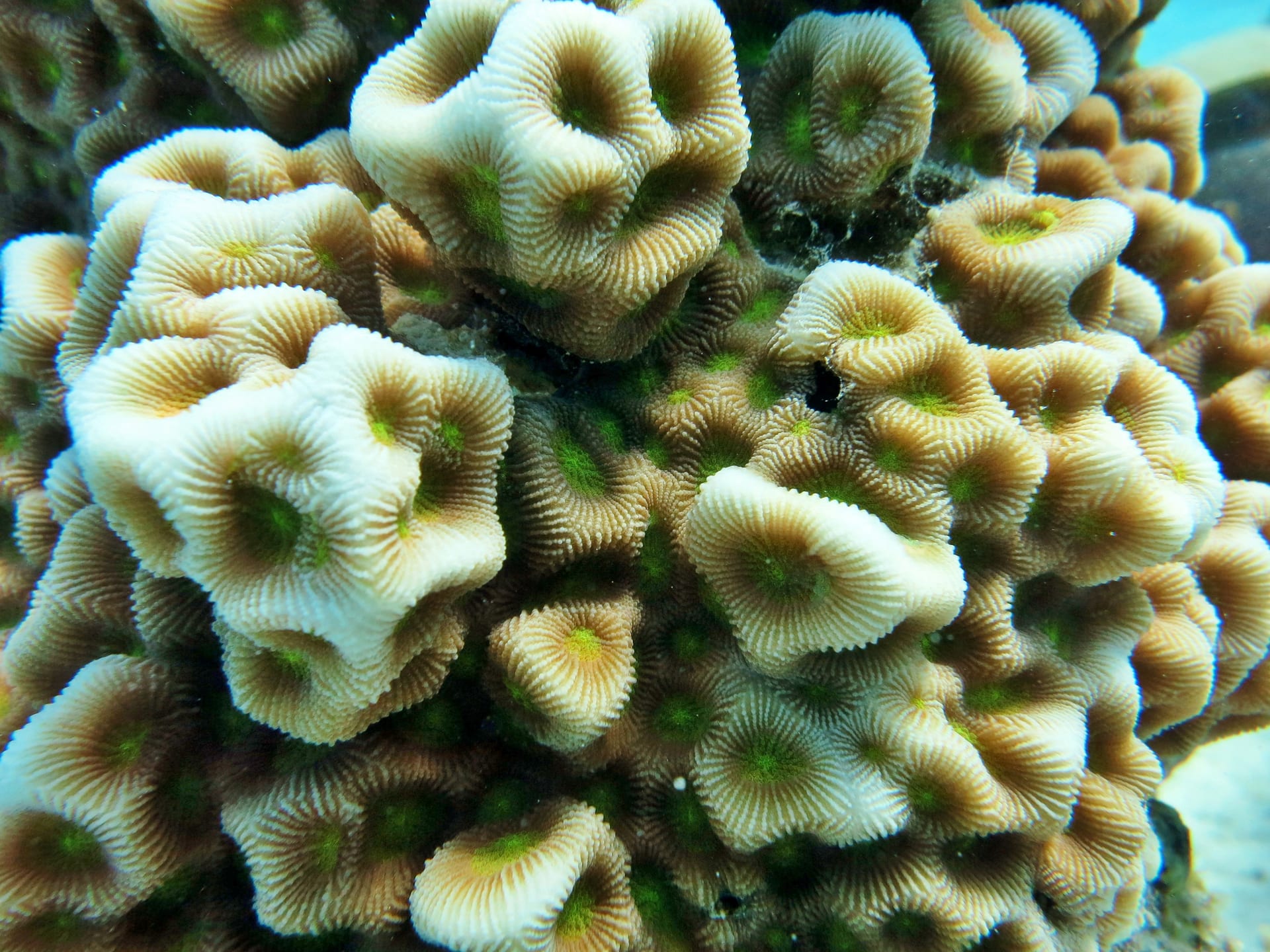
 © Ahmed Abdul Rahman for MDC Seamarc Maldives / CC BY-SA 4.0
Halicora Brain Coral
The Halicora Brain Coral forms rounded, lumpy colonies. Its corallite walls are very thick and the corallites tend to sit slightly apart, and some colonies also show small columnar projections called paliform lobes at the center. The color is usually a uniform pale yellow-brown to green-brown, so its appeal lies in its sculptural texture rather than flashy color. Little is documented about its size, and the care level is intermediate, which suits keepers who can hold tank conditions steady.
View Halicora Brain Coral encyclopedia →0% commission on your first sales!Register by September 30, 2026 and your first 2 sales are commission-free!
Breeder Wanted!
List on BreederDirect and sell directly to customers nationwide!
BreederDirect's 6 Transparency Commitments
Our Breeder sellers disclose detailed care specs for all Coral listings. We prioritize Aquacultured/CB specimens, verify WYSIWYG photos, and provide difficulty ratings—avoiding wild-caught.
- Aquacultured
- WYSIWYG Photo
- Difficulty Disclosed
- Frag/Colony
- Care Info Included
- Trade name shown
Browse all 241 breeds
Difficulty
Verified breeders wanted for Coral
Breeders are signing up now ahead of launch. Subscribe to be notified when new listings go live.
Getting alerts is free with a member account. When new listings match your saved search, we'll notify you by email and in-app.
Browse other categories
Verified breeders (preview)
Halicora Brain Coral key facts
- Care level
- Intermediate
- Lifespan
- Little data available
- Size
- Up to about 25 cm (Reeflex)
- Temperature
- 24〜27℃
- Diet
- Photosynthesis (zooxanthellae) plus plankton
- Lighting
- It hosts zooxanthellae (Reeflex). A shallow-reef species: give moderate or brighter light and adjust by watching its colour.
- Flow & Placement
- Favites prefer moderate to high flow (AlgaeBarn). Place it on a stable spot on the rockwork.
- Water Temperature & Quality
- 24-27°C, salinity 33-35 ppt (SG 1.023-1.025). Keep calcium and alkalinity stable for skeleton growth.
- Diet & Feeding
- Besides photosynthesis it takes plankton (Reeflex); offer fine food when the tentacles are out.
- Health & Cautions
- Moderately easy (Reeflex). Names get mixed among similar Favites, so check wall thickness and corallite shape.
About Halicora Brain Coral
Halicora Brain Coral: rounded, lumpy colonies with thick corallite walls in pale yellow-brown to green-brown. Intermediate care level.
7 things to know before welcoming a Halicora Brain Coral
1Thick Corallite Walls
The corallite walls are very thick, and the corallites tend to sit a little apart, which gives the colony its distinctive look. Some colonies also show small columnar projections, called paliform lobes, at the center. Up close, you can enjoy the textured surface of the rounded colony.
2Understated Coloring
Colors run from pale yellow-brown to green-brown, and a single uniform tone is common. Its charm is a natural, calm look rather than dramatic color changes. It can also serve as a quiet backdrop that sets off more colorful corals.
3Intermediate Care Level
The care level is intermediate. It calls for steady water quality, lighting and flow, and for noticing changes early. Having some coral-keeping experience first will help you care for it with confidence.
4Plan for Growth
Adult size is poorly documented, so no clear figure can be given. Because it grows as a rounded mass, leave some open space around it with its future size in mind. It also helps to plan your tank size and layout ahead of time.
5Placement and Flow
Favites corals prefer moderate to fairly strong flow, so place it on a stable spot on the rock where the water moves well. Introduce lighting gradually while watching how the colony responds, which is gentler on it. Suitable conditions vary between individuals, so observe its condition and adjust as needed.
6Spacing from Neighbors
Corals can affect one another through tentacles, mucus and other means, so it is safer to leave a gap between this colony and its neighbors. Its skeleton is sturdy, so take care not to hurt your hands or nearby corals when rearranging the tank.
7Checking on Arrival
When it arrives, check whether the tissue is peeling away from the skeleton and whether the color has faded sharply. Acclimate it carefully, and watch for changes often until it settles in. It also helps to ask the seller about anything that concerns you before you buy.
Frequently asked questions about Halicora Brain Coral
- Q.Can a beginner keep this coral?
- A.Its care level is intermediate. It is easier to keep in good condition once you are comfortable managing water quality, lighting and flow in a reef tank.
- Q.How large does it grow?
- A.Its size is poorly documented, so no clear figure can be given. Growth depends on the environment and the individual, so it is wise to reserve a roomy spot for it.
- Q.Can it be kept with other corals?
- A.Keeping corals together in one tank is common, but corals can affect each other through their tentacles and other means. Leave some space between this colony and its neighbors.
- Q.How long does it live?
- A.There is little documentation on its lifespan, so no clear figure is known. To enjoy it for as long as possible, keep water quality and conditions stable and watch for daily changes.
- Q.Is it listed under CITES?
- A.Yes, it is listed in CITES Appendix II. If you want more detail, please check the official CITES information for the latest content.
Useful tools for Halicora Brain Coral care
Learn more about Halicora Brain Coral in the encyclopedia
View Halicora Brain Coral encyclopedia entry →
Care difficulty, lifespan, size and diet — all basics covered.
More in this category
Can't find the one you're looking for?
Post your wishes for free and breeders with matching animals will contact you with introductions.