Giant Carnation Coral
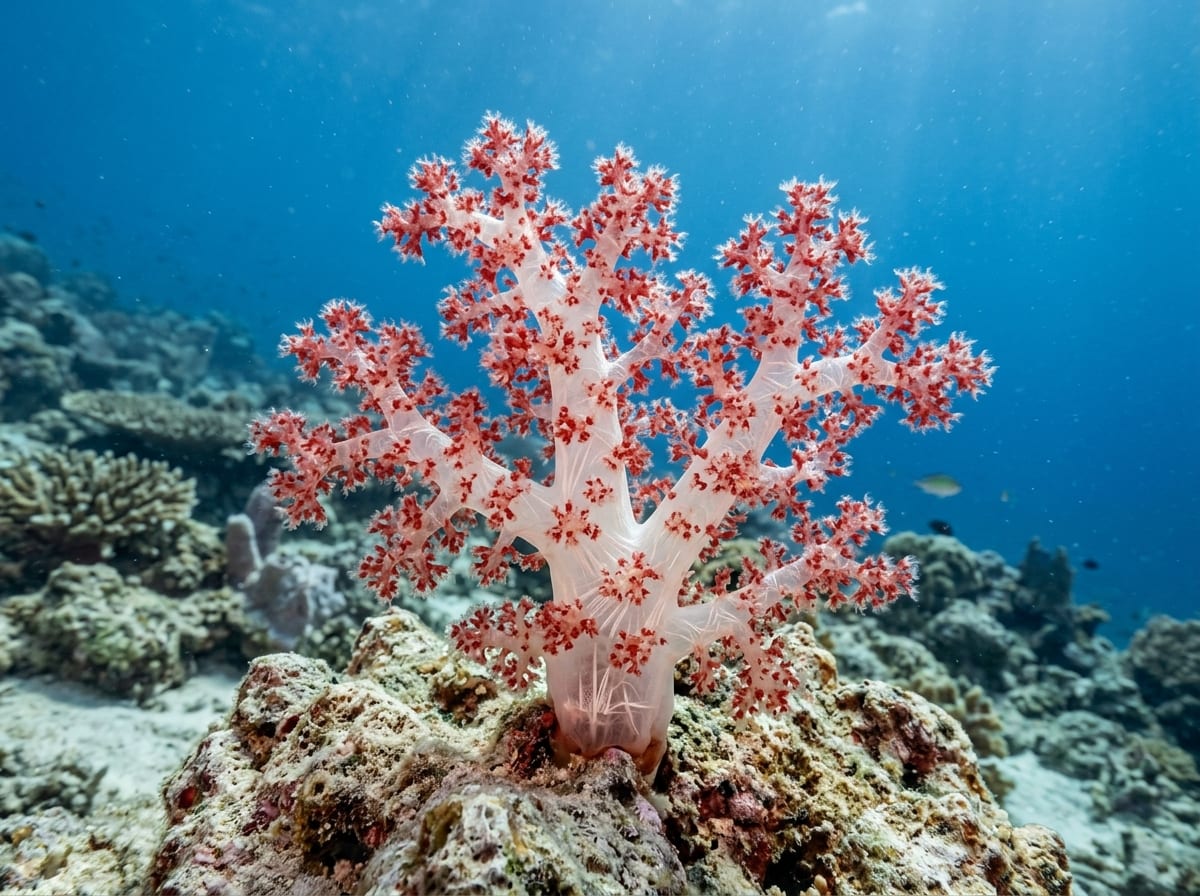
The Giant Carnation Coral is the carnation coral most commonly seen in the warm seas of Japan. Red skeletal elements wrap around the polyps and are held up by bundles of white ones, which gives it a striking red-and-white look. It has no zooxanthellae, so lighting alone will not sustain it, and it needs a steady supply of fine foods such as plankton. That makes it a soft coral for experienced keepers, best brought home only once your feeding routine and water quality management are firmly in place. Its care differs sharply from that of light-dependent corals, which is part of what makes it such a distinctive challenge.
View Giant Carnation Coral encyclopedia →Breeder Wanted!
List on BreederDirect and sell directly to customers nationwide!
BreederDirect's 6 Transparency Commitments
Our Breeder sellers disclose detailed care specs for all Coral listings. We prioritize Aquacultured/CB specimens, verify WYSIWYG photos, and provide difficulty ratings—avoiding wild-caught.
- Aquacultured
- WYSIWYG Photo
- Difficulty Disclosed
- Frag/Colony
- Care Info Included
- Trade name shown
Browse all 241 breeds
Difficulty
Verified breeders wanted for Coral
Breeders are signing up now ahead of launch. Subscribe to be notified when new listings go live.
Getting alerts is free with a member account. When new listings match your saved search, we'll notify you by email and in-app.
Browse other categories
Verified breeders (preview)
Giant Carnation Coral key facts
- Care level
- Advanced
- Size
- Dendronephthya colonies are about 20 cm tall
- Diet
- Feeding only (fine foods such as phytoplankton); no zooxanthellae
- Lighting
- It has no zooxanthellae and does not photosynthesise. Strong light is unnecessary; subdued light also limits algae on the colony.
- Flow & Placement
- It grows on rocky reefs facing the open sea. Give flow that sways the whole colony so food reaches the polyps, and attach it to an overhang or rock.
- Water Temperature & Quality
- It is common even in temperate waters such as the Izu Peninsula, so its needs differ from tropical reef tanks. There is little guidance on temperature figures; keep it near the temperature of its origin and avoid heat. Salinity 33-35 ppt (SG 1.023-1.025).
- Diet & Feeding
- Dendronephthya need an almost constant supply of fine foods such as phytoplankton. Give liquid and fine particulate foods in small, frequent doses; consider automatic feeding.
- Health & Cautions
- Dendronephthya are notoriously difficult to keep. Heavy feeding fouls water, so provide strong filtration and water changes; best for advanced keepers with a dedicated tank.
About Giant Carnation Coral
Giant Carnation Coral is the carnation coral most often seen in Japan's warm seas. With no zooxanthellae, it needs constant fine feeding, making it an advanced-level soft coral. Learn what to know before bringing one home.
7 things to know before welcoming a Giant Carnation Coral
1Red and white skeletal elements
Red skeletal elements (sclerites) surround the polyps, and white bundles of sclerites support them, which defines the look of the Giant Carnation Coral. It is the carnation coral most commonly seen in Japan's warm seas, so it is a useful reference for how this group typically looks.
2It does not grow on light
Because it has no zooxanthellae, the Giant Carnation Coral cannot draw nutrition from light, however strong the lighting. Treat lights as being for viewing and for any light-dependent corals sharing the tank, and plan to supply its nutrition through food. The usual reef-keeping instinct that more light means better growth does not apply here.
3Feeding is the core of care
It needs fine food supplied continuously, so feeding sits at the center of its care. Work out in advance how you can sustain plankton-type fine foods within your daily routine. Gaps in feeding make it harder to keep the coral in good condition, so plan for times when you are away as well.
4Why it is for advanced keepers
It is considered an advanced-level soft coral, and its care is built differently from that of light-driven species. Before bringing one home, set up your feeding system and a stable tank, and build experience with other corals first to make things easier.
5Flow and food delivery
Fine food is carried to the whole colony by the water, so the direction and strength of flow matter. Aim for a current that keeps food from settling without being too strong, and fine-tune it as you watch how the coral responds.
6Water quality and daily checks
Feeding constantly tends to load the water with waste. Check your feeding amounts together with water quality, and look daily at how open the polyps are and how firm the body looks. If the coral seems off, the first step is to review your feeding method and water quality.
7Size and lifespan
Both size and lifespan are poorly documented, so no clear figure can be given. Individuals vary, so choose its spot in the tank with room to spare.
Frequently asked questions about Giant Carnation Coral
- Q.Can a beginner keep it?
- A.It is regarded as an advanced-level coral, so it is hard to recommend as a first coral. It is easier to approach after you have gained experience with water quality and feeding using light-driven species and have your feeding setup ready.
- Q.Will strong lighting help it grow?
- A.No. The Giant Carnation Coral has no zooxanthellae, so stronger light gives it no nutrition, and it must be fed fine foods continuously. Think of lighting as being for viewing and for other corals in the tank.
- Q.What should I feed it?
- A.It needs fine foods such as plankton, supplied continuously. Amounts and frequency depend on your tank, so start small and adjust as you observe. Overfeeding can degrade water quality, so check your water alongside feeding.
- Q.How large does it get?
- A.Its size is poorly documented, so no clear guideline can be given. Individuals vary as well, so leave some extra room where you place it.
- Q.How long does it live?
- A.Lifespan is poorly documented, and no clear figure is known. Rather than counting on a set number of years, keep observing its condition day by day and aim to care for it over the long term.
Useful tools for Giant Carnation Coral care
Learn more about Giant Carnation Coral in the encyclopedia
View Giant Carnation Coral encyclopedia entry →
Care difficulty, lifespan, size and diet — all basics covered.
More in this category
Can't find the one you're looking for?
Post your wishes for free and breeders with matching animals will contact you with introductions.