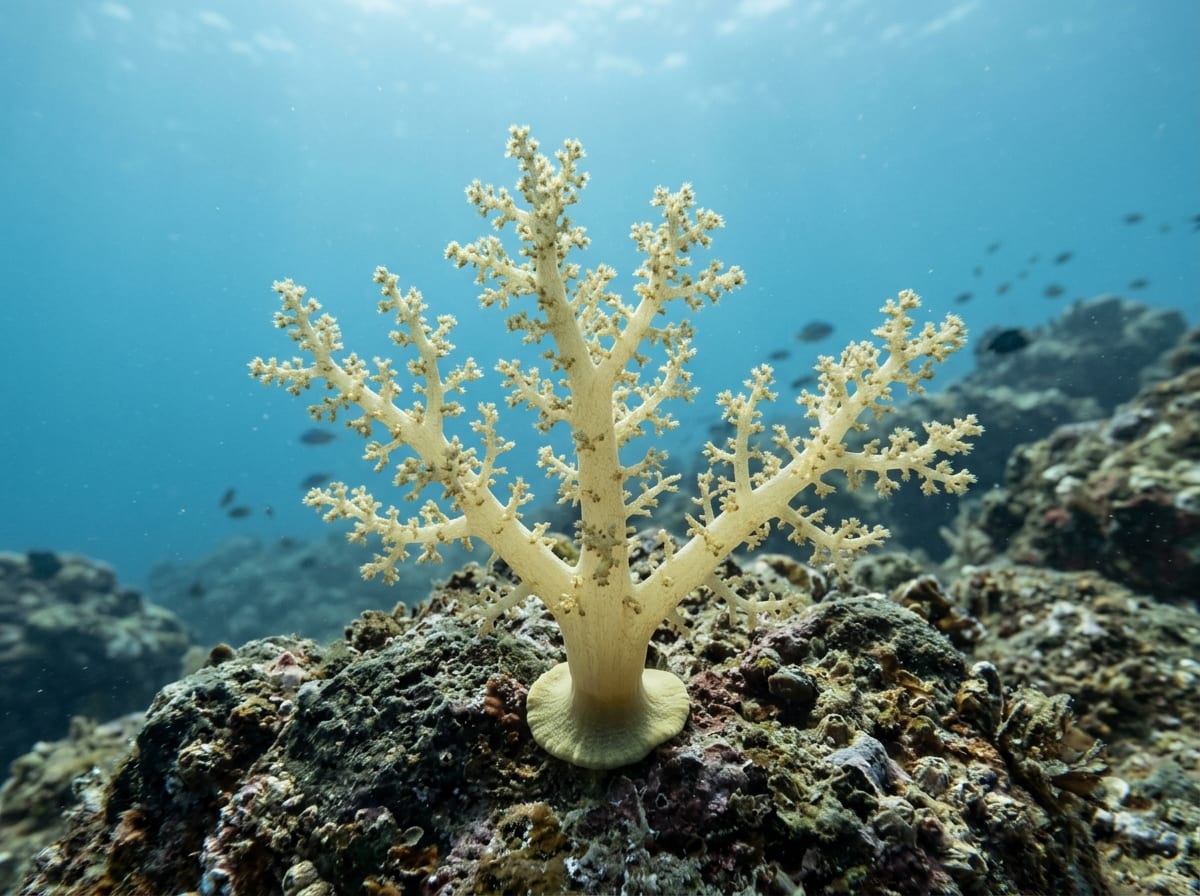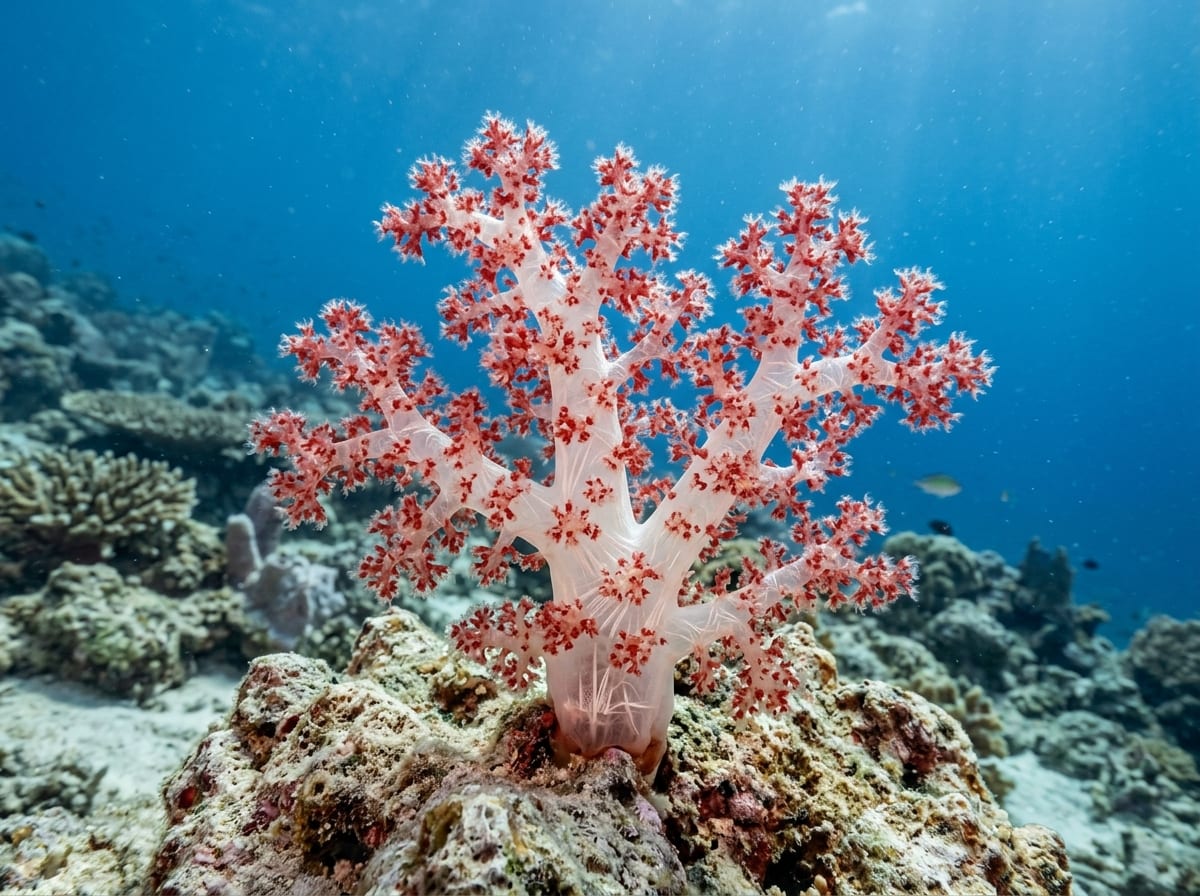
AI-generated image
Giant Carnation Coral
AdvancedDendronephthya gigantea
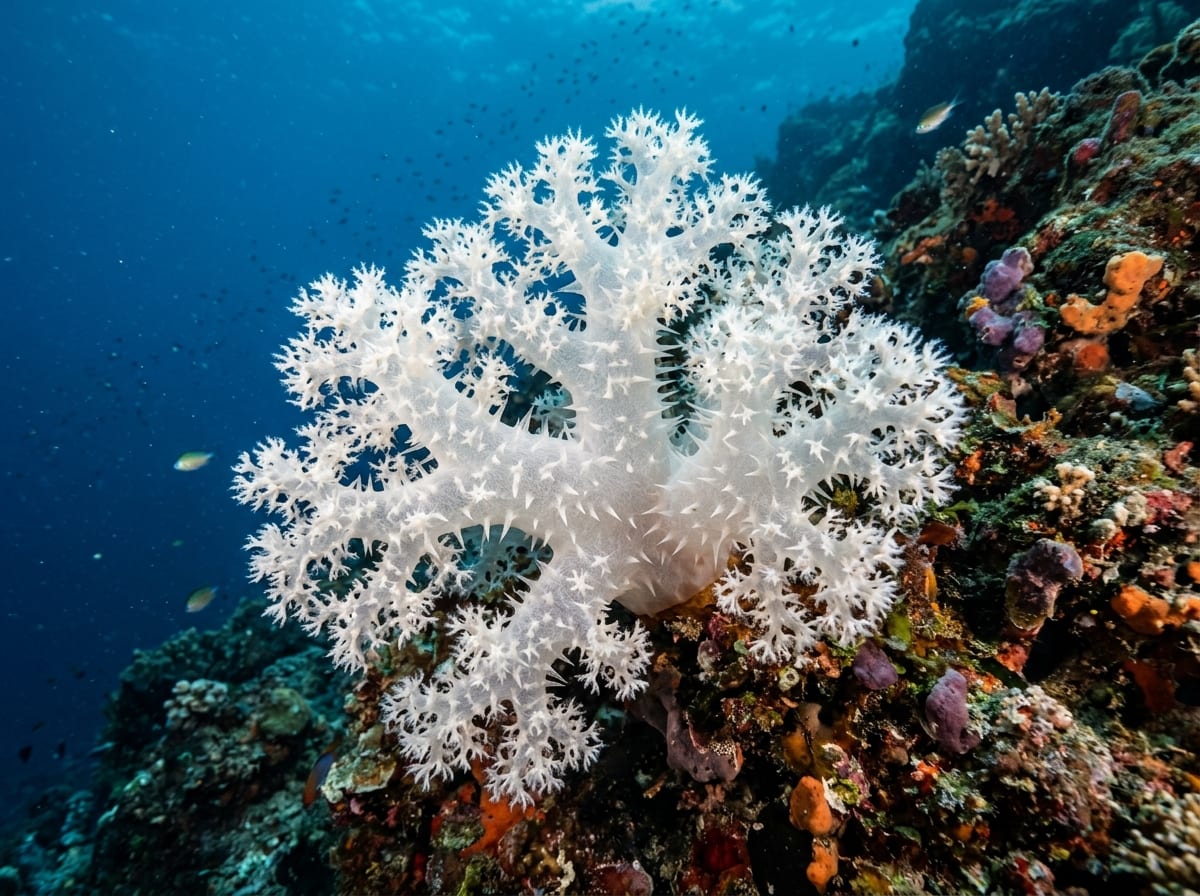
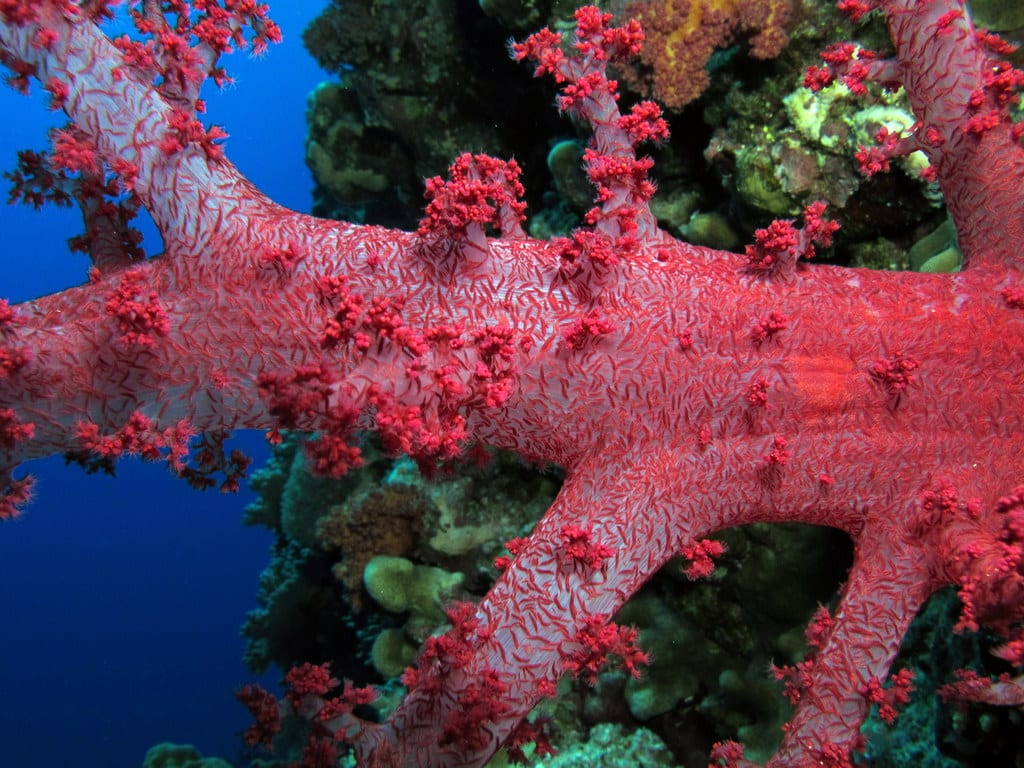
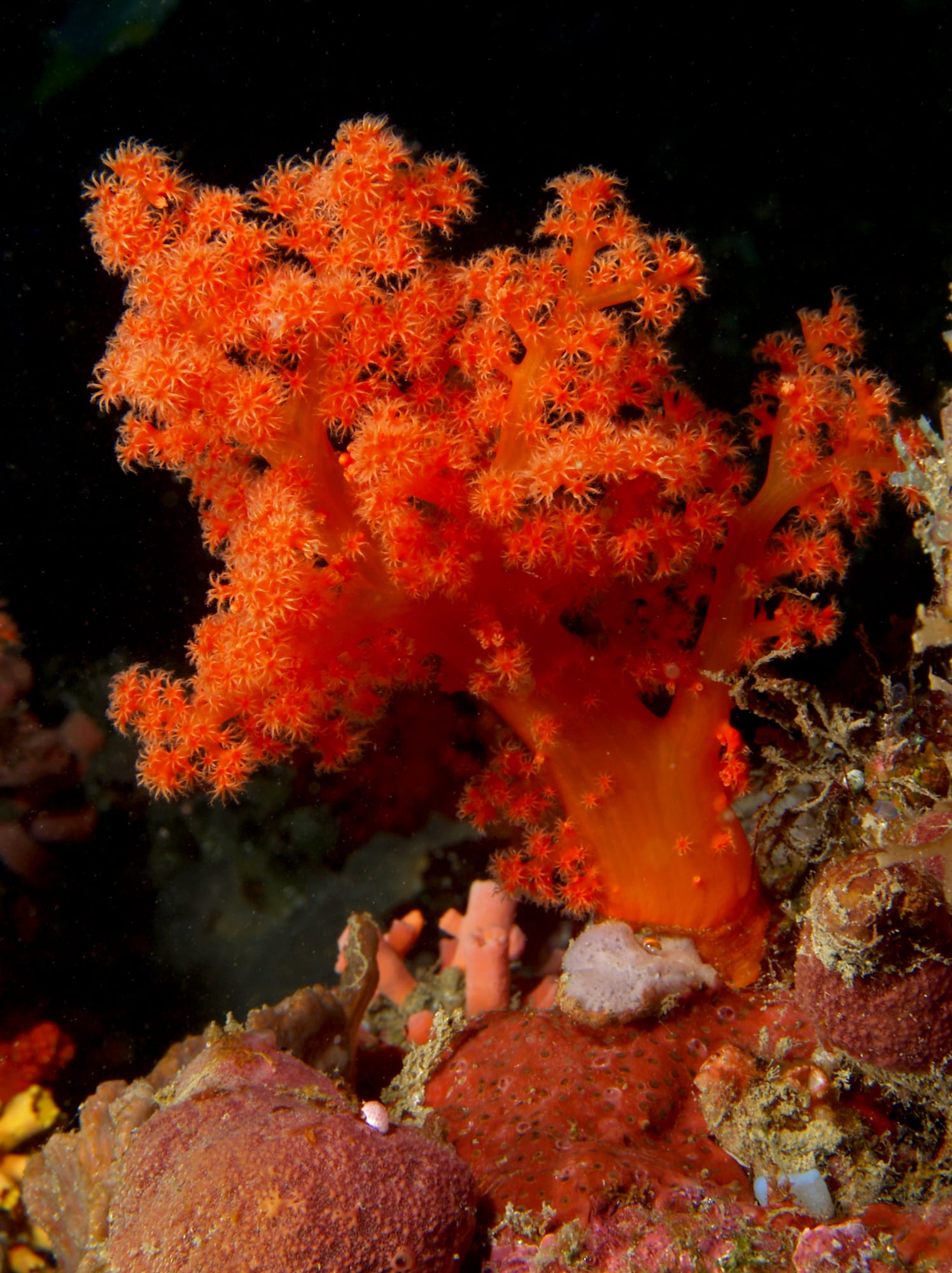
The commonest Dendronephthya in warm Japanese seas, with red sclerites around the polyp heads and white supporting bundles. It has no zooxanthellae, cannot live on light and needs a constant supply of fine food.
Difficulty
Advanced
Temperature
24〜27℃
Size
Dendronephthya colonies are about 20 cm tall
Diet
Feeding only (fine foods such as phytoplankton); no zooxanthellae
About
Dendronephthya gigantea is a soft coral of the family Nephtheidae. Dendronephthya are abundant in warm seas from the western Pacific to the Indian Ocean; 30-40 species are known from Japan, living on rocky reefs facing the open sea down to about 50 m. Colonies have a short, thick stalk with several swollen main stems carrying short finger-like branches, and polyps cluster at the branch tips. Each polyp is surrounded by supporting sclerites, and large ones protrude so the colony feels rough. This species has red sclerites on the polyp heads and white supporting bundles and is the commonest Dendronephthya in warm Japanese waters. It is seen year-round on the Izu Peninsula. Dendronephthya have no zooxanthellae and in aquaria need an almost constant supply of fine foods such as phytoplankton, which makes them notoriously difficult to keep. This site also has an entry for the genus as a whole. In Japan, locally collected specimens reach specialist shops.
Source: Wikipedia (CC BY-SA 4.0)
Size of the Giant Carnation Coral
The Giant Carnation Coral grows to Dendronephthya colonies are about 20 cm tall.
Basic Info
Origin
Rocky reefs of warm Japanese seas (Izu Peninsula, Kyushu and elsewhere) and southern Korea
Size
Dendronephthya colonies are about 20 cm tall
Temperature
24〜27℃
Diet
Feeding only (fine foods such as phytoplankton); no zooxanthellae
Care Specifications
- Specific Gravity
- 1.023–1.025
- Salinity
- 33–35 ppt
Soft coralLight: Low (PAR 30-50)
Sources: Kotobank (Nipponica, Heibonsha World Encyclopedia): Dendronephthya / Wikipedia (Dendronephthya) / Izuzuki marine life guide (Dendronephthya gigantea, Izu observations)
References & Sources
Edited & verified by: BreederDirect editorial team
The taxonomic, regulatory, and husbandry data on this page are compiled and verified against the authoritative primary sources below.
Primary sources
- Wikipedia
- Species+ (CITES search)
- Ministry of the Environment: List of Designated Invasive Alien Species
- Okinawa Prefecture: Collection of reef-building corals is prohibited
- e-Gov: Natural Parks Act (Art. 22, marine park zones)
- Kotobank (Nipponica, Heibonsha World Encyclopedia): Dendronephthya
- Izuzuki marine life guide (Dendronephthya gigantea, Izu observations)
- WoRMS
- GBIF
Taxonomy & Authority
Regulations & Conservation Status
Not CITES-listed
Domestic law: Soft corals of this group are not included in the 'reef-building corals' whose collection Okinawa prohibits (stony corals, blue coral, sea fans and others). Collecting in the sea may still fall under fishing rights or prefectural fisheries rules, and taking designated species in marine park zones requires a permit (Natural Parks Act, Art. 22).
Not listed in the CITES Appendices (checked on Species+). Not designated as an Invasive Alien Species under Japanese law.
Sources: Species+ (CITES search) / Ministry of the Environment: List of Designated Invasive Alien Species / Okinawa Prefecture: Collection of reef-building corals is prohibited / e-Gov: Natural Parks Act (Art. 22, marine park zones)
Regulations may change. Always verify the latest information with the relevant authorities.
Giant Carnation Coral Listings
Loading latest listingsFind listings for this species