Source: Wikimedia Commons
Dendronephthya (Carnation Coral)
AdvancedDendronephthya spp.
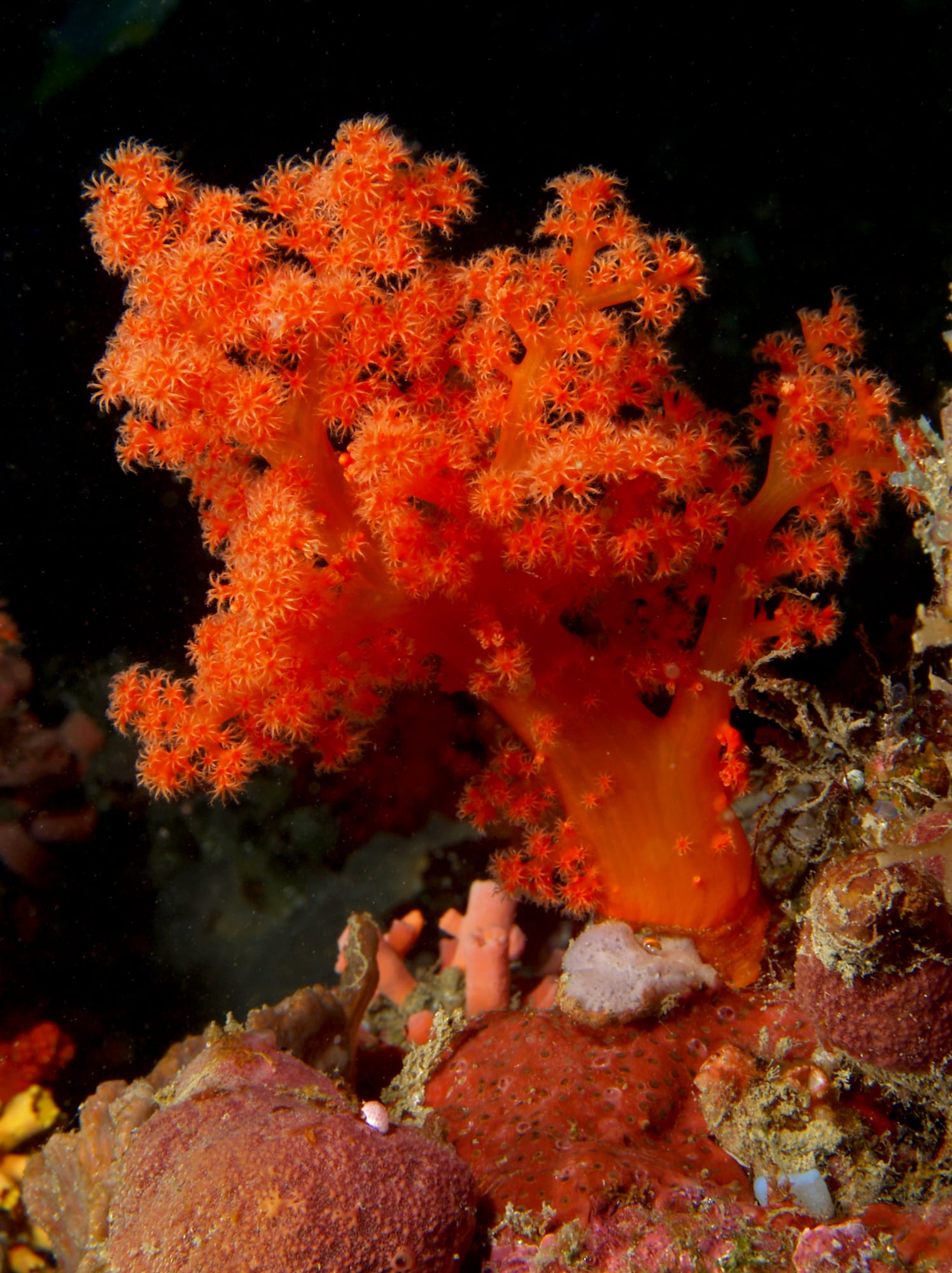
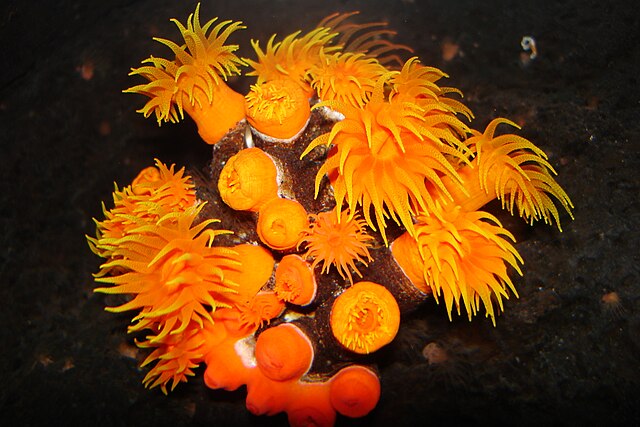
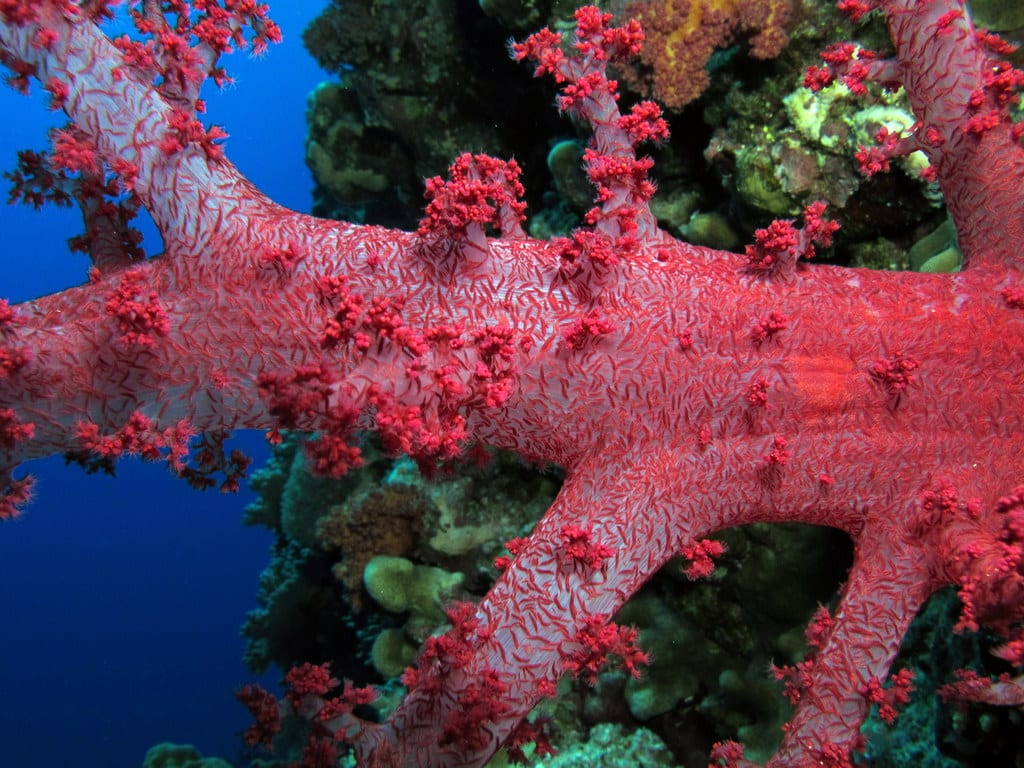
A non-photosynthetic soft coral in vivid red, pink or orange. Sclerites show through the tissue and give the branches a spiky look. It has no zooxanthellae and needs a near constant supply of fine foods such as phytoplankton.
Difficulty
Advanced
Temperature
24〜26℃
Diet
Azooxanthellate and filter-feeding, needing a near constant supply of fine foods, phytoplankton above all.
About
Dendronephthya is a genus of octocoral soft corals in the family Nephtheidae, order Malacalcyonacea, with more than 250 described species. Colonies are vivid red, pink or orange, and the sclerites visible through the tissue give the branches a spiky appearance. The genus is non-photosynthetic, hosting no zooxanthellae, so its nutrition depends entirely on suspended matter captured from the water. It attaches on current-swept reef slopes and under overhangs and inflates or deflates the colony by taking in water. It is sometimes offered for aquariums but is notoriously difficult to keep, requiring a near constant supply of small foods such as phytoplankton. Where feeding is inadequate the colony shrinks over weeks to months and the branches waste away. As a soft coral with no stony skeleton it is not covered by the CITES coral listings.
Source: Wikipedia (CC BY-SA 4.0)
Temperature & humidity for the Dendronephthya (Carnation Coral)
The ideal temperature for the Dendronephthya (Carnation Coral) is 24〜26℃.
Basic Info
Origin
Indo-West Pacific including the Red Sea, attached on current-swept reef slopes and under overhangs.
Temperature
24〜26℃
Diet
Azooxanthellate and filter-feeding, needing a near constant supply of fine foods, phytoplankton above all.
Care Guide
Lighting
Care Specifications
- Carbonate (KH)
- 8–12 dKH
- Water Temp.
- 24–26℃
- Specific Gravity
- 1.023–1.025
- Salinity
- 33–35 ppt
Soft coralLight: Low (PAR 30-50)Flow: HighPlacement: Middle
Sources: AlgaeBarn: Feeding Your NPS Aquarium / LiveAquaria (Tree Coral, Assorted/チヂミトサカ科の飼育値) / WoRMS (World Register of Marine Species)
References & Sources
Edited & verified by: BreederDirect editorial team
The taxonomic, regulatory, and husbandry data on this page are compiled and verified against the authoritative primary sources below.
Taxonomy & Authority
Accepted name: Dendronephthya spp. Kükenthal, 1905
Authority databases: WoRMS
Nomenclature follows global taxonomic authority databases.
Regulations & Conservation Status
Not CITES-listed
Sources: CITES Appendices (taxon not listed)
Regulations may change. Always verify the latest information with the relevant authorities.
Dendronephthya (Carnation Coral) Listings
Loading latest listingsFind listings for this species