Source: Wikimedia Commons
Orange Ball Anemone (Pseudocorynactis)
IntermediatePseudocorynactis spp.
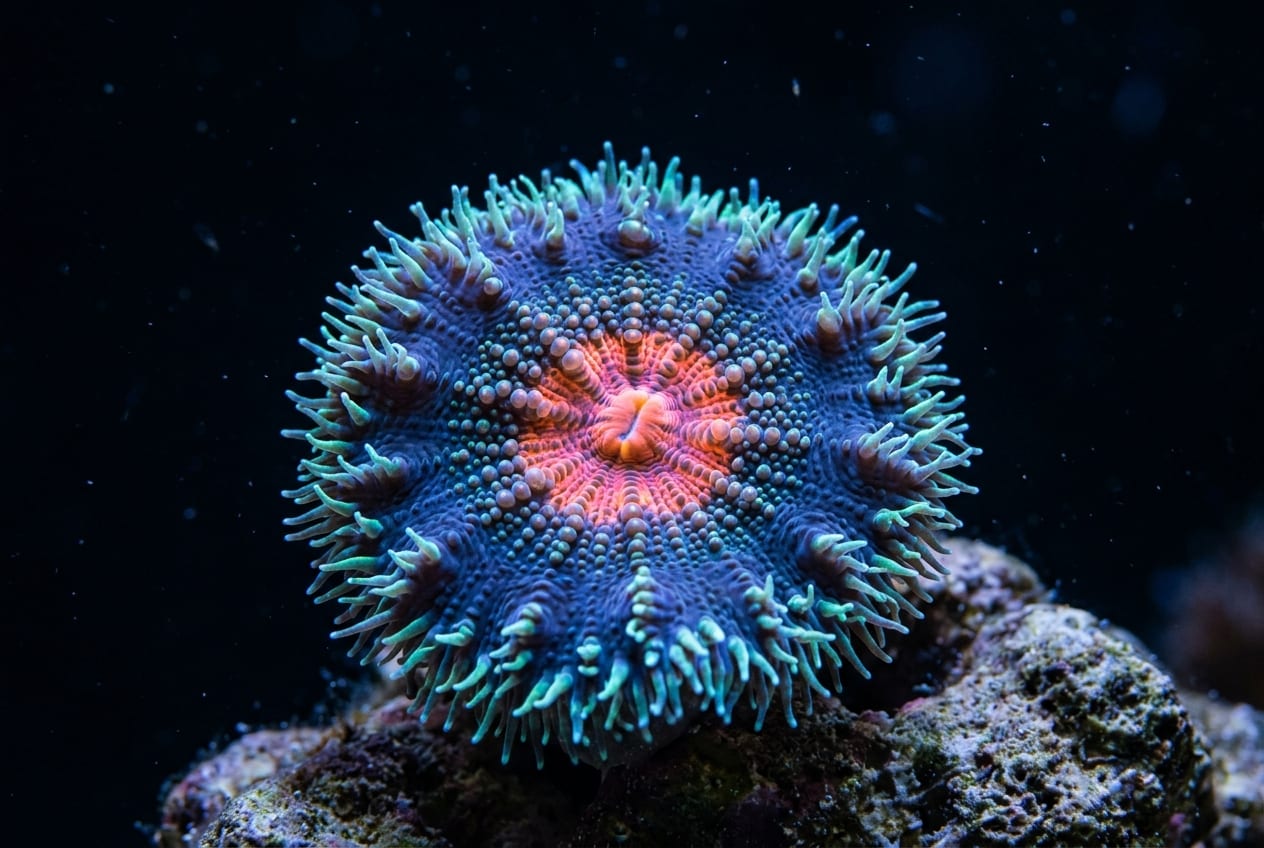
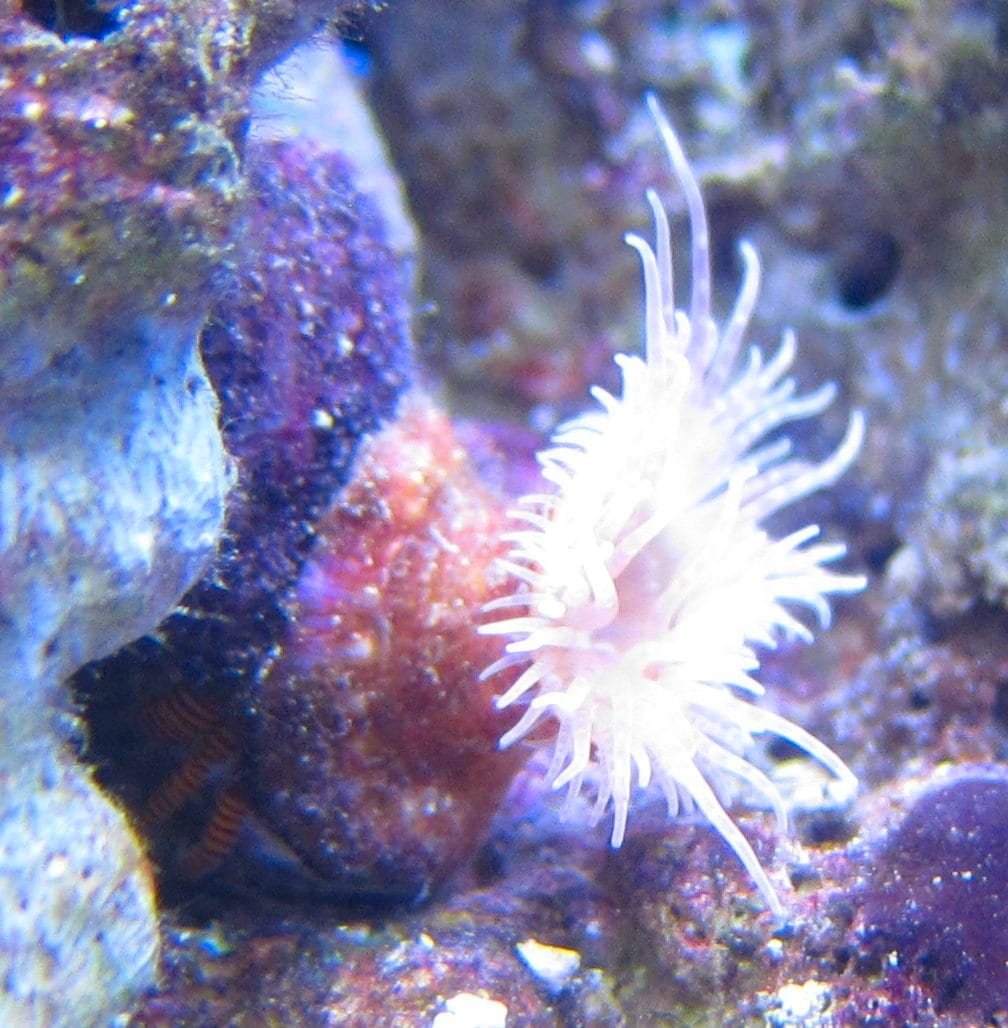
A corallimorph whose tentacles end in bright orange or white balls. It opens its disc at night and catches prey with those ball tips. It builds no skeleton.
Difficulty
Intermediate
Temperature
24〜26℃
Diet
Catches zooplankton and small crustaceans with tentacles spread at night. In the aquarium it needs target feeding with chopped seafood and similar items.
About
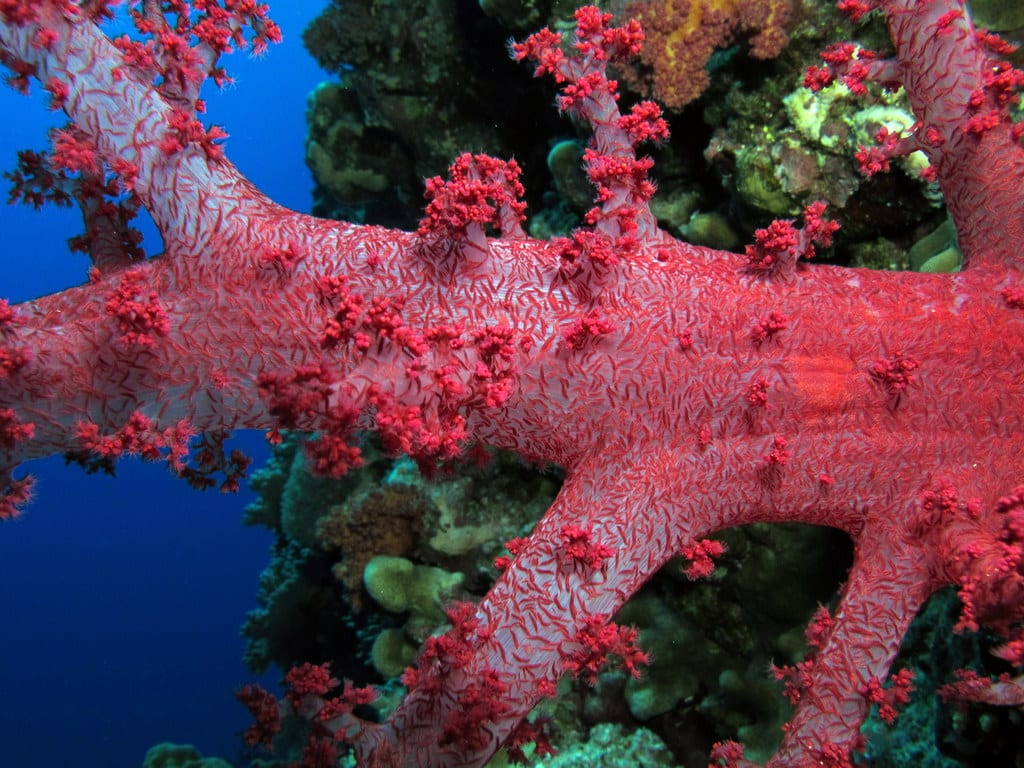
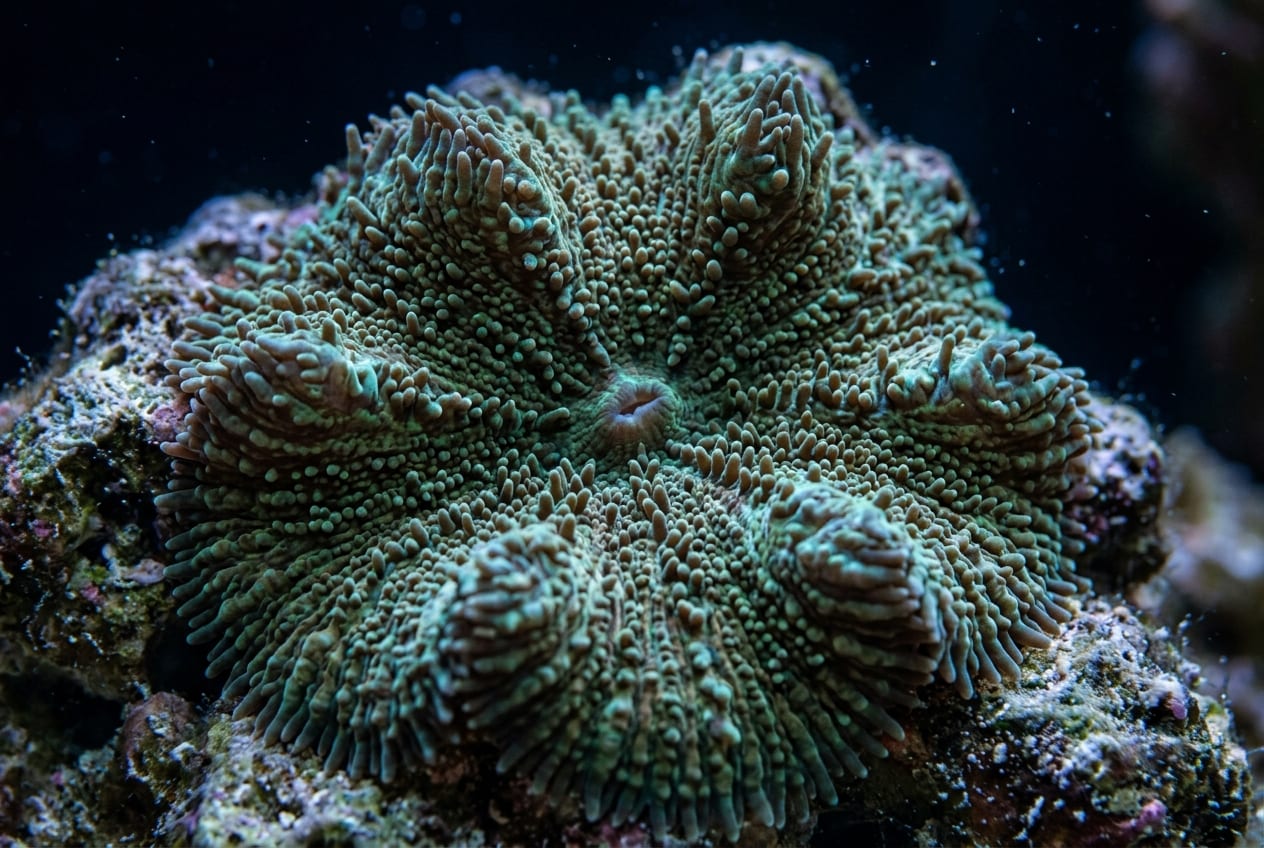
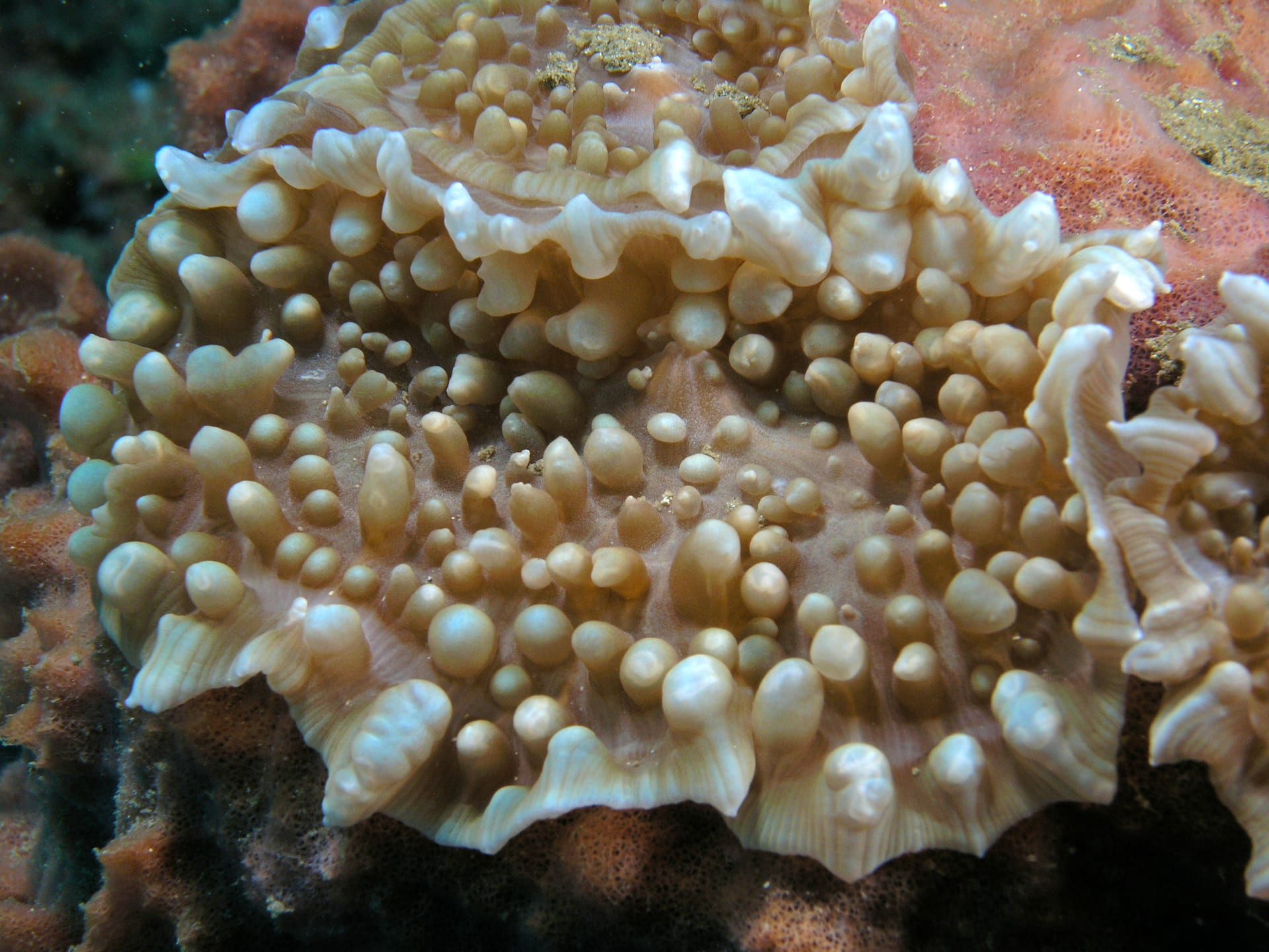
Pseudocorynactis is a corallimorph genus in the family Corallimorphidae, erected by den Hartog in 1980. Related to the stony corals, it builds no calcareous skeleton. Its tentacles end in swollen balls that glow bright orange or white, which is why it is traded as the orange ball anemone. By day it contracts into rock crevices and under overhangs; at night it spreads its disc and tentacles to catch zooplankton and small crustaceans, and it is known for swallowing prey large relative to its own size. WoRMS currently recognises only two valid species, P. caribbeorum and P. tuberculata; the former P. globulifera and P. caboverdensis have been moved to Corynactis and P. hoplites to Paracorynactis, so the trade name alone does not identify the species. Having no skeleton, it is not covered by the CITES coral listings.
Source: WoRMS
Temperature & humidity for the Orange Ball Anemone (Pseudocorynactis)
The ideal temperature for the Orange Ball Anemone (Pseudocorynactis) is 24〜26℃.
Basic Info
Origin
Tropical rocky and coral reefs, hidden in crevices and under overhangs.
Temperature
24〜26℃
Diet
Catches zooplankton and small crustaceans with tentacles spread at night. In the aquarium it needs target feeding with chopped seafood and similar items.
Care Guide
Lighting
Care Specifications
- Carbonate (KH)
- 8–12 dKH
- Water Temp.
- 24–26℃
- Specific Gravity
- 1.023–1.025
- Salinity
- 33–35 ppt
Soft coralLight: Low (PAR 30-50)Flow: LowPlacement: Bottom
Sources: WoRMS (World Register of Marine Species) / AlgaeBarn: Feeding Your NPS Aquarium / LiveAquaria (Green Ricordea Mushroom Coral/コーラリモルフの飼育値)
References & Sources
Edited & verified by: BreederDirect editorial team
The taxonomic, regulatory, and husbandry data on this page are compiled and verified against the authoritative primary sources below.
Taxonomy & Authority
Accepted name: Pseudocorynactis spp. den Hartog, 1980
Authority databases: WoRMS
Nomenclature follows global taxonomic authority databases.
Regulations & Conservation Status
Not CITES-listed
Sources: CITES Appendices (taxon not listed)
Regulations may change. Always verify the latest information with the relevant authorities.
Orange Ball Anemone (Pseudocorynactis) Listings
Loading latest listingsFind listings for this species