Python Species and Care Mindset
Organizing the characteristics and care difficulty of ball pythons, reticulated pythons, burmese pythons, and other large snake species. Explains legal regulations, enclosure size, feeding frequency, and handling precautions.

Key Takeaways
Organizing the characteristics and care difficulty of ball pythons, reticulated pythons, burmese pythons, and other large snake species. Explains legal regulations, enclosure size, feeding frequency, and handling precautions.
Related Species
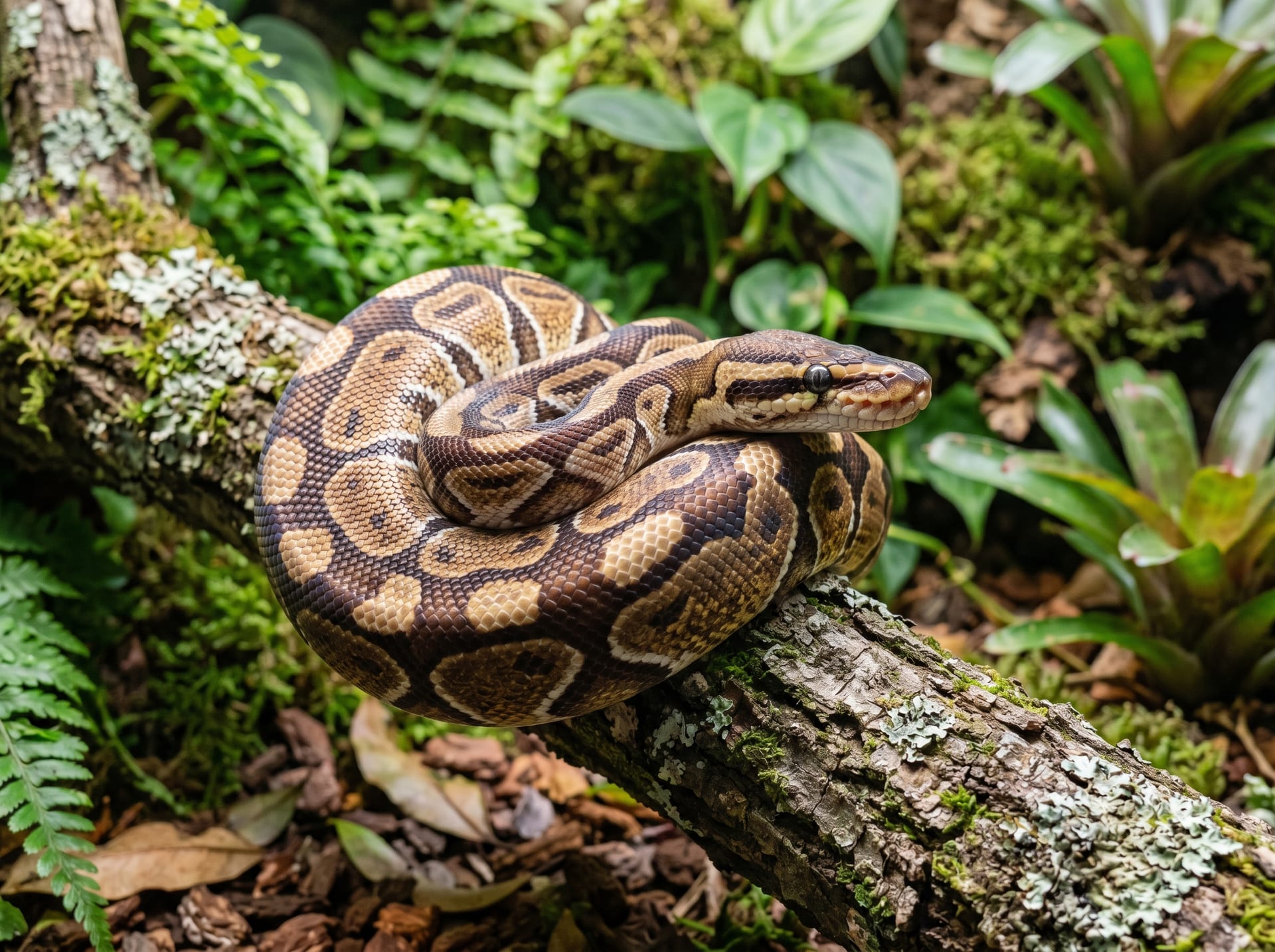
Pythons are a group particularly cherished by dedicated reptile enthusiasts. From small, manageable ball pythons to large species reaching several meters in length, the spectrum is vast. However, keeping large species requires appropriate resolve and knowledge, and casual acquisition leads to misfortune for both keeper and animal alike. This article organizes the major python species and the fundamental mindset you should understand before beginning care.
What Are Pythons
Pythonidae are large non-venomous snakes distributed across the Old World (Africa, Asia, and Australia). Rather than using venom, they are constrictors that subdue prey through powerful muscular constriction, and even small species should not be underestimated for strength. Among reptile enthusiasts, they are often called "pythons," and they are popular for the diversity of morphs (varieties) and stable care suitability (for small species).
Major Species and Characteristics
Comparing representative species, they are as follows.
| Species | Size | Characteristics |
|---|---|---|
| Ball Python (West African Python, Python regius) | Approximately 1–1.8 m | Docile temperament, defensive ball-coiling behavior, over 100 known morphs |
| Reticulated Python (Malayopython reticulatus) | 6–7 m in captivity (records over 8 m in the wild) | Temperament varies by individual; accident risk increases with size |
| Burmese Python (Python bivittatus) | 4–6 m | Fast growth rate leading to many cases of animals being surrendered; naturalized in Florida with significant ecosystem impact |
| Green Tree Python (Morelia viridis) | Arboreal, medium-sized | Temperature and humidity management is delicate; suitable for advanced keepers |
The Ball Python (West African Python, Python regius) is widely appreciated as a beginner-friendly species. Even as adults, they reach approximately 1–1.8 m, making them manageable in size, and their docile nature and defensive ball-coiling behavior are beloved qualities. Over 100 morphs are known, offering diverse colors and patterns such as spider, pied, and yellow belly varieties.
The basic care requirements for ball pythons are as follows:
- Temperature gradient (hot side 32–35°C, cool side 26–28°C)
- Humidity 60–80%
- Enclosure of at least 90 cm × 60 cm for adults
- Feeding frozen-thawed mice or rats once to twice per week
Refusal to feed—especially during breeding season—is a well-known trait of this species; even individuals with good body condition can go months without eating without serious consequences.
The Reticulated Python (Malayopython reticulatus) is the longest of all reptiles, with wild records exceeding 8 m. In captivity, they can reach 6–7 m, requiring dedicated enclosure space and handling by two or more people. Temperament varies significantly by individual; accustomed individuals are relatively manageable, but accident risk increases markedly with size.
The Burmese Python (Python bivittatus) is also a large species reaching 4–6 m. Once promoted as easy to keep, many keepers surrender them due to their rapid growth rate and inability to accommodate their final size. In Florida, abandoned individuals have naturalized and caused serious ecosystem damage, prompting strengthened regulations.
The Green Tree Python (Morelia viridis) is an arboreal, medium-sized species with striking bright green, blue, and yellow coloration. Care difficulty is high due to delicate temperature and humidity management and sensitivity to stress, making it suitable for advanced keepers. Their habit of coiling on branches has high ornamental value, and their static beauty is prized.
Legal Regulations and Specified Animal Licensing
In Japan, large python species are regulated under the Specified Animal system of the Animal Protection and Management Law. Following the June 2020 legal revision, new private (pet) ownership of specified animals is prohibited, and permits are granted only for purposes such as exhibition and research at zoos and similar facilities (individuals kept before the revision may continue to be housed subject to proper procedures). Reticulated pythons (over 3 m), burmese pythons (over 3 m), and African pythons (over 3 m) are among those covered. Even when obtaining permission for exhibition purposes, facilities must meet structural standards (escape prevention, secure locks, signage, etc.). For the full picture of this system, see Legal Regulations Guide for Reptile Keeping.
Ball pythons are not designated as specified animals, but if you intend to keep large python species with potential to exceed 3 m, we strongly recommend confirming beforehand with your local prefecture's animal welfare office.
Additionally, under the Washington Convention (CITES), strict regulations apply to the import and export of wild-caught individuals. When purchasing, verify the animal is captive-bred (CB), and check for appropriate certificates and documentation.
Enclosures and Equipment
Snake enclosures must prioritize size and escape prevention. Never forget the principle that "snakes are escape artists." Escapes through tiny gaps or broken locks resulting in lost snakes are common.
The recommended enclosure type is a front-opening or slide-door reptile terrarium with securely functioning locks and latches. Floor area should be at least approximately "snout-to-vent length × snout-to-vent length / 2." For large species, commercial options are inadequate, requiring custom construction from wood or FRP.
Heating typically combines under-tank heaters (floor) and ceramic heat emitters (ceiling), regulated with a thermostat. Provide a water bowl large enough for the snake to fully submerge, keeping it clean especially around shedding. Hides (shelters) are essential, with placement on both the hot and cool sides to reduce stress.
Feeding and Health Management
Food for pythons is typically frozen-thawed mice or rats. Live feeding carries injury risk, so "frozen-thawed food" warmed to 35–38°C before offering is recommended. Feeding frequency is about weekly for juveniles and once every 2–3 weeks for adults (over 1 m). For large species, calculate feeding amounts based on body weight.
Health management relies on regular weight monitoring. Sustained weight loss suggests parasites, stomatitis, or respiratory disease. Identify veterinarians capable of reptile medicine beforehand (search for animal hospitals listed as "exotic animal specialists" or "reptile-capable").
Summary
Pythons vary greatly in required care skill, equipment, and legal responsibility depending on species. Beginning with the beginner-friendly ball python and gradually acclimating to living with snakes is the path to sustained rewarding husbandry. Challenge yourself with large species only once you have gained experience, established proper facilities, and secured the understanding of those around you (family, neighbors, etc.). Meet your responsibility to living creatures while enjoying the mysterious world unique to pythons.