Source: Wikimedia Commons
Sun Coral
AdvancedTubastraea sp.
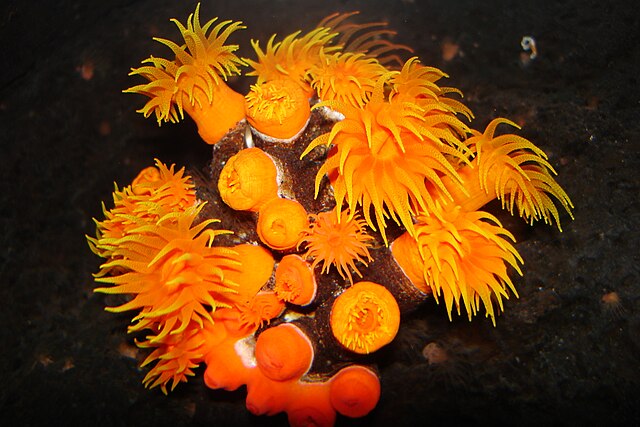
Vivid orange non-photosynthetic coral. Grown entirely through feeding. Stunning full polyp extension at night.
Difficulty
Advanced
Temperature
22〜27℃
Lifespan
10+ years with proper care
Diet
Mysis/brine shrimp (daily or every other day feeding)
About
Sun coral (genus Tubastraea, family Dendrophylliidae) is an azooxanthellate cup coral containing no symbiotic algae and therefore deriving all nutrition from active predation rather than photosynthesis. Its brilliant orange, yellow, or black polyps open like flowers to capture plankton, making it one of the most visually striking corals for shaded tank positions where photosynthetic corals cannot thrive. Native to reef walls and slopes of the Indo-Pacific, it often colonizes overhangs and cave ceilings. Successful husbandry demands frequent target feeding (three to five times weekly) with brine shrimp, mysis, or plankton, pausing flow to allow polyp extension during meals.
Source: Wikipedia (CC BY-SA 4.0)
Lifespan of the Sun Coral
The Sun Coral lives 10+ years with proper care.
Temperature & humidity for the Sun Coral
The ideal temperature for the Sun Coral is 22〜27℃.
Basic Info
Origin
reef walls, slopes, and cave ceilings of the Indo-Pacific
Lifespan
10+ years with proper care
Temperature
22〜27℃
Diet
Mysis/brine shrimp (daily or every other day feeding)
Care Specifications
- Carbonate (KH)
- 8–12 dKH
- Water Temp.
- 22–27℃
- Specific Gravity
- 1.023–1.025
- Salinity
- 33–35 ppt
- Calcium (Ca)
- 400–450 ppm
- Magnesium (Mg)
- 1280–1350 ppm
LPSLight: Low (PAR 30-50)Flow: MediumPlacement: Flexible
Sources: AlgaeBarn: Water Parameters 101
References & Sources
Edited & verified by: BreederDirect editorial team
The taxonomic, regulatory, and husbandry data on this page are compiled and verified against the authoritative primary sources below.
Taxonomy & Authority
Regulations & Conservation Status
CITES Appendix II
Stone Coral Order (Tubastraea, Dendrophylliidae). Though commonly called 'Coral Anemone,' its scientific classification is Stone Coral Order = CITES Appendix II.
Sources: DOC NZ / CITES-listed corals (Scleractinia spp. = App. II)
Regulations may change. Always verify the latest information with the relevant authorities.
Sun Coral Listings
Loading latest listingsFind listings for this species