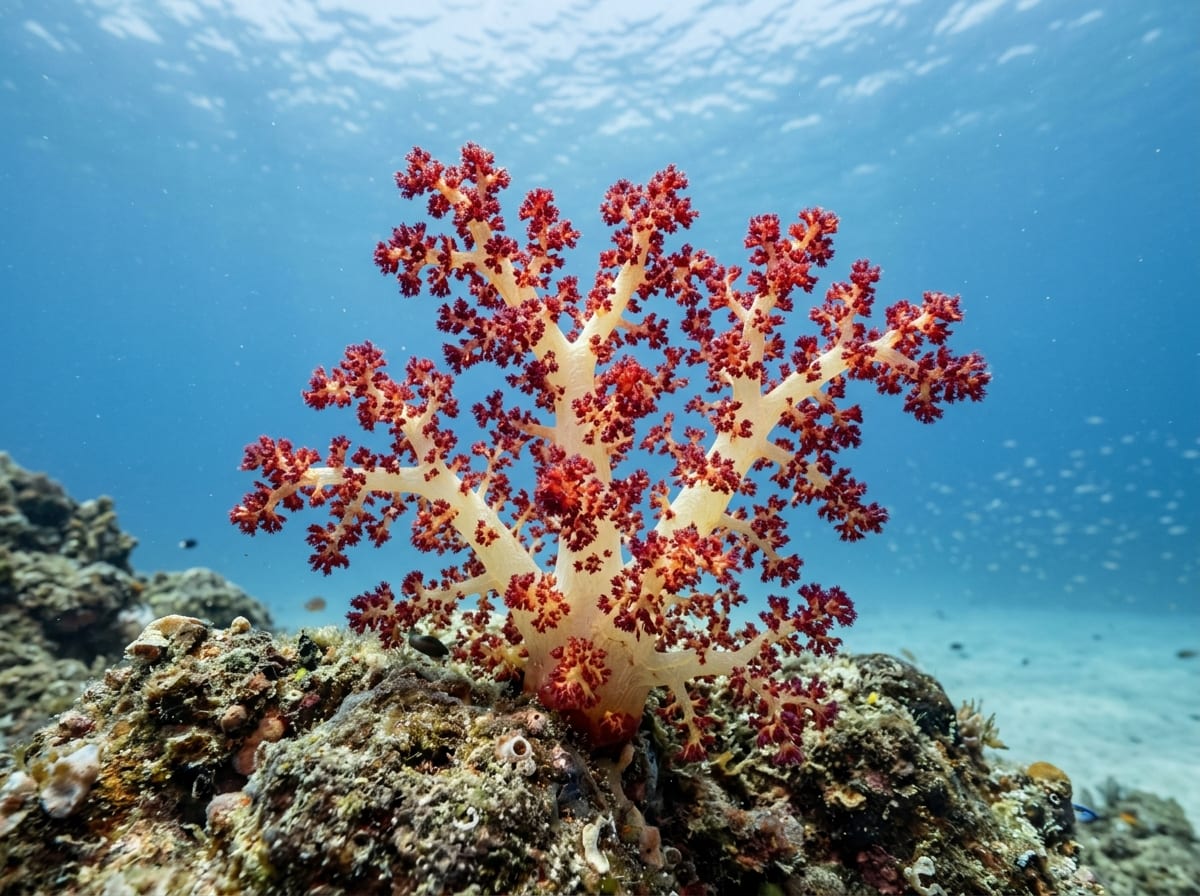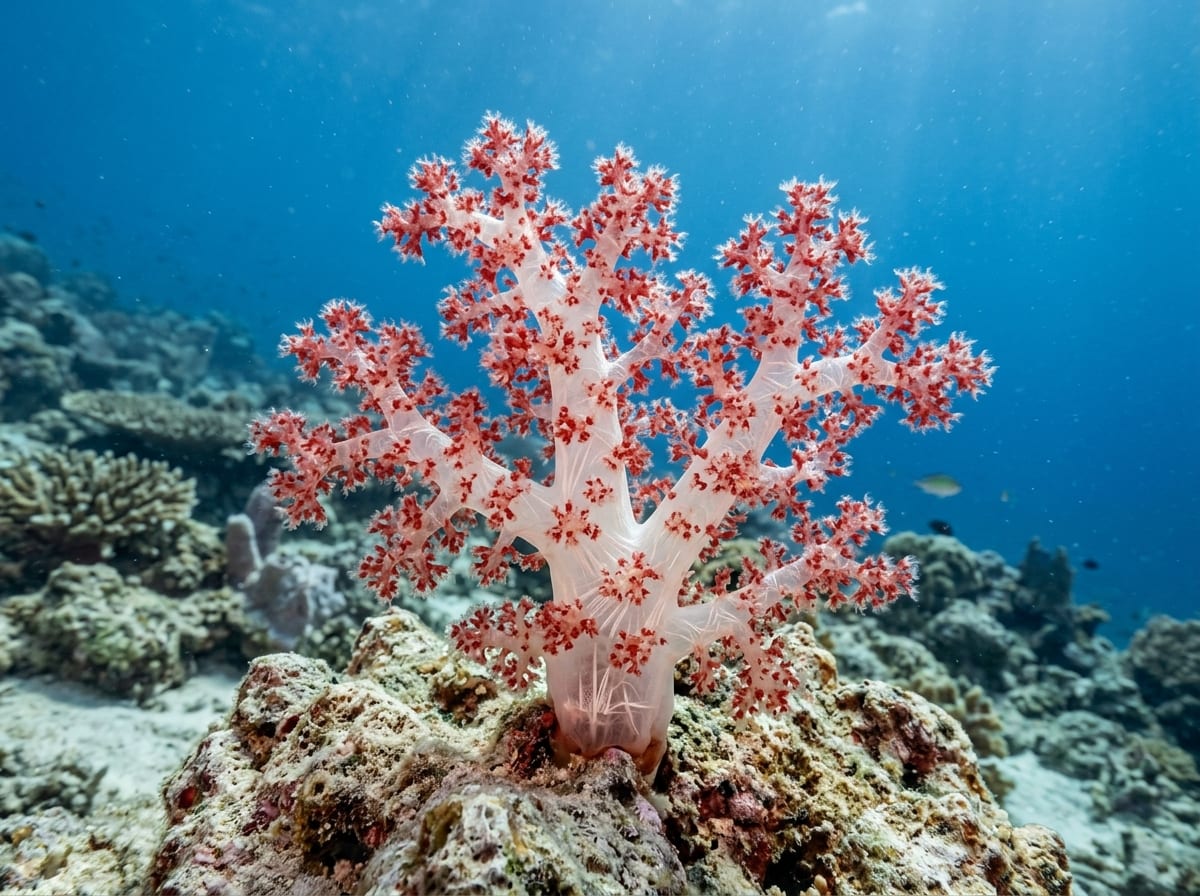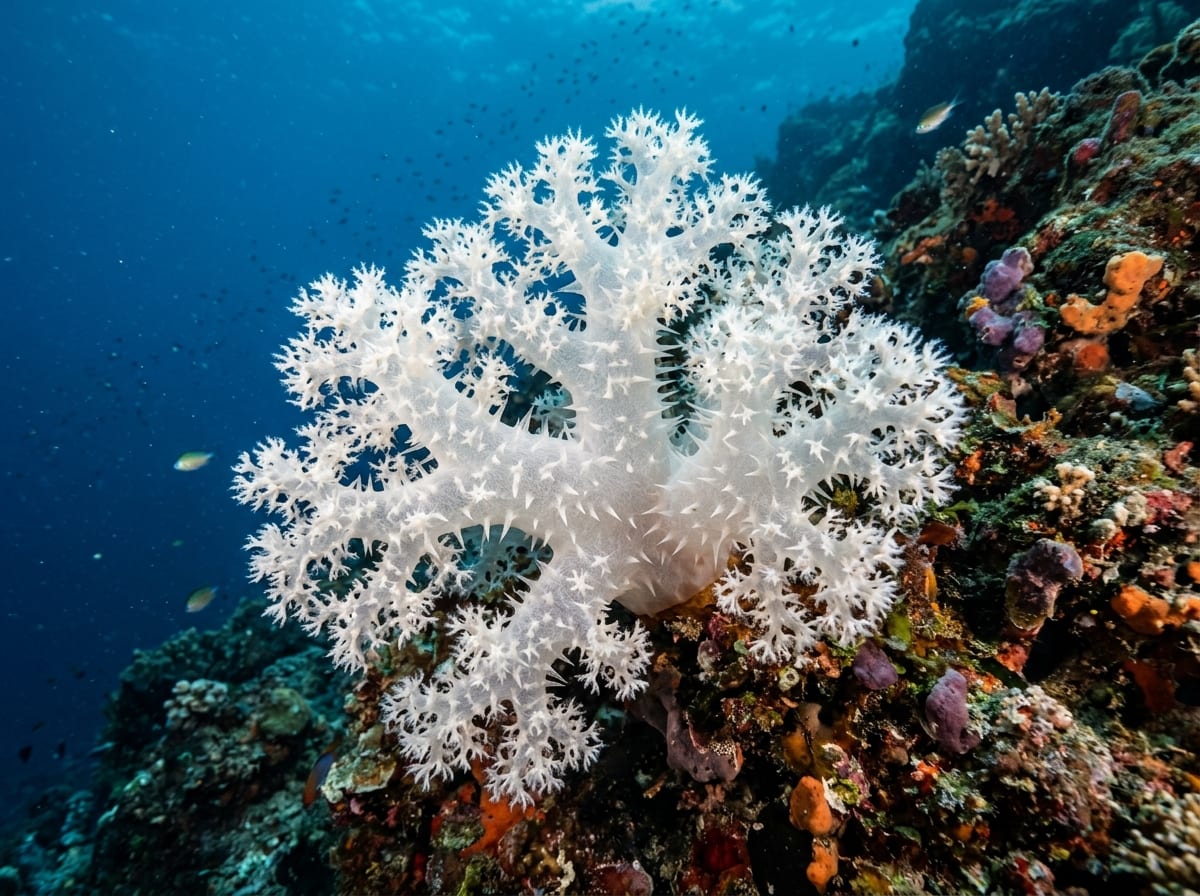
AI-generated image
Japanese Yellow Soft Coral
AdvancedStereonephthya japonica
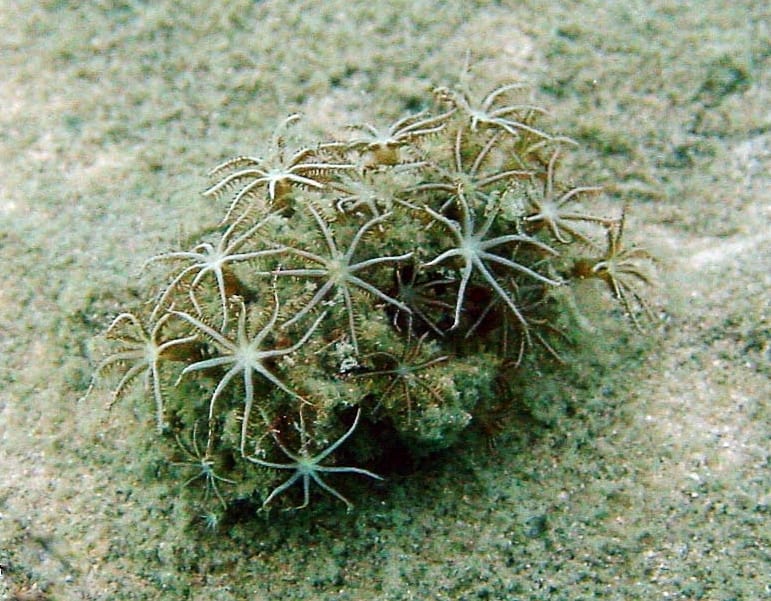
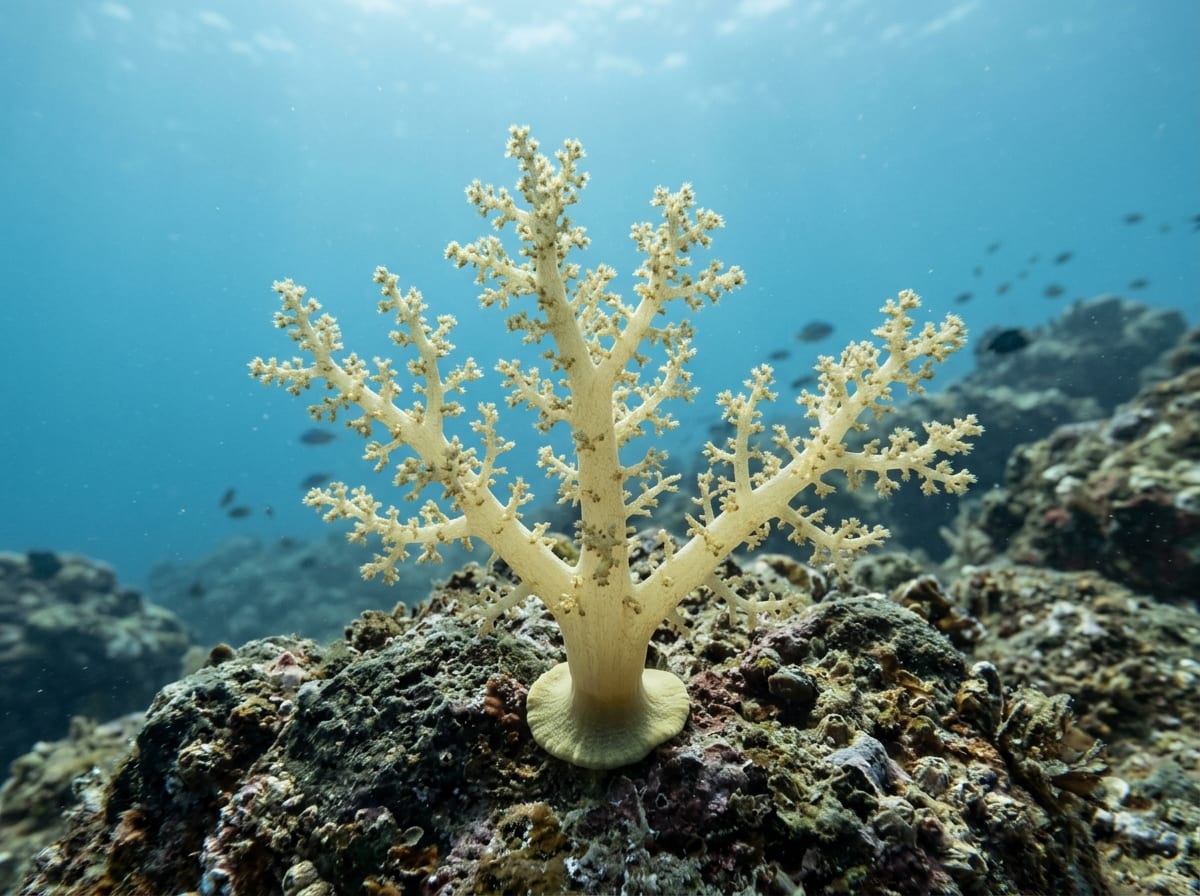
A yellow nephtheid soft coral common on shallow rocky reefs from Sagami Bay to western Kyushu. The yellow comes from its sclerites, not its tissue, and polyps sit singly or in small tufts rather than large clusters as in Dendronephthya.
Difficulty
Advanced
Temperature
24〜27℃
Size
10-15 cm tall when extended (Nipponica)
About
Stereonephthya japonica is a nephtheid soft coral described by Utinomi in 1954. It ranges from Sagami Bay to western Kyushu and is common in shallow water at 0-12 m. Extended colonies are 10-15 cm tall and a dull pale yellow; a disc-like stalk divides into several main branches that branch again and are covered with terminal twigs 1-2 cm long (Nipponica). The yellow comes from the sclerites rather than the tissue. It resembles Dendronephthya, but whereas Dendronephthya carry large clusters of polyps at the branch tips, this species bears polyps singly or in small tufts and has rod-shaped sclerites on the ventral side of the polyps (Kuroshio Biological Research Foundation). The related S. rubriflora has red-purple polyp-head sclerites that make the colony look reddish. It is a common year-round species on the Izu Peninsula. No source was found on whether it hosts zooxanthellae, and there is little consolidated information on keeping it. In Japan, locally collected specimens reach specialist shops.
Size of the Japanese Yellow Soft Coral
The Japanese Yellow Soft Coral grows to 10-15 cm tall when extended (Nipponica).
Basic Info
Origin
Shallow rocky reefs of Japan (Sagami Bay to western Kyushu, 0-12 m)
Size
10-15 cm tall when extended (Nipponica)
Temperature
24〜27℃
Care Guide
Lighting
No source shows whether it can rely on photosynthesis. As a shallow-reef species, give ordinary viewing light but plan to nourish it by feeding.
Care Specifications
- Specific Gravity
- 1.023–1.025
- Salinity
- 33–35 ppt
Soft coral
Sources: Kotobank (Nipponica): Stereonephthya japonica / Kuroshio Biological Research Foundation (Stereonephthya japonica) / Izuzuki marine life guide (Stereonephthya japonica)
References & Sources
Edited & verified by: BreederDirect editorial team
The taxonomic, regulatory, and husbandry data on this page are compiled and verified against the authoritative primary sources below.
Primary sources
- Species+ (CITES search)
- Ministry of the Environment: List of Designated Invasive Alien Species
- Okinawa Prefecture: Collection of reef-building corals is prohibited
- e-Gov: Natural Parks Act (Art. 22, marine park zones)
- Kotobank (Nipponica): Stereonephthya japonica
- Kuroshio Biological Research Foundation (Stereonephthya japonica)
- Izuzuki marine life guide (Stereonephthya japonica)
- WoRMS
Taxonomy & Authority
Regulations & Conservation Status
Not CITES-listed
Domestic law: Soft corals of this group are not included in the 'reef-building corals' whose collection Okinawa prohibits (stony corals, blue coral, sea fans and others). Collecting in the sea may still fall under fishing rights or prefectural fisheries rules, and taking designated species in marine park zones requires a permit (Natural Parks Act, Art. 22).
Not listed in the CITES Appendices (checked on Species+). Not designated as an Invasive Alien Species under Japanese law.
Sources: Species+ (CITES search) / Ministry of the Environment: List of Designated Invasive Alien Species / Okinawa Prefecture: Collection of reef-building corals is prohibited / e-Gov: Natural Parks Act (Art. 22, marine park zones)
Regulations may change. Always verify the latest information with the relevant authorities.
Japanese Yellow Soft Coral Listings
Loading latest listingsFind listings for this species