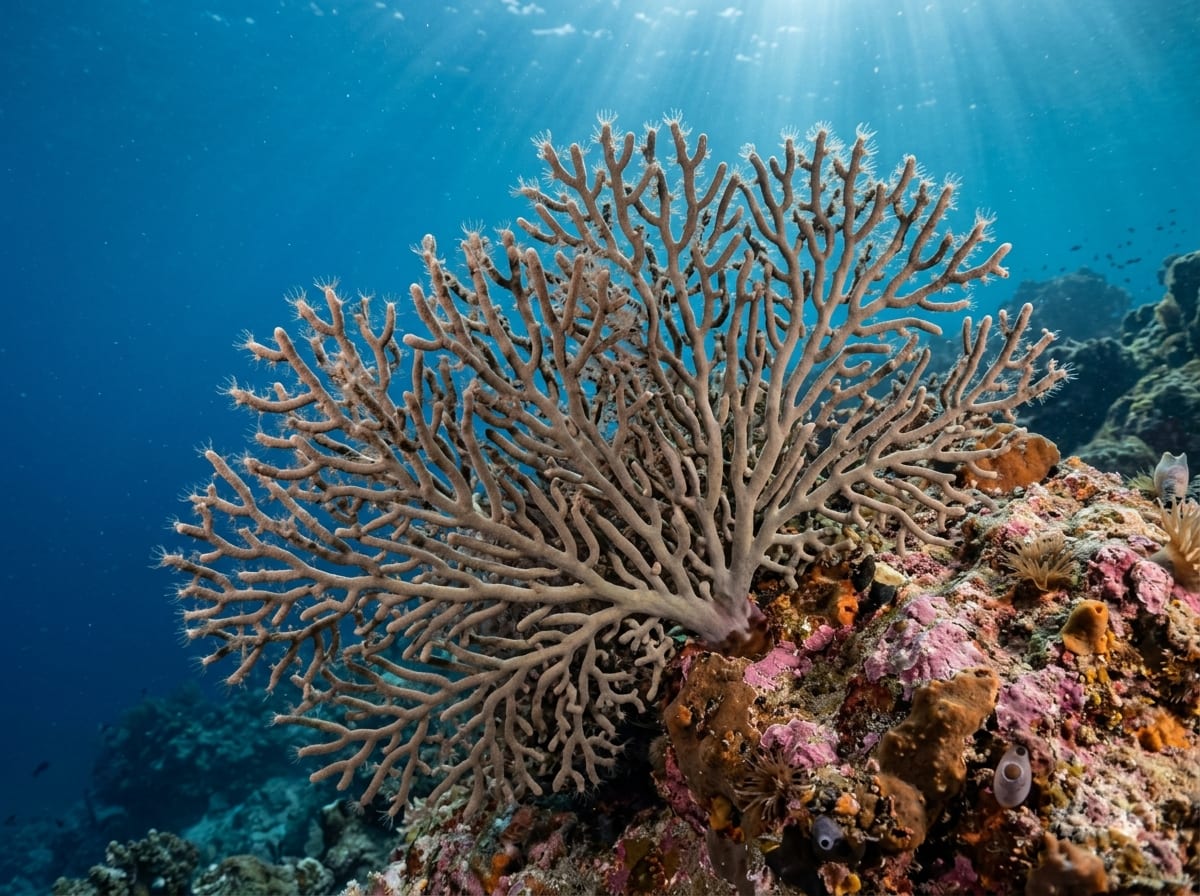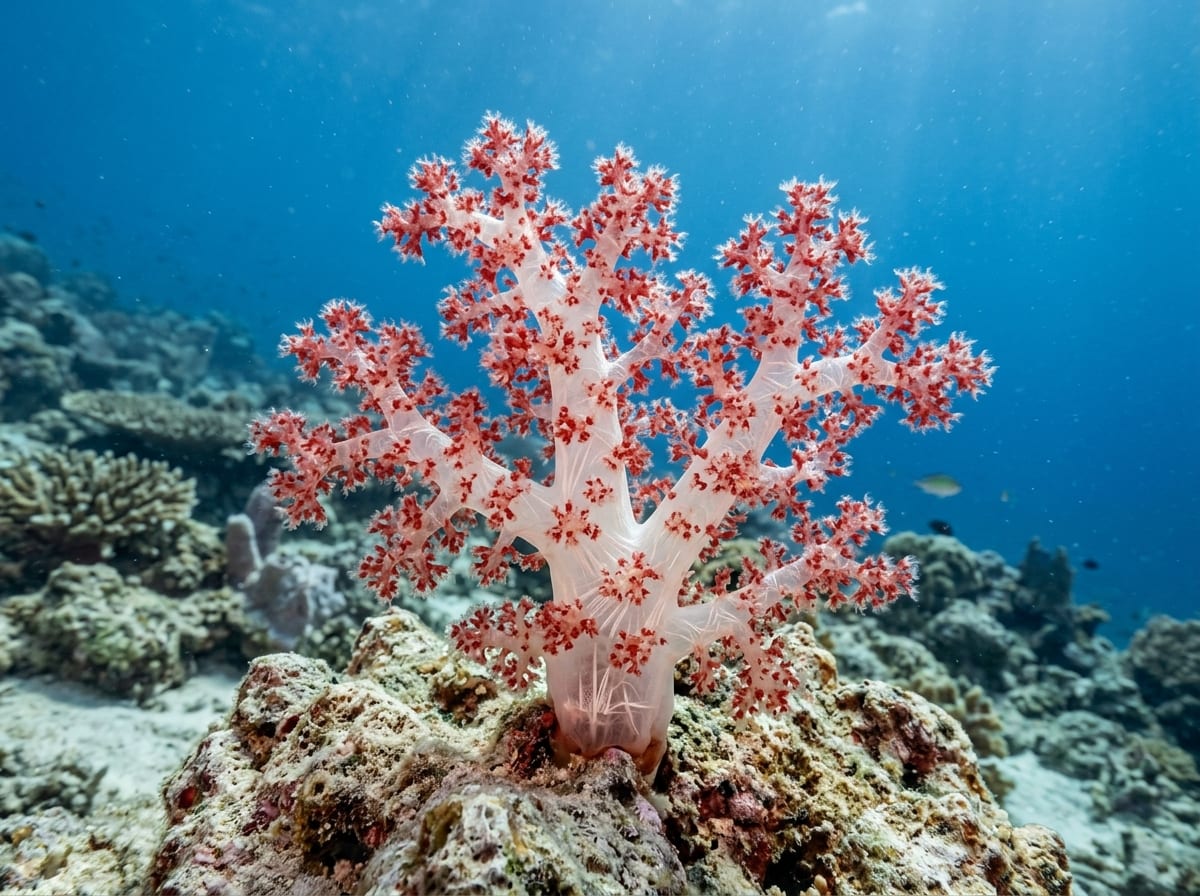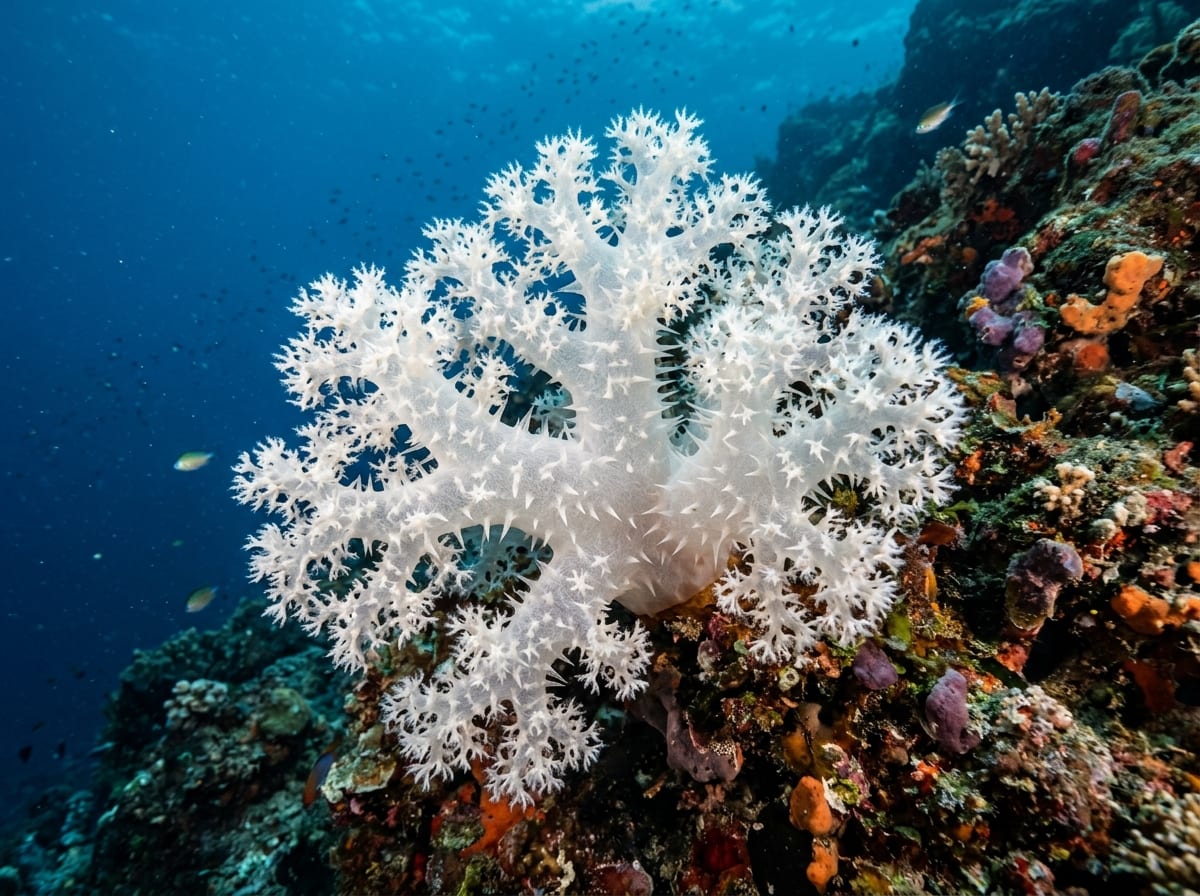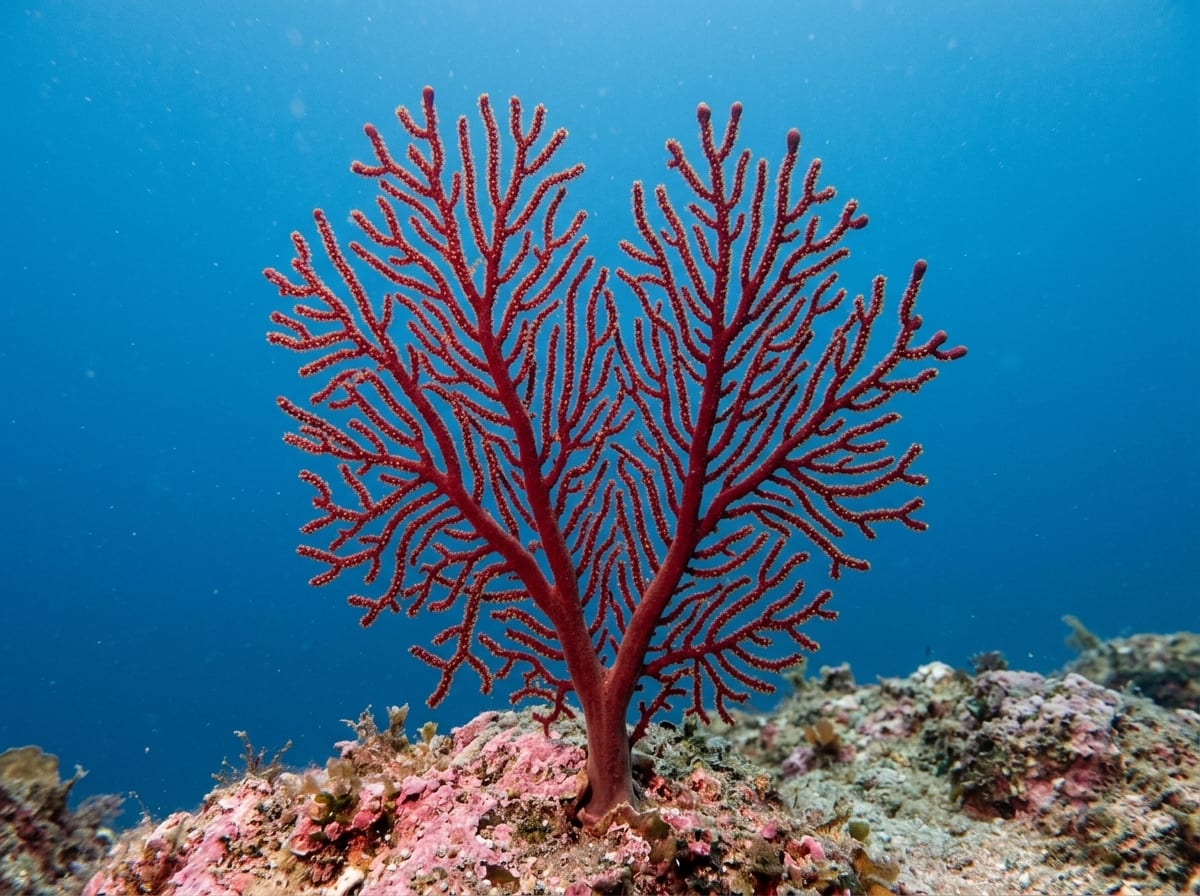
AI-generated image
Red Sea Whip
AdvancedEllisella rubra
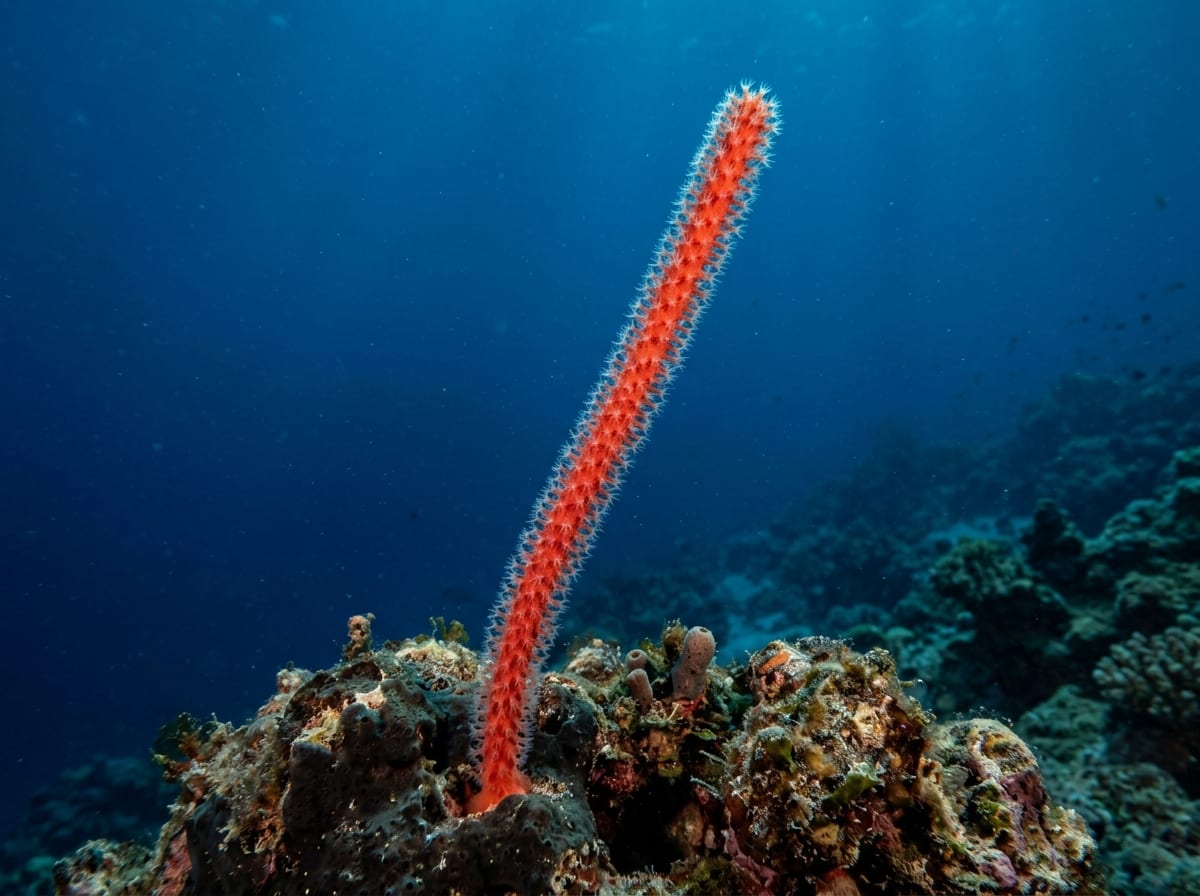
A sea whip that grows as a single unbranched whip. Its axis is heavily calcified, hard and inflexible. The tissue and polyps are vermilion to orange, and the polyps withdraw completely into the tissue when disturbed.
Difficulty
Advanced
Temperature
24〜27℃ (typical for Coral)
Diet
Must be fed (fine particulate and plankton-type food)
About
Ellisella rubra is an octocoral of the family Ellisellidae and the species that carries the standard Japanese name Muchiyagi (sea whip) on WoRMS. It is widespread in warm waters of the western Pacific and Indian Ocean from Sagami Bay southward, attached to rocky reefs deeper than 20 m. The colony is a single unbranched whip whose axis is heavily calcified, making it hard and inflexible. The tissue and polyps are vermilion to orange (Nipponica), and the polyps retract completely into the tissue (Marinepia Nihonkai aquarium). Most gorgonians have no zooxanthellae and cannot live on light, so they will not survive in aquaria unless each polyp is fed adequately (Reeflex). Junceella fragilis on this site is sometimes called 'Muchiyagi' but belongs to another genus, and this species has been sold as 'Akayagi', although the standard Akayagi is the branching fan Menella rigida. In Japan, locally collected specimens reach specialist shops from time to time.
Basic Info
Origin
Western Pacific and Indian Ocean from Sagami Bay southward (rocky reefs below 20 m)
Temperature
24〜27℃ (typical for Coral)
Diet
Must be fed (fine particulate and plankton-type food)
Care Guide
Lighting
Most gorgonians lack zooxanthellae and do not feed on light (Reeflex). This species lives below 20 m, so strong lighting is unnecessary.
Flow & Placement
The single whip is inflexible and can snap (Nipponica). Wedge the base firmly into a rock hole to stand it upright, with enough flow to bring food to the polyps.
Care Specifications
- Specific Gravity
- 1.023–1.025
- Salinity
- 33–35 ppt
Soft coralLight: Low (PAR 30-50)
Sources: Kotobank (Nipponica): Ellisella rubra / Marinepia Nihonkai aquarium guide (Ellisella rubra) / Reeflex (Euplexaura crassa): feeding azooxanthellate gorgonians
References & Sources
Edited & verified by: BreederDirect editorial team
The taxonomic, regulatory, and husbandry data on this page are compiled and verified against the authoritative primary sources below.
Primary sources
- Species+ (CITES search)
- Ministry of the Environment: List of Designated Invasive Alien Species
- Okinawa Prefecture: Collection of reef-building corals is prohibited
- e-Gov: Natural Parks Act (Art. 22, marine park zones)
- Kotobank (Nipponica): Ellisella rubra
- Marinepia Nihonkai aquarium guide (Ellisella rubra)
- Reeflex (Euplexaura crassa): feeding azooxanthellate gorgonians
- WoRMS
- GBIF
Taxonomy & Authority
Accepted name: Ellisella rubra (Wright & Studer, 1889)
Synonyms: Scirpearella rubra Wright & Studer, 1889, Scirpearia rubra (Wright & Studer, 1889), Ctenocella (Ellisella) rubra (Wright & Studer, 1889)
Authority databases: WoRMS · GBIF · GBIF · WoRMS
Nomenclature follows global taxonomic authority databases.
Regulations & Conservation Status
Not CITES-listed
Domestic law: Okinawa's fisheries adjustment regulations include sea fans and sea whips (suborders Calcaxonia, Holaxonia and others) in 'reef-building corals', so collecting them in Okinawan waters is prohibited (cultured specimens are exempt). Elsewhere, collection may fall under prefectural fisheries rules or fishing rights, and taking designated species in marine park zones requires a permit (Natural Parks Act, Art. 22).
Not listed in the CITES Appendices (checked on Species+). Not designated as an Invasive Alien Species under Japanese law.
Sources: Species+ (CITES search) / Ministry of the Environment: List of Designated Invasive Alien Species / Okinawa Prefecture: Collection of reef-building corals is prohibited / e-Gov: Natural Parks Act (Art. 22, marine park zones)
Regulations may change. Always verify the latest information with the relevant authorities.
Red Sea Whip Listings
Loading latest listingsFind listings for this species