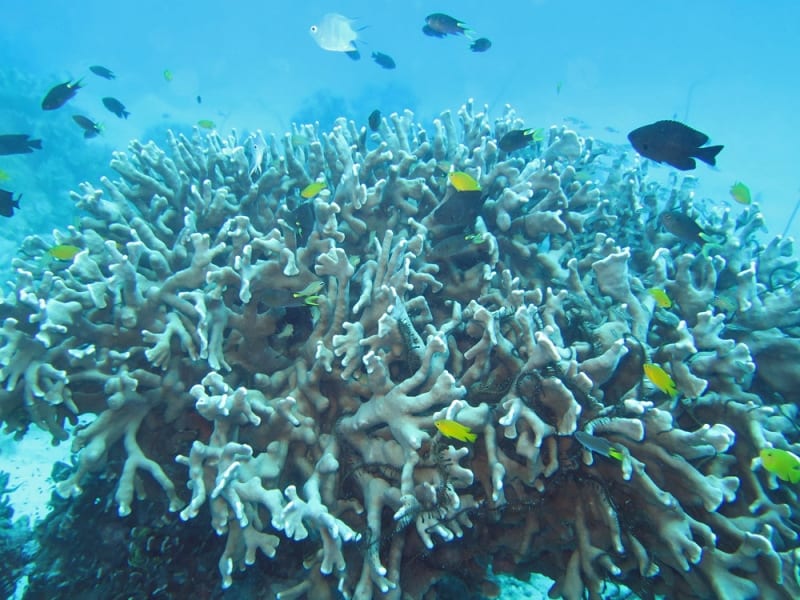
 © Anne Hoggett / CC BY 3.0
Blue Coral
Blue coral is an unusual reef coral. Although it belongs to the octocorals, it builds a hard, calcareous skeleton. Break the skeleton open and the inside is a vivid indigo blue, while brown polyps emerge from pores on the surface and spread eight feathery tentacles. Colonies grow as plates, columns or branches, which makes it easy to add variety to a reef layout. It is considered beginner-friendly, but large colonies can reach a meter or more across, so it pays to think about where it will sit as it grows.
View Blue Coral encyclopedia →0% commission on your first sales!Register by September 30, 2026 and your first 2 sales are commission-free!
Breeder Wanted!
List on BreederDirect and sell directly to customers nationwide!
BreederDirect's 6 Transparency Commitments
Our Breeder sellers disclose detailed care specs for all Coral listings. We prioritize Aquacultured/CB specimens, verify WYSIWYG photos, and provide difficulty ratings—avoiding wild-caught.
- Aquacultured
- WYSIWYG Photo
- Difficulty Disclosed
- Frag/Colony
- Care Info Included
- Trade name shown
Browse all 241 breeds
Difficulty
Verified breeders wanted for Coral
Breeders are signing up now ahead of launch. Subscribe to be notified when new listings go live.
Getting alerts is free with a member account. When new listings match your saved search, we'll notify you by email and in-app.
Browse other categories
Verified breeders (preview)
Blue Coral key facts
- Care level
- Beginner-friendly
- Lifespan
- Little data available
- Size
- Large colonies exceed 1 m across (Nipponica)
- Temperature
- 24〜27℃
- Diet
- Mainly photosynthesis (zooxanthellae); feeding only as a supplement
- Lighting
- It needs strong light (Saltcorner). If light is lacking, the white growing edges turn brown and growth stops.
- Flow & Placement
- It lives on wave-exposed shallows (Reef Builders). Place it in fairly brisk flow, but not directly in front of pump outlets (Saltcorner).
- Water Temperature & Quality
- 24-27°C, salinity 33-35 ppt (SG 1.023-1.025). It tolerates heat well (Reef Builders), but keep calcium and alkalinity stable for its limestone skeleton.
- Diet & Feeding
- It grows on photosynthesis and needs no special feeding; in dimmer spots add fine zooplankton-type food several times a week (Saltcorner).
- Health & Cautions
- Very hardy and largely disease-free (Saltcorner). It may shed a thin surface layer to remove algae or film, which is normal.
About Blue Coral
Blue coral is an octocoral with a hard, indigo-blue skeleton. Learn its traits, beginner-friendly care level, what to know before bringing one home, and answers to common questions.
7 things to know before welcoming a Blue Coral
1Beginner-Friendly Care
Blue coral is considered beginner-friendly, so it is a reasonable choice if this is your first coral. Even so, it assumes a tank where lighting, flow and water quality have settled. Avoid a freshly set-up tank and add it once things are stable.
2Lighting
Many corals live in partnership with zooxanthellae algae and use light as one of their energy sources, and blue coral is no exception. It suits a tank with adequate light. Right after arrival, place it somewhere gentler and adjust gradually while watching how the polyps open.
3Flow and Placement
Whether the polyps are open is a useful clue to whether the flow and placement suit the coral. If the tentacles stay closed under strong flow, move it slightly and watch again. Polyps can also close in response to disturbance, so observe for a while before drawing conclusions.
4Room to Grow
Large colonies are reported to reach a meter or more across, spreading sideways or upward depending on their form. Leave generous space between it and neighboring corals, and plan your layout on the assumption that you will rearrange as it grows. Whatever size it is when it arrives, it helps to plan for its eventual size.
5Choosing a Growth Form
Blue coral comes as plates, columns or branches, and the form changes how it looks in a tank even within the same species. Think about where you want it and how it will sit next to other corals, and check the shape in the listing photos. The blue is the color of the skeleton inside, and the surface usually looks brown, so look at the coloration in the photos too.
6Acclimating on Arrival
When it arrives, acclimate it slowly to reduce the difference in temperature and water quality. Sudden changes are hard on corals, so take your time. Once it is in the tank, keep it somewhere with gentler light and watch until the polyps open.
7Signs to Watch
Day to day, check whether the polyps are open and whether the brown coloration is holding. If the polyps stay closed for a long time or the color starts to fade, review your lighting, flow and water quality. The cause is not always a single thing, so change one factor at a time rather than many at once.
Frequently asked questions about Blue Coral
- Q.Can beginners keep blue coral?
- A.Its care level is considered beginner-friendly. It still assumes a tank with stable lighting, flow and water quality, and after arrival you should adjust its position while watching how the polyps open.
- Q.How large does blue coral get?
- A.Large colonies are reported to reach a meter or more across (Nihon Daihyakka Zensho). Growth speed in a tank depends on conditions, so leave enough room to rearrange the layout as it grows.
- Q.How long does blue coral live?
- A.Little documentation is available on its lifespan, so there is no reliable figure. What matters is observing it regularly so you notice any change in condition early.
- Q.Will I see the blue skeleton in my tank?
- A.The blue is the color of the skeleton inside, and the surface of a living colony usually looks brown because of the polyps. How much blue is visible varies by colony and condition, so check the listing photos or ask the seller.
- Q.Is blue coral covered by CITES?
- A.Blue coral is listed in CITES Appendix II. If you have questions, ask the seller.
Useful tools for Blue Coral care
Learn more about Blue Coral in the encyclopedia
View Blue Coral encyclopedia entry →
Care difficulty, lifespan, size and diet — all basics covered.
More in this category
Can't find the one you're looking for?
Post your wishes for free and breeders with matching animals will contact you with introductions.