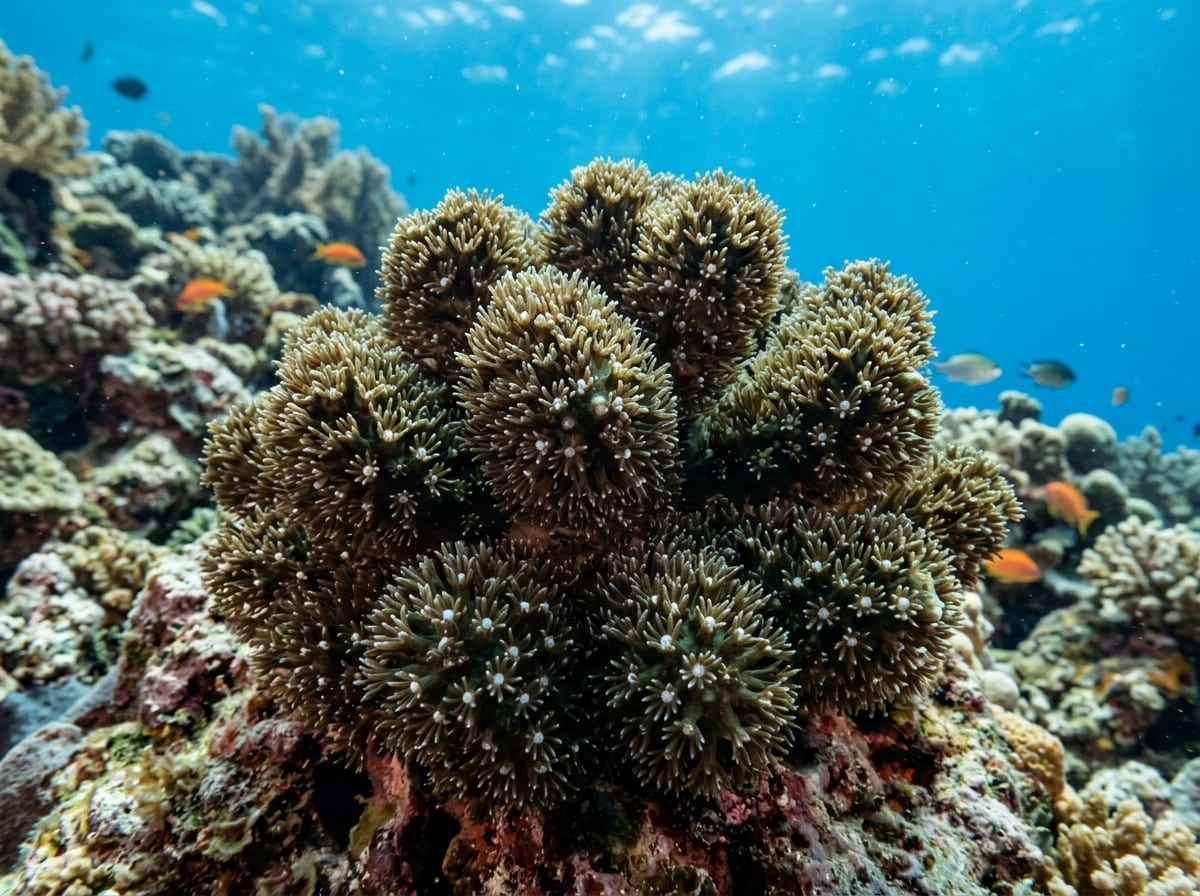
Verrill's Alveopora
Verrill's Alveopora is the standard species of the genus Alveopora. It forms a colony of short, knobby branches that split irregularly and carry long, swaying polyps. Colors run from dark green-brown to gray and chocolate, and some colonies have white tips on the mouth or tentacles. It grows much larger than the Japanese Alveopora, which stays under 4 cm across. It makes a striking centerpiece, but it is rated for advanced keepers, and little reliable information exists on its lifespan.
View Verrill's Alveopora encyclopedia →Breeder Wanted!
List on BreederDirect and sell directly to customers nationwide!
BreederDirect's 6 Transparency Commitments
Our Breeder sellers disclose detailed care specs for all Coral listings. We prioritize Aquacultured/CB specimens, verify WYSIWYG photos, and provide difficulty ratings—avoiding wild-caught.
- Aquacultured
- WYSIWYG Photo
- Difficulty Disclosed
- Frag/Colony
- Care Info Included
- Trade name shown
Browse all 241 breeds
Difficulty
Verified breeders wanted for Coral
Breeders are signing up now ahead of launch. Subscribe to be notified when new listings go live.
Getting alerts is free with a member account. When new listings match your saved search, we'll notify you by email and in-app.
Browse other categories
Verified breeders (preview)
Verrill's Alveopora key facts
- Care level
- Advanced
- Size
- About 10-20 cm
- Temperature
- 24〜27℃
- Diet
- Photosynthesis (zooxanthellae) plus plankton
- Lighting
- It gets most of its nutrition from zooxanthellae. Alveopora are common on turbid reef slopes, so avoid very intense light and acclimate it at moderate levels.
- Flow & Placement
- Its polyps extend long, so give gentle, swaying flow that does not keep them blown back and retracted.
- Water Temperature & Quality
- 24-27°C, salinity 33-35 ppt (SG 1.023-1.025). It bleaches easily, so avoid high temperatures and sudden changes.
- Diet & Feeding
- The rest of its needs come from plankton caught by the tentacles. Offer small amounts of fine plankton-type food.
- Health & Cautions
- Not for beginners. Polyps that stay retracted or exposed skeleton are signs of trouble; review placement and water quality.
About Verrill's Alveopora
Verrill's Alveopora is the standard Alveopora species, with short knobby branches bearing long polyps; it grows much larger than the Japanese Alveopora. Learn its looks, care needs and what to know before you bring one home. Rated for advanced keepers.
7 things to know before welcoming a Verrill's Alveopora
1For Experienced Keepers
Verrill's Alveopora is rated for advanced keepers, so it is best added after you have real reef-keeping experience. When conditions do not suit it, the polyps may stop extending. Start by making sure your tank is stable and well established.
2Adult Size
Adult size is poorly documented, but it grows far larger than the Japanese Alveopora, which stays under 4 cm across, so leave generous room around it. Extended polyps can also brush against neighbors, which is worth planning for.
3Color and Form
Long polyps rise from a colony of short, knobby branches that split irregularly. Colors are mainly dark green-brown, gray and chocolate, and some colonies show white tips on the mouth or tentacles. Each colony looks a little different, so study the photos carefully.
4Flow and Lighting
The long polyps sway in the current, but strong flow is generally thought to stress them. Aim for gentle movement that lets the polyps sway naturally. Increase lighting gradually rather than all at once, and watch how the colony responds.
5Feeding and Water Quality
Alveopora catch food with their polyps, and keepers commonly offer small, fine foods. Overfeeding can degrade water quality, though. Keep the tank stable first, then adjust portions conservatively.
6Space From Neighbors
Because the polyps extend far, they can easily touch nearby corals. Leave some space around the colony and judge compatibility by watching how things go. It is safest to keep it away from aggressive species.
7Checks on Arrival
In the listing photos, check that the polyps are open and that the tissue and skeleton show no breaks or bare white patches. Do not drop it straight into the tank on arrival; acclimate it slowly. Then leave it alone until it settles in.
Frequently asked questions about Verrill's Alveopora
- Q.Can a beginner keep Verrill's Alveopora?
- A.It is rated for advanced keepers. It calls for a stable tank and steady effort with feeding and water quality, so it is not well suited as a first coral. Gaining experience first is recommended.
- Q.How long does it live?
- A.Little reliable information exists on its lifespan, so no clear figure can be given. Watching its day-to-day condition, such as how well the polyps open, is more practical than relying on a number.
- Q.How large does it get?
- A.There is little data giving a firm figure, but it grows much larger than the Japanese Alveopora, which stays under 4 cm across. Leave room around it in the tank.
- Q.How is it different from the Japanese Alveopora?
- A.Size is the main difference: the Japanese Alveopora stays under 4 cm across, while Verrill's grows much larger. Verrill's forms a colony of short, knobby branches that split irregularly and is regarded as the standard species of the genus.
- Q.Is it listed under CITES?
- A.Verrill's Alveopora is listed in CITES Appendix II. Please also check the details on each listing page when choosing an individual.
Useful tools for Verrill's Alveopora care
Learn more about Verrill's Alveopora in the encyclopedia
View Verrill's Alveopora encyclopedia entry →
Care difficulty, lifespan, size and diet — all basics covered.
More in this category
Can't find the one you're looking for?
Post your wishes for free and breeders with matching animals will contact you with introductions.