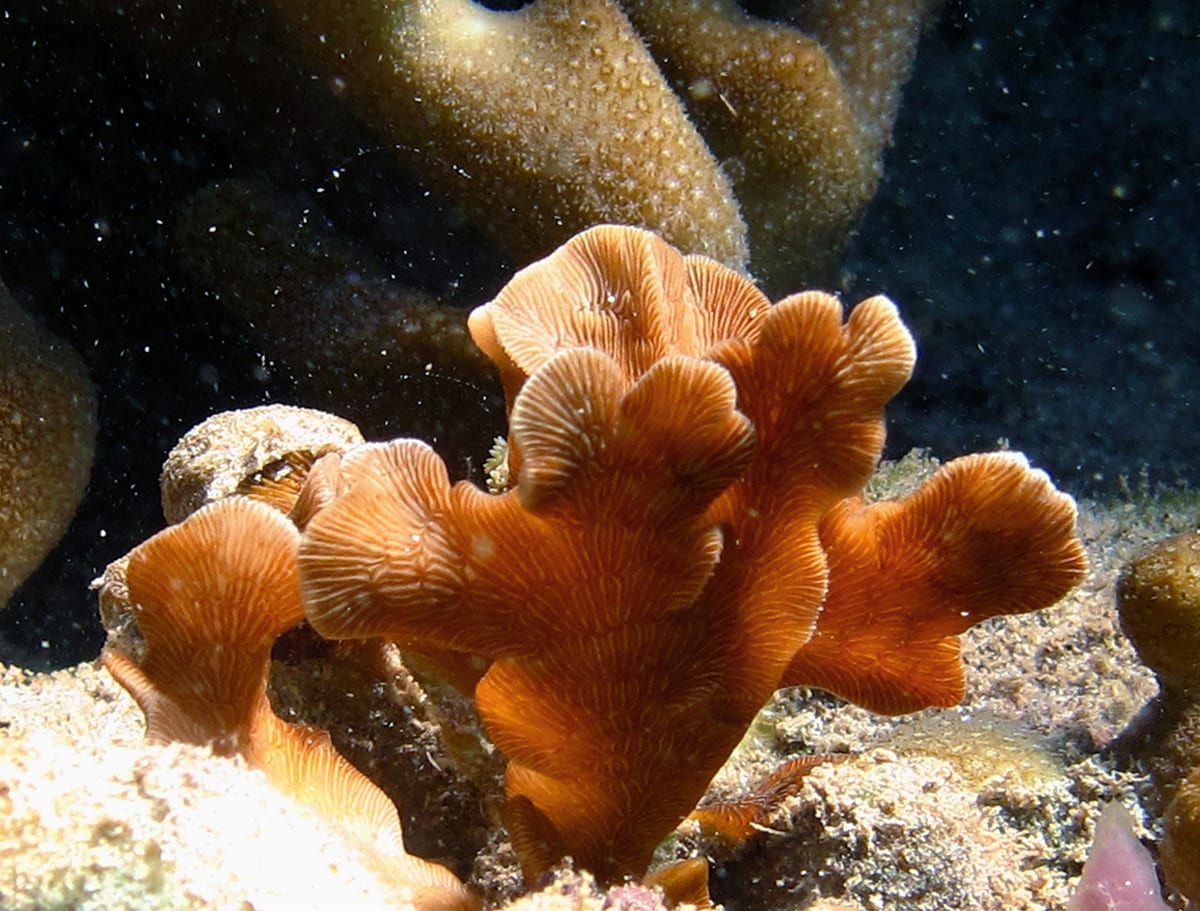
 © Philippe Bourjon / CC BY-SA 3.0
Cactus Coral
The Cactus Coral grows as thin, wavy, leaf-like plates that rise in layers, much like a stack of potato chips. Both faces of each plate carry shallow calices lined up parallel to the edge. The color runs from pale brown to greenish brown, and the margins are often white. A single plate stands about 5 cm tall and is 5 mm thick or less, yet colonies can merge and spread over several meters. It is rated as suited to intermediate keepers, making it a rewarding next step once you are comfortable with basic coral care.
View Cactus Coral encyclopedia →Breeder Wanted!
List on BreederDirect and sell directly to customers nationwide!
BreederDirect's 6 Transparency Commitments
Our Breeder sellers disclose detailed care specs for all Coral listings. We prioritize Aquacultured/CB specimens, verify WYSIWYG photos, and provide difficulty ratings—avoiding wild-caught.
- Aquacultured
- WYSIWYG Photo
- Difficulty Disclosed
- Frag/Colony
- Care Info Included
- Trade name shown
Browse all 241 breeds
Difficulty
Verified breeders wanted for Coral
Breeders are signing up now ahead of launch. Subscribe to be notified when new listings go live.
Getting alerts is free with a member account. When new listings match your saved search, we'll notify you by email and in-app.
Browse other categories
Verified breeders (preview)
Cactus Coral key facts
- Care level
- Intermediate
- Size
- Fronds about 5 cm tall and under 5 mm thick; clusters may spread several metres
- Temperature
- 24〜27℃
- Diet
- Photosynthesis (zooxanthellae) plus plankton
- Lighting
- It needs strong light. Place it in a bright spot, but acclimate it gradually rather than exposing it to intense light at once.
- Flow & Placement
- It is common in calm lagoons and fringing reefs. Give moderate flow that keeps detritus out between the fronds.
- Water Temperature & Quality
- 24-27°C, salinity 33-35 ppt (SG 1.023-1.025); the guideline range is 24-28°C.
- Diet & Feeding
- It extends its tentacles at night to catch plankton. Offer filter-feeder foods or brine shrimp a few times a week.
- Health & Cautions
- Considered peaceful toward tankmates. The thin fronds snap easily, so avoid touching them when cleaning or moving it.
About Cactus Coral
The Cactus Coral forms thin, wavy, leaf-like plates in pale to greenish brown, often with white edges. Rated for intermediate keepers. Learn its traits, what to know before bringing one home, and answers to common questions.
7 things to know before welcoming a Cactus Coral
1Potato-Chip Plates
Thin, wavy, leaf-like plates rise in layers, and both faces carry shallow calices lined up parallel to the edge. The color runs from pale brown to greenish brown, and the margins are often white. This distinctive shape is the main visual draw in a reef tank.
2Intermediate Level
This coral is rated as suited to intermediate keepers. It helps to be comfortable with water quality management and with adjusting lighting and flow before bringing one home. If you are new to corals, focus first on building a stable tank.
3Light and Flow
It hosts symbiotic algae called zooxanthellae that use light, so place it where enough light reaches it. Sudden exposure to strong light can stress a coral, so acclimate it gradually after introduction. Aim for gentle flow that reaches the whole colony and keeps debris from settling on the plates.
4Room to Spread
Because the plates stand upright and spread out, they can touch neighboring corals or cast shade on the plates below. Leave generous space around the colony to allow for growth. Each plate is about 5 cm tall and 5 mm thick or less, but colonies can merge and spread over several meters.
5Keep Plates Clean
Thin plates layered together can trap debris on their surfaces and between the layers. Review the flow pattern from time to time and check for spots where debris collects. Handle the coral as little as possible, and do so gently when necessary.
6White Edges and Health
White margins are a common trait of this coral, so they do not necessarily signal a problem. However, if the white area spreads quickly, the tissue thins, or the plates shrink, it is a cue to review water quality, light, and flow. Noting how it looks right after arrival gives you a baseline for spotting changes.
7Before You Bring It Home
The Cactus Coral is listed in CITES Appendix II. Before it arrives, prepare its spot in the tank, set up lighting and flow, and confirm that water quality has settled. If you have questions about its origin or care history, ask the seller so you can decide with confidence.
Frequently asked questions about Cactus Coral
- Q.Can a beginner keep it?
- A.It is rated as suited to intermediate keepers. If you have no coral experience, start by building a tank where water quality, lighting, and flow are stable, and consider adding it once you feel comfortable.
- Q.How large does it get?
- A.A single plate is about 5 cm tall and 5 mm thick or less. Colonies can merge and spread over several meters, though how far one spreads in a tank depends on its conditions. Plan for plenty of open space around it.
- Q.How long does it live?
- A.There is little documented information on its lifespan, so a specific number of years cannot be given. What matters is keeping water quality, light, and flow stable and checking on its condition every day.
- Q.Do white edges mean something is wrong?
- A.White edges are a common trait of this coral in themselves. If the white area spreads over a short time or the tissue starts to peel away, check water quality, light, and flow, and consult the seller or an experienced keeper.
- Q.Can I keep it with other corals?
- A.Its plates can spread into neighboring corals or shade them, so the basic approach is to leave ample space between colonies. How well it gets along with other species depends on your tank and layout, so adjust as you observe.
Useful tools for Cactus Coral care
Learn more about Cactus Coral in the encyclopedia
View Cactus Coral encyclopedia entry →
Care difficulty, lifespan, size and diet — all basics covered.
More in this category
Can't find the one you're looking for?
Post your wishes for free and breeders with matching animals will contact you with introductions.