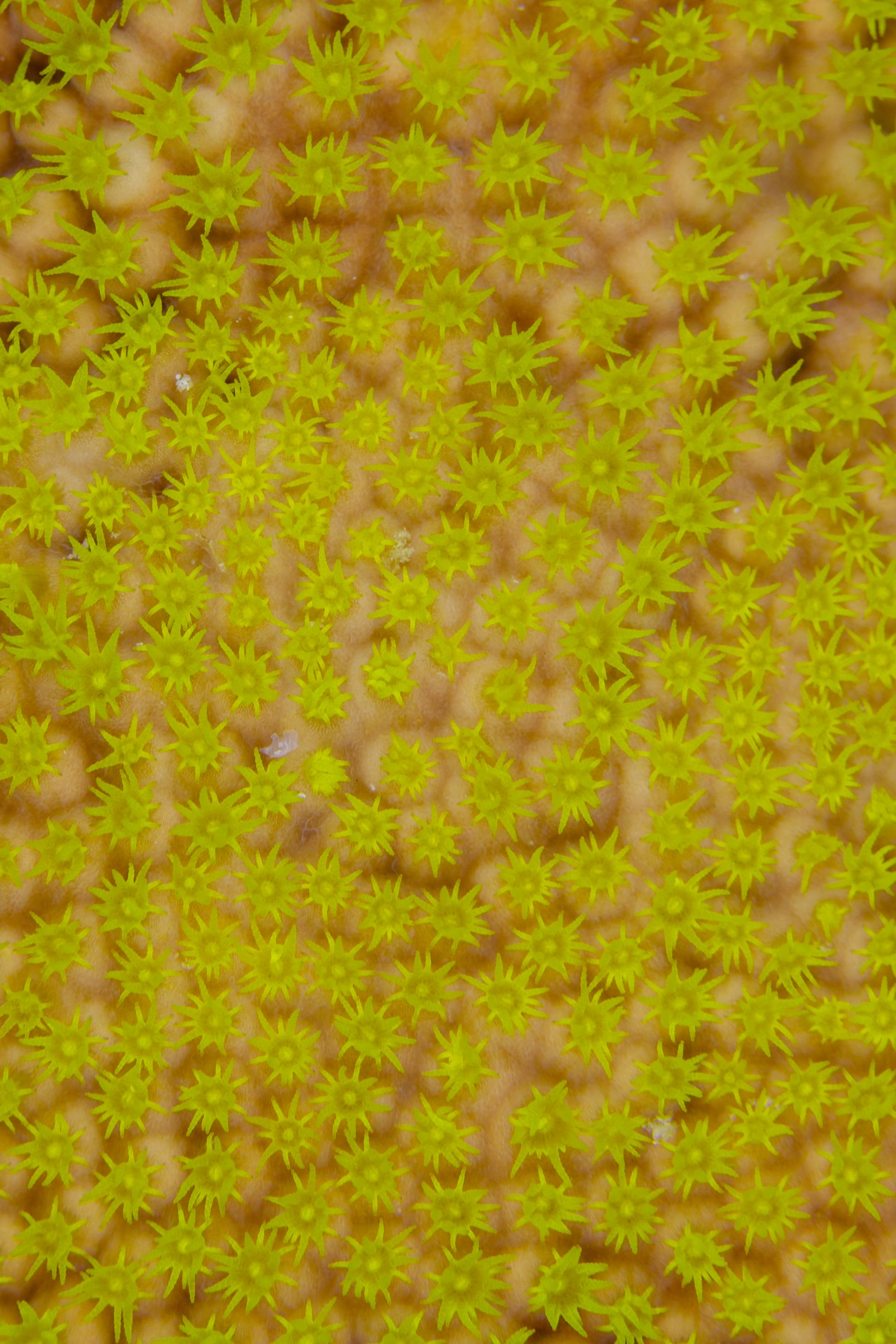
 © Diego Delso / CC BY-SA 4.0
Encrusting Turbinaria
Encrusting Turbinaria grows from a crust-like sheet into a low dome. Its Japanese name evokes a mortar bowl, yet this coral rarely rises into upright plates, and its low, spreading form adds a calm presence to a reef tank. Its thick-walled, conical calyces, about 2.5 mm across, sit in a pattern where the coenosteum between them looks darker than the calyx walls. Unusually for its genus, it avoids turbid water, so keeping the tank clear matters. It is rated for intermediate keepers, and a domed colony can reach about 50 cm across.
View Encrusting Turbinaria encyclopedia →0% commission on your first sales!Register by September 30, 2026 and your first 2 sales are commission-free!
Breeder Wanted!
List on BreederDirect and sell directly to customers nationwide!
Br-Choku's 6 Transparency Standards
Our Breeder sellers disclose detailed care specs for all Coral listings. We prioritize Aquacultured/CB specimens, verify WYSIWYG photos, and provide difficulty ratings—avoiding wild-caught.
- Aquacultured
- WYSIWYG Photo
- Difficulty Disclosed
- Frag/Colony
- Care Info Included
- Trade name shown
Browse all 241 breeds
Difficulty
Verified breeders wanted for Coral
Breeders are signing up now ahead of launch. Subscribe to be notified when new listings go live.
Getting alerts is free with a member account. When new listings match your saved search, we'll notify you by email and in-app.
Browse other categories
Verified breeders (preview)
Encrusting Turbinaria key facts
- Care level
- Intermediate
- Lifespan
- Little data available
- Size
- Dome-shaped colonies about 50 cm across (Wikipedia)
- Temperature
- 24〜27℃
- Diet
- Photosynthesis (zooxanthellae) plus plankton
- Lighting
- It hosts zooxanthellae and lives on upper reef slopes, avoiding turbid water (Wikipedia). Give clear water and moderate or brighter light.
- Flow & Placement
- It spreads as a crust and grows into a dome, so attach it to a flat rock and give moderate flow that keeps the surface clean.
- Water Temperature & Quality
- 24-27°C, salinity 33-35 ppt (SG 1.023-1.025); Reeflex gives 24-29°C.
- Diet & Feeding
- It extends its polyps to feed, mostly at night (Wikipedia). Offer fine particulate or plankton-type food after lights-out.
- Health & Cautions
- Moderately easy (Reeflex). Small colonies resemble T. radicalis (Corals of the World), so also check corallite size and shape.
About Encrusting Turbinaria
Encrusting Turbinaria grows from a crust into a low dome, with thick-walled calyces and darker coenosteum. Unusual for its genus, it avoids turbid water. Intermediate level; colonies reach about 50 cm across.
7 things to know before welcoming a Encrusting Turbinaria
1A Low, Spreading Form
It grows from a crust into a low dome and rarely forms upright plates. The name suggests a mortar bowl, but this species stays low and settled instead.
2Avoids Turbid Water
Unusually for its genus, this coral avoids turbid water. Careful water-quality management and well-kept filtration help maintain the clear water it prefers. If the water turns cloudy, track down the cause and fix it first.
3Intermediate Difficulty
Its difficulty is rated for intermediate keepers. It is safer to bring one home after your tank has stabilized and daily maintenance feels routine, not right after setup.
4Plan for Its Size
A domed colony is reported to reach about 50 cm across. Because it spreads in a crust, choose a spot with room to spare so it does not touch neighboring corals. How large it gets in a tank depends on conditions, so review the layout as it grows.
5Lifespan Is Unclear
There is little reference material on lifespan, so no clear figure is known. Plan for a long-term commitment and keep notes on water quality and appearance, which makes changes easier to spot.
6How to Tell It Apart
In the skeleton, thick-walled conical calyces about 2.5 mm across are lined up, and the coenosteum between them is darker than the calyx walls. The details are tiny, so check the species name against the seller's description and photos.
7Observe Daily
Look over the coral's color and its spreading edges every day so you notice anything unusual early. Since it avoids turbid water, check the water clarity at the same time.
Frequently asked questions about Encrusting Turbinaria
- Q.Is it suitable for beginners?
- A.Its difficulty is rated for intermediate keepers. It is best considered once your tank is stable and you are comfortable with water-quality management.
- Q.How large does it get?
- A.A domed colony is reported to reach about 50 cm across. Since it grows from a crust into a low dome, plan for sideways spread rather than height when choosing a spot.
- Q.Can it be kept in turbid water?
- A.Unusually for its genus, it avoids turbid water. Clear water suits it best, so check the water clarity regularly.
- Q.How does it differ from other Turbinaria?
- A.The most noticeable difference is that it rarely forms upright plates, growing from a crust into a low dome instead. In the skeleton, the thick-walled conical calyces and the coenosteum that is darker than the calyx walls are also useful clues.
- Q.Is it listed under CITES?
- A.Yes, Encrusting Turbinaria is listed in CITES Appendix II. Please also check the details on each listing page.
Useful tools for Encrusting Turbinaria care
Learn more about Encrusting Turbinaria in the encyclopedia
View Encrusting Turbinaria encyclopedia entry →
Care difficulty, lifespan, size and diet — all basics covered.
More in this category
Can't find the one you're looking for?
Post your wishes for free and breeders with matching animals will contact you with introductions.