Source: Wikimedia Commons
Blue Coral
BeginnerHeliopora coerulea
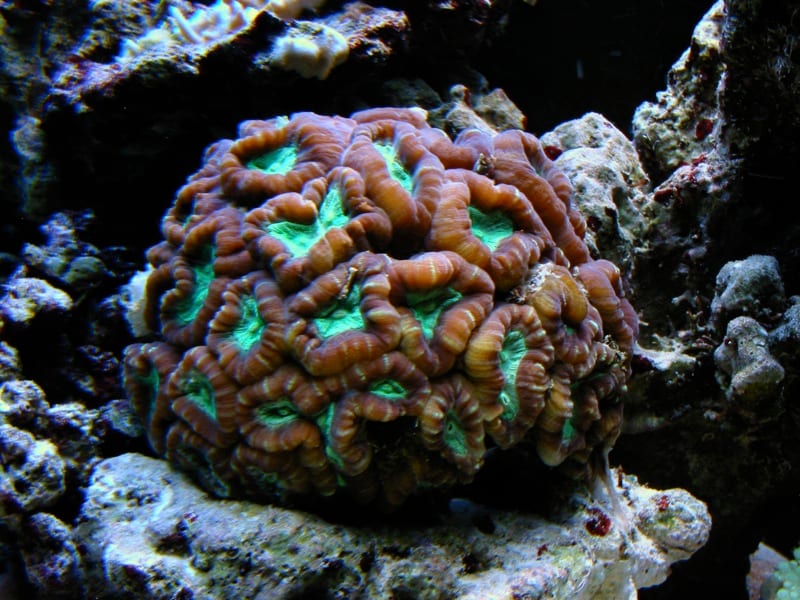
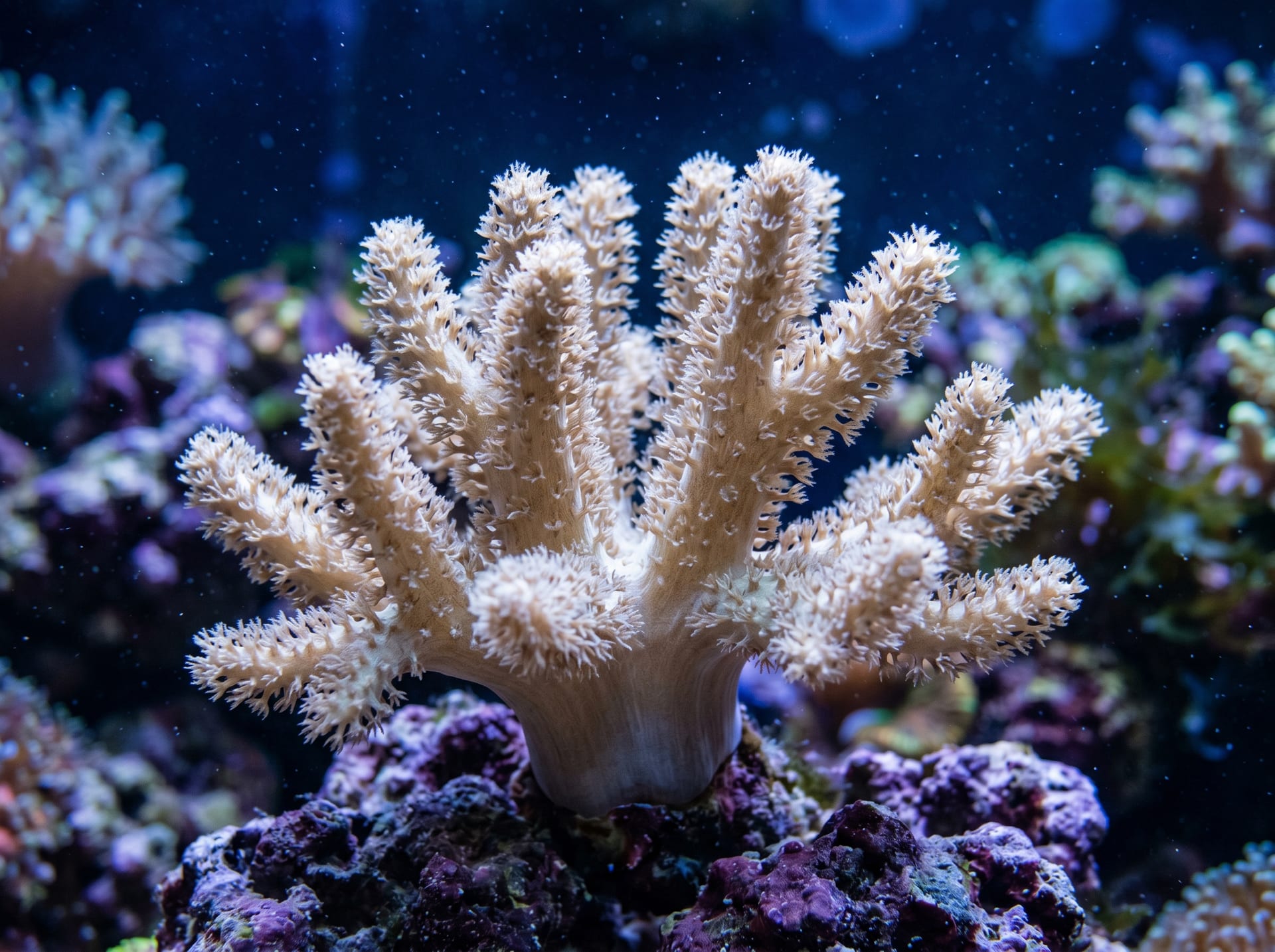
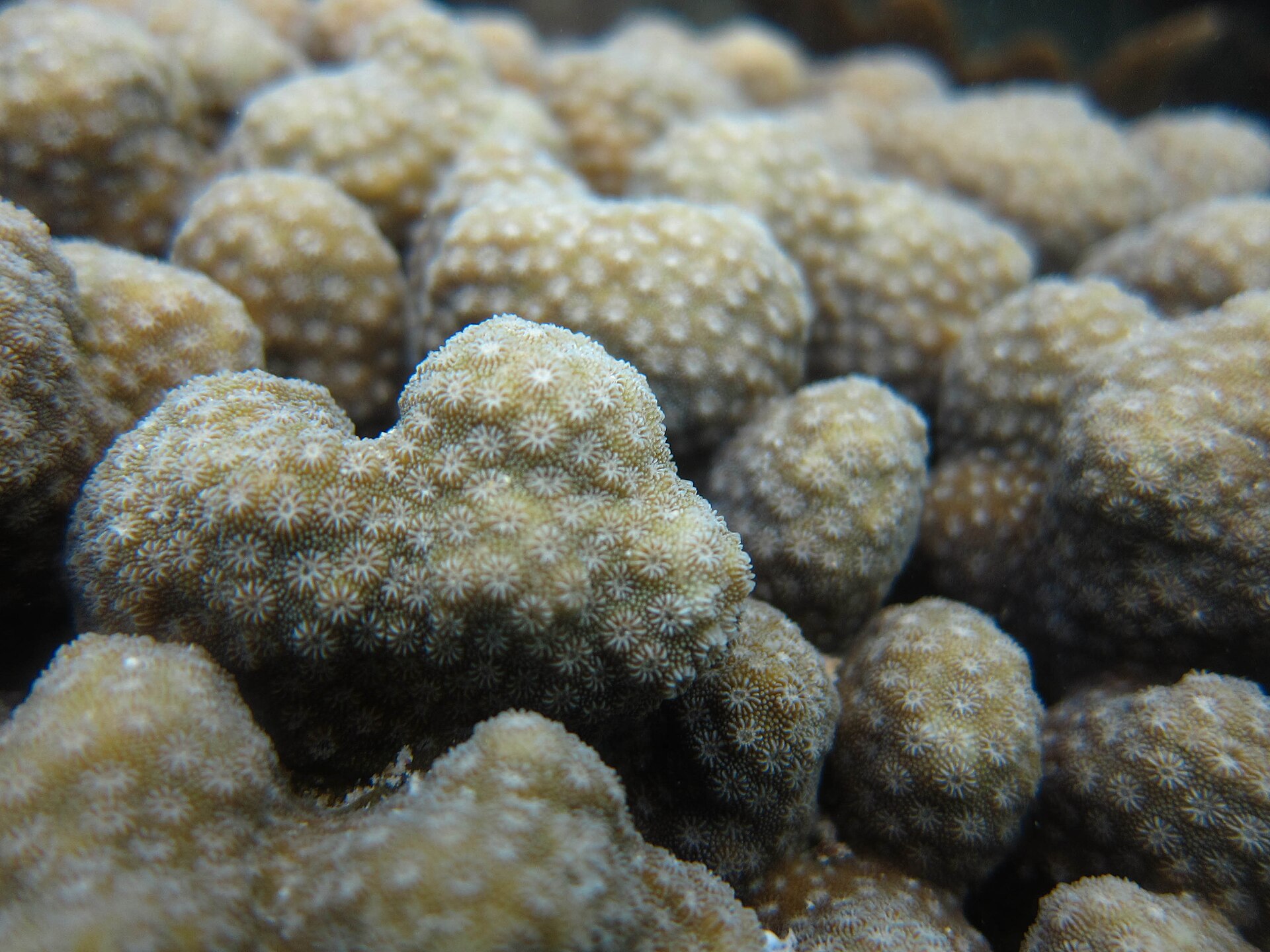
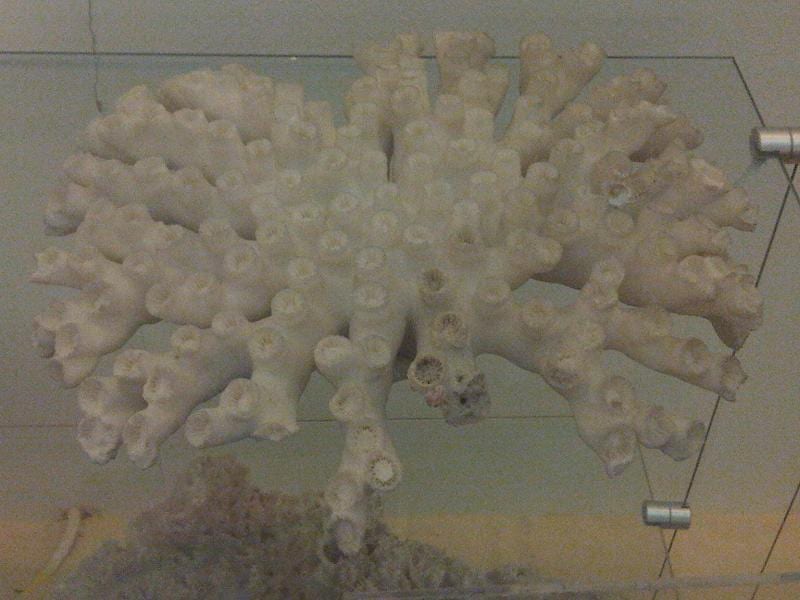
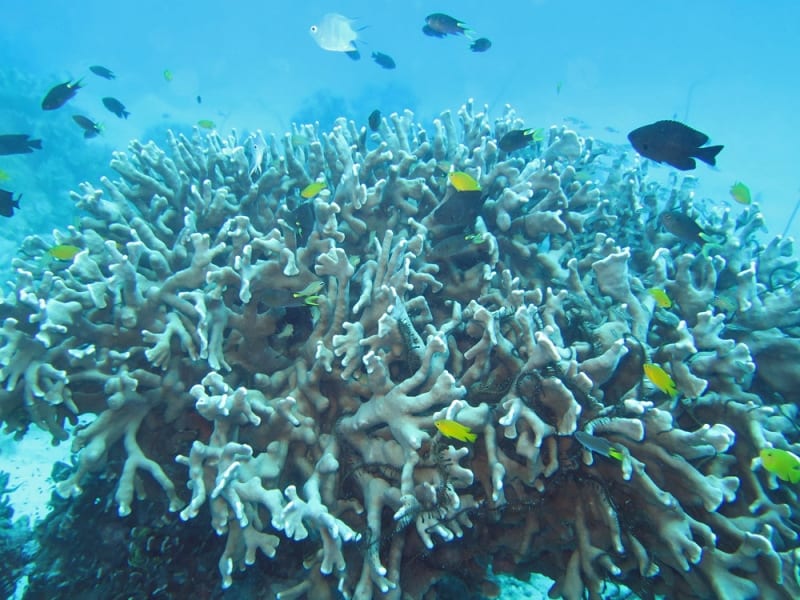
An unusual octocoral that builds a hard limestone skeleton. Broken open, the skeleton is vivid blue inside, and brown polyps with eight feathery tentacles open from pores on the surface. Colonies are plate-like, columnar or branching.
Difficulty
Beginner
Temperature
24〜27℃
Size
Large colonies exceed 1 m across
Diet
Mainly photosynthesis (zooxanthellae); feeding only as a supplement
About
Heliopora coerulea is an octocoral of the family Helioporidae and the only octocoral known to build a massive aragonite skeleton like that of stony corals. The skeleton surface is greyish blue, but broken open it is vivid blue inside, coloured by iron salts. Pores about 1 mm across cover the surface, and pale brown polyps open eight feathery tentacles typical of octocorals. Colonies are plate-like, columnar or branching, and large ones exceed a metre. It lives on shallow reefs of the Indian and Pacific Oceans; in Japan it occurs from the Amami Islands southward, and Shiraho on Ishigaki Island has one of the world's largest stands. It is common from the intertidal to about 10 m on wave-exposed shallows and is notably heat-tolerant. A second species, H. hiberniana, was described from northwestern Australia in 2018. In aquaria it is very hardy and grows without special feeding given strong light and fairly brisk flow. Specialist shops in Japan stock it from time to time.
Source: Wikipedia (CC BY-SA 4.0)
Size of the Blue Coral
The Blue Coral grows to Large colonies exceed 1 m across.
Temperature & humidity for the Blue Coral
The ideal temperature for the Blue Coral is 24〜27℃.
Basic Info
Origin
Shallow Indo-Pacific reefs (in Japan from the Amami Islands southward)
Size
Large colonies exceed 1 m across
Temperature
24〜27℃
Care Specifications
- Water Temp.
- 24–27℃
- Specific Gravity
- 1.023–1.025
- Salinity
- 33–35 ppt
- Min. Tank
- 200 L
Light: High (PAR>150)Flow: High
Sources: Saltcorner (Bob Goemans): Heliopora coerulea / Reef Builders: Heliopora are Not-So-Soft, Soft Corals / Kotobank (Nipponica, Britannica): Heliopora coerulea / Reeflex (Heliopora coerulea) / Wikipedia (Blue coral)
References & Sources
Edited & verified by: BreederDirect editorial team
The taxonomic, regulatory, and husbandry data on this page are compiled and verified against the authoritative primary sources below.
Primary sources
- Wikipedia
- Species+ (CITES listing of Heliopora coerulea)
- Okinawa Prefecture: Collection of reef-building corals is prohibited
- e-Gov: Natural Parks Act (Art. 22, marine park zones)
- Saltcorner (Bob Goemans): Heliopora coerulea
- Reef Builders: Heliopora are Not-So-Soft, Soft Corals
- Kotobank (Nipponica, Britannica): Heliopora coerulea
- Reeflex (Heliopora coerulea)
- WoRMS
Taxonomy & Authority
Regulations & Conservation Status
CITES Appendix IIIUCN LC · Least Concern
Domestic law: Okinawa's fisheries adjustment regulations include the blue corals in 'reef-building corals', so collecting them in Okinawan waters is completely prohibited, as is possessing or selling illegally collected specimens. Cultured corals are exempt, and the prefecture advises buyers to confirm a specimen is cultured (on an artificial base or tagged). In marine park zones of national and quasi-national parks, taking designated species requires a permit (Natural Parks Act, Art. 22).
The blue coral family (Helioporidae) is listed in CITES Appendix II (checked on Species+). International trade requires export permits, but no registration is needed to sell or transfer specimens within Japan.
Sources: Species+ (CITES listing of Heliopora coerulea) / Okinawa Prefecture: Collection of reef-building corals is prohibited / e-Gov: Natural Parks Act (Art. 22, marine park zones)
Regulations may change. Always verify the latest information with the relevant authorities.
Blue Coral Listings
Loading latest listingsFind listings for this species