Source: Wikimedia Commons
Cyphastrea Serailia
BeginnerCyphastrea serailia
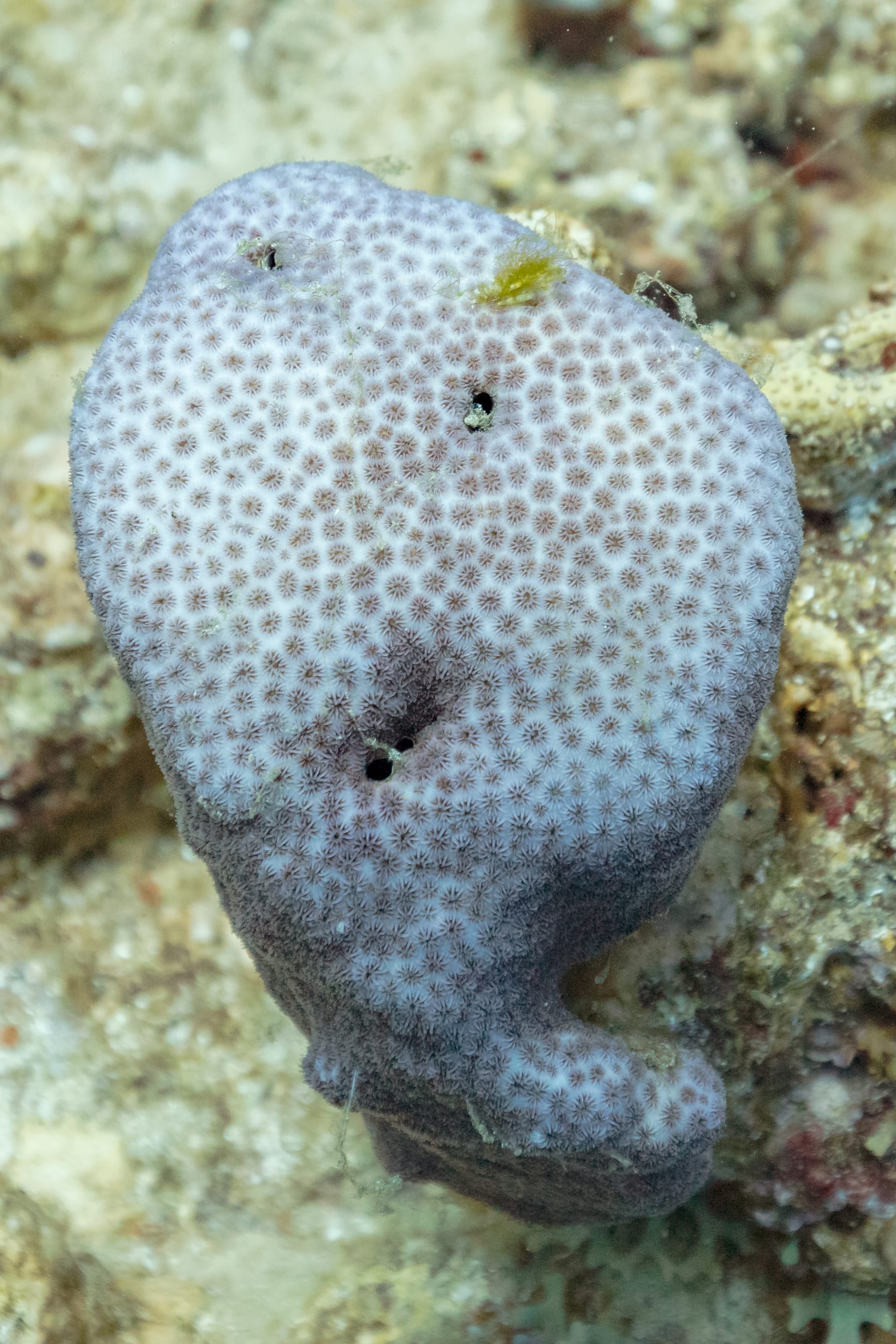
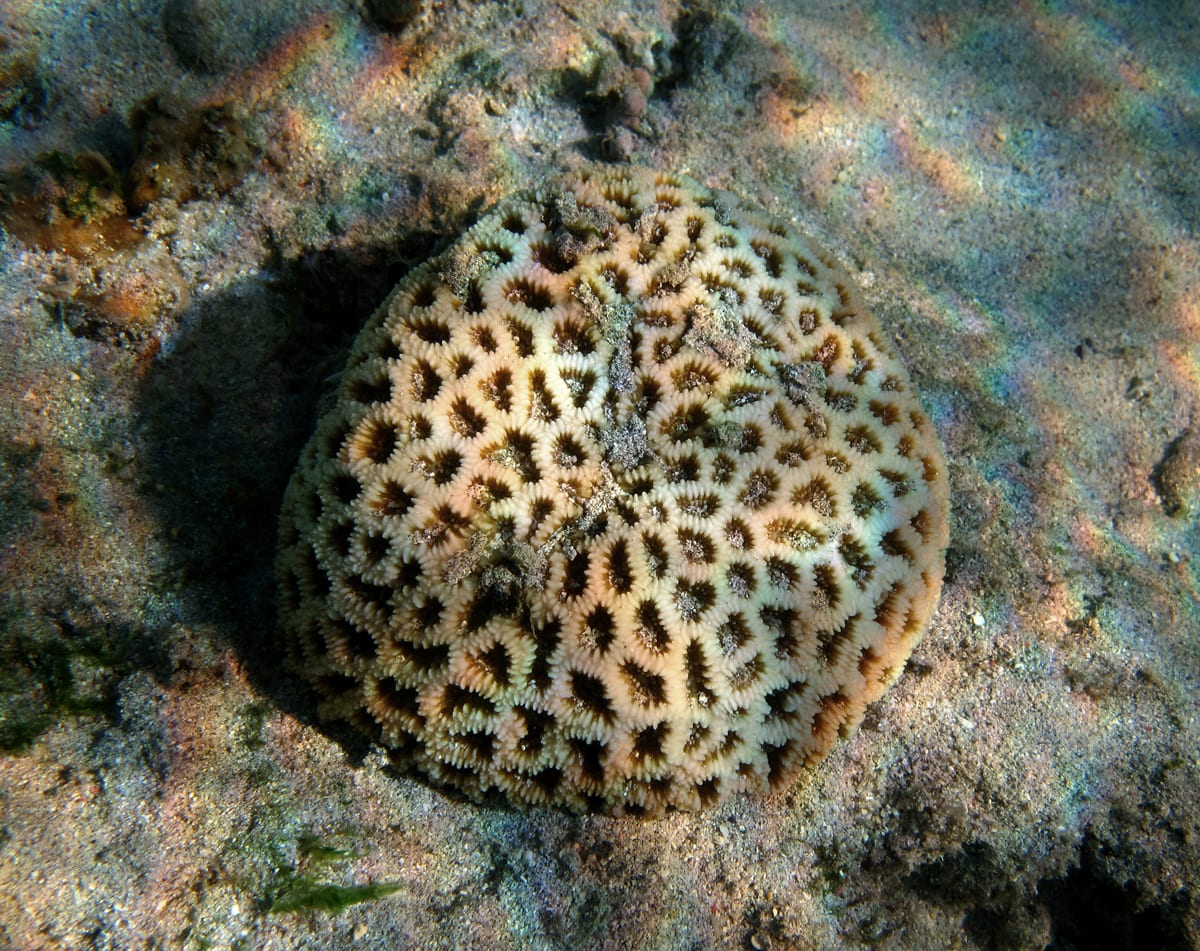
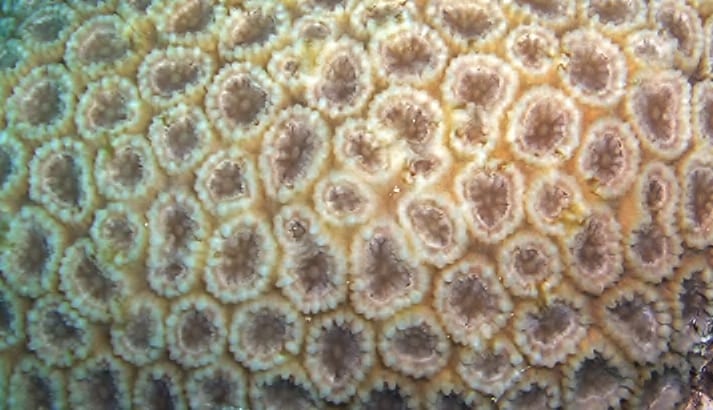
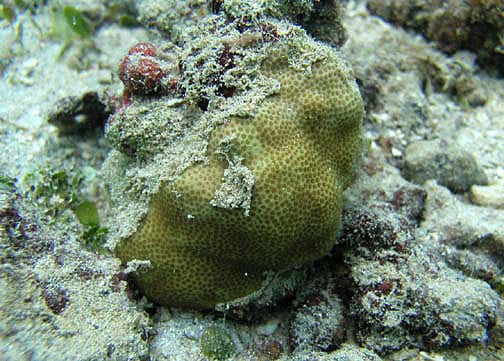
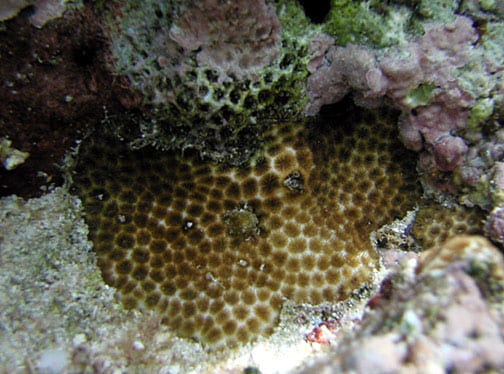
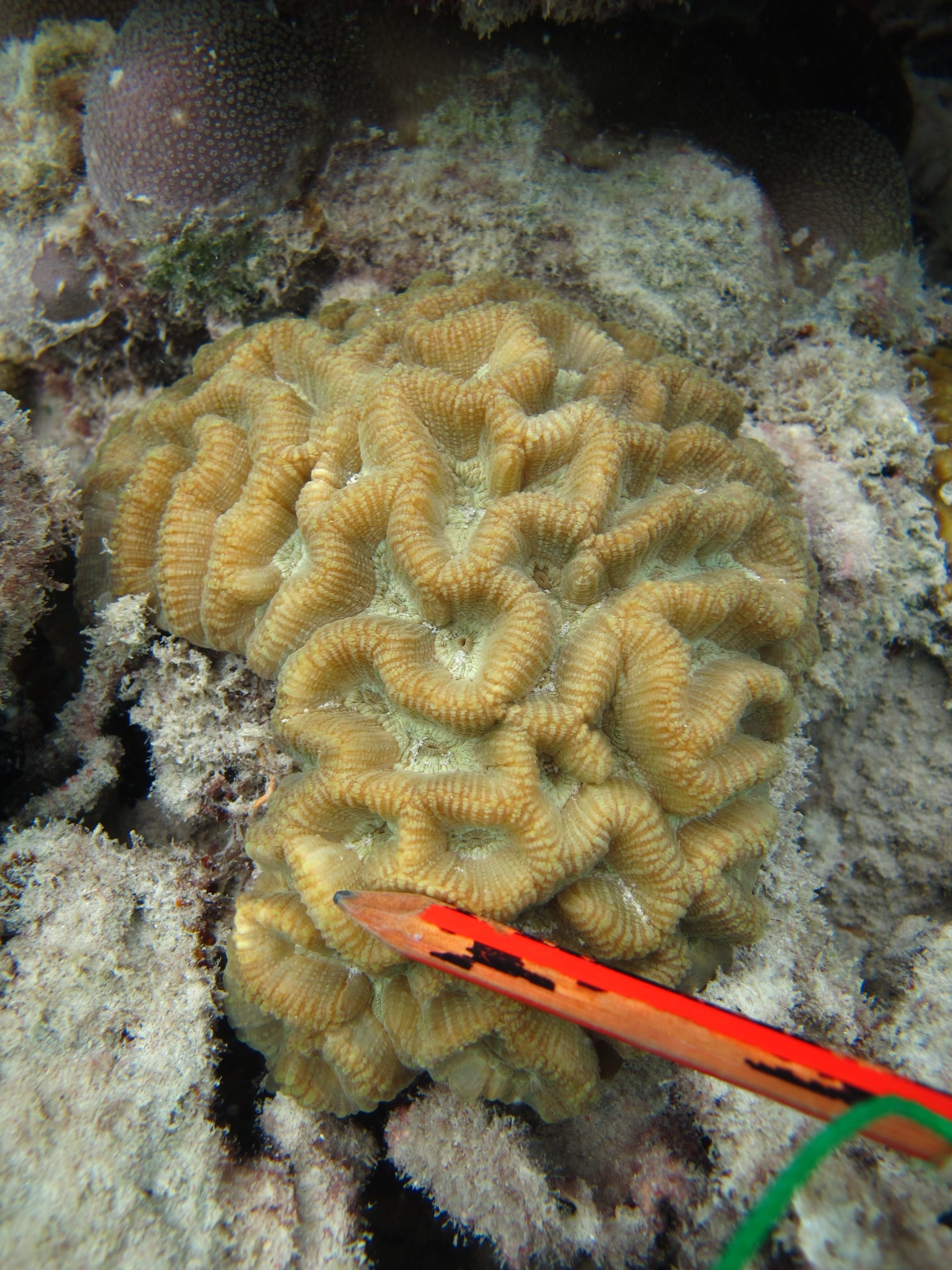
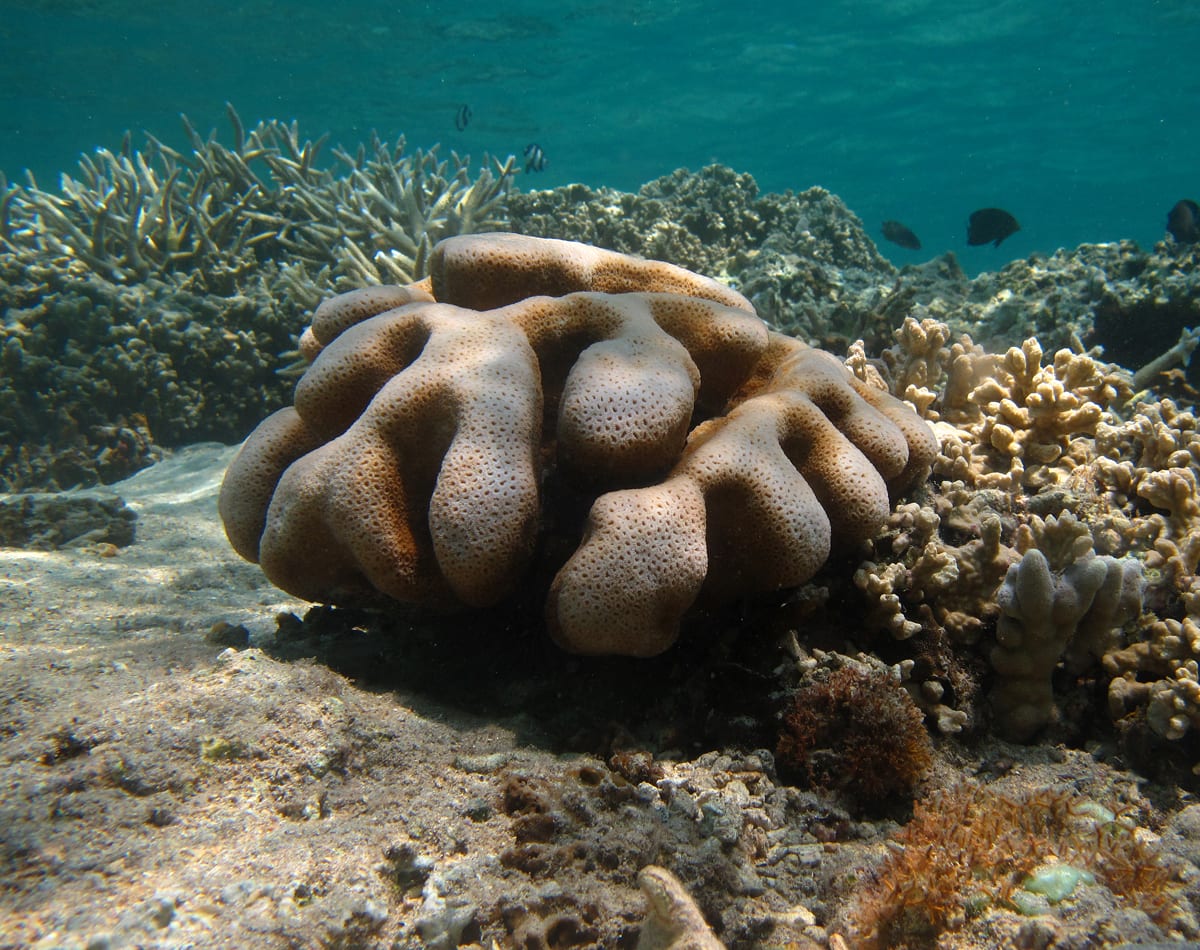
A merulinid reef coral whose small corallites stand as low knobs scattered over the skeleton surface. Called the lesser knob coral in English, it forms encrusting to hemispherical colonies and is widespread across the Indo-Pacific.
Difficulty
Beginner
Temperature
24〜27℃
Size
Colonies from about 10 cm to several tens of cm
Diet
Mainly nutrition from symbiotic zooxanthellae, supplemented with fine particulate coral foods offered at night.
About
Cyphastrea serailia, the lesser knob coral, is a reef-building merulinid coral described by Forsskal in 1775. The distribution records held by WoRMS run from the Red Sea, East Africa, Kenya, Mozambique, Mauritius, the Seychelles, the Maldives and Chagos to Indonesia, the Philippines, Papua New Guinea, the Marshall Islands and Australia. Colonies range from encrusting sheets over rock to hemispherical mounds, and the genus is recognised by its small corallites, which stand out as low knobs scattered across the skeleton surface. Colonies are usually brown or green, sometimes with the corallites a contrasting colour. It grows well under moderate light and moderate flow and is reasonably fast-growing, so it is treated as a hardy beginner stony coral, though it encrusts outwards and will overgrow neighbours, so it needs room. As a scleractinian it is on CITES Appendix II.
Source: Wikipedia (CC BY-SA 4.0)
Size of the Cyphastrea Serailia
The Cyphastrea Serailia grows to Colonies from about 10 cm to several tens of cm.
Temperature & humidity for the Cyphastrea Serailia
The ideal temperature for the Cyphastrea Serailia is 24〜27℃.
Basic Info
Origin
Red Sea, East Africa and Kenya through the Indian Ocean to Indonesia, the Philippines, Papua New Guinea, the Marshall Islands and Australia
Size
Colonies from about 10 cm to several tens of cm
Temperature
24〜27℃
Care Specifications
- Carbonate (KH)
- 8–12 dKH
- Water Temp.
- 24–27℃
- Specific Gravity
- 1.023–1.025
- Salinity
- 33–35 ppt
- Calcium (Ca)
- 380–450 ppm
- Magnesium (Mg)
- 1200–1400 ppm
LPSLight: Medium (PAR 50-150)Flow: MediumPlacement: Flexible
Sources: LiveAquaria / AlgaeBarn: Calcium Supplementation / WoRMS (World Register of Marine Species)
References & Sources
Edited & verified by: BreederDirect editorial team
The taxonomic, regulatory, and husbandry data on this page are compiled and verified against the authoritative primary sources below.
Taxonomy & Authority
Accepted name: Cyphastrea serailia (Forskål, 1775)
Synonyms: Cyphastraea serailia (Forskål, 1775), Madrepora serailia Forskål, 1775
Authority databases: WoRMS
Nomenclature follows global taxonomic authority databases.
Regulations & Conservation Status
CITES Appendix II
Sources: CITES Appendix II (Scleractinia spp. listed as an order)
Regulations may change. Always verify the latest information with the relevant authorities.
Cyphastrea Serailia Listings
Loading latest listingsFind listings for this species