Source: Wikimedia Commons
Leptastrea
IntermediateLeptastrea purpurea
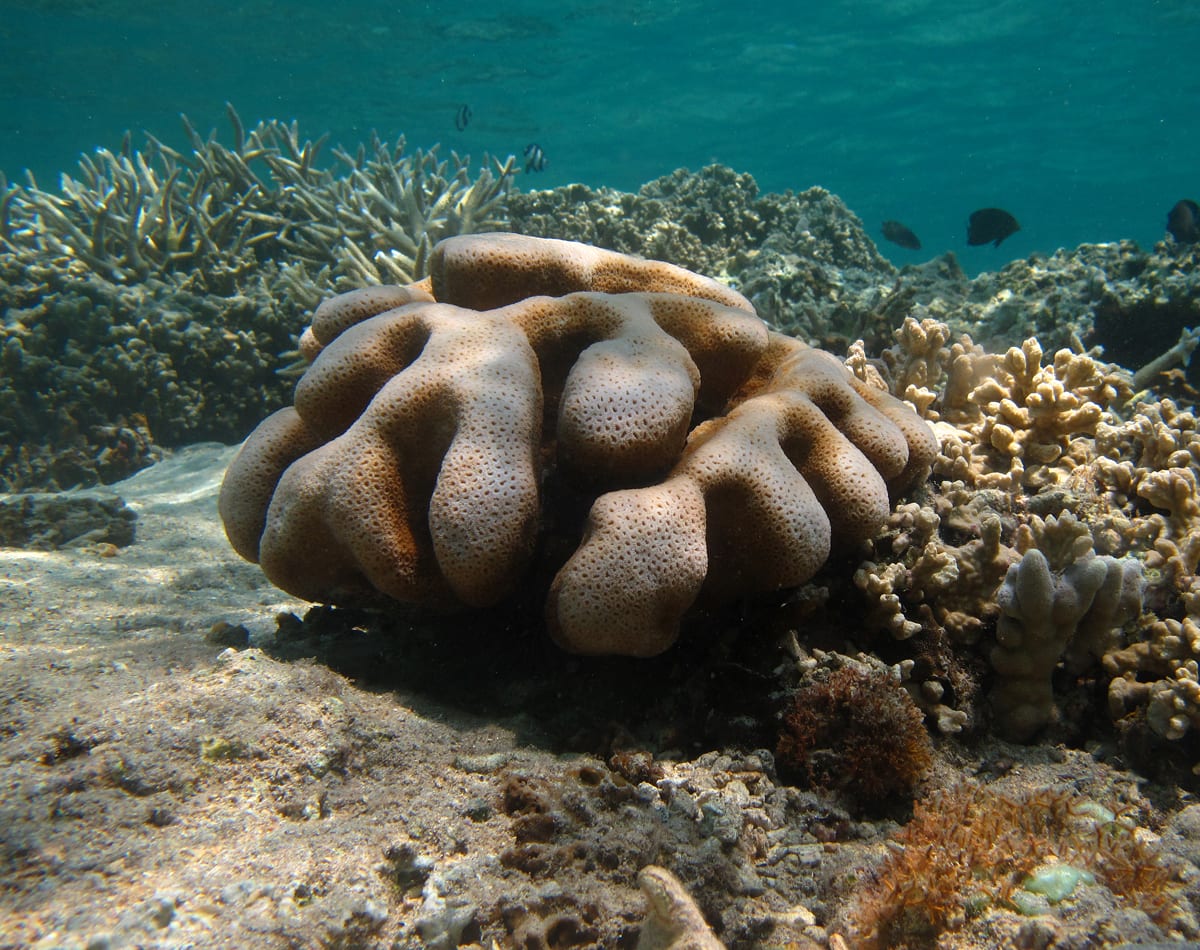
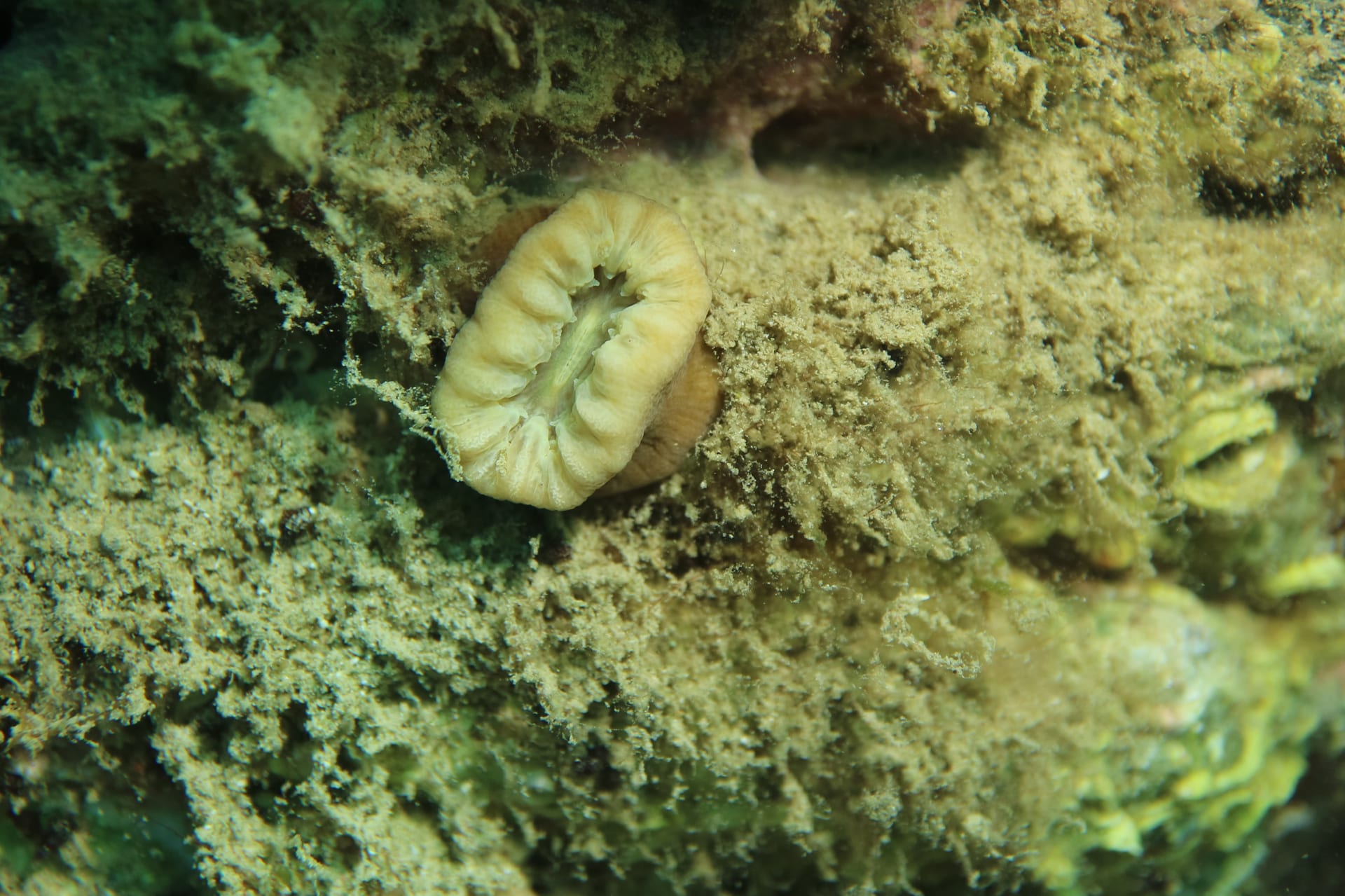
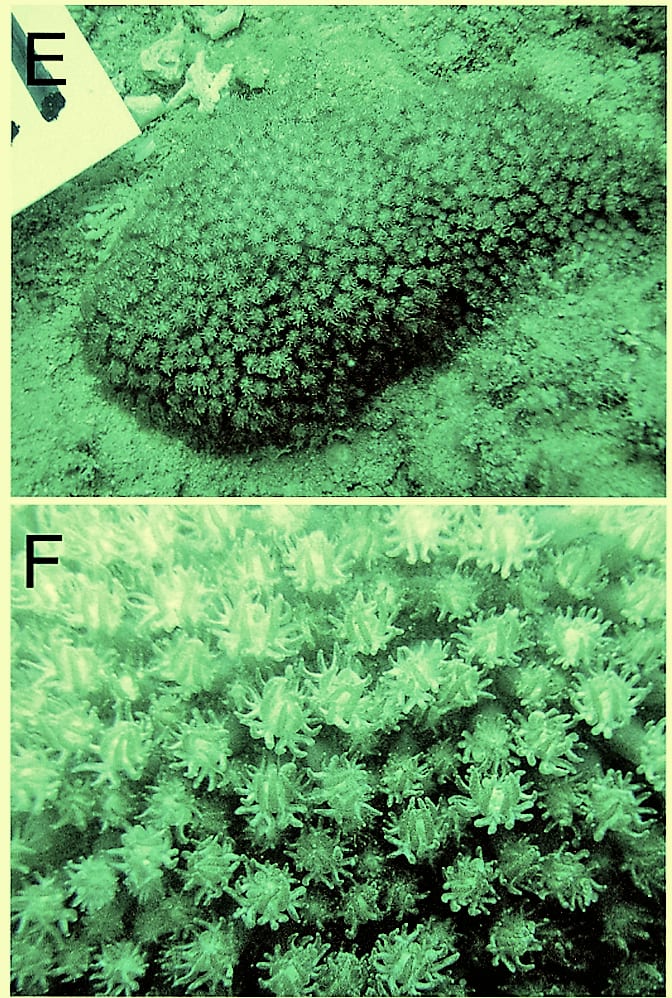
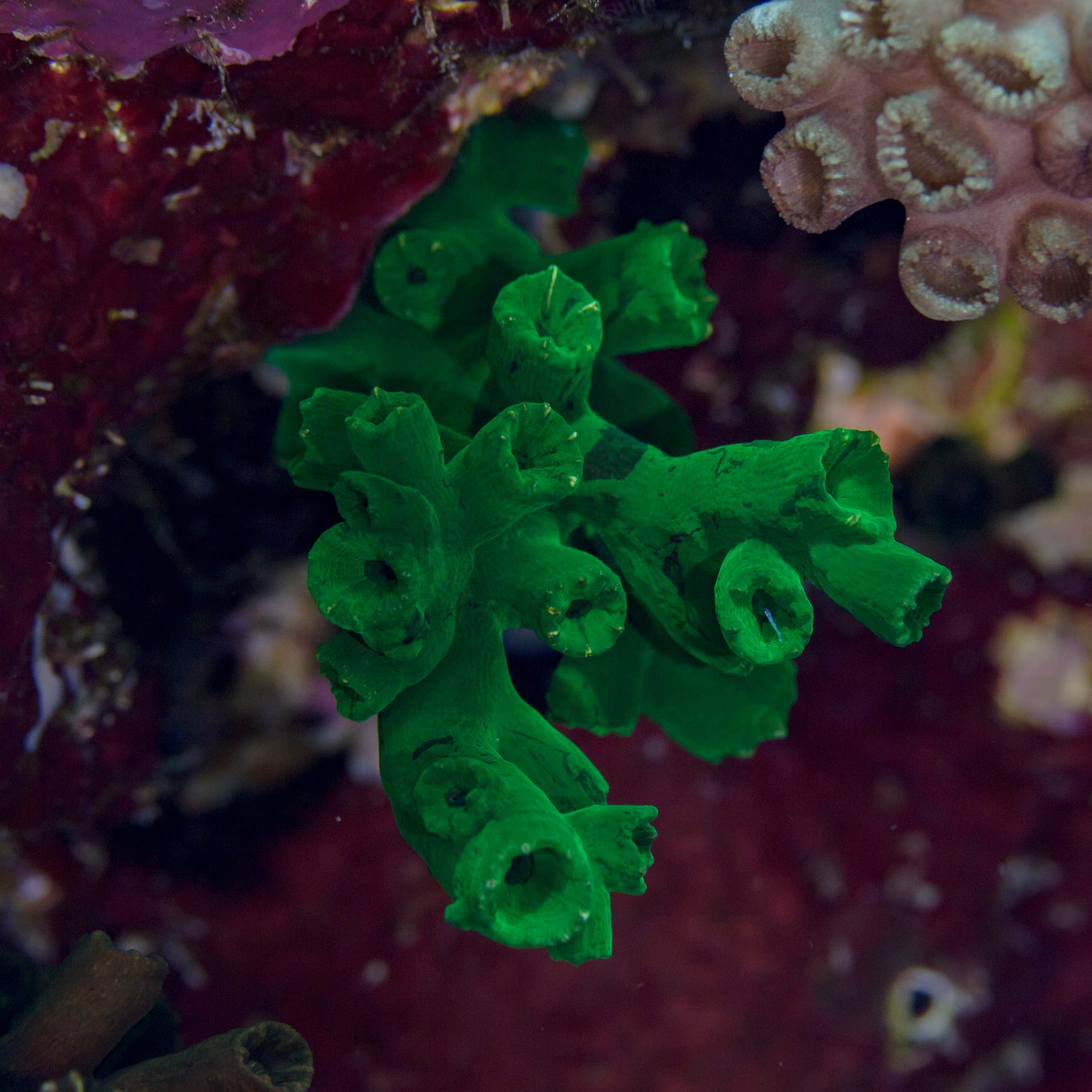
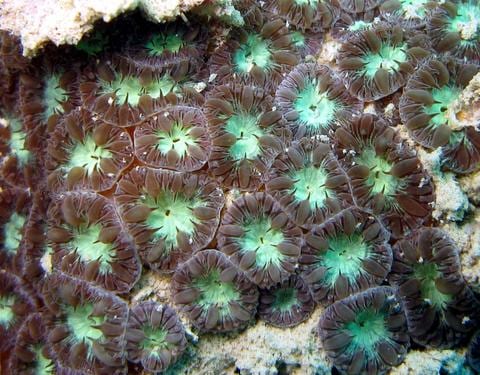
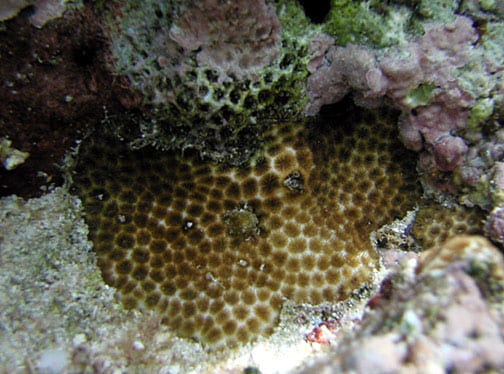
An encrusting stony coral that spreads as a thin sheet over rock. Known in English as the crust coral, it usually shows contrasting colour in the centre of each corallite, and the orange-eye colour form is well known in the trade.
Difficulty
Intermediate
Temperature
24〜27℃
Size
Encrusting colonies to around 10-20 cm across
Diet
Mainly nutrition from symbiotic zooxanthellae, supplemented with fine particulate coral foods offered at night.
About
Leptastrea purpurea, the crust coral, is an encrusting stony coral in the family Leptastreidae. The distribution records held by WoRMS run from the Red Sea, East Africa, Kenya, Madagascar, the Maldives and Chagos to Indonesia, the Philippines, Papua New Guinea, the Marshall Islands, American Samoa and Midway Atoll, covering much of the Indo-Pacific. Colonies spread as a thin sheet over rock and live rock, with nearly circular corallites packed against one another. The centre of each corallite is often a contrasting colour, and specimens with bright orange or red oral discs are traded as orange-eye Leptastrea. It grows well under moderate light and moderate flow, but it is aggressive and will digest the tissue of anything it touches to take the substrate. Growth is steady and encrusting, filling gaps in the rockwork. As a scleractinian it is on CITES Appendix II.
Source: Wikipedia (CC BY-SA 4.0)
Size of the Leptastrea
The Leptastrea grows to Encrusting colonies to around 10-20 cm across.
Temperature & humidity for the Leptastrea
The ideal temperature for the Leptastrea is 24〜27℃.
Basic Info
Origin
Red Sea, East Africa and Madagascar through the Indian Ocean to Indonesia, the Philippines, Papua New Guinea, the Marshall Islands and Midway Atoll
Size
Encrusting colonies to around 10-20 cm across
Temperature
24〜27℃
Care Specifications
- Carbonate (KH)
- 8–12 dKH
- Water Temp.
- 24–27℃
- Specific Gravity
- 1.023–1.025
- Salinity
- 33–35 ppt
- Calcium (Ca)
- 380–450 ppm
- Magnesium (Mg)
- 1200–1400 ppm
LPSLight: Medium (PAR 50-150)Flow: MediumPlacement: Flexible
Sources: LiveAquaria / AlgaeBarn: Calcium Supplementation / WoRMS (World Register of Marine Species)
References & Sources
Edited & verified by: BreederDirect editorial team
The taxonomic, regulatory, and husbandry data on this page are compiled and verified against the authoritative primary sources below.
Taxonomy & Authority
Accepted name: Leptastrea purpurea (Dana, 1846)
Synonyms: Astraea purpurea Dana, 1846, Astraea (Fissicella) purpurea Dana, 1846
Authority databases: WoRMS
Nomenclature follows global taxonomic authority databases.
Regulations & Conservation Status
CITES Appendix II
Sources: CITES Appendix II (Scleractinia spp. listed as an order)
Regulations may change. Always verify the latest information with the relevant authorities.
Leptastrea Listings
Loading latest listingsFind listings for this species