Acanthastrea and Blastomussa Care Guide | How to Raise Vibrant LPS Corals
Learn how to care for the colorful LPS corals "Acanthastrea (Akan)" and "Blastomussa." This guide covers key points for lighting, water flow, feeding, and water quality management, and explains in detail why these corals are beginner-friendly.
Key Takeaways
Learn how to care for the colorful LPS corals "Acanthastrea (Akan)" and "Blastomussa." This guide covers key points for lighting, water flow, feeding, and water quality management, and explains in detail why these corals are beginner-friendly.
Related Species
About Acanthastrea and Blastomussa
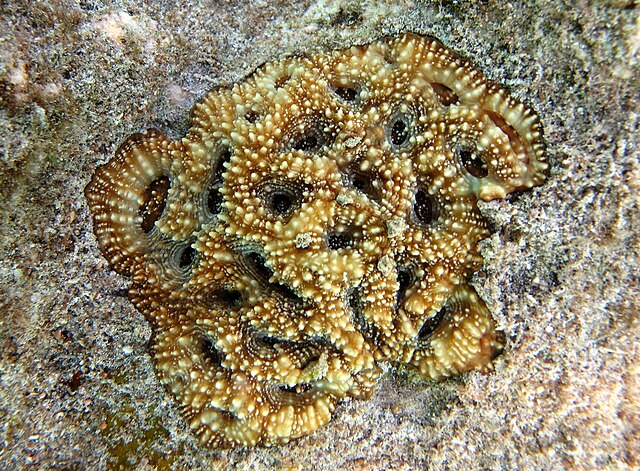
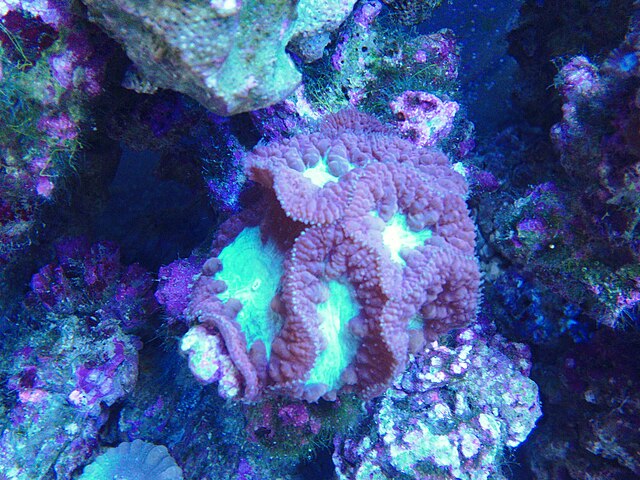
Acanthastrea (commonly called Akan) and Blastomussa are both LPS (Large Polyp Stony) corals found in coral reef ecosystems. Characterized by thick, colorful polyps available in shades of fluorescent green, orange, red, and purple, they are treasured by hobbyists as "jewels" of the reef tank and enjoy high popularity among enthusiasts.
Acanthastrea (Acanthastrea echinata)
- Common name: Acanthastrea
- Distribution: Indian Ocean and Pacific coral reefs
- Colony form: Massive or disc-shaped. Multiple polyps arranged together on a single skeleton, forming a "colonial" type
- Polyp size: Approximately 10–25 mm
- Price range: Several thousand to tens of thousands of yen (depending on color grade)
Blastomussa (Blastomussa wellsi / B. merleti)
- Common name: Blastomussa
- Distribution: Indian Ocean and Pacific regions
- Colony form: Each polyp has an independent skeleton and gradually forms a loose colony
- Polyp size: 15–30 mm (larger than Acanthastrea)
- Price range: Approximately 1,000–5,000 yen (relatively affordable)
Why They're Beginner-Friendly
Acanthastrea and Blastomussa are among the easiest LPS corals to keep:
- Low lighting demands: They don't require the high light intensity that SPS corals need; moderate LED lighting is sufficient
- High water quality tolerance: They can adapt to minor water parameter fluctuations
- Relatively weak allelopathy: Low aggression toward neighboring corals
- Easy growth promotion through feeding: They respond readily to food and growth is easy to observe
Setting Up the Aquarium Environment
Water Parameters
| Parameter | Target |
|---|---|
| Temperature | 24–26°C |
| Specific gravity | 1.025–1.026 |
| pH | 8.1–8.3 |
| KH (Alkalinity) | 8–11 dKH |
| Ca (Calcium) | 380–450 ppm |
| Mg (Magnesium) | 1,200–1,350 ppm |
| Nitrate (NO3) | 5–20 ppm |
| Phosphate (PO4) | 0.03–0.1 ppm |
Unlike SPS corals, they prefer environments with some nutrient content (nitrate and phosphate). In extremely low-nutrient tanks approaching zero, their colors may actually fade.
Lighting
| Light Level | Suitability |
|---|---|
| Low light (PAR 30–80) | ◎ Optimal. Place in mid to lower tank sections |
| Medium light (PAR 80–150) | ○ No problem |
| High light (PAR 150+) | △ Direct light may cause bleaching or polyp retraction |
A major advantage is that they can thrive in shaded areas or crevices in live rock where light is limited.
Tip for vibrant colors: Using an LED that emits blue and violet wavelengths will enhance the fluorescent protein expression.
Water Flow
Moderate indirect water flow is ideal.
- Recommended flow: Gentle swaying of polyps (excessive flow causes polyp contraction)
- Strong direct flow is not recommended: Sweeper tentacles won't extend properly and stress the coral
- Placement in tank corners or shaded areas with gentle flow is suitable
Placement
- Bottom to mid-level (top of rock in the lower tank section is optimal)
- Avoid areas with intense direct light
- Distance from other corals: At least 10 cm minimum (chemical warfare occurs if sweeper tentacles touch neighboring corals)
Feeding
Acanthastrea and Blastomussa benefit from active feeding to promote growth and color enhancement.
Feed Types
| Feed Type | Effect |
|---|---|
| Frozen copepods | Close to natural nutrition. Polyps open well |
| Frozen brine shrimp | High palatability. Color-enhancing effect |
| Frozen daphnia | Easy to digest, beginner-friendly |
| Fine pellets | Convenient. Reduce flow before feeding |
| Amino acid supplements | Dissolve in water for tank-wide distribution |
Feeding Method
- Turn off water pumps before feeding (to prevent food from drifting away)
- Use a pipette to place food directly near the polyps
- Observe the polyps respond and actively consume the food in mesh-like fashion
- Resume water flow after 15–20 minutes
- Frequency: 2–3 times per week (daily feeding is possible but monitor for water quality issues)
Polyps tend to open largest at night, so feeding in the evening will result in better food intake.
Growth and Reproduction
Natural Fission (Budding)
Under good conditions, polyp numbers naturally increase over time (from 1–2 polyps growing into colonies with dozens). This is one of the rewards of keeping these corals.
Fragging (Fragmentation)
For breeding or trading purposes, corals can be divided:
- Remove from the tank and carefully cut with a clean blade or chisel to include at least 1 polyp per fragment
- Fix the cut end to a frag plug using epoxy adhesive
- Place in a low-light, gentle-flow area of the tank and leave undisturbed for 1–2 weeks
- Once the cut has healed (2–3 weeks), move to normal care conditions
Common Issues and Troubleshooting
Polyps won't open
- Cause: Water parameter fluctuation, shipping stress, excessive light or flow
- Solution: Allow new specimens 1 week to acclimate. Reduce light and flow. Check water parameters
Color fading or bleaching
- Cause: Excessive light, insufficient nutrients (near-zero nutrient levels)
- Solution: Move to a shadier location. Increase feeding frequency. Slightly raise nutrient levels
Persistent polyp retraction
- Cause: Allelopathy from neighboring corals, chemical contamination (copper, iodine, etc.)
- Solution: Increase distance from adjacent corals. Use activated carbon to remove chemical contaminants
Tissue recession or necrosis
- Cause: Rapid temperature spikes, pathogens, chemical contamination
- Solution: Stabilize water temperature. Isolate and treat with medicated water (diluted Buta-Jo or similar)
Summary
Acanthastrea and Blastomussa are excellent introductory LPS corals for reef tanks, combining vibrant colors with ease of care. They don't require high light and actually display their best colors under moderate to low lighting. Regular feeding allows you to increase polyp numbers and grow a thriving colony—a rewarding achievement. Once you master the basics of water quality management, give them a try.