Heliofungia (Plate Coral) Care Guide | How to Raise LPS Corals Placed on Substrate
Heliofungia (Plate Coral) is a rare LPS coral that can be placed directly on substrate. As a solitary polyp with self-locomotion ability, it can be beautifully cultivated through lighting, water flow, and feeding management. This guide provides detailed care tips for both beginners and intermediate aquarists.
Key Takeaways
Heliofungia (Plate Coral) is a rare LPS coral that can be placed directly on substrate. As a solitary polyp with self-locomotion ability, it can be beautifully cultivated through lighting, water flow, and feeding management. This guide provides detailed care tips for both beginners and intermediate aquarists.
What is Heliofungia?
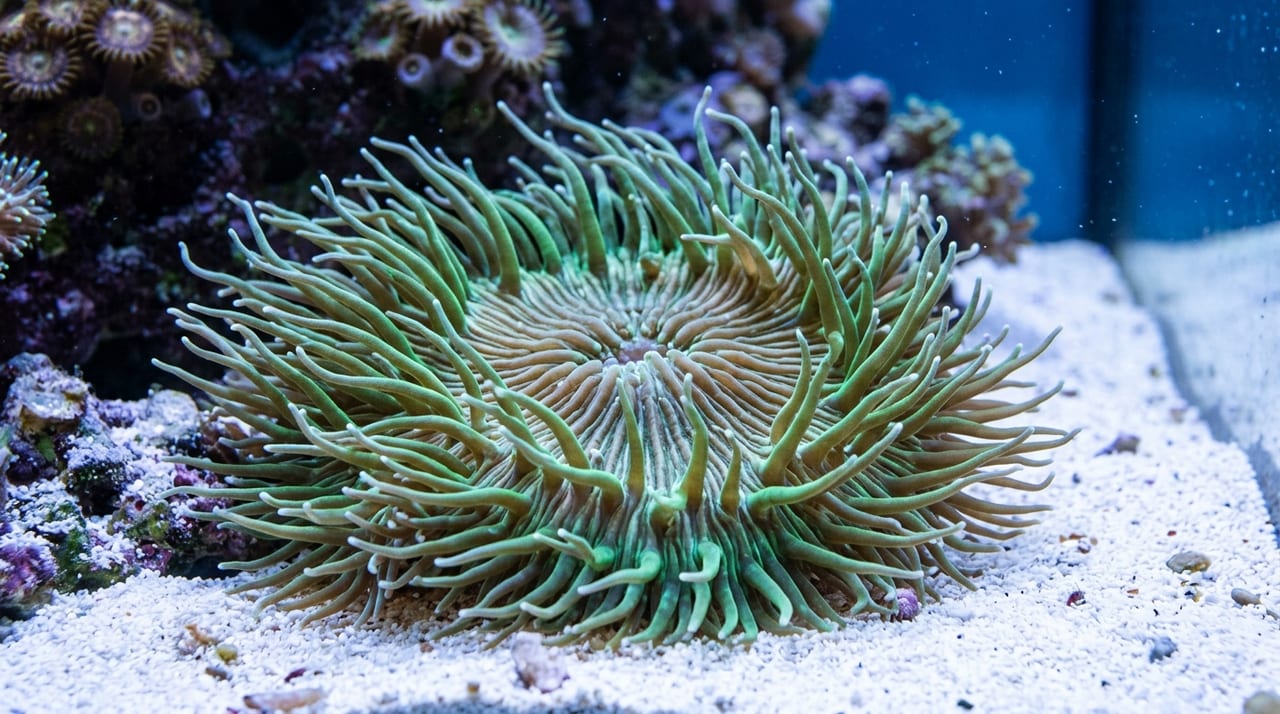
Heliofungia (Heliofungia actiniformis) is an LPS (Large Polyp Stony) coral belonging to the order Scleractinia and family Fungiidae. Also known as "Plate Coral" or "Long-Tentacle Plate Coral," it is characterized by long, extended tentacles and a distinctive silhouette.
When mature, Heliofungia detaches from the substrate and lives as a "free-living" coral on the sand bed. From its attached larval stage, it separates as it grows and can subtly move across the substrate. This self-locomotion ability requires special attention in aquarium placement management.
Main Features
- Single polyp (does not form colonies)
- Free-living type that can be placed directly on substrate
- Tentacles extend greatly at night or during feeding (5-15cm)
- Color variations: Green, Brown, Grey, Purple-tipped, etc.
- Size: 10-30cm diameter (adult)
Aquarium Environment Setup
Water Quality Parameters
Heliofungia is a relatively hardy LPS, but stable water quality is important. Use the following as guidelines for management.
| Parameter | Ideal Range |
|---|---|
| Temperature | 24-27°C |
| Specific Gravity | 1.025-1.026 |
| pH | 8.1-8.3 |
| KH (Alkalinity) | 8-11 dKH |
| Calcium | 380-450 ppm |
| Magnesium | 1250-1350 ppm |
| Nitrate (NO₃) | 5-20 ppm (relatively tolerant of slightly higher levels) |
| Phosphate (PO₄) | 0.03-0.10 ppm |
Unlike SPS corals, it does not require as strict management, but it is sensitive to sudden water quality fluctuations, so aim to maintain stable conditions.
Lighting Setup
Heliofungia contains zooxanthellae and derives energy through photosynthesis. However, it tends to prefer moderate lighting over intense light.
- PAR Value Guidelines: 100-250 PAR
- Place in the mid-water to bottom area of the tank and avoid intense light
- Responds particularly well to blue-spectrum (450nm) lighting
- Excessive light can cause zooxanthellae expulsion and bleaching
When using LED lighting, a gradual "light acclimation" process is recommended: start with dim light and gradually increase intensity over 2-3 weeks.
Water Flow Setup
Water flow is an important factor for Heliofungia.
- Recommended Flow: Weak to moderate (enough to sway the polyps)
- Strong direct flow damages polyps and causes retraction
- Indirect flow (diffused by walls, etc.) is optimal
- Using random flow modes creates natural wave-like movement
Placement and Layout
Direct Placement on Substrate
Heliofungia is placed directly on the substrate rather than attached to rocks. This is the defining characteristic of plate corals.
Placement Considerations
- When placing on sand, avoid contact with neighboring corals or rocks (stinging cells can damage adjacent corals)
- Provide at least 1.5x its diameter in spacing
- As Heliofungia may move, check its position regularly
- Place on flat substrate to prevent tipping on sloped areas
Responding to Self-Locomotion
Heliofungia may move in response to light or water flow. Frequent movement is often a sign of dissatisfaction with current conditions, so review lighting, water flow, and water quality if movement is excessive.
Feeding Method
Heliofungia can be promoted to grow not only through photosynthesis but also through active feeding.
Recommended Food Types
- Copepods/Brine Shrimp: Nauplii (larvae) are ideal
- Mysis Shrimp: 1-2mm particles
- Copepods: Naturally occurring copepods are also eaten
- Commercial LPS Foods: Reef Roids, Benepets Coralline, etc.
- Finely Chopped Live Food: Krill, tuna, shrimp, etc. (1-2 times per week)
Feeding Timing and Method
- Feeding is best done at night or after lights out when tentacles are most extended
- Use a dropper or syringe to target-feed directly near the tentacles
- Temporarily stopping water flow pumps for 5-10 minutes during feeding increases feeding efficiency
- Feed 2-3 times per week
Health Management and Troubleshooting
Signs of Healthy Polyps
- Tentacles moderately extended even during the day
- Tentacles greatly expanded at night
- Vibrant colors with good transparency
- Tissue firmly covers the skeleton
Common Problems and Solutions
Polyp Retraction or Shrinkage
- Causes: Excessive water flow, excessive light, poor water quality, contact with neighboring corals
- Solution: Review placement and adjust water flow and lighting
Bleaching
- Causes: Excessive light, high temperature (over 28°C), sudden water quality changes
- Solution: Move to low-light area, adjust temperature, perform RO/DI water changes to stabilize water quality
Tissue Necrosis (Rot)
- Symptoms: Tissue begins to peel away from skeleton
- Causes: Parasites (flatworms, etc.), bacterial infection, poor water quality
- Solution: Move to quarantine tank. Treat with Lugol's Solution, manually remove flatworms if present
Continuous Movement
- Causes: Uncomfortable conditions due to lighting, water flow, temperature, or nearby corals
- Solution: Adjust placement and improve environmental conditions
Propagation (Fragging)
Fragging Heliofungia is slightly more difficult than other LPS corals, but success is possible with proper technique.
- Use clean scissors or cutters when separating from the mother colony
- Disinfect the cut surface with Lugol's Solution
- Attach to frag plugs or live rock (do not use cement, as it is free-living)
- Place in a quarantine tank with low light and weak flow for 2-4 weeks
- Once recovered, return to the main tank substrate
Conclusion
Heliofungia is a unique free-living LPS coral with the appeal of being easily placed directly on substrate. By avoiding intense light and strong flow while providing regular feeding, you can enjoy its beautiful tentacles for years. With moderate water quality management requirements, it is an excellent choice for first-time LPS keepers. Enjoy the distinctive care experience of plate corals while observing its unique self-locomotion behavior.