Keeping Fungia (Wedge Coral): Care Guide | Water Flow, Lighting, and Feeding for Plate Corals
Fungia (Fungia sp.) is a solitary LPS coral in the Fungiidae family, a unique plate coral with the ability to move. This guide explains the essential knowledge for long-term care, including proper placement to avoid contact with other corals, gentle indirect water flow, and target feeding techniques.
Key Takeaways
Fungia (Fungia sp.) is a solitary LPS coral in the Fungiidae family, a unique plate coral with the ability to move. This guide explains the essential knowledge for long-term care, including proper placement to avoid contact with other corals, gentle indirect water flow, and target feeding techniques.
Related Species
What is Fungia (Wedge Coral)?
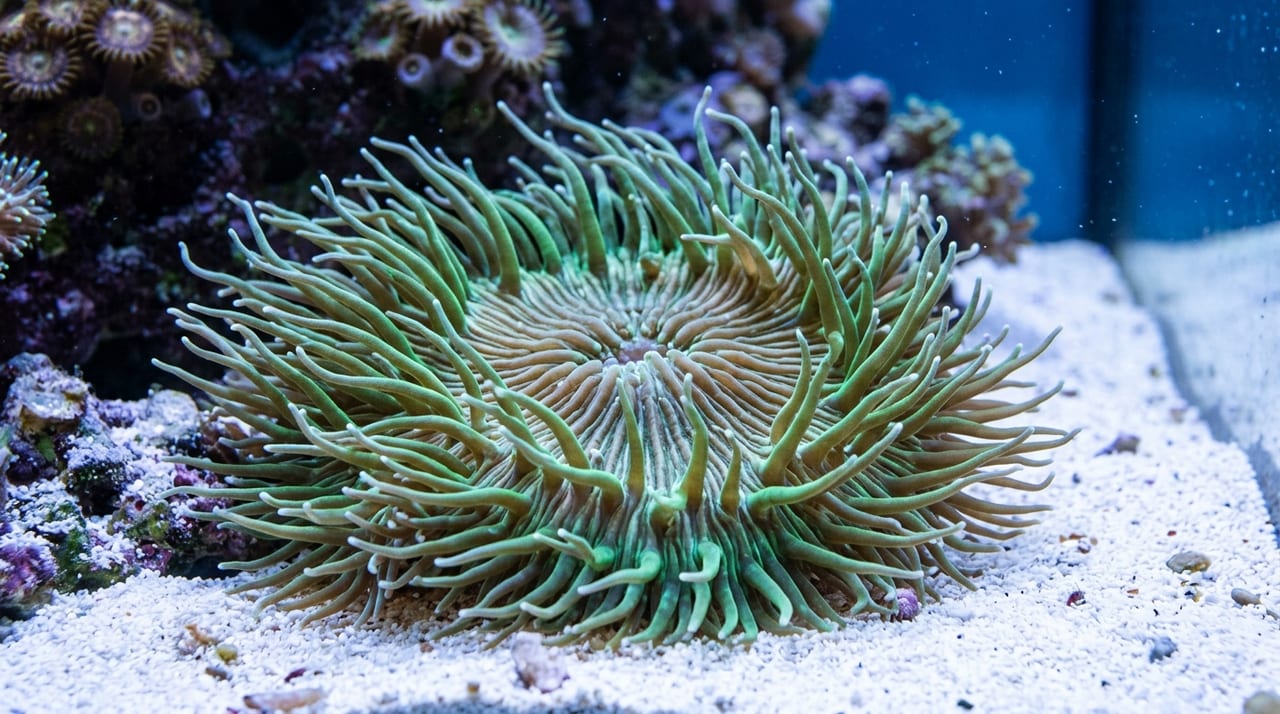
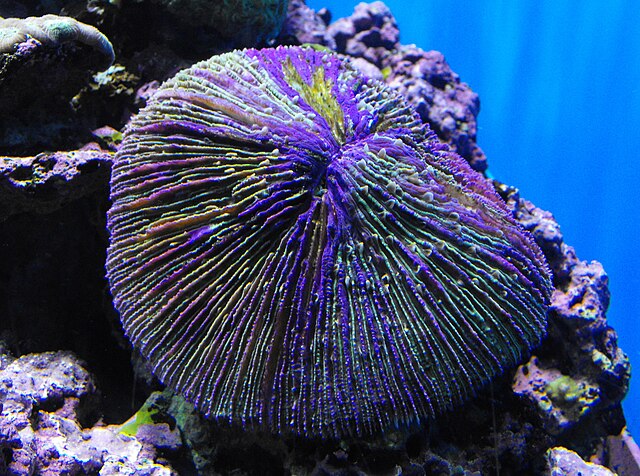
Fungia (Fungia sp.) is a solitary LPS coral (Large Polyp Stony coral that does not form colonies) belonging to the Fungiidae family. In English, it's called "Plate Coral" or "Mushroom Coral," and as the name suggests, it's characterized by a disc or plate-like skeleton.
The most distinctive characteristic of Fungia is its ability to move. Unlike most corals that permanently attach to a substrate, Fungia can slowly move across the sand bed using water flow and body expansion/contraction. It can even right itself if flipped over, and has been observed moving away from unfavorable locations in search of light.
Basic Information
| Category | Details |
|---|---|
| Classification | Fungiidae family |
| English Name | Plate Coral, Mushroom Coral |
| Appearance | Disc-shaped or elliptical (diameter 5-30 cm) |
| Polyps | Numerous medium-sized polyps (with long tentacles) |
| Care Difficulty | Beginner to Intermediate (easy to read polyp condition) |
| Natural Habitat | Indo-Pacific reef slopes and sand flats |
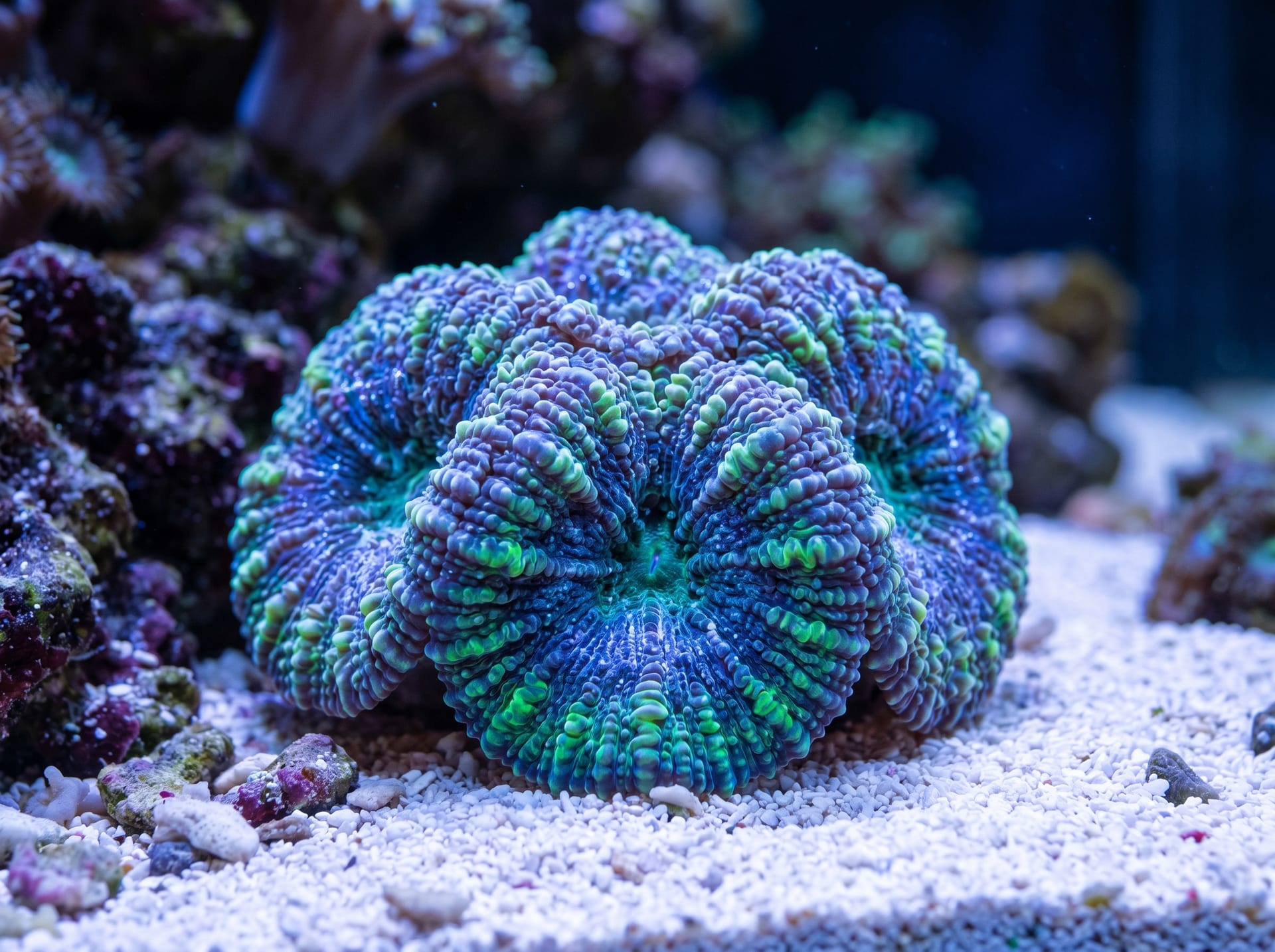
Color Variations: Available in a wide range including green, brown, purple, pink, blue, and multicolor. Specimens with vibrant fluorescent coloration are highly valued by collectors.
Water Parameters Required for Care
Fungia is relatively easy to maintain among LPS corals, but stable water parameter management is key to long-term success.
| Parameter | Target |
|---|---|
| Temperature | 25-27°C |
| Specific Gravity (SG) | 1.024-1.026 |
| pH | 8.1-8.3 |
| Alkalinity (KH) | 8-11 dKH |
| Calcium (Ca) | 400-450 mg/L |
| Magnesium (Mg) | 1,280-1,380 mg/L |
| Nitrate (NO₃⁻) | 5-20 ppm |
| Phosphate (PO₄³⁻) | 0.02-0.10 ppm |
Important Note: Fungia tends to fade in ultra-low nutrient (ULNS) environments. Maintaining moderate nutrient levels (NO₃ 5-15 ppm, PO₄ around 0.05 ppm) promotes extended polyp expansion and better coloration.
Lighting Selection and Appropriate PAR Values
Since Fungia is usually placed on the tank floor, it doesn't require the intense lighting needed for upper-level corals.
| Placement | PAR Target | Expected Condition |
|---|---|---|
| Tank Floor (low light zone) | 50-100 μmol/m²/s | Standard care zone |
| Mid-water | 100-200 μmol/m²/s | For enhanced coloration |
| Upper tank | 200+ μmol/m²/s | Only after acclimation (no sudden increases) |
Light Acclimation: Always start newly purchased Fungia in low-light conditions and gradually increase light levels over 2-3 weeks. Sudden light changes cause polyp retraction and bleaching (photostress).
Photoperiod: 8-10 hours per day. Blue-spectrum lighting enhances fluorescent coloration.
Water Flow Design (Critical Point)
Water flow is extremely important for Fungia, but excessively strong direct flow causes polyp closure.
Recommended Water Flow Characteristics:
- Gentle, indirect flow (random surge)
- Strong enough to sway polyps but not overpower them
- Multi-directional weak flow from all angles (360°)
Signs of Insufficient Flow:
- Detritus accumulation beneath polyps (around skeleton)
- Tissue browning or polyp retraction
- Sweeper tentacles don't extend
Signs of Excessive Flow:
- Polyps remain constantly retracted
- Polyps retract away from flow
- Tentacle damage or tearing
Because Fungia can move, it will often relocate to find its preferred position. Allow this natural behavior while monitoring for contact with nearby corals.
Tank Placement and Distance from Other Corals
Fungia possesses sweeper tentacles (specialized tentacles that extend when stimulated or at night) that can sting nearby corals.
Placement Rules:
- Leave 15-20 cm clearance around Fungia, accounting for potential movement
- Avoid mixing with sting-sensitive LPS corals (Trumpet corals, Bubble tip anemones)
- Ensure adequate sand area to prevent movement obstruction
If Flipped Over: Fungia can usually right itself within 5-10 minutes. If it hasn't recovered after several hours, gently flip it back. If frequent flipping occurs, the water flow may be too strong—reconsider placement.
Target Feeding
Fungia benefits from both photosynthesis (zooxanthellae) and direct feeding on organic matter. Regular target feeding is highly effective for long-term growth.
Feeding Schedule: 2-3 times per week (daily feeding is possible but requires careful water parameter monitoring)
Suitable Food Types:
| Food Type | Characteristics | Feeding Method |
|---|---|---|
| Frozen brine shrimp | High palatability, classic choice | Pipette directly onto polyps |
| Frozen copepods | Small, easy for polyps to capture | Pipette feeding |
| Finely chopped krill | High nutritional value | Pipette or tweezers |
| Liquid coral food | Nutritional supplement | Suspend flow and distribute |
Feeding Steps:
- Wait for polyps to fully open with extended tentacles (usually evening to after lights out)
- Turn off or minimize water flow pumps
- Slowly dispense small amounts of food with a pipette directly onto polyps
- Resume water flow after 10-20 minutes to clear any uneaten food
Common Problems and Solutions
Polyps Remain Closed (Several Days or Longer)
- Flow too strong → Reduce pump output or change direction
- Light too intense (photostress) → Move to lower light area
- Poor water quality → Check KH, ammonia, and nitrate levels
Tissue Turning White (Bleaching)
- Intense light or sudden light changes → Move to low-light area and allow recovery
- High temperature (over 28°C) → Implement cooling
- Imbalanced KH/Ca/Mg → Recheck all parameters
Tissue Sloughing or Recession
A sign of severe stress. Move to a quarantine tank due to infection risk to nearby corals, and identify the cause (parasites, sudden water changes, trauma).
Summary: The Appeal of a Unique Plate Coral
Fungia is a remarkable LPS coral distinguished by its unique movement behavior and stunning color variety. By avoiding intense light and strong flow while providing regular target feeding, you can achieve reliable growth.
Watching Fungia slowly traverse the tank floor in search of its ideal position feels almost like observing a living creature with intention. This behavior brings a whole new dimension of fascination to reef-keeping. It's an ideal species for aquarists ready to move beyond soft corals to the next level of coral husbandry.