Source: Wikimedia Commons
Yellow Scroll Coral (Turbinaria Reniformis)
IntermediateTurbinaria reniformis
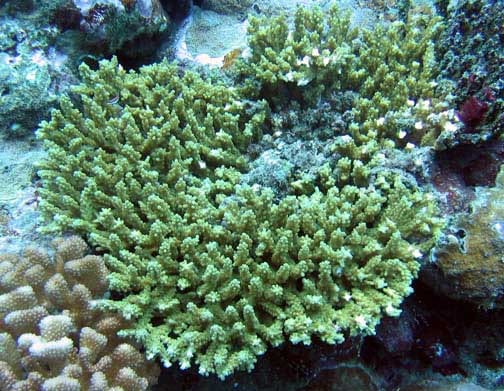
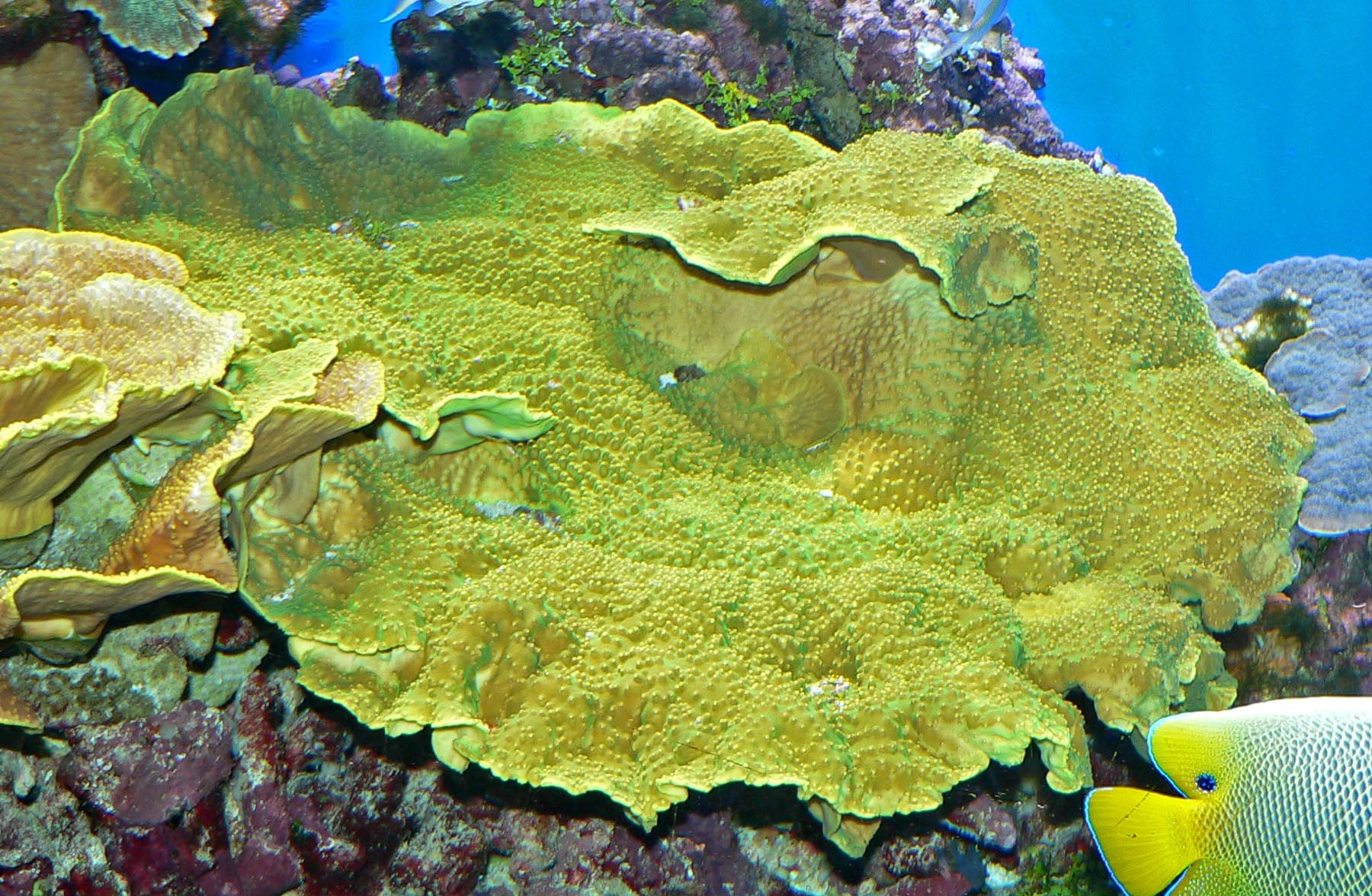
A stony coral that spreads as thin yellowish-green plates, sometimes stacking into tiers or scrolls. The corallites are small, 1.5 to 2 mm across, occur only on the upper surface, and the plate has a distinct corallite-free rim.
Difficulty
Intermediate
Temperature
24〜26℃
Size
Corallites 1.5-2 mm across; colonies to several tens of cm
Diet
Mainly nutrition from symbiotic zooxanthellae, supplemented with fine particulate coral foods offered at night.
About
Turbinaria reniformis, the yellow scroll coral, is a reef-building dendrophylliid for which WoRMS gives the Japanese name yokomizo suribachi sango. Colonies are laminar, forming horizontal plates or shallow chalices and sometimes stacking into tiers. The corallites are small, 1.5 to 2 mm across, widely separated, and confined to the upper surface; their walls are thick and are either sunk into the coenosteum or raised into cones. A distinct corallite-free rim and a yellowish-green colour are characteristic. The range runs from the Red Sea and the Gulf of Aden through the Indian Ocean and central Indo-Pacific to northern Australia, southern Japan, the South China Sea and the island groups of the western and central Pacific. Colonies are gonochoristic, and all the colonies in an area release their gametes about a week after the November full moon. Moderate nitrogen enrichment of the surrounding water is known to improve its resistance to thermal stress. As a scleractinian it is on CITES Appendix II.
Source: Wikipedia (CC BY-SA 4.0)
Size of the Yellow Scroll Coral (Turbinaria Reniformis)
The Yellow Scroll Coral (Turbinaria Reniformis) grows to Corallites 1.5-2 mm across; colonies to several tens of cm.
Temperature & humidity for the Yellow Scroll Coral (Turbinaria Reniformis)
The ideal temperature for the Yellow Scroll Coral (Turbinaria Reniformis) is 24〜26℃.
Basic Info
Origin
Red Sea and Gulf of Aden through the Indian Ocean and central Indo-Pacific to northern Australia, southern Japan, the South China Sea and the island groups of the western and central Pacific
Size
Care Specifications
- Carbonate (KH)
- 8–12 dKH
- Water Temp.
- 24–26℃
- Specific Gravity
- 1.023–1.025
- Salinity
- 33–35 ppt
- Calcium (Ca)
- 380–450 ppm
- Magnesium (Mg)
- 1200–1400 ppm
SPSLight: Medium (PAR 50-150)Flow: HighPlacement: Bottom
Sources: LiveAquaria / AlgaeBarn: Calcium Supplementation / WoRMS (World Register of Marine Species)
References & Sources
Edited & verified by: BreederDirect editorial team
The taxonomic, regulatory, and husbandry data on this page are compiled and verified against the authoritative primary sources below.
Taxonomy & Authority
Accepted name: Turbinaria reniformis Bernard, 1896
Synonyms: Turbinaria lichenoides Bernard, 1896, Turbinaria reptans Bernard, 1896
Authority databases: WoRMS
Nomenclature follows global taxonomic authority databases.
Regulations & Conservation Status
CITES Appendix II
Domestic law: Collecting in Japanese waters is governed by each prefecture's fisheries adjustment regulations, which differ by prefecture. Okinawa Prefecture's regulations ban the collection of reef-building corals, including stony corals (Scleractinia), organ-pipe corals (Tubiporidae) and blue coral (Helioporacea); this covers corals naturally attached to quays or ropes, broken fragments lying on the seabed, and skeletons. Possessing or selling illegally collected corals is also banned. Cultured corals are exempt, and the prefecture advises buyers to confirm that a coral is cultured, on an artificial base or tagged.
Sources: CITES Appendix II (Scleractinia spp. listed as an order)
Regulations may change. Always verify the latest information with the relevant authorities.
Yellow Scroll Coral (Turbinaria Reniformis) Listings
Loading latest listingsFind listings for this species