Source: Wikimedia Commons
Yellow Polyps (Parazoanthus)
BeginnerHydrozoanthus gracilis
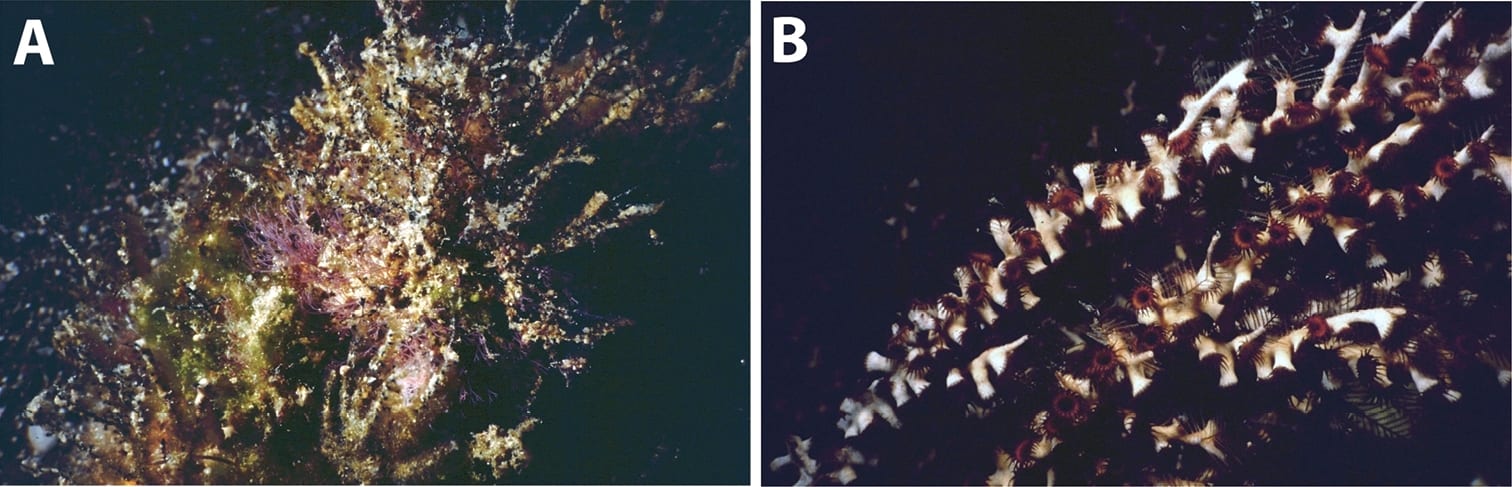
A zoantharian that opens a vivid yellow oral disc at the tip of a slender column. Its coenenchyme creeps thinly over rock and the polyps rise singly. It has long been traded under the old name Parazoanthus gracilis.
Difficulty
Beginner
Temperature
24〜27℃
Size
Polyps 1-2cm tall
Diet
Takes zooplankton and finely divided foods. Offer powdered or liquid coral foods and brine shrimp regularly.
About
Hydrozoanthus gracilis is a zoantharian of Indo-West Pacific reefs. It has long been traded as Parazoanthus gracilis, but the currently accepted name in WoRMS is Hydrozoanthus gracilis, placed in the family Hydrozoanthidae. Its coenenchyme creeps thinly over the rock surface, and slender-stalked polyps rise from it singly. The oral disc is a vivid yellow and the tentacles spread radially. Unlike Zoanthus, the colony does not form a dense carpet; the polyps stand apart from one another, which is the obvious visual difference. In the aquarium it responds well to zooplankton and finely divided foods, and regular powdered or liquid coral foods and brine shrimp keep its growth steady. Moderate light is sufficient and intense illumination is not required. Once established it spreads across rock, so in a reef tank keeping it on an isolated rock limits its range. It is hardy and tolerant of changing water chemistry, and is treated as a beginner's species. It is not listed in the CITES Appendices.
Source: WoRMS
Size of the Yellow Polyps (Parazoanthus)
The Yellow Polyps (Parazoanthus) grows to Polyps 1-2cm tall.
Temperature & humidity for the Yellow Polyps (Parazoanthus)
The ideal temperature for the Yellow Polyps (Parazoanthus) is 24〜27℃.
Basic Info
Origin
Coral reefs of the Indo-West Pacific
Size
Polyps 1-2cm tall
Temperature
24〜27℃
Care Specifications
- Carbonate (KH)
- 8–12 dKH
- Water Temp.
- 24–27℃
- Specific Gravity
- 1.023–1.025
- Salinity
- 33–35 ppt
PeacefulLight: Medium (PAR 50-150)Flow: MediumPlacement: Middle
Sources: WoRMS (Hydrozoanthus gracilis) / LiveAquaria (Colony Polyp, Zoanthus Corals; zoantharian care values) / AlgaeBarn: Water Parameters 101
References & Sources
Edited & verified by: BreederDirect editorial team
The taxonomic, regulatory, and husbandry data on this page are compiled and verified against the authoritative primary sources below.
Taxonomy & Authority
Accepted name: Hydrozoanthus gracilis (Lwowsky, 1913)
Synonyms: Parazoanthus gracilis (Lwowsky, 1913), Sidisia gracilis Lwowsky, 1913, Epizoanthus cnidosus Tischbierek, 1929
Authority databases: WoRMS
Nomenclature follows global taxonomic authority databases.
Regulations & Conservation Status
Not CITES-listed
Sources: CITES Appendices (species not listed)
Regulations may change. Always verify the latest information with the relevant authorities.
Yellow Polyps (Parazoanthus) Listings
Loading latest listingsFind listings for this species