Source: Wikimedia Commons
Turbinaria Peltata
BeginnerDuncanopsammia peltata
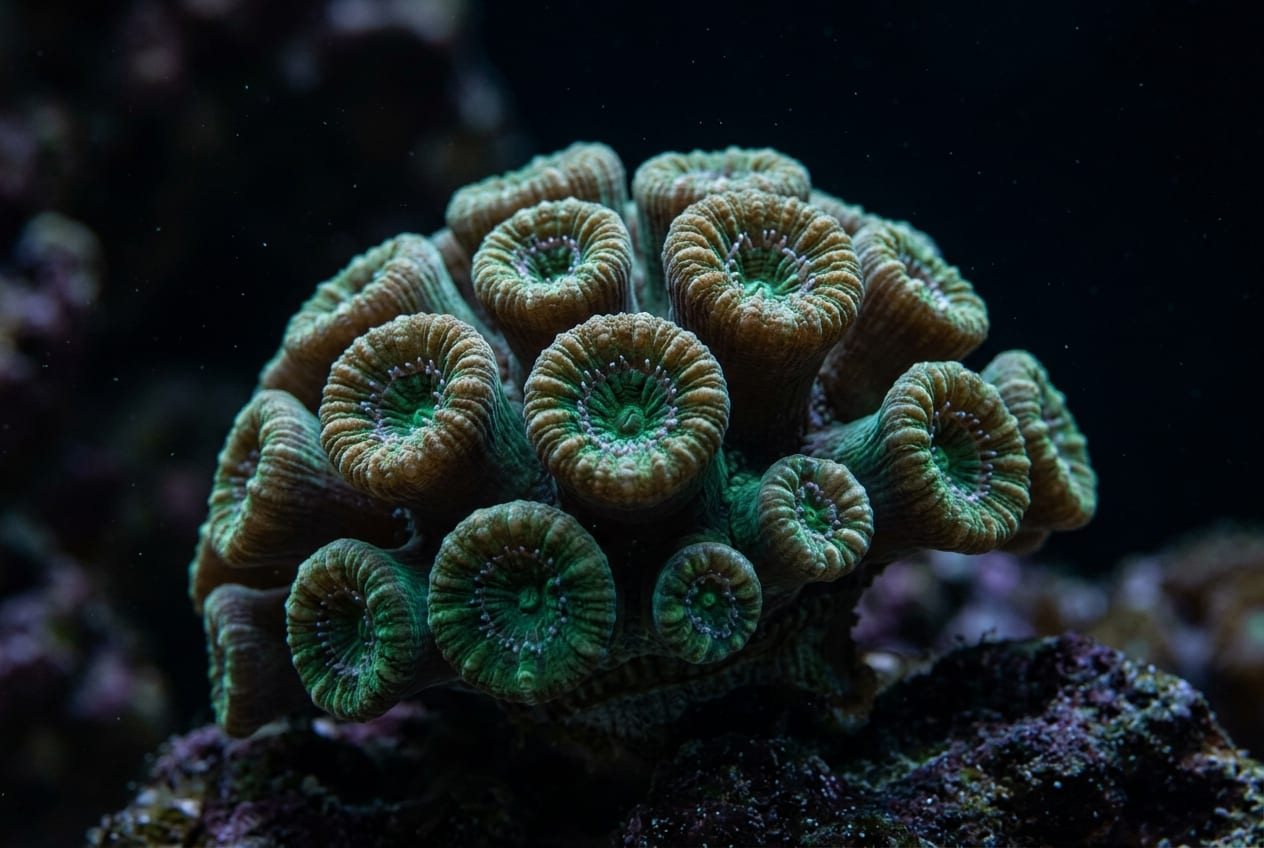
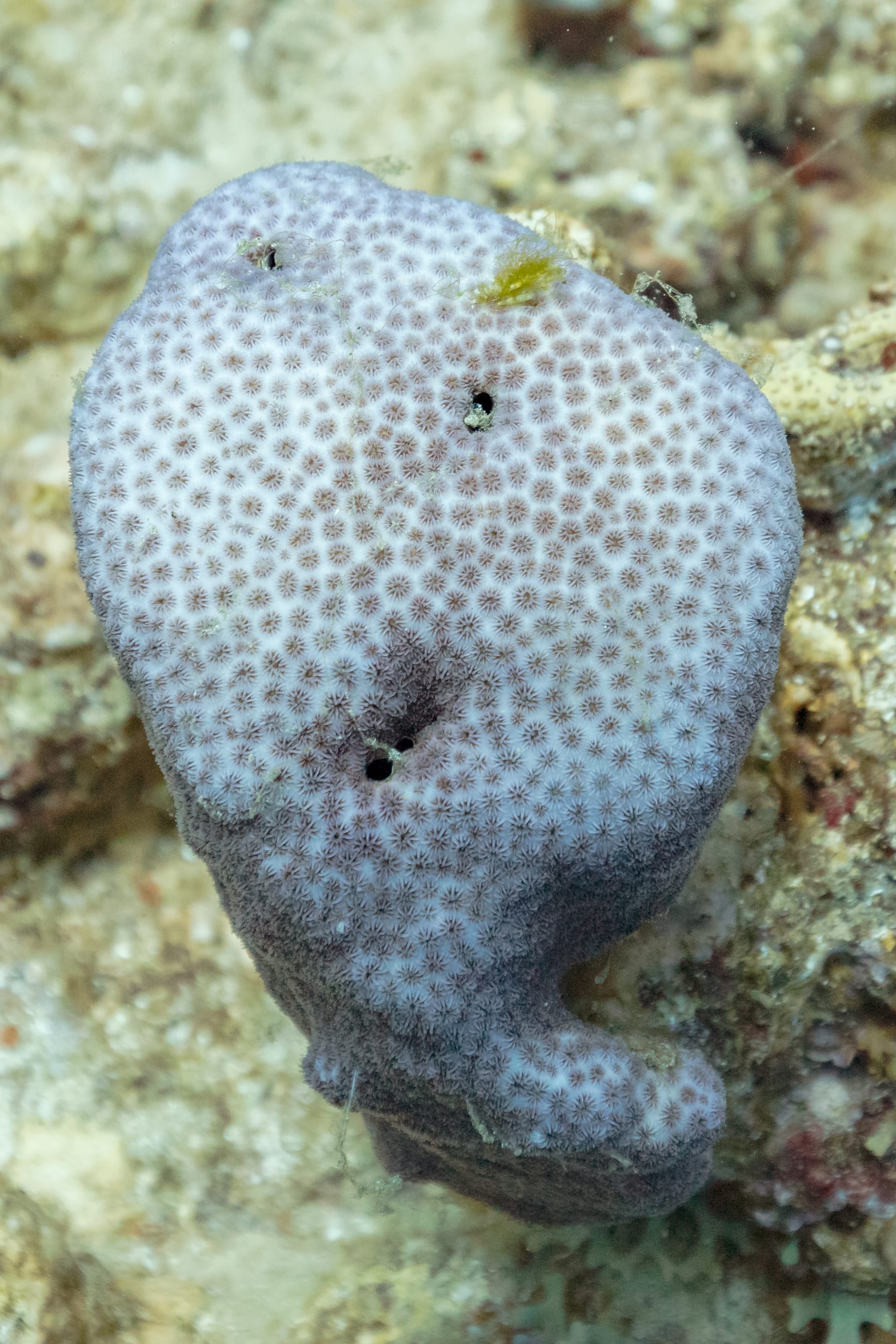
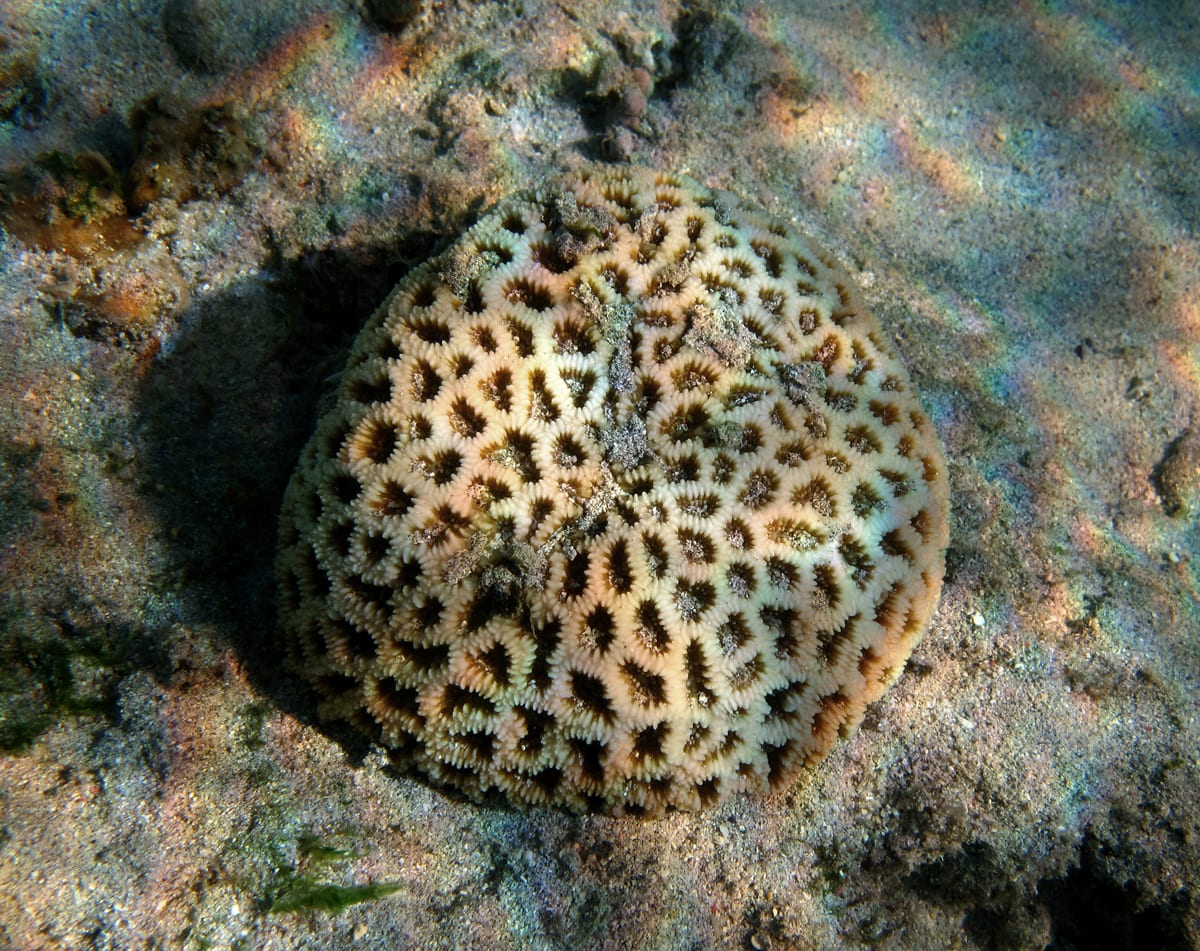
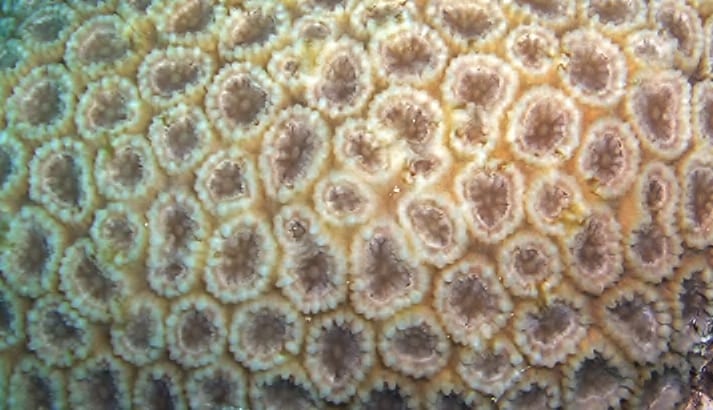
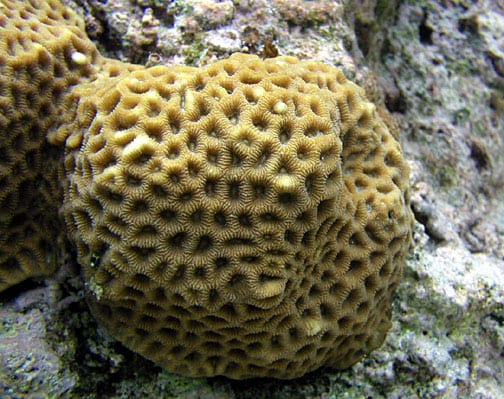
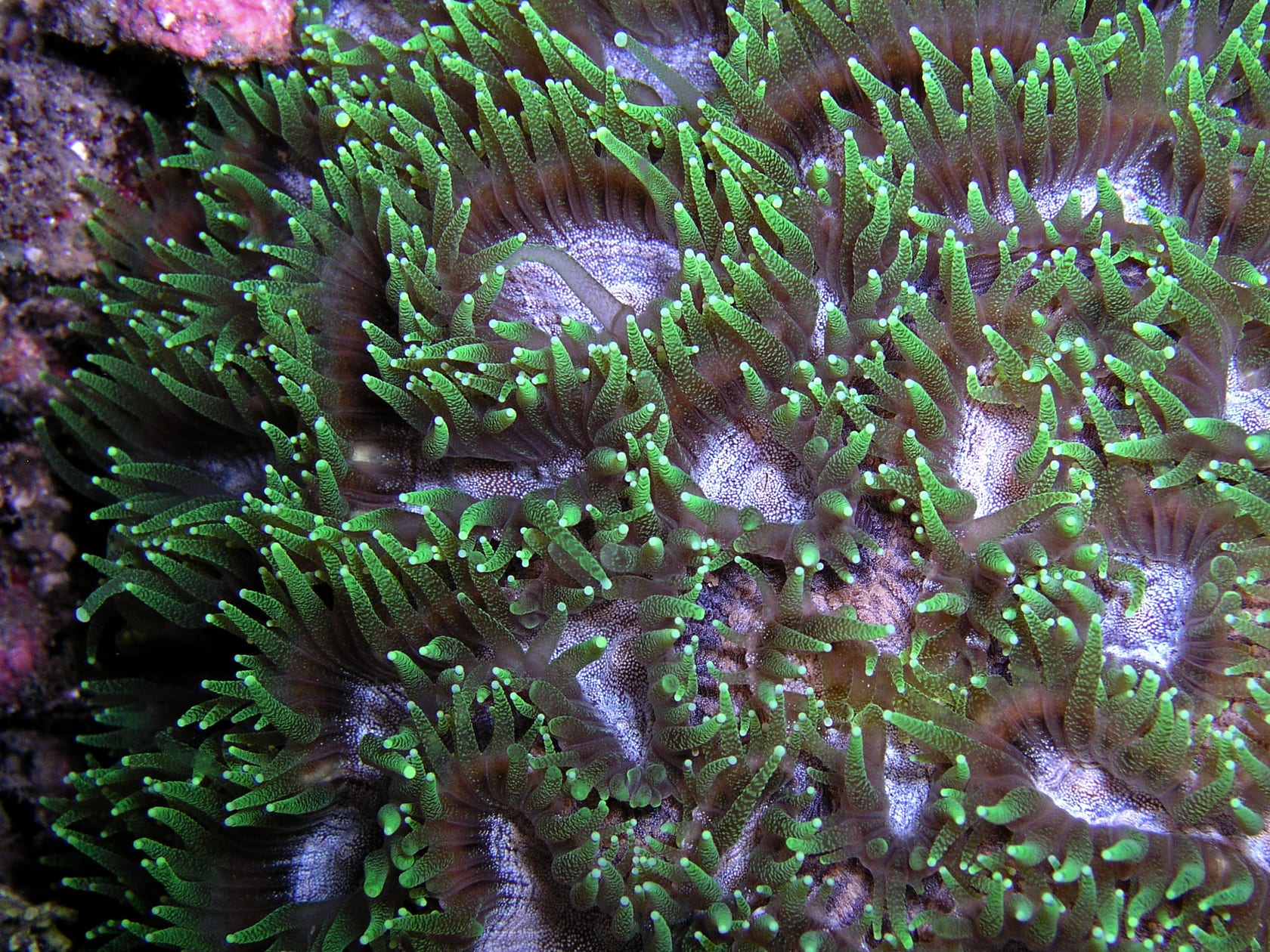
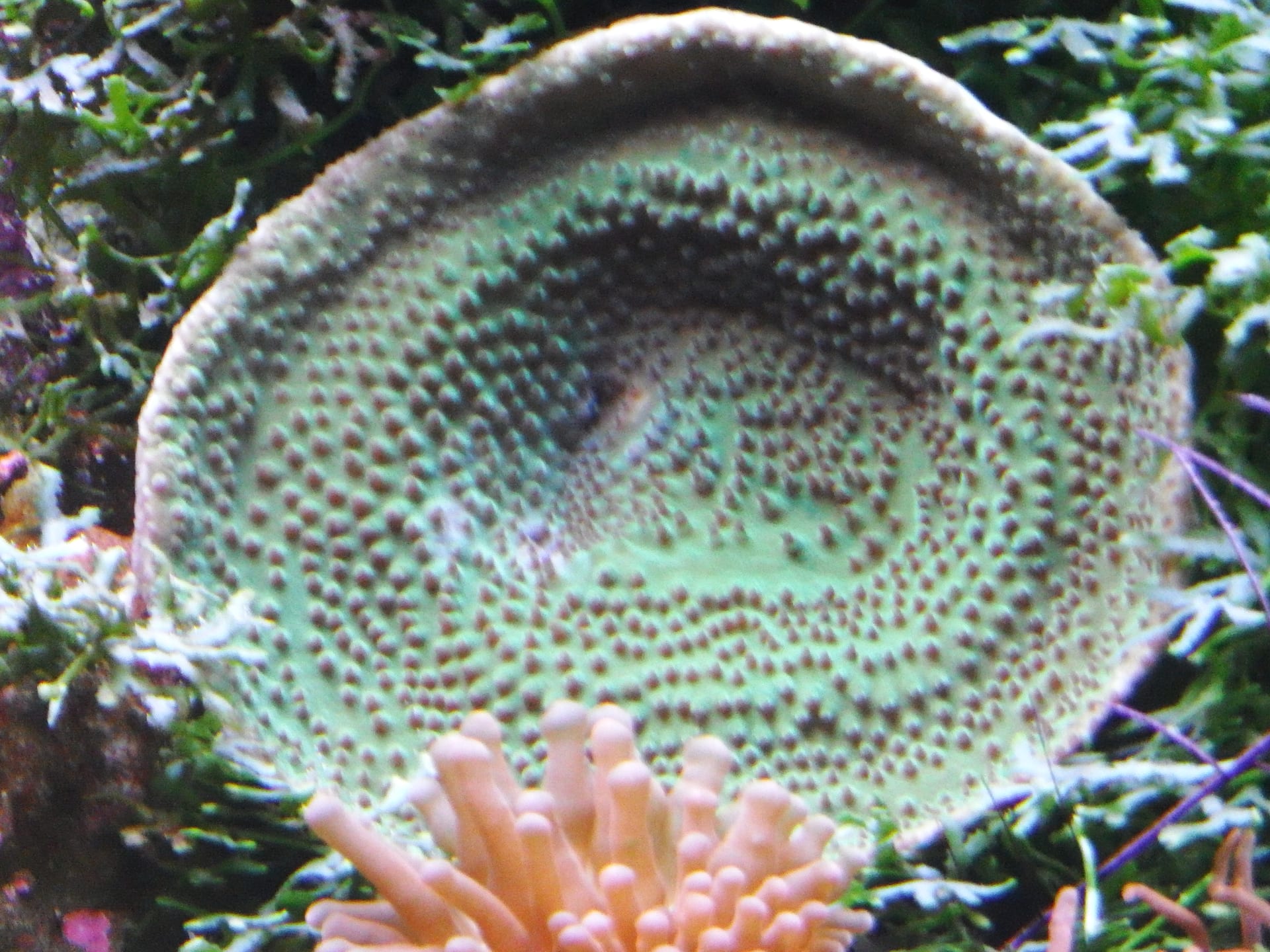
A dendrophylliid stony coral that forms thick, flat plates in overlapping tiers. The calices are 3 to 5 mm across, and the polyps, with thick tentacles up to 1 cm long, are often extended during the day. In English it is the disc coral.
Difficulty
Beginner
Temperature
24〜26℃
Size
Calices 3-5 mm across; colonies reaching several metres
Diet
Mainly nutrition from symbiotic zooxanthellae; meaty coral foods can be offered to the polyps, which are often open during the day.
About
Duncanopsammia peltata, the disc coral, is a reef-building dendrophylliid of warm Indo-Pacific waters. It was long treated as Turbinaria peltata, but WoRMS now places it in Duncanopsammia. Colonies are foliaceous or encrusting and form thick, flat plates in overlapping tiers, the largest reaching several metres across. The corallites occur on one side of each plate only and are 3 to 5 mm across, either immersed in the skeleton or raised on tubular mounts; on the upper surfaces of large colonies, two-sided ridges or cylindrical columns may form. The septa are arranged in three cycles, the third often reduced or absent. The polyps are frequently extended during the day and carry thick tentacles up to 1 cm long. The range runs from the East African coast to Taiwan and American Samoa, and the coral is common on rocky foreshores and shallow reef slopes, especially in turbid water. The IUCN assessed it as Least Concern in 2024, and as a scleractinian it is on CITES Appendix II.
Source: Wikipedia (CC BY-SA 4.0)
Size of the Turbinaria Peltata
The Turbinaria Peltata grows to Calices 3-5 mm across; colonies reaching several metres.
Temperature & humidity for the Turbinaria Peltata
The ideal temperature for the Turbinaria Peltata is 24〜26℃.
Basic Info
Origin
Indo-Pacific, from the East African coast to Taiwan and American Samoa
Size
Calices 3-5 mm across; colonies reaching several metres
Temperature
Care Specifications
- Carbonate (KH)
- 8–12 dKH
- Water Temp.
- 24–26℃
- Specific Gravity
- 1.023–1.025
- Salinity
- 33–35 ppt
- Calcium (Ca)
- 380–450 ppm
- Magnesium (Mg)
- 1200–1400 ppm
LPSLight: Medium (PAR 50-150)Flow: MediumPlacement: Bottom
Sources: LiveAquaria / AlgaeBarn: Calcium Supplementation / WoRMS (World Register of Marine Species)
References & Sources
Edited & verified by: BreederDirect editorial team
The taxonomic, regulatory, and husbandry data on this page are compiled and verified against the authoritative primary sources below.
Taxonomy & Authority
Accepted name: Duncanopsammia peltata (Esper, 1790)
Synonyms: Turbinaria peltata (Esper, 1790), Madrepora peltata Esper, 1790, Gemmipora peltata (Esper, 1794)
Authority databases: WoRMS
Nomenclature follows global taxonomic authority databases.
Regulations & Conservation Status
CITES Appendix IIIUCN LC · Least Concern
Sources: CITES Appendix II (Scleractinia spp. listed as an order) / IUCN Red List
Regulations may change. Always verify the latest information with the relevant authorities.
Turbinaria Peltata Listings
Loading latest listingsFind listings for this species