Source: Wikimedia Commons
Favites Abdita
BeginnerFavites abdita
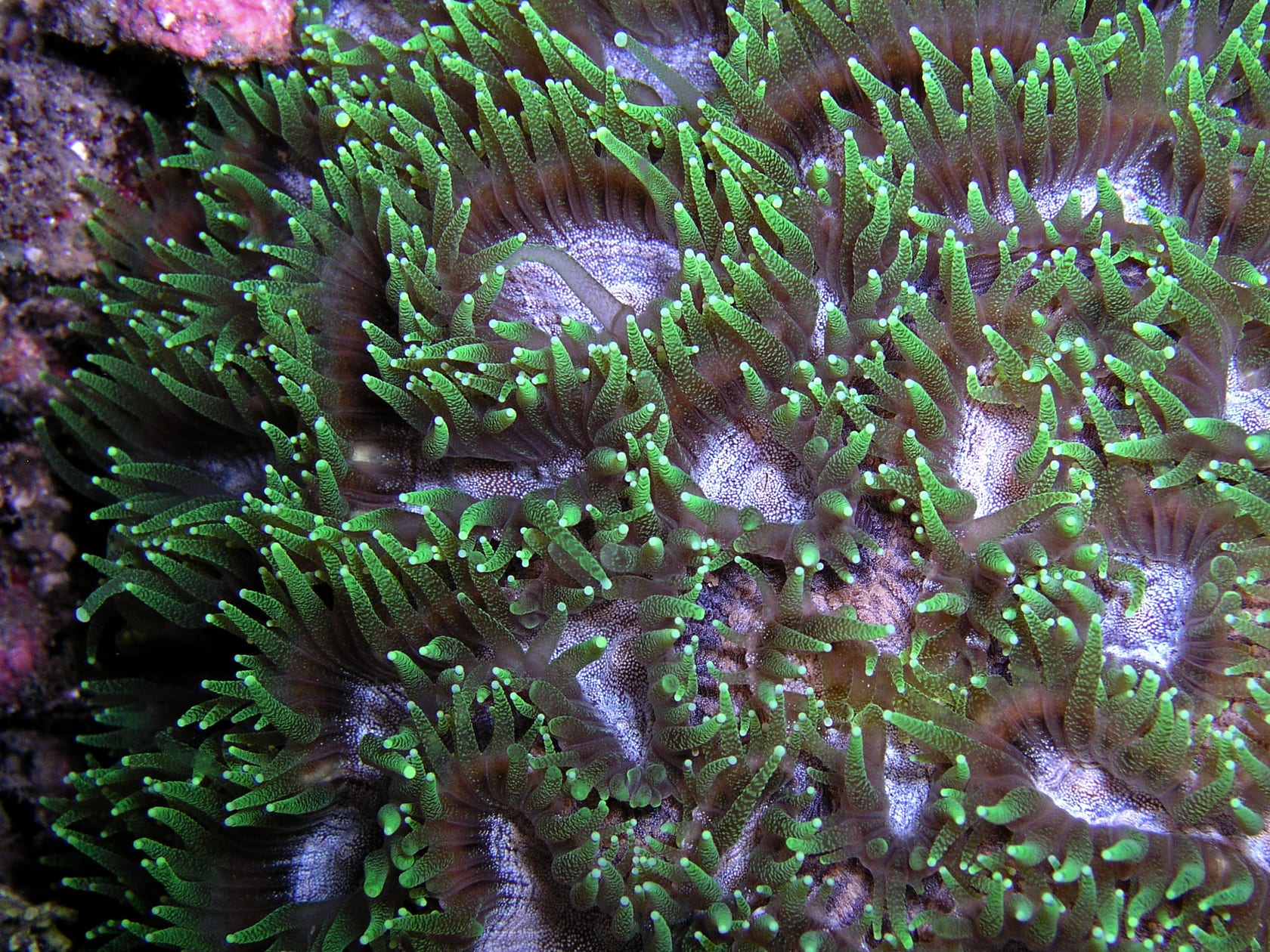
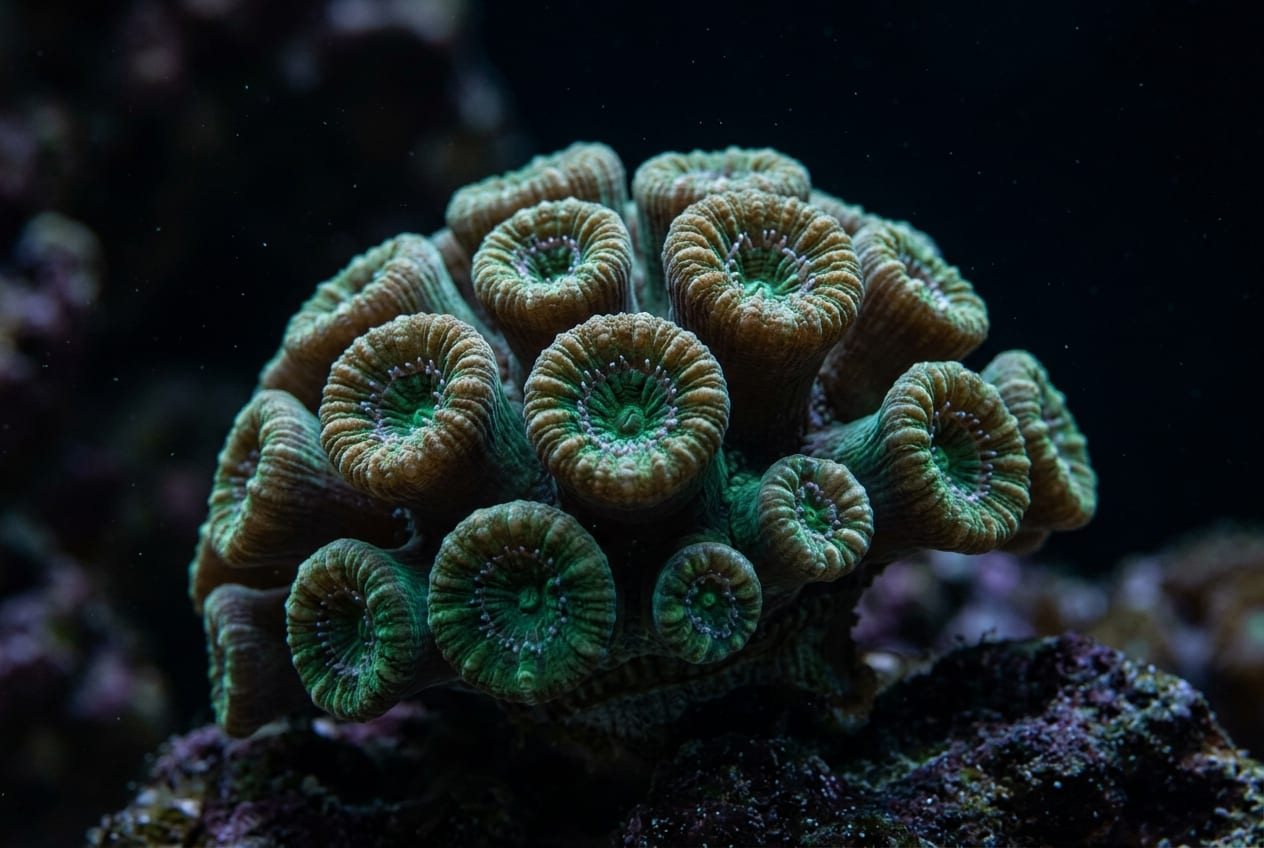
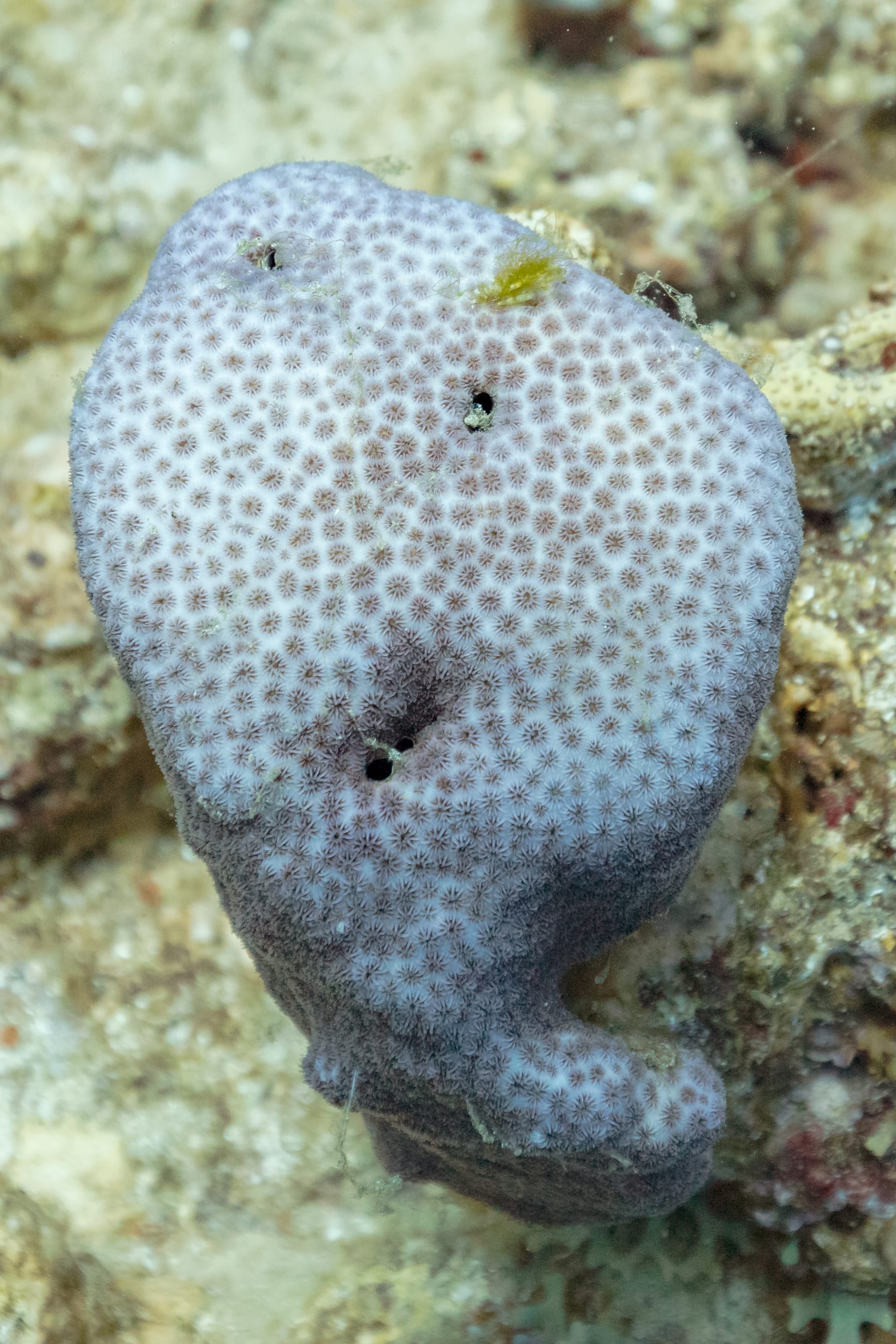
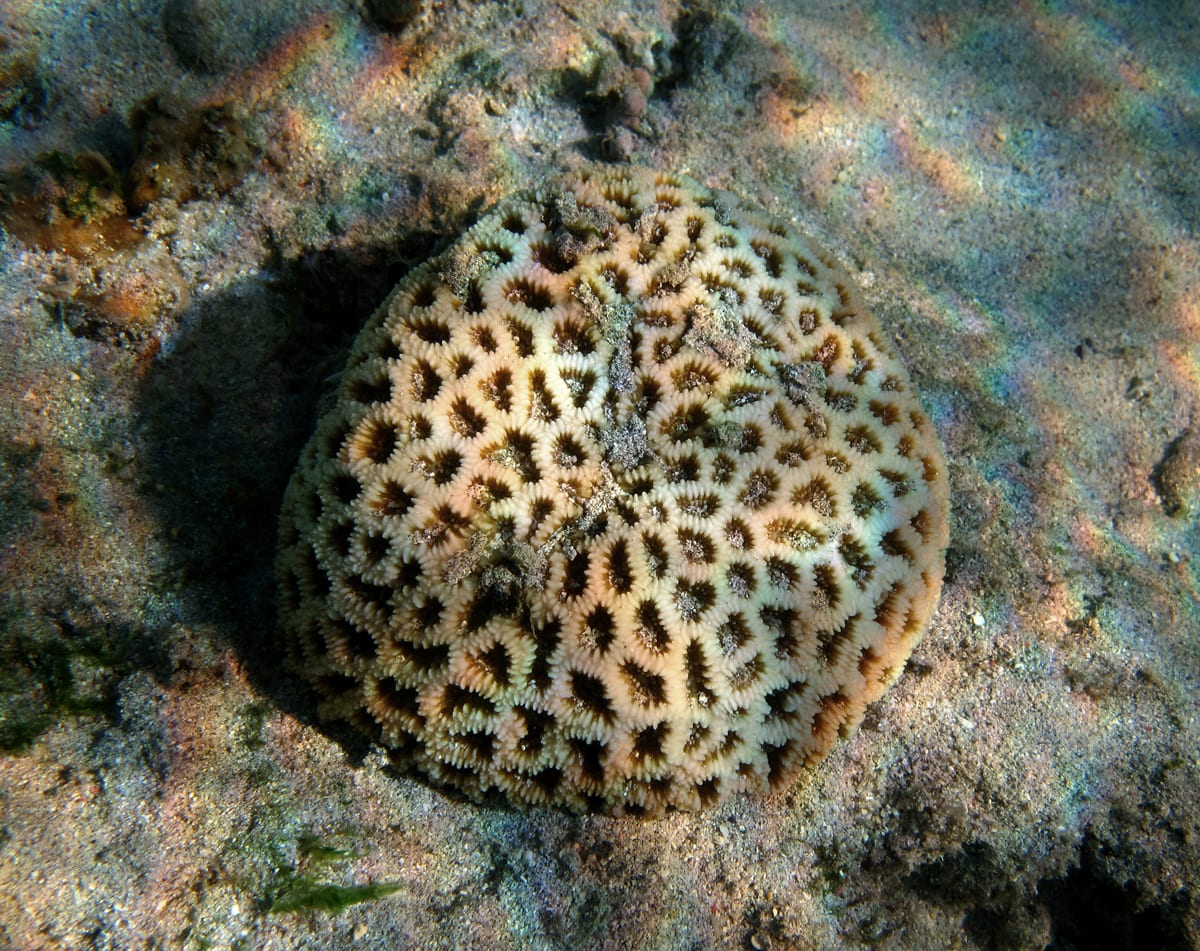
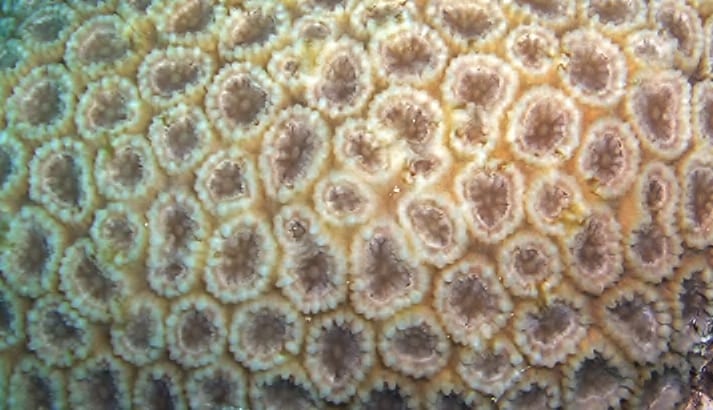
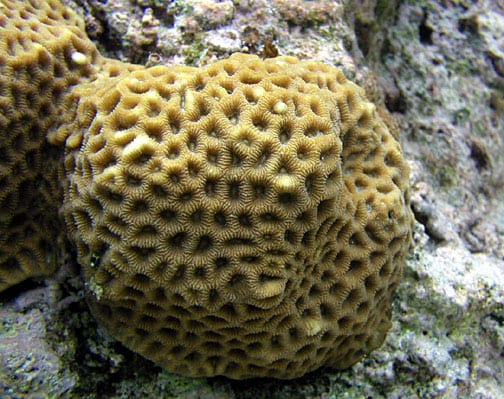
A merulinid reef coral whose corallites share their walls with their neighbours, giving a honeycomb pattern. Known in English as the larger star coral or honeycomb coral, it ranges from East Africa and the Red Sea to the western Pacific and is hardy in captivity.
Difficulty
Beginner
Temperature
24〜27℃
Size
Colonies to several tens of cm
Diet
Mainly nutrition from symbiotic zooxanthellae, supplemented with meaty coral foods offered at night.
About
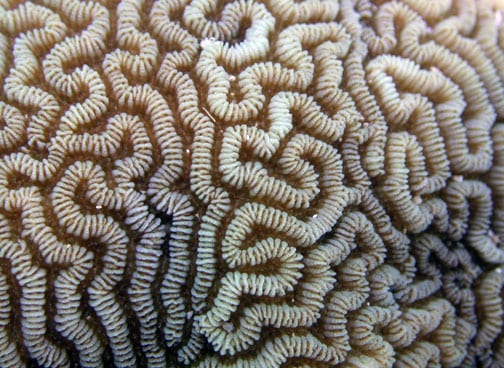
Favites abdita is a reef-building merulinid coral distributed widely across the Indo-Pacific, from East Africa and the Red Sea through the Indian Ocean to the western Pacific. In English it is called the larger star coral or honeycomb coral. Its standard Japanese name is kamenoko-kikumeishi; the similar name midare-kamenoko-kikumeishi belongs to Paragoniastrea deformis, a different genus, and the two are easily confused in the trade. Where Dipsastraea walls each corallite separately, Favites corallites share walls with their neighbours, so the skeleton forms a polygonal honeycomb network; this is the main feature separating the two genera. Colonies are hemispherical to dome-shaped and are usually brown or green, often with contrasting oral discs. The IUCN reassessed it as Least Concern in 2024. It is among the hardier aquarium corals and settles under moderate light and moderate flow, but it is aggressive and its night-time sweeper tentacles will damage neighbouring corals, so space is needed around it. As a scleractinian it is on CITES Appendix II.
Source: Wikipedia (CC BY-SA 4.0)
Temperature & humidity for the Favites Abdita
The ideal temperature for the Favites Abdita is 24〜27℃.
Basic Info
Origin
East Africa and the Red Sea through the Indian Ocean to the western Pacific
Size
Colonies to several tens of cm
Temperature
24〜27℃
Diet
Mainly nutrition from symbiotic zooxanthellae, supplemented with meaty coral foods offered at night.
Care Specifications
- Carbonate (KH)
- 8–12 dKH
- Water Temp.
- 24–27℃
- Specific Gravity
- 1.023–1.025
- Salinity
- 33–35 ppt
- Calcium (Ca)
- 380–450 ppm
- Magnesium (Mg)
- 1200–1400 ppm
LPSLight: Medium (PAR 50-150)Flow: MediumPlacement: Flexible
Sources: LiveAquaria / AlgaeBarn: Calcium Supplementation / WoRMS (World Register of Marine Species)
References & Sources
Edited & verified by: BreederDirect editorial team
The taxonomic, regulatory, and husbandry data on this page are compiled and verified against the authoritative primary sources below.
Taxonomy & Authority
Accepted name: Favites abdita (Ellis & Solander, 1786)
Synonyms: Astraea (Fissicella) abdita (Ellis & Solander, 1786), Madrepora abdita Ellis & Solander, 1786
Authority databases: WoRMS
Nomenclature follows global taxonomic authority databases.
Regulations & Conservation Status
CITES Appendix IIIUCN LC · Least Concern
Domestic law: Collecting in Japanese waters is governed by each prefecture's fisheries adjustment regulations, which differ by prefecture. Okinawa Prefecture's regulations ban the collection of reef-building corals, including stony corals (Scleractinia), organ-pipe corals (Tubiporidae) and blue coral (Helioporacea); this covers corals naturally attached to quays or ropes, broken fragments lying on the seabed, and skeletons. Possessing or selling illegally collected corals is also banned. Cultured corals are exempt, and the prefecture advises buyers to confirm that a coral is cultured, on an artificial base or tagged.
Sources: CITES Appendix II (Scleractinia spp. listed as an order) / IUCN Red List
Regulations may change. Always verify the latest information with the relevant authorities.
Favites Abdita Listings
Loading latest listingsFind listings for this species