Source: Wikimedia Commons
Giant Clam (Tridacna Gigas)
AdvancedTridacna gigas
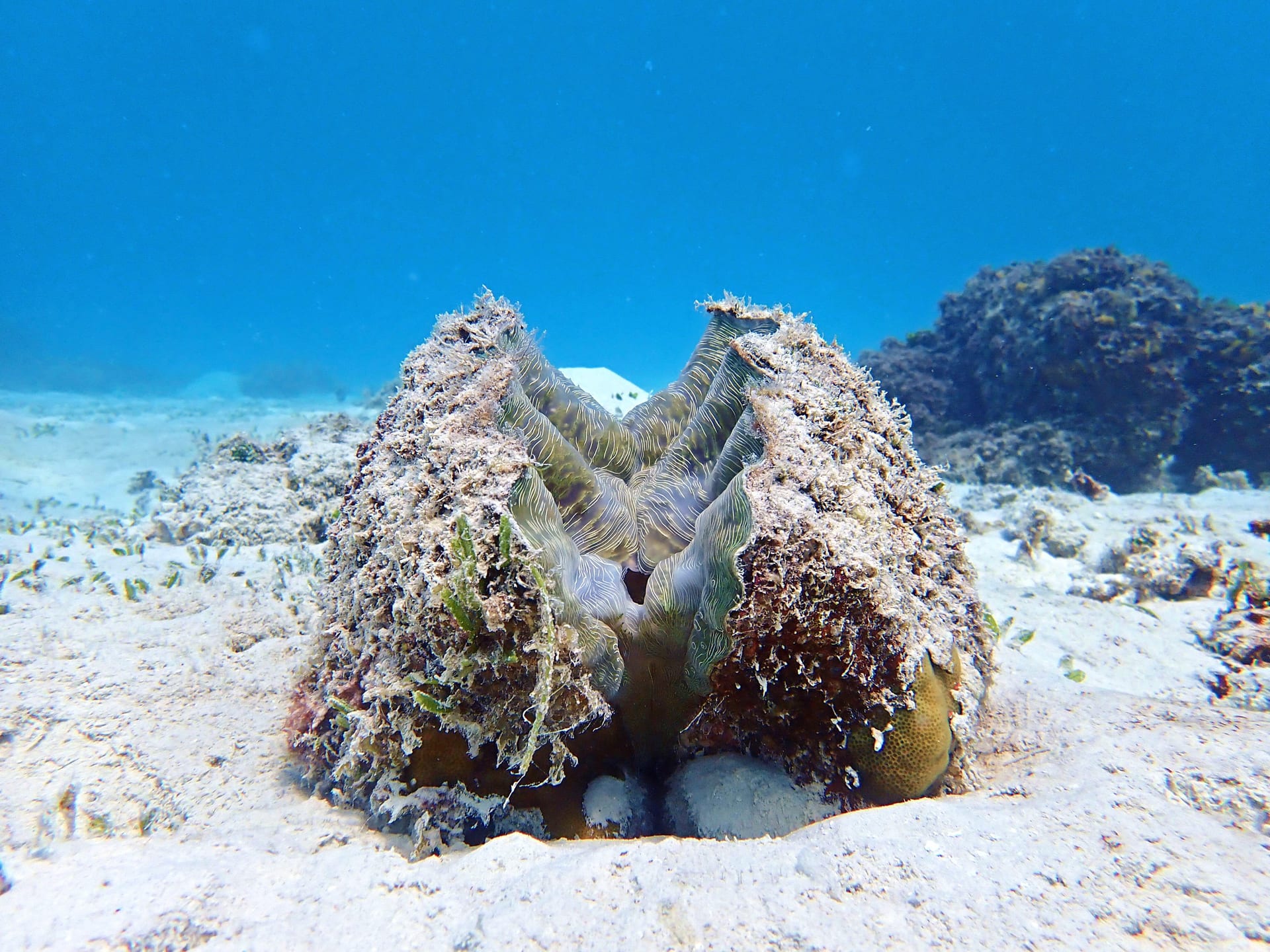
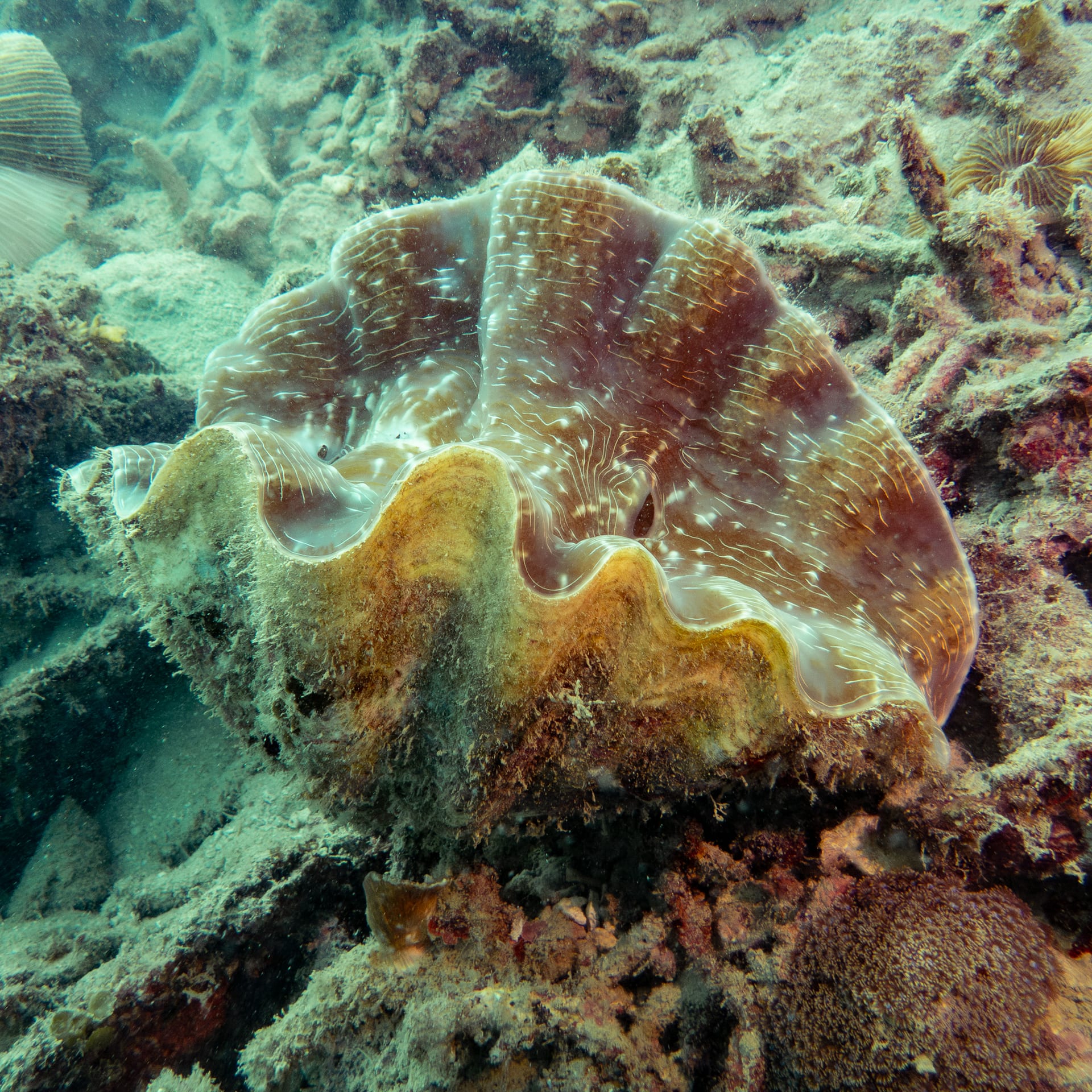
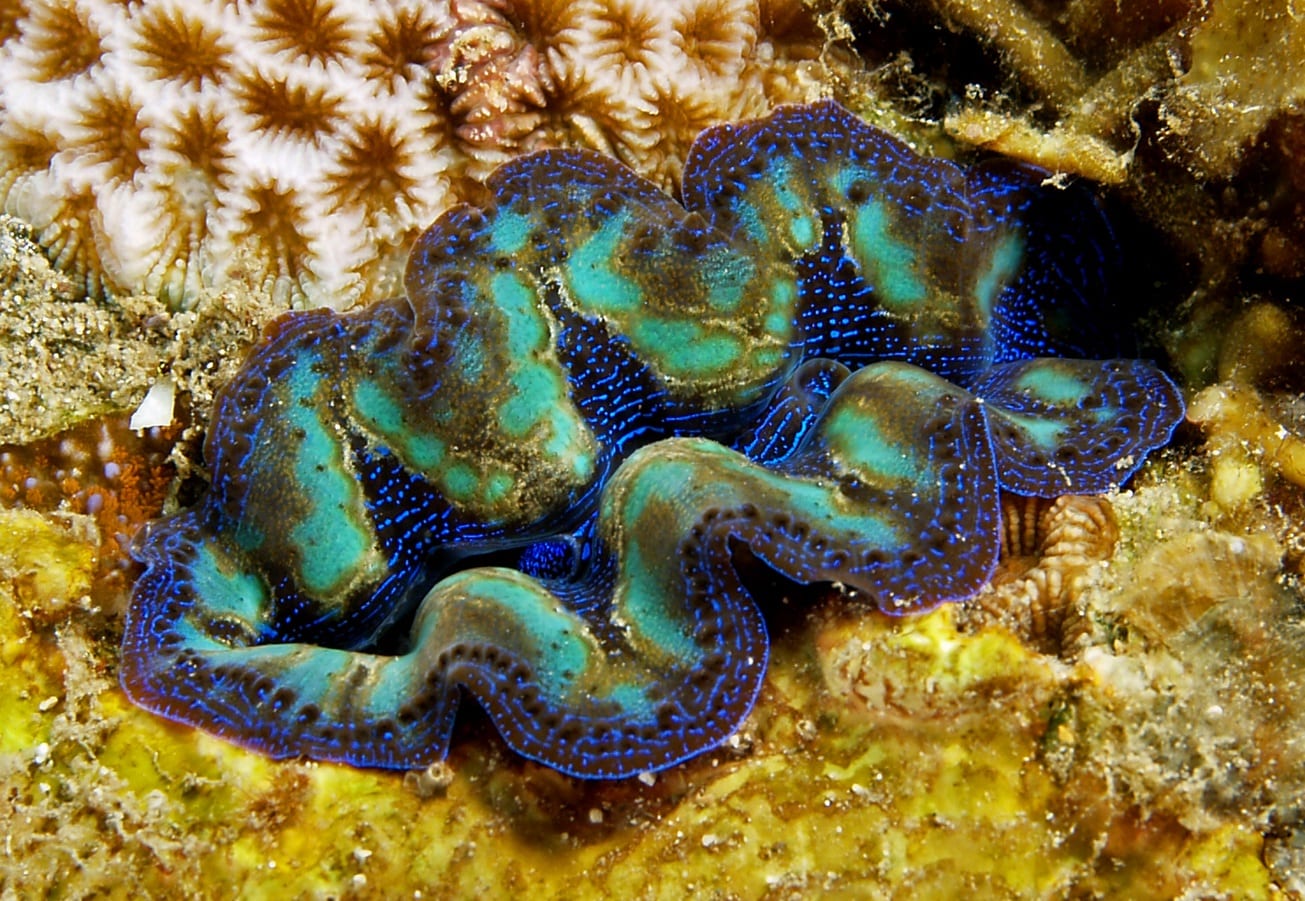
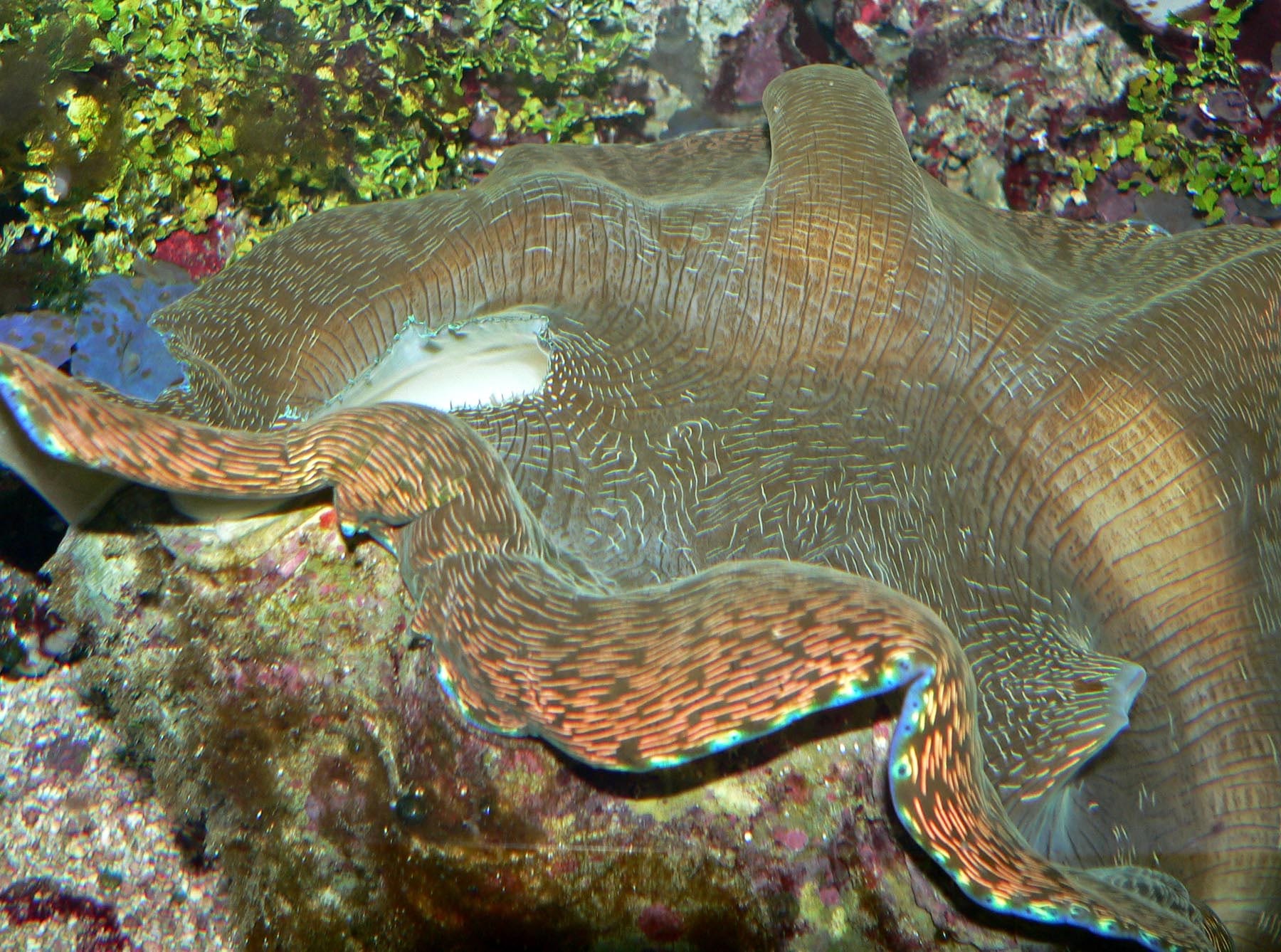
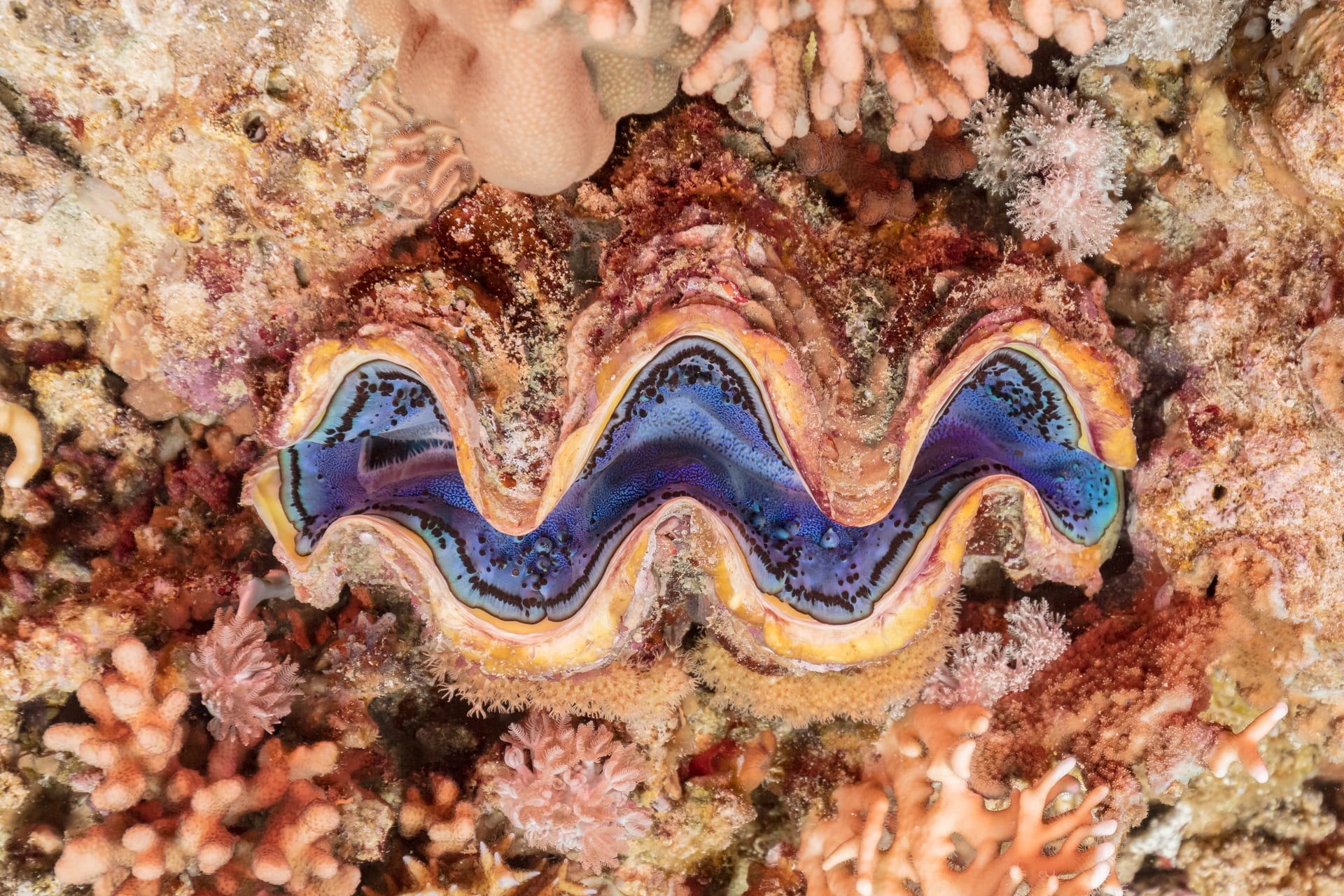
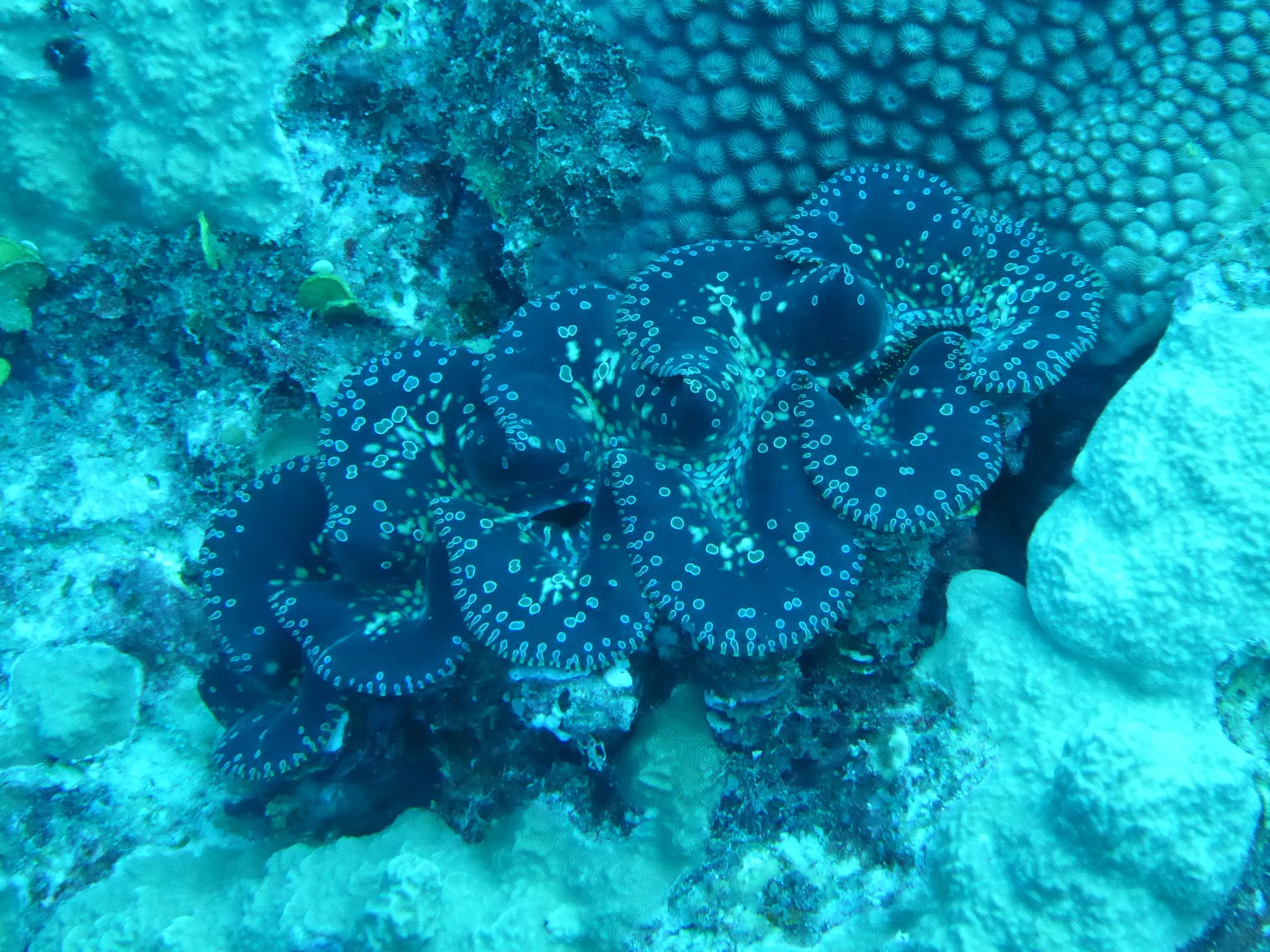
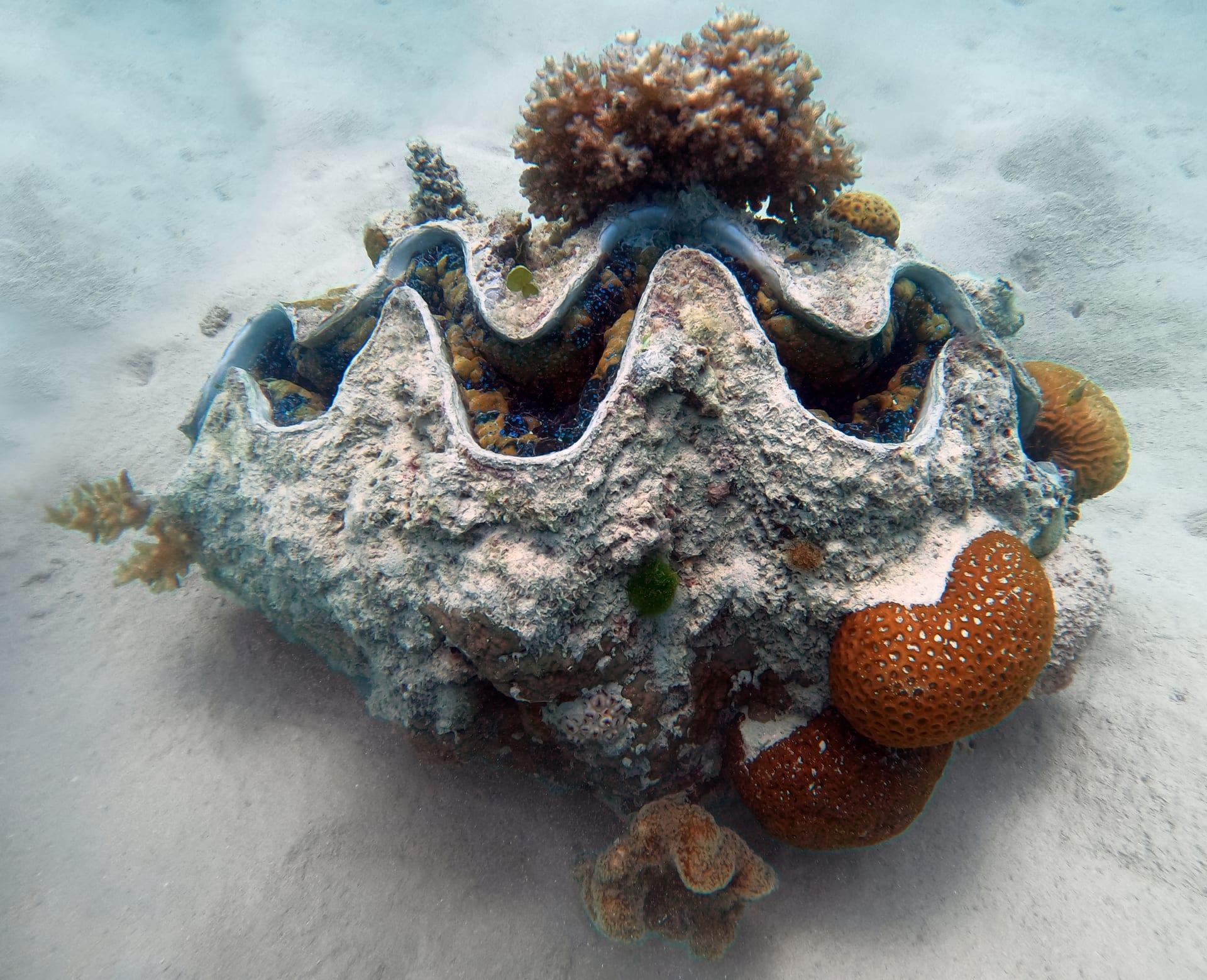
The largest living bivalve, reaching 137 cm in shell length. Its mantle is brown or gold with blue-green mottling. Keeping one for life in an aquarium is not realistic, and the IUCN assesses it as Critically Endangered.
Difficulty
Advanced
Temperature
24〜27℃
Size
Shell length to 137cm
Diet
Mainly photosynthesis by the zooxanthellae in its mantle; small specimens also filter-feed on phytoplankton.
About
Tridacna gigas ranges from Myanmar east to Wallis and Futuna, north to Japan and south to Western Australia, and is the largest living bivalve. Zooxanthellae live in its mantle, which is brown or gold with spreading blue-green mottling. Unlike its relatives the mantle extends well beyond the shell margin, and in adults the shell no longer closes fully. It was heavily overharvested for meat and shell, and populations have been lost across much of its former range. The IUCN assessed it as Critically Endangered in 2024, and as a member of the Tridacnidae it is covered by the blanket CITES Appendix II listing. Only small cultured specimens reach the aquarium trade, but since they grow to several tens of centimetres and beyond a metre, keeping one for life is not realistic; anyone considering it should plan for where the clam will go once grown. Care itself demands strong lighting and a heavy calcium supply.
Source: Wikipedia (CC BY-SA 4.0)
Size of the Giant Clam (Tridacna Gigas)
The Giant Clam (Tridacna Gigas) grows to Shell length to 137cm.
SeaLifeBase gives its depth range as 0-35 m and a maximum shell length of 137 cm.
Temperature & humidity for the Giant Clam (Tridacna Gigas)
The ideal temperature for the Giant Clam (Tridacna Gigas) is 24〜27℃.
Basic Info
Origin
Indo-Pacific, from Myanmar east to Wallis and Futuna, north to Japan and south to Western Australia, at depths of 0-35 m
Size
Shell length to 137cm
Care Specifications
- Carbonate (KH)
- 8–12 dKH
- Water Temp.
- 24–27℃
- Specific Gravity
- 1.023–1.025
- Salinity
- 33–35 ppt
- Calcium (Ca)
- 400–450 ppm
- Magnesium (Mg)
- 1280–1350 ppm
PeacefulLight: High (PAR>150)Flow: MediumPlacement: Bottom
Sources: SeaLifeBase (Tridacna gigas) / LiveAquaria (Gigas Clam, Aquacultured) / AlgaeBarn: Water Parameters 101
References & Sources
Edited & verified by: BreederDirect editorial team
The taxonomic, regulatory, and husbandry data on this page are compiled and verified against the authoritative primary sources below.
Taxonomy & Authority
Accepted name: Tridacna gigas (Linnaeus, 1758)
Synonyms: Chama gigas Linnaeus, 1758, Chama gigantea G. Perry, 1811, Dinodacna cookiana Iredale, 1937
Authority databases: WoRMS
Nomenclature follows global taxonomic authority databases.
Regulations & Conservation Status
CITES Appendix IIIUCN CR · Critically Endangered
Sources: CITES Appendix II (Tridacnidae spp. listed as a family) / IUCN Red List 2025-2 (assessed 2024, via SeaLifeBase)
Regulations may change. Always verify the latest information with the relevant authorities.
Giant Clam (Tridacna Gigas) Listings
Loading latest listingsFind listings for this species