Source: Wikimedia Commons
Boring Clam (Tridacna Crocea)
IntermediateTridacna crocea
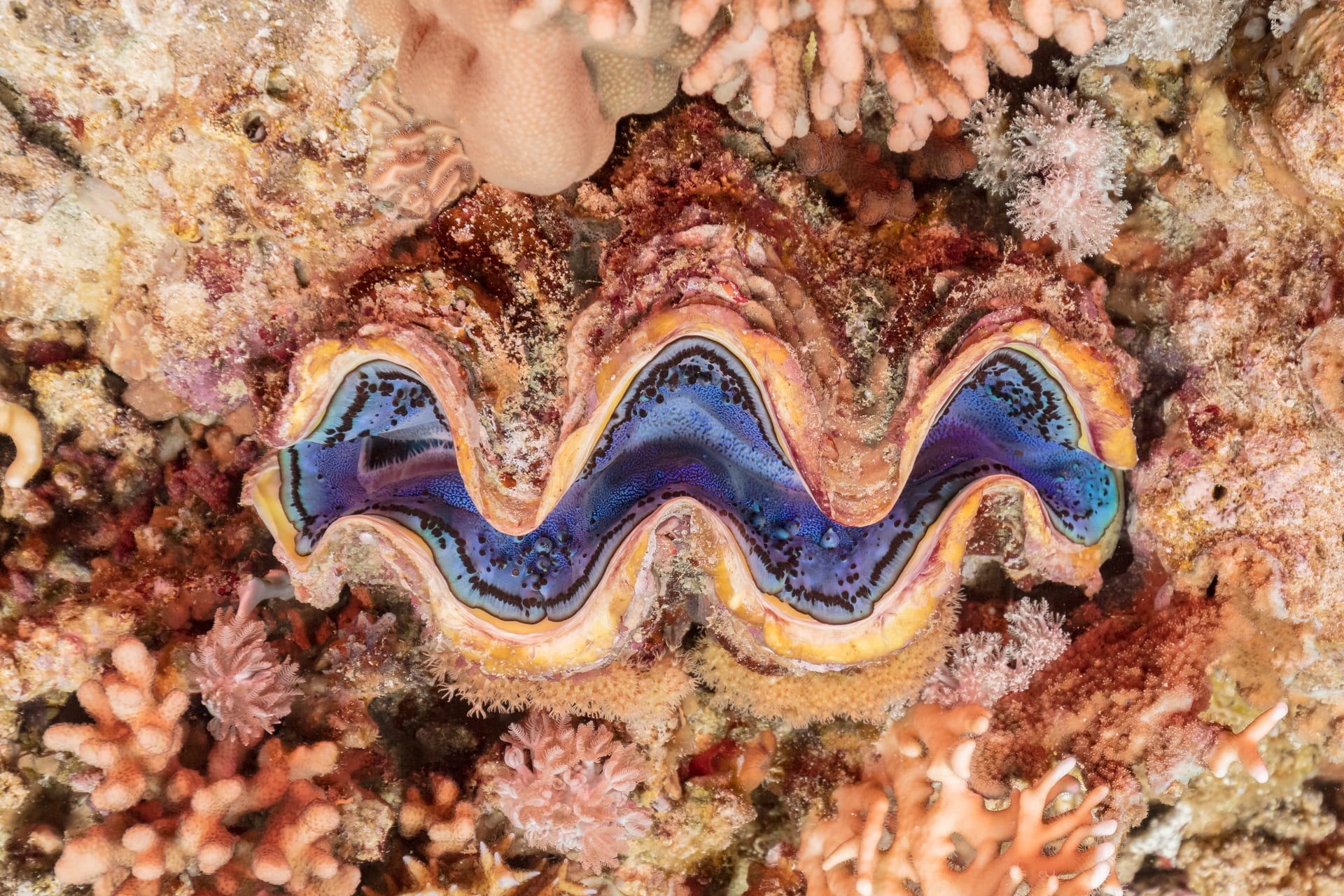
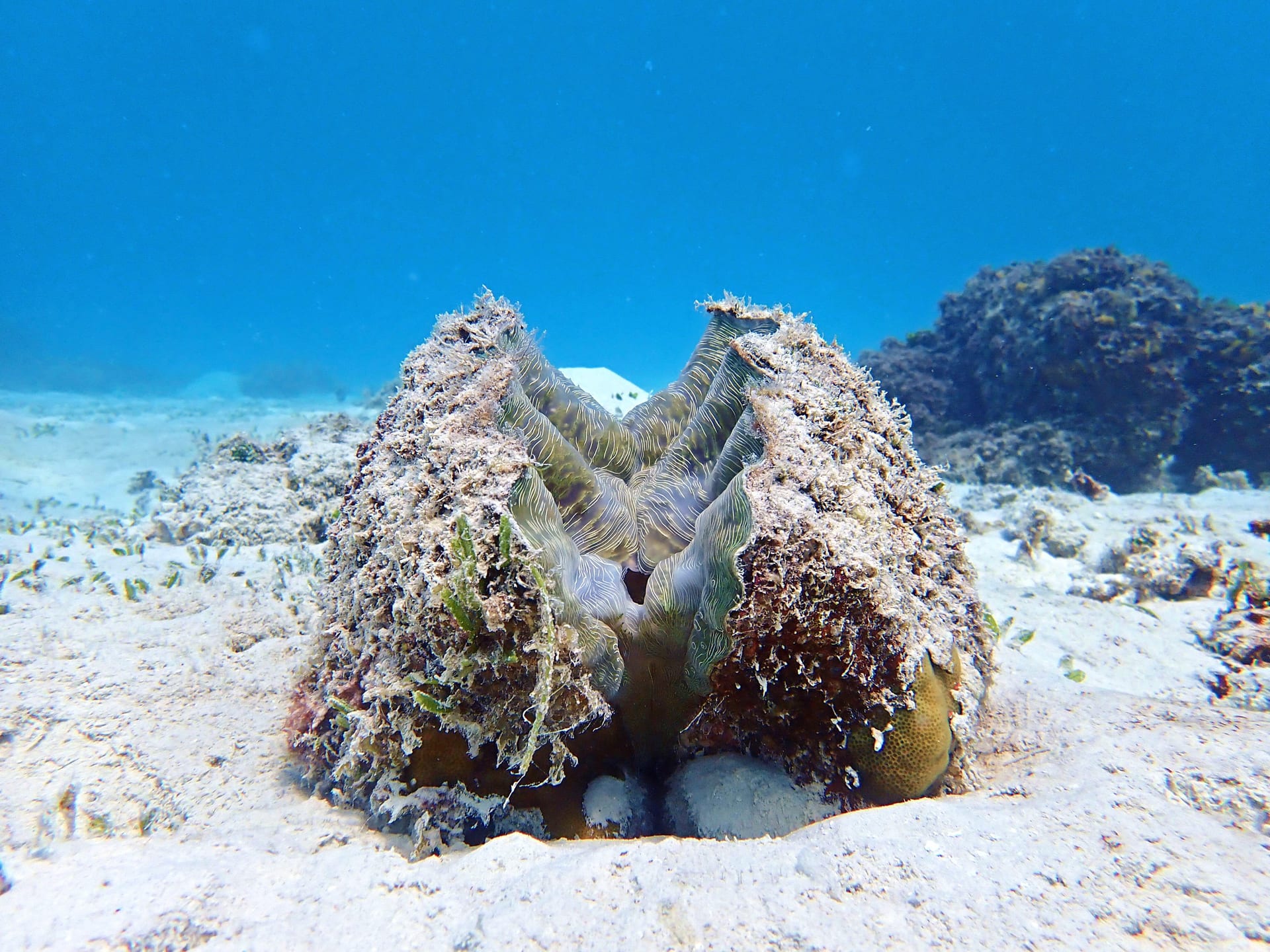
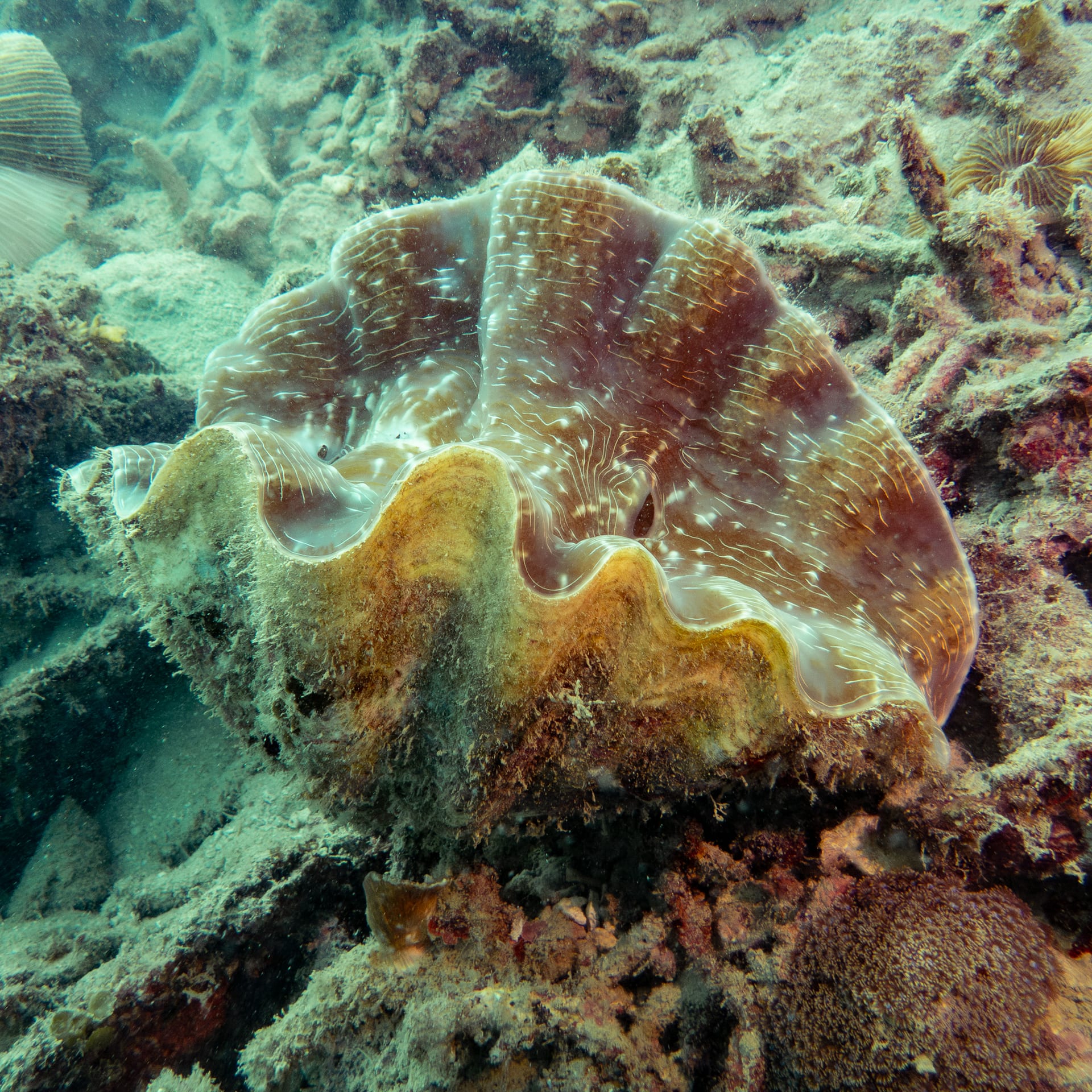
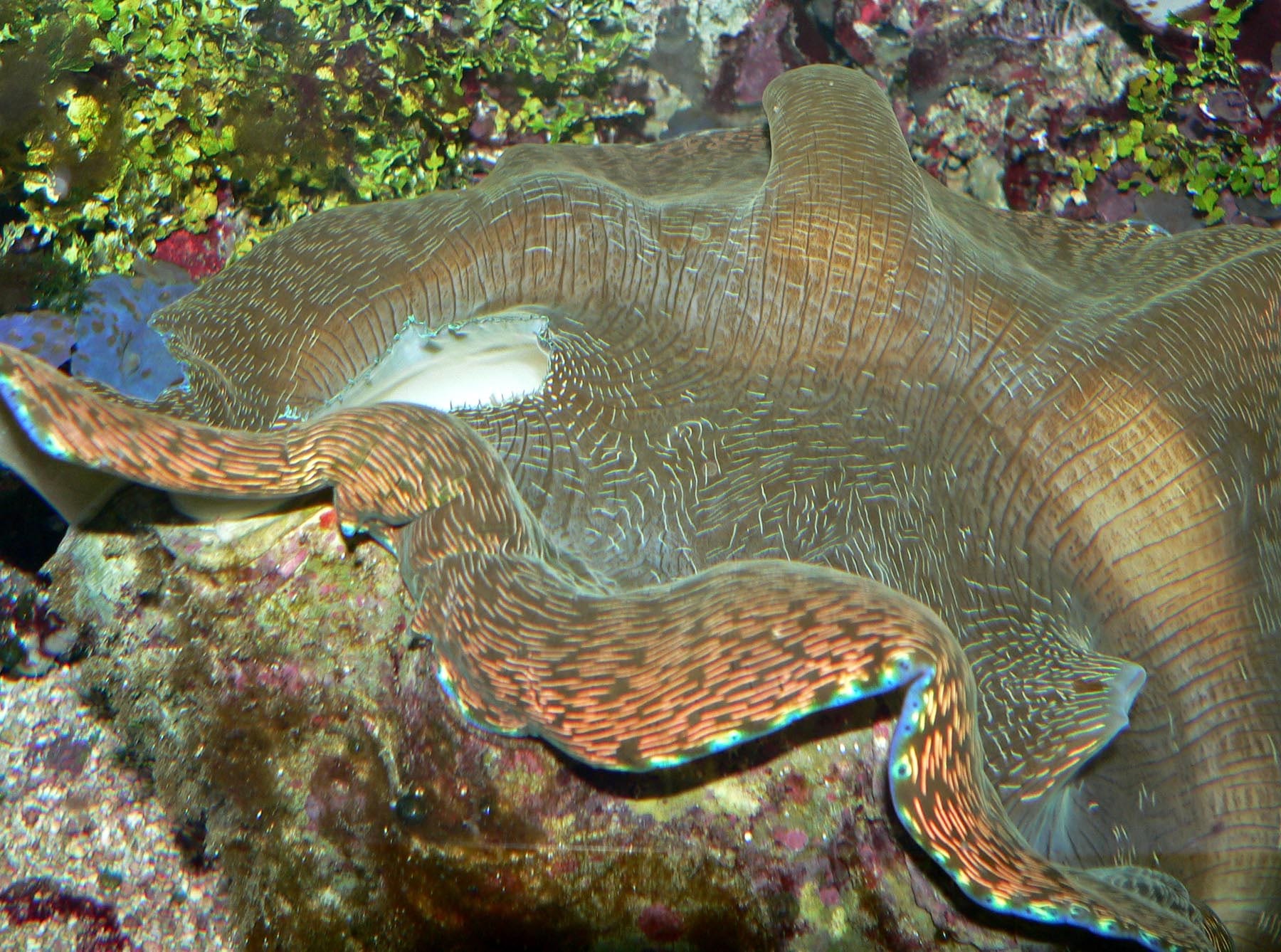
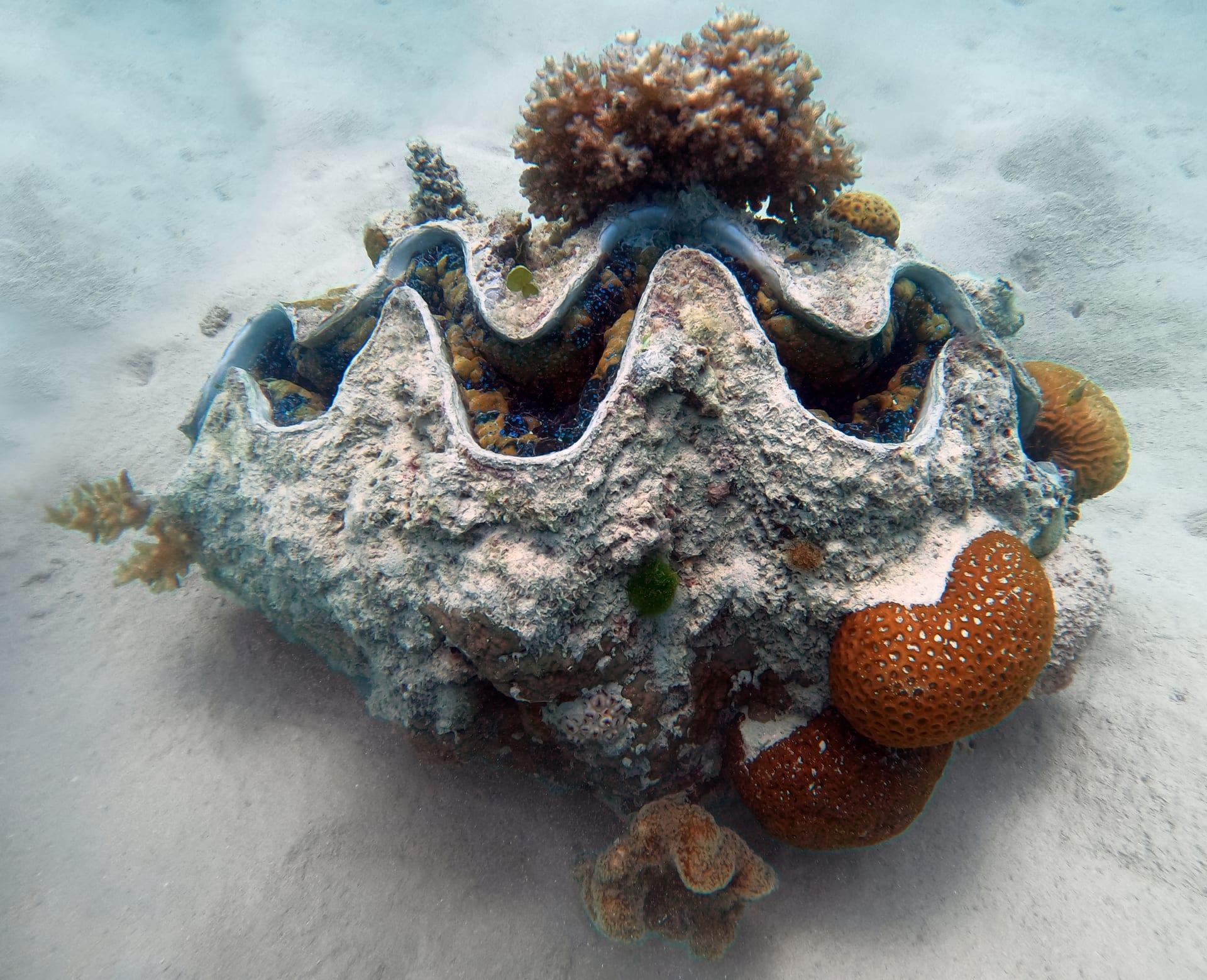
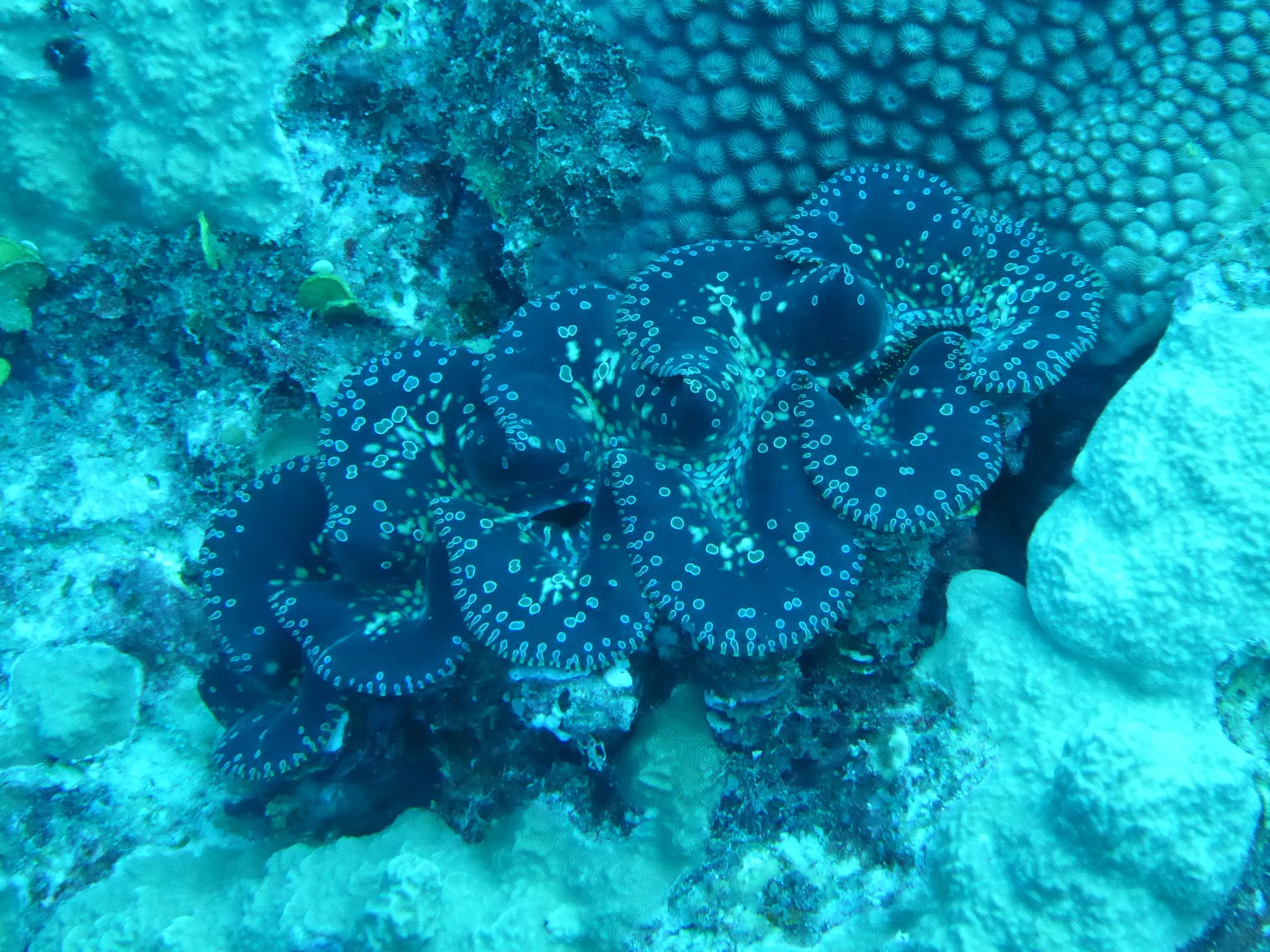
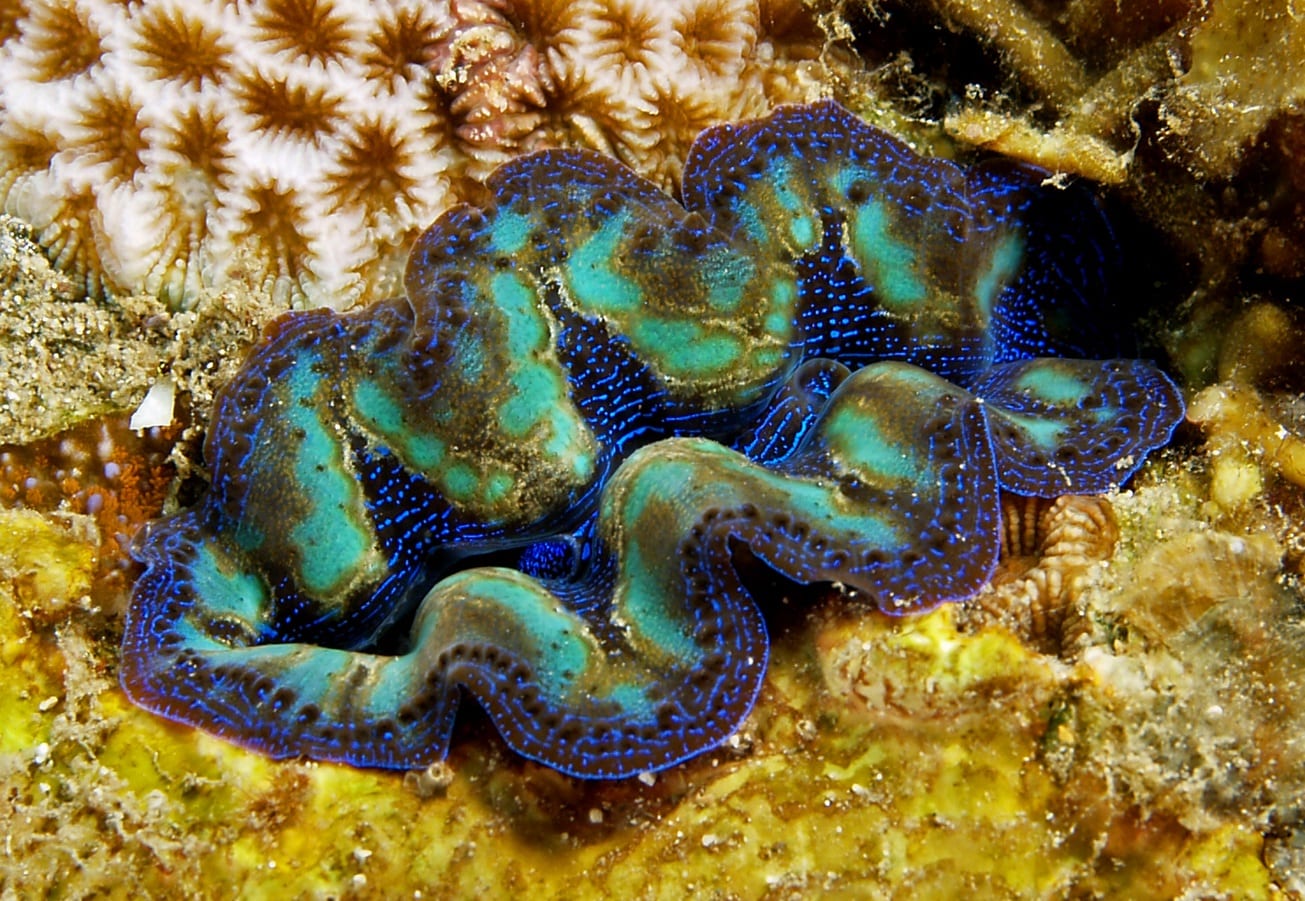
The smallest giant clam, reaching 15 cm in shell length. It bores into coral rock, which gives it the English name boring clam. Its mantle shows the widest colour variation in the family, and it is the most traded clam for aquariums.
Difficulty
Intermediate
Temperature
24〜27℃
Size
Shell length to 15cm
Diet
Mainly photosynthesis by the zooxanthellae in its mantle; small specimens also filter-feed on phytoplankton.
About
Tridacna crocea is a giant clam ranging from the Andaman Islands to Fiji, north to Japan and south to New Caledonia and Queensland. It bores into coral rock, rasping with the edge of its shell until it is partly embedded, which is the origin of the English name boring clam. Zooxanthellae live in its mantle, whose colour variation - blue, green, gold, purple - is the richest in the family, and it is the most widely traded clam in the aquarium hobby. Because most of its nutrition comes from photosynthesis in the mantle, strong lighting is essential. Once it has attached by its byssus it cannot be moved, so decide on the final position when introducing it. The IUCN assessed it as Least Concern in 2024, but as a member of the Tridacnidae it is covered by the blanket CITES Appendix II listing and trade requires permits. Most clams sold in Japan are cultured.
Source: Wikipedia (CC BY-SA 4.0)
Size of the Boring Clam (Tridacna Crocea)
The Boring Clam (Tridacna Crocea) grows to Shell length to 15cm.
SeaLifeBase gives its depth range as 0-20 m and a maximum shell length of 15 cm, making it the smallest species in the family.
Temperature & humidity for the Boring Clam (Tridacna Crocea)
The ideal temperature for the Boring Clam (Tridacna Crocea) is 24〜27℃.
Basic Info
Origin
Indo-West Pacific, from the Andaman Islands to Fiji, north to Japan and south to New Caledonia and Queensland, at depths of 0-20 m
Size
Shell length to 15cm
Care Specifications
- Carbonate (KH)
- 8–12 dKH
- Water Temp.
- 24–27℃
- Specific Gravity
- 1.023–1.025
- Salinity
- 33–35 ppt
- Calcium (Ca)
- 400–450 ppm
- Magnesium (Mg)
- 1280–1350 ppm
PeacefulLight: High (PAR>150)Flow: MediumPlacement: Middle
Sources: SeaLifeBase (Tridacna crocea) / LiveAquaria (Crocea Clam, Multicolored, Aquacultured) / AlgaeBarn: Water Parameters 101
References & Sources
Edited & verified by: BreederDirect editorial team
The taxonomic, regulatory, and husbandry data on this page are compiled and verified against the authoritative primary sources below.
Taxonomy & Authority
Accepted name: Tridacna crocea Lamarck, 1819
Synonyms: Tridacna cumingii Reeve, 1862, Tridacna ferruginea Reeve, 1862
Authority databases: WoRMS
Nomenclature follows global taxonomic authority databases.
Regulations & Conservation Status
CITES Appendix IIIUCN LC · Least Concern
Sources: CITES Appendix II (Tridacnidae spp. listed as a family) / IUCN Red List 2025-2 (assessed 2024, via SeaLifeBase)
Regulations may change. Always verify the latest information with the relevant authorities.
Boring Clam (Tridacna Crocea) Listings
Loading latest listingsFind listings for this species