Zoanthus (Button Polyps) Care Guide | Species, Lighting, Placement, and Reproduction Management
Zoanthus (Button Polyps) are ideal beginner soft corals. This guide explains popular color variations, their characteristics, optimal lighting, water flow and water quality conditions, mat-base expansion patterns and reproduction management, as well as allelopathy countermeasures with neighboring corals.
Key Takeaways
Zoanthus (Button Polyps) are ideal beginner soft corals. This guide explains popular color variations, their characteristics, optimal lighting, water flow and water quality conditions, mat-base expansion patterns and reproduction management, as well as allelopathy countermeasures with neighboring corals.
✍️
BreederDirect Editorial
The BreederDirect editorial team specializes in care information for animals, covering veterinary care and breeding to deliver beginner-friendly guides.
Find Coral on BreederDirect
Buy directly from verified breeders
Browse Related Listings
Find Coral listings related to this article on BreederDirect. Buy directly from verified breeders.
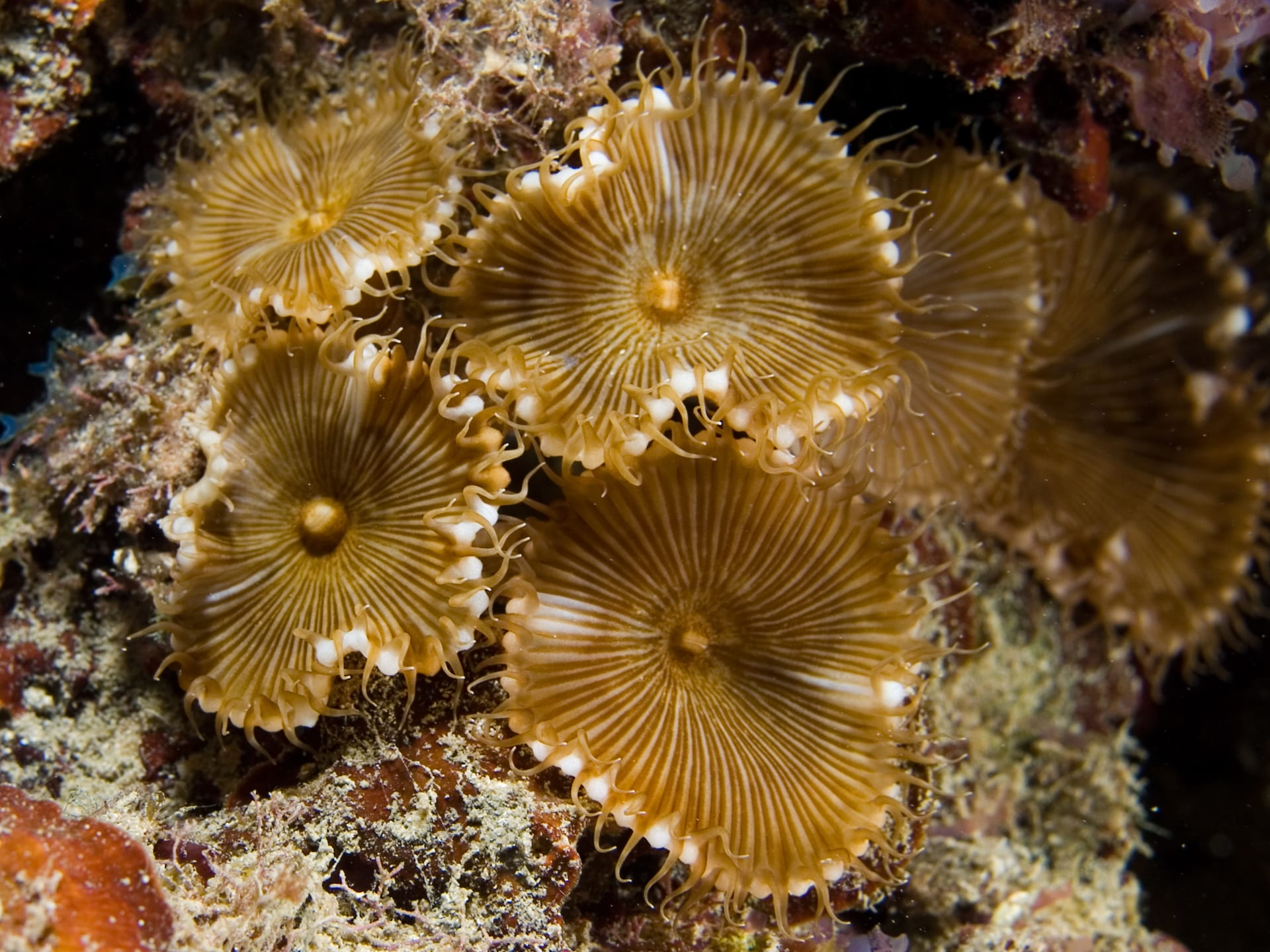
Zoanthus (Zoanthus sp.) is a type of soft coral characterized by colony-forming polyps that spread in mat-like formations. In Japanese, they are also called "Button Polyps," named after each polyp's round, button-like appearance.
They are among the most popular corals in marine aquariums, and with an extremely wide variety of color morphs, they are highly sought after by collectors. Recommended as the "first coral for reef tank beginners," they can be enjoyed by both beginners and advanced aquarists.
Basic Information
Item
Details
Classification
Soft coral (Order Zoantharia)
Common Name
Button Polyps, Zoa, Zoanthids
Form
Colony type spreading in mat formations
Polyp Size
Approximately 5–20mm
Care Difficulty
Beginner to Intermediate
Habitat
Tropical and subtropical coral reefs worldwide
The main zoanthus genera are Zoanthus (round tentacles) and Palythoa (larger, granular texture). Most zoanthids commonly referred to as "Zoas" belong to one of these two genera or intermediate species.
Popular Color Variations
Zoanthus species frequently hybridize naturally, and the market offers hundreds of color morphs. Here are some of the most popular varieties:
Name
Characteristics
WWC Armor of God
Blue-green base with gold rim, strong UV fluorescence
Sunny D
Orange base with lemon-yellow tentacles
Rasta
Orange-red center with green tentacles
Purple Monster
Deep purple, large polyps
Eagle Eye
Green skirt with red-orange center
Rainbow Infusion
Multi-color gradient, collector's favorite
Water Quality Parameters for Optimal Care
Zoanthus has a wide tolerance range for water quality and is relatively easy to maintain even for beginners. However, they are sensitive to rapid water quality fluctuations, so maintaining a stable environment is essential.
Parameter
Target Value
Water Temperature
25–27°C
Specific Gravity (SG)
1.024–1.026
pH
8.1–8.3
Alkalinity (KH)
8–10 dKH
Calcium (Ca)
380–450 mg/L
Magnesium (Mg)
1,260–1,380 mg/L
Nitrate (NO₃⁻)
5–25 ppm
Phosphate (PO₄³⁻)
0.03–0.10 ppm
Key Point: Zoanthus grows well in environments with moderate nutrient levels. In ultra-low nutrient (ULNS) conditions, color fading and growth stagnation may occur. Maintain stable water quality with weekly partial water changes (10–20%).
Lighting Selection and PAR Guidelines
Zoanthus has a wide light tolerance range, adapting from low to moderate light levels. However, optimal light intensity varies by color morph, so observe individual specimens and adjust accordingly.
Placement
PAR Range
Condition
Tank Bottom / Low Light
30–100 μmol/m²/s
Beginner species, greens do well
Mid-Tank
100–200 μmol/m²/s
Optimal for most varieties
Upper Tank / High Light
200–400 μmol/m²/s
Effective for fluorescent types after acclimation
Acclimation Process: When introducing new zoanthids, start in a low-light area for 1–2 weeks and allow polyps to open consistently before gradually moving them to brighter locations. Rapid exposure to high light causes polyp closure, color loss, and bleaching (ZoaV-type photostress).
UV Light Compatibility: Zoanthus responds to UV/violet lighting (360–420nm wavelength) with enhanced fluorescence. Using Kessil, Radion, or AIP series UV modes will intensify fluorescent coloration.
Water Flow Management
Zoanthus thrives with gentle, indirect water movement. Direct, strong currents cause polyp closure and long-term colony shrinkage.
Optimal Flow: Soft, indirect currents from the sides (Gyre flow, random flow)
Avoid Direct or Strong Flow: Small polyp varieties are particularly susceptible to damage
Bottom Placement: Place near substrate with gentle circulation, avoiding excessive sand disturbance
For optimal settings, use a wavemaker in weak-to-medium random mode—the ideal state is when polyps sway gently open.
Mat Expansion Control and Frag Creation
Under healthy conditions, zoanthus extends its mat (skinfold) to expand the colony. While natural growth, care must be taken to prevent encroachment on neighboring corals (allelopathy).
Controlling Growth
Liverock Placement: Position on rock edges or crevices to limit spread
Individual Slab Management: Place on small flat rocks (slabs) for independent control
Distance from Other Corals: Maintain at least 5–10cm spacing
Creating Frags (Cuttings)
Zoanthus reproduces easily by cutting mat sections containing polyps and attaching to frag plugs.
Use a sharp razor blade or zoa cutter to remove a 5–10 polyp section from the colony
Attach to a frag plug using cyanoacrylate-based adhesive (zoa glue)
Place in a quarantine tank (1L with aeration) for 24 hours to rinse toxins
Return to the main tank in a low-light area and allow 1–2 weeks for attachment
Palytoxin Warning: Larger Palythoa species may contain palytoxin, and direct skin contact or inhalation of vaporized toxin is dangerous. Wear rubber gloves and protective eyewear, and work in a well-ventilated area.
Troubleshooting: When Polyps Won't Open
Symptom
Main Cause
Solution
Won't open at all
Water parameter shift, strong light, strong flow
Move to low-light, gentle-flow location
Partial polyp closure
Neighboring coral interference
Increase spacing
Thin tentacles, pale color
Nutrient deficiency
Adjust NO₃ to 5–10ppm
Bleaching, transparency
Photostress, temperature shock
Maintain proper light and temperature
Tissue recession (RTN/STN)
Poor water quality, harsh chemicals
Perform water change, add activated carbon
If polyps remain closed for over a week, prioritize measuring water temperature, SG, and KH to rule out rapid fluctuations.
Summary: Tips for Long-Term Zoanthus Care
Zoanthus stands out among corals for being easy to grow, visually striking, and simple to propagate—a winning combination for beginners. With proper water quality and gentle light and flow, they will spread beautifully across your tank.
The joy of collecting different color morphs is another draw. From managing large scatters across the entire scape to precisely controlling individual fragment colors, zoanthus offers deep enjoyment.
Purchasing frags directly from breeders is a major advantage, allowing access to rare named morphs in healthy condition. Once your tank conditions are established, build your own unique zoanthus collection.