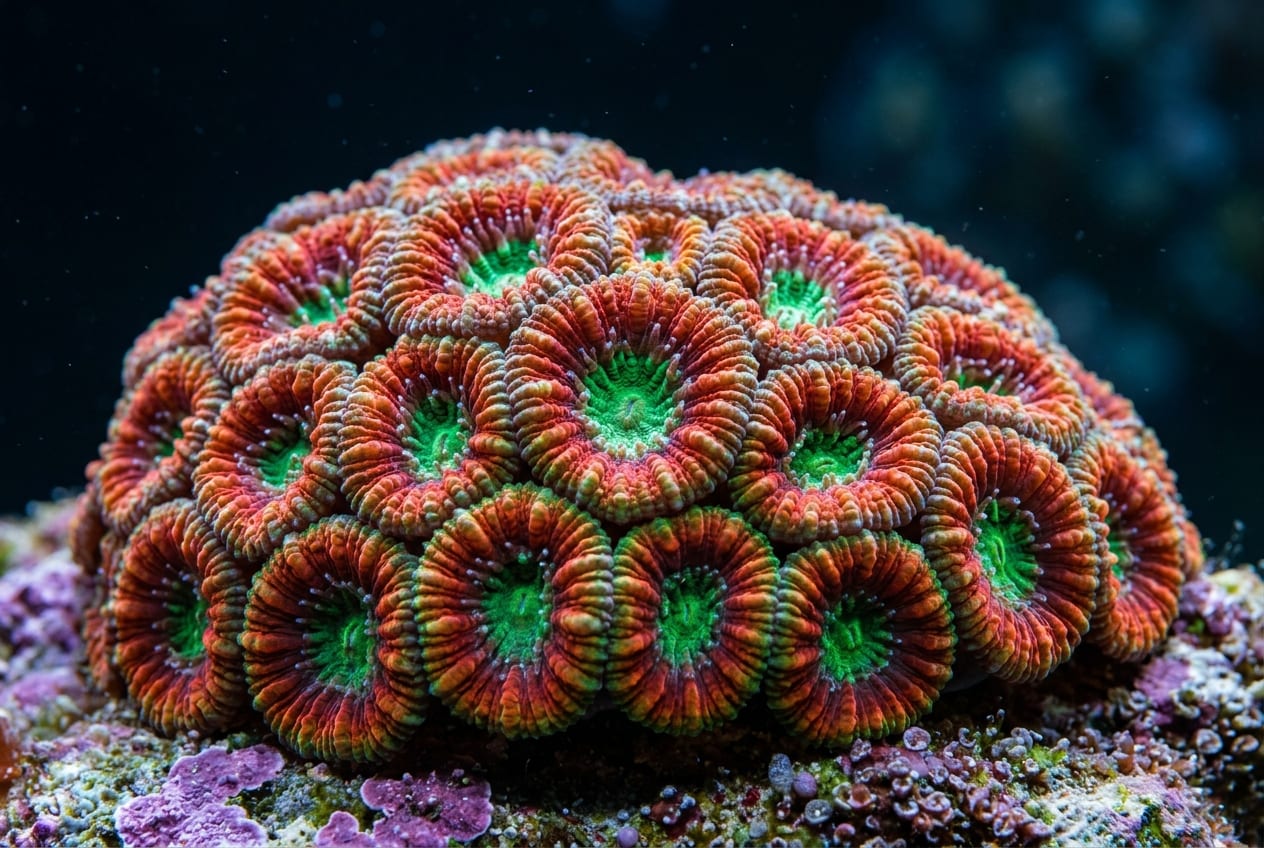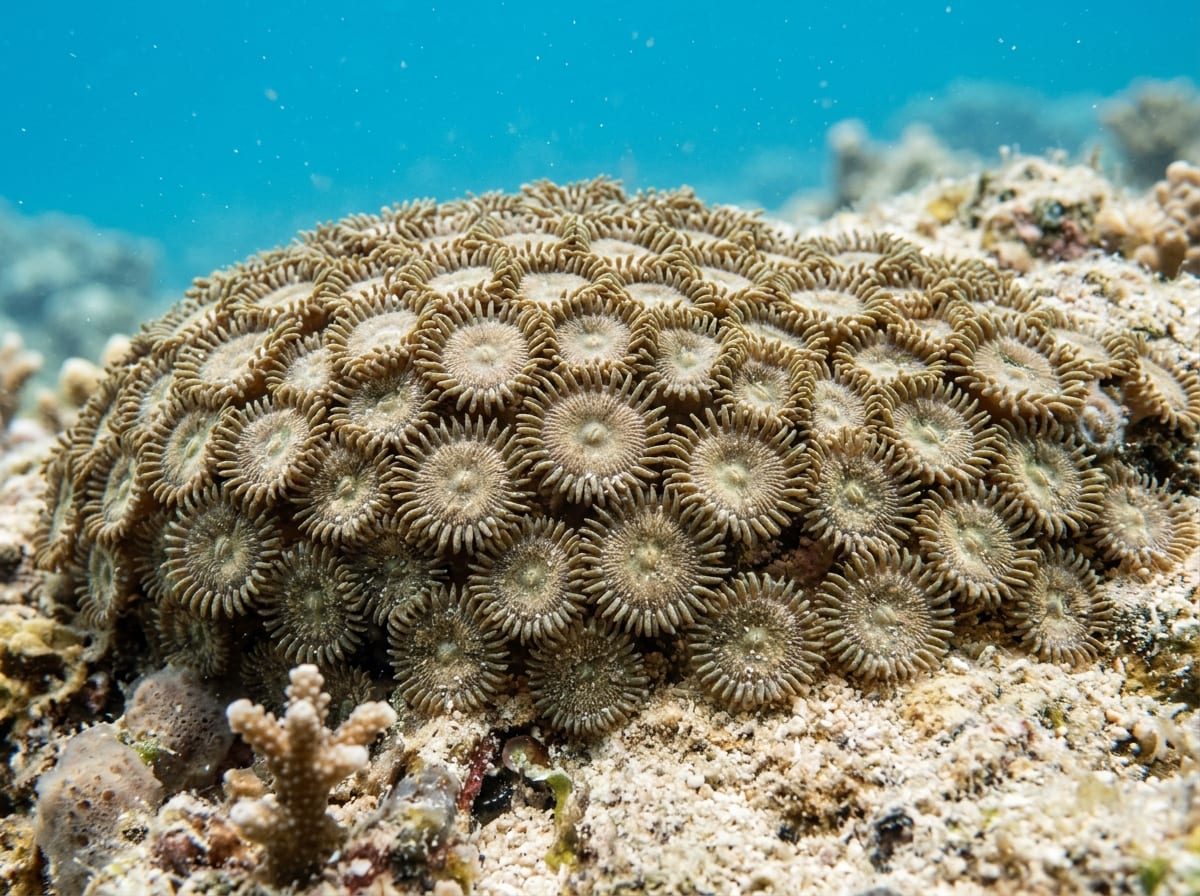
AI-generated image
Button Polyp (Palythoa leseuri)
IntermediatePalythoa leseuri
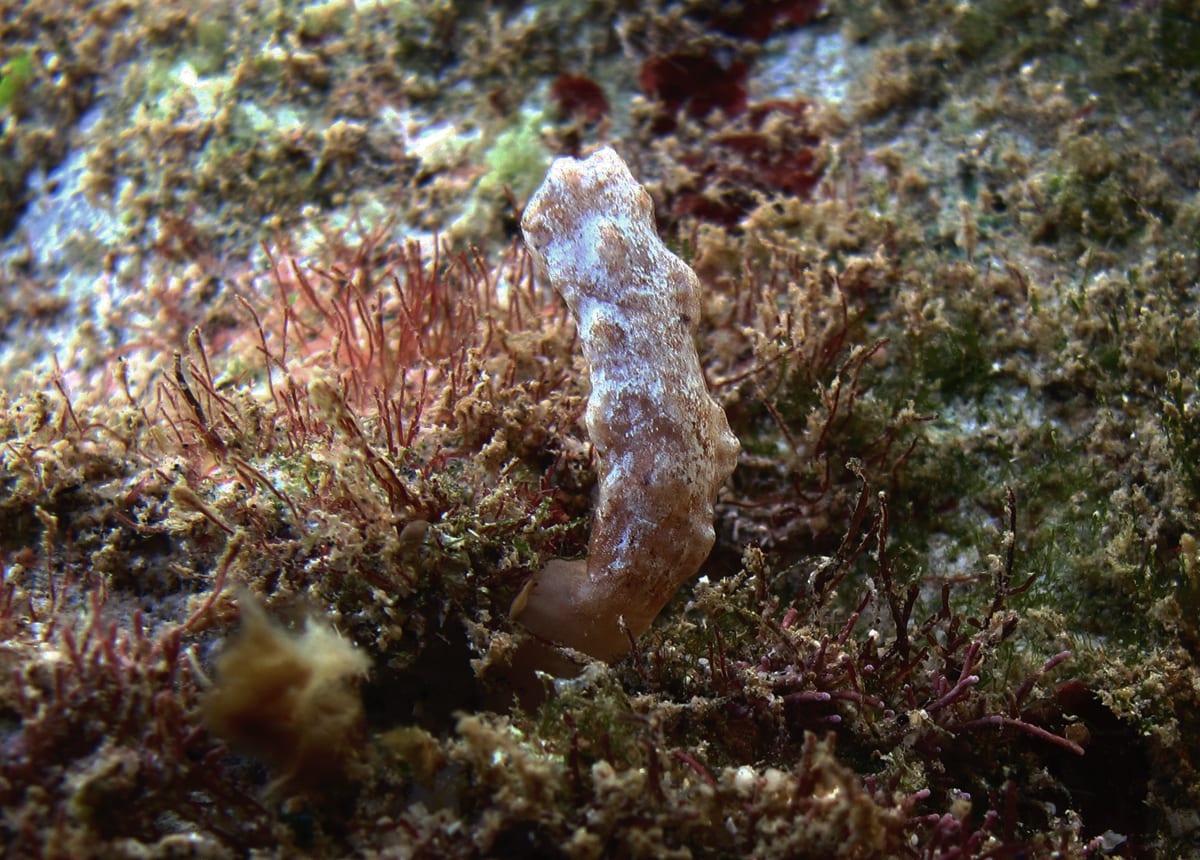
A Palythoa with polyps about 1.5 cm wide that stiffens its body wall with embedded sand grains; found in shallow Okinawan waters. Some Palythoa contain the potent toxin palytoxin, so handle it with gloves and eye protection.
Difficulty
Intermediate
Temperature
24〜27℃
Size
Polyps about 1.5 cm wide (Gifu University science teaching database)
Diet
Photosynthesis (zooxanthellae) plus feeding
About
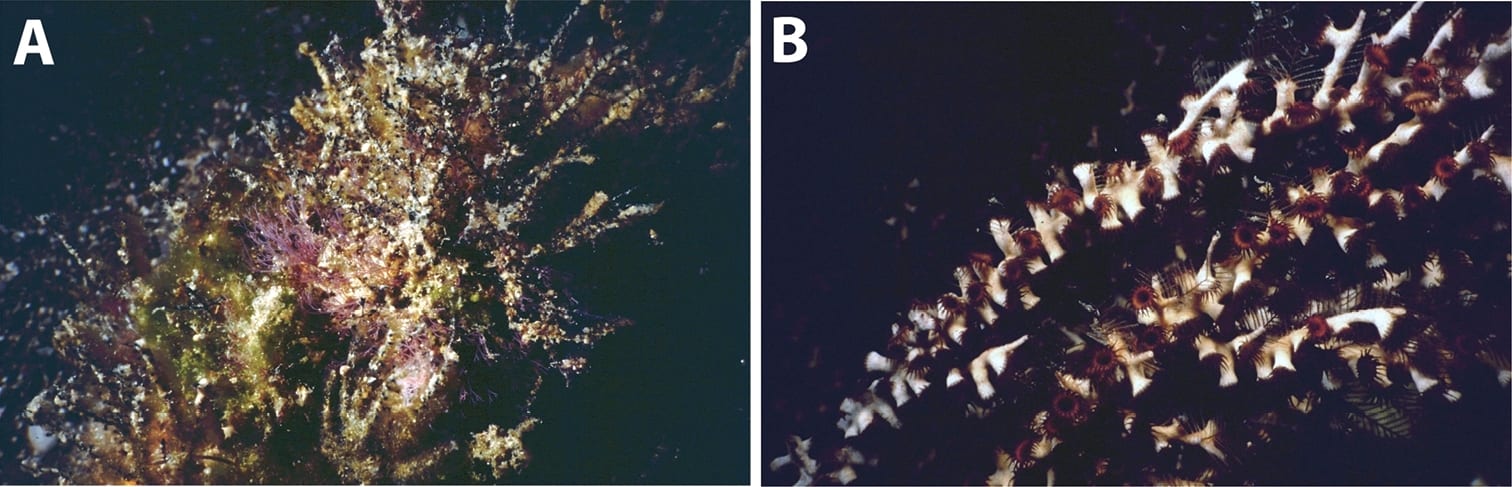
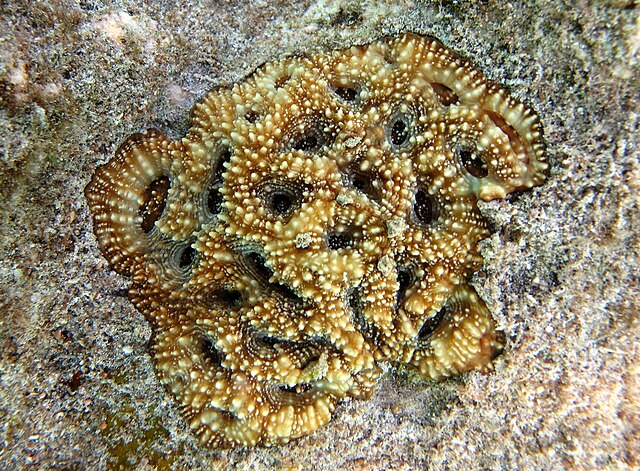
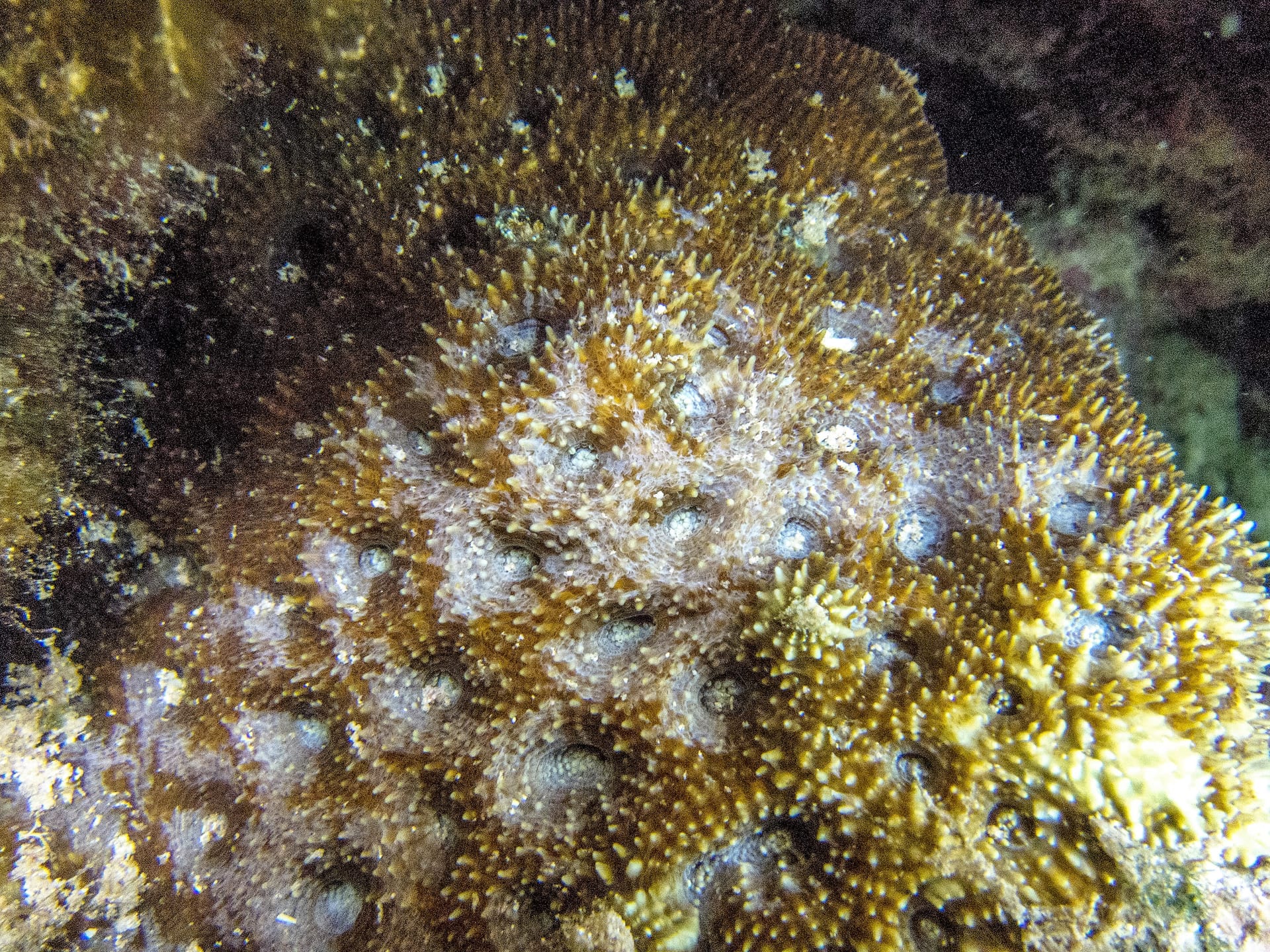
Palythoa leseuri is a zoanthid of the genus Palythoa, formerly written Palythoa (Protopalythoa) lesueuri. WoRMS has a record from Saudi Arabia (Red Sea), and it has been photographed at Cape Maeda, Onna, Okinawa. Zoanthids reinforce their body wall with embedded sand grains, and the polyps of this species are about 1.5 cm wide (Gifu University science teaching database). Palythoa embed foreign particles in the body wall and have a thick coenenchyme; most host zooxanthellae, although a few cave-dwelling species do not (paper in PMC). Zoanthid tissues and mucus are toxic, and palytoxin, first isolated from a Hawaiian Palythoa, is regarded as the strongest marine animal toxin (Nipponica). Some aquarium zoanthids contain palytoxin, and because you cannot tell which by looking, health authorities advise treating all of them as if they do. The site also has pages for P. tuberculosa and P. grandis. Specialist shops in Japan stock it from time to time.
Size of the Button Polyp (Palythoa leseuri)
The Button Polyp (Palythoa leseuri) grows to Polyps about 1.5 cm wide (Gifu University science teaching database).
Temperature & humidity for the Button Polyp (Palythoa leseuri)
The ideal temperature for the Button Polyp (Palythoa leseuri) is 24〜27℃.
Basic Info
Origin
Red Sea to the western Pacific (photographed in shallow water off Okinawa Island)
Size
Polyps about 1.5 cm wide (Gifu University science teaching database)
Temperature
24〜27℃
Diet
Care Specifications
- Water Temp.
- 24–27℃
- Specific Gravity
- 1.023–1.025
- Salinity
- 33–35 ppt
Soft coral
Sources: Gifu University science teaching database (Palythoa lesueuri) / Kotobank (Nipponica): Zoantharia / SA Health: Palytoxin poisoning and marine aquarium safety / PMC: Azooxanthellate Palythoa genomes (Yoshioka et al. 2024)
References & Sources
Edited & verified by: BreederDirect editorial team
The taxonomic, regulatory, and husbandry data on this page are compiled and verified against the authoritative primary sources below.
Primary sources
- Species+ (CITES search)
- Ministry of the Environment: List of Designated Invasive Alien Species
- e-Gov: Natural Parks Act (Art. 22, marine park zones)
- SA Health: Palytoxin poisoning and marine aquarium safety
- Gifu University science teaching database (Palythoa lesueuri)
- Kotobank (Nipponica): Zoantharia
- PMC: Azooxanthellate Palythoa genomes (Yoshioka et al. 2024)
Taxonomy & Authority
Regulations & Conservation Status
Not CITES-listed
Domestic law: Collecting on the shore or in the sea may fall under fishing rights or prefectural fisheries rules, and taking designated species in marine park zones requires a permit (Natural Parks Act, Art. 22). Check local rules before collecting.
Not listed in the CITES Appendices (checked on Species+). Not designated as an Invasive Alien Species under Japanese law.
Sources: Species+ (CITES search) / Ministry of the Environment: List of Designated Invasive Alien Species / e-Gov: Natural Parks Act (Art. 22, marine park zones) / SA Health: Palytoxin poisoning and marine aquarium safety
Regulations may change. Always verify the latest information with the relevant authorities.
Button Polyp (Palythoa leseuri) Listings
Loading latest listingsFind listings for this species