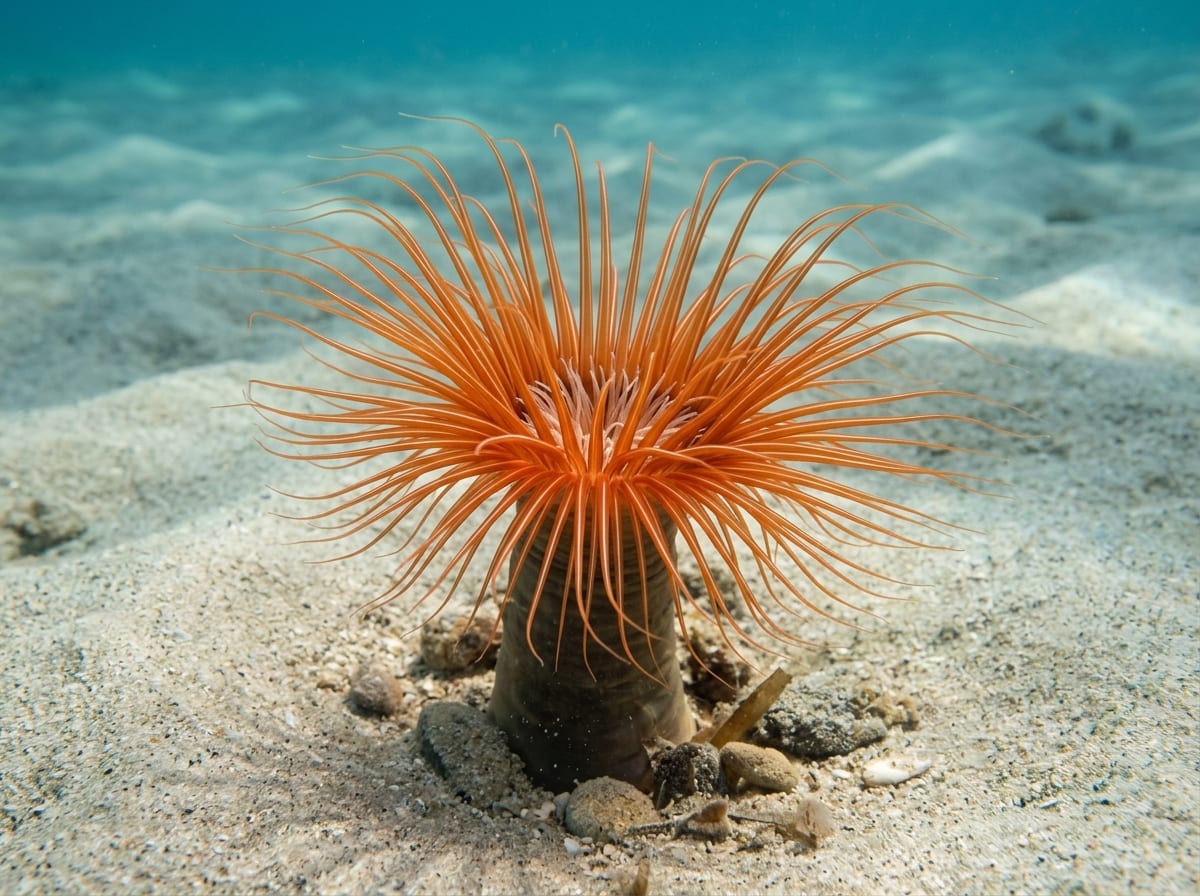
Tube Anemone
The Tube Anemone (Himehanaginchaku in Japanese) is a tube anemone from Japan. It anchors a soft tube in the sand and fans out long, slender tentacles like fireworks. White vertical lines run along the tentacles, and the colors come in orange and purple tones. It withdraws into its tube in an instant when touched, and its tentacle crown reaches about 15 cm across. Tube anemones are generally long-lived and are said to live more than 50 years. Few people have kept it, and Reeflex regards it as unsuitable for aquarium keeping. Its sand-dwelling lifestyle makes it an animal only for experienced keepers who can give it a dedicated tank.
View Tube Anemone encyclopedia →Breeder Wanted!
List on BreederDirect and sell directly to customers nationwide!
BreederDirect's 6 Transparency Commitments
Our Breeder sellers disclose detailed care specs for all Coral listings. We prioritize Aquacultured/CB specimens, verify WYSIWYG photos, and provide difficulty ratings—avoiding wild-caught.
- Aquacultured
- WYSIWYG Photo
- Difficulty Disclosed
- Frag/Colony
- Care Info Included
- Trade name shown
Browse all 241 breeds
Difficulty
No listings match your filters
Adjust your filters, or get notified when new listings arrive.
Getting alerts is free with a member account. When new listings match your saved search, we'll notify you by email and in-app.
Browse other categories
Verified breeders (preview)
Tube Anemone key facts
- Care level
- Advanced
- Lifespan
- Tube anemones are generally long-lived, reportedly over 50 years
- Size
- Tentacle crown about 15 cm across
- Diet
- Carnivore (plankton, small crustaceans); no zooxanthellae
- Lighting
- It has no zooxanthellae and does not feed on light. Lighting only needs to be bright enough for viewing.
- Flow & Placement
- It lives with its tube buried in sand, so provide fine sand deep enough to hold the tube upright, and set the tube into the substrate without bending or crushing it.
- Water Temperature & Quality
- A species of temperate Japanese coasts. The upper limit is 26°C, so guard against summer heat. Salinity 33-35 ppt (SG 1.023-1.025).
- Diet & Feeding
- A carnivore that eats brine shrimp, copepods and small crustaceans. Deliver fine frozen food to the tentacles while the crown is open.
- Health & Cautions
- Its tentacles are venomous and can sting nearby fish and corals. It is unsuitable for aquarium keeping, so it suits experienced keepers with a dedicated tank.
About Tube Anemone
Tube Anemone: a Japanese species that fans slender tentacles like fireworks from a sand-buried tube. Orange or purple, about 15 cm across, and regarded as unsuitable for most aquariums; for experienced keepers only.
7 things to know before welcoming a Tube Anemone
1For experienced keepers
The reference guide rates its difficulty as advanced. Living in a tube buried in sand is very different from the life of typical corals or fish, so the usual routines do not carry over directly. Few people have kept it, and Reeflex regards it as unsuitable for aquarium keeping, so only experienced keepers who can give it a dedicated tank should consider it, and carefully.
2A sand bed is essential
This species lives with a soft tube buried in the sand, so it needs a fine sand bed deep enough for the tube. A shallow layer where rock or equipment touches the bottom makes it harder for the animal to settle. Check whether your tank can hold enough sand before you choose it.
3Retracting is normal
Snapping back into the tube when touched is a natural defensive reaction for this group. It may stay inside the tube for a while after arrival, so do not assume something is wrong right away. Give it quiet time, and avoid poking or chasing it.
4Room for the tentacles
An adult's tentacle crown is about 15 cm across. Plan the layout so the spread tentacles do not touch rocks, equipment, or other animals. It also helps to choose a spot that is not hit directly by very strong flow.
5How to feed
It catches food with its tentacles and passes it to the mouth, so offer finely chopped meaty foods in small amounts near the tentacles. Uneaten food can degrade water quality, so remove it after feeding. Watch whether the animal is actually catching food, and adjust the amount and frequency accordingly.
6Choosing tank mates
Be careful about keeping it with animals that could damage the tentacles or tube, such as sand-diggers or fish that nip at tentacles. In the other direction, its extended tentacles can irritate nearby corals or small animals they touch. If you keep them together, leave plenty of distance between them.
7Health checks
Tube anemones are generally long-lived and are said to live more than 50 years. If the tentacles stay closed for a long time or the animal leaves its tube, water quality or feeding may not suit it. Check possible causes one at a time.
Frequently asked questions about Tube Anemone
- Q.Can beginners keep it?
- A.The reference guide rates its difficulty as advanced. It calls for an understanding of its sand-dwelling lifestyle and steady tank management, so it is best considered after you have gained some experience.
- Q.How large does it get?
- A.An adult's tentacle crown is about 15 cm across. Prepare a tank and layout with enough room that the spread tentacles do not touch their surroundings.
- Q.Does the tank need sand?
- A.Yes. It lives with its tube buried in the sand, so provide a fine sand bed deep enough for the tube. Also check that rock or equipment does not press against the bottom.
- Q.How long does it live?
- A.Tube anemones are generally long-lived and are said to live more than 50 years. However, few people have kept it and Reeflex regards it as unsuitable for aquarium keeping, so think carefully about whether you can maintain a stable environment over the long term before bringing one home.
- Q.Is retracting a sign of illness?
- A.Snapping back into the tube when touched is a natural reaction for this group, and it does not necessarily mean illness. If the tentacles stay closed for a long time, review water quality and feeding.
Useful tools for Tube Anemone care
Learn more about Tube Anemone in the encyclopedia
View Tube Anemone encyclopedia entry →
Care difficulty, lifespan, size and diet — all basics covered.
More in this category
Can't find the one you're looking for?
Post your wishes for free and breeders with matching animals will contact you with introductions.