AI-generated image
Tube Anemone
AdvancedPachycerianthus magnus
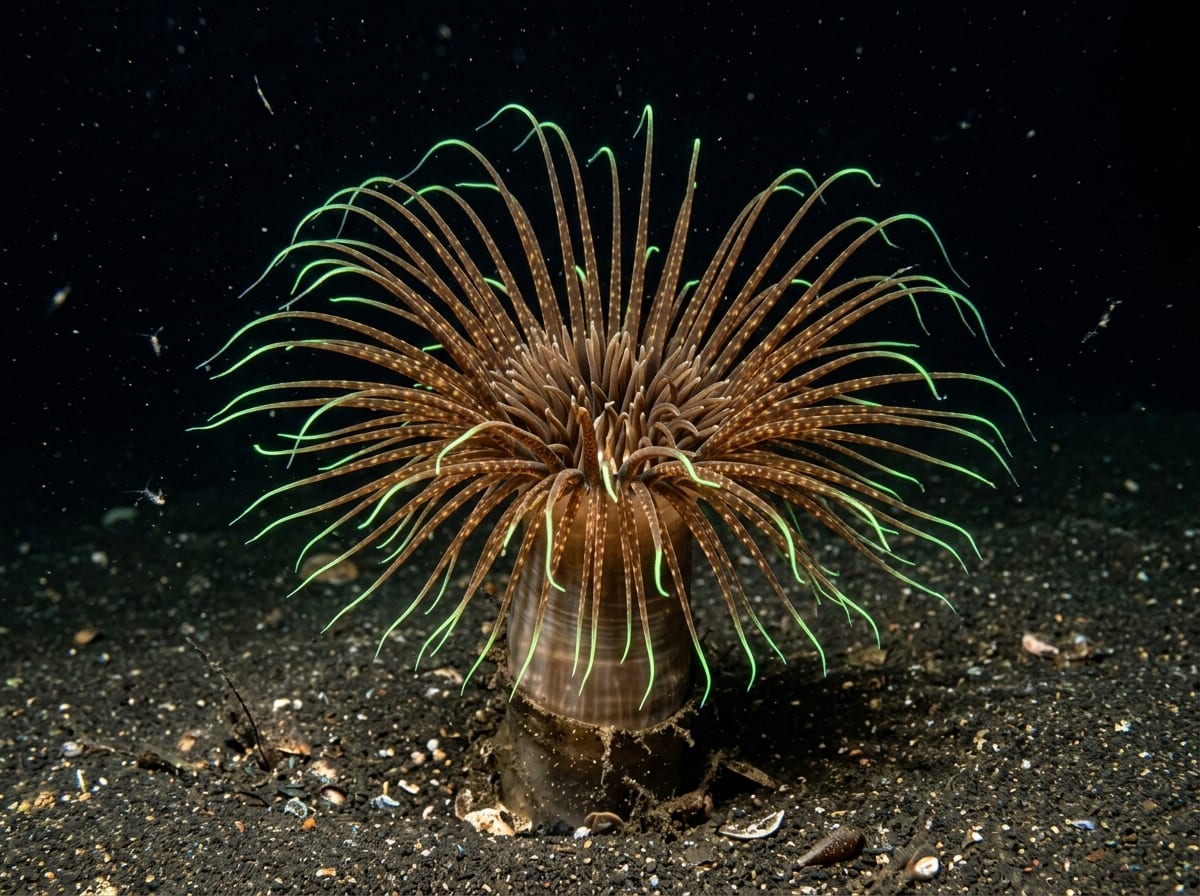
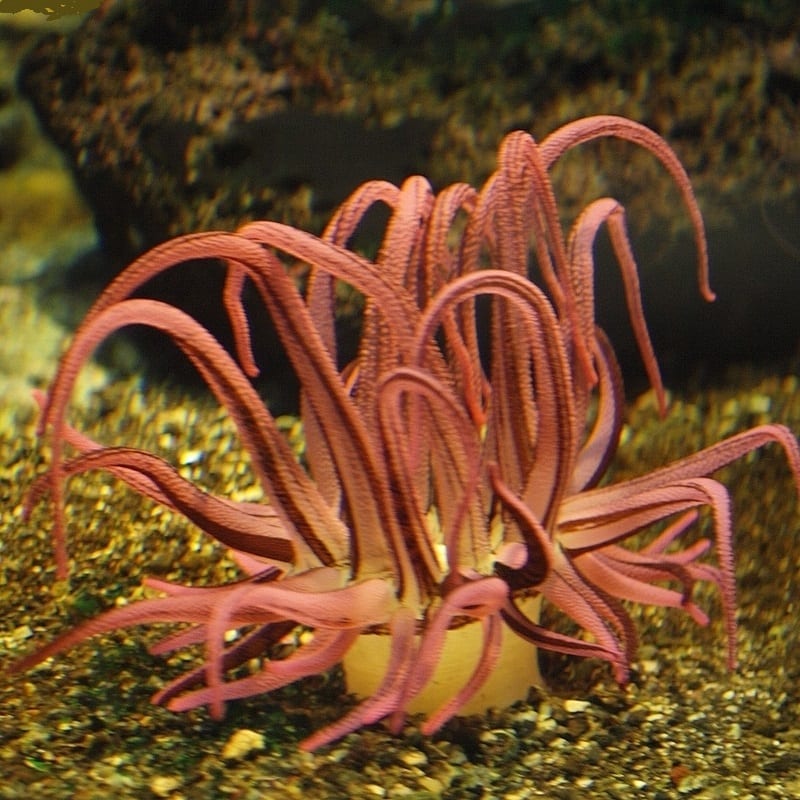
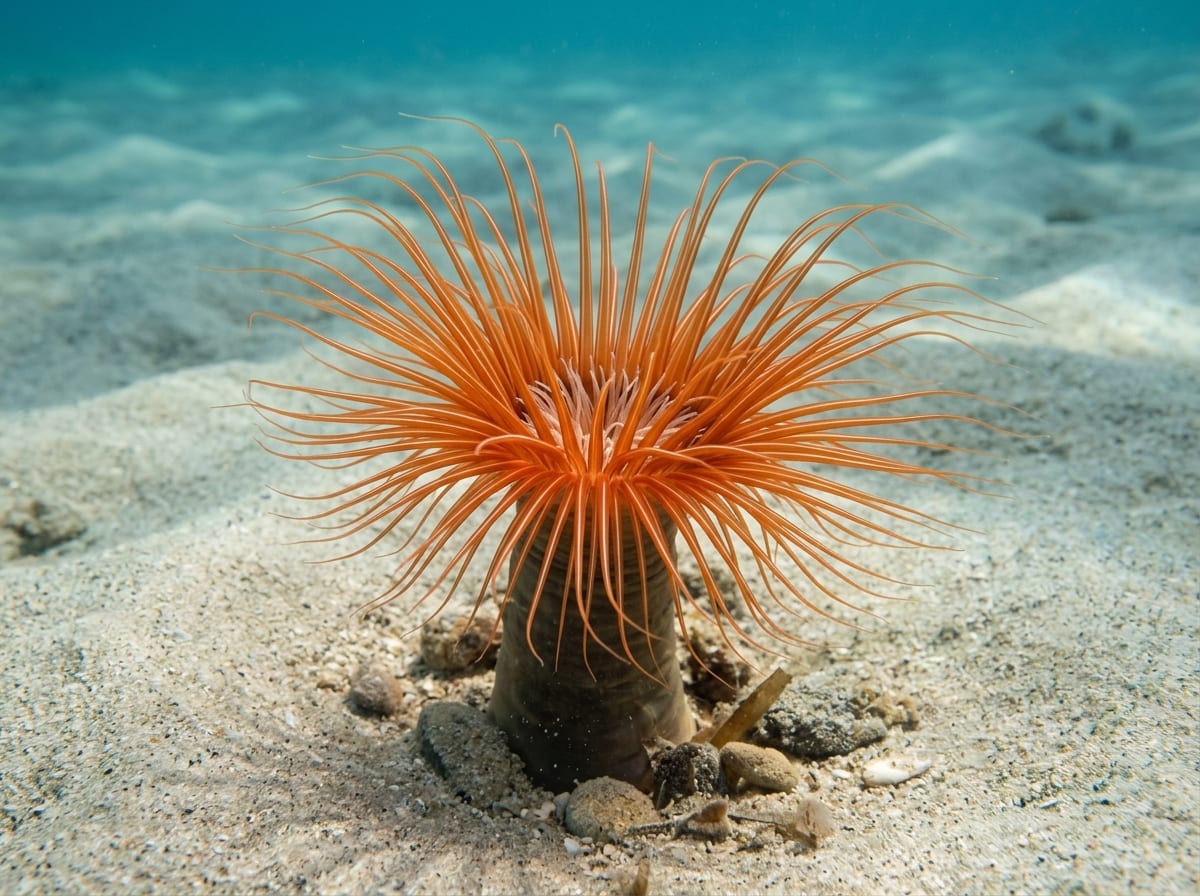
A Japanese tube anemone that spreads long, slender tentacles like fireworks from a soft tube buried in sand. Each tentacle has a white stripe along its middle, in orange or purple colour forms. It retracts quickly when touched.
Difficulty
Advanced
Temperature
24〜27℃ (typical for Coral)
Lifespan
Tube anemones are generally long-lived, reportedly over 50 years
Size
Tentacle crown about 15 cm across
Diet
Carnivore (plankton, small crustaceans); no zooxanthellae
About
Pachycerianthus magnus is a tube anemone (order Ceriantharia, family Cerianthidae). Tube anemones resemble sea anemones but belong to a separate order and live inside tough tubes made of mucus and threads of specialised stinging organelles. In Japan it occurs from central Honshu to Kyushu, mainly in sandy patches between rocky reefs somewhat exposed to the open sea. The tube is buried in sand or mud and the crown of tentacles opens from its upper end. The crown reaches about 15 cm across, and the tube of this species is very soft and elastic. A white stripe runs along the middle of each tentacle on both sides, orange and purple colour forms are known, and phoronid worms live on the tube. It withdraws quickly into the tube when disturbed. Its larvae do not drift but settle at once and transform into small tube anemones (direct development). Names are confusing: on WoRMS, the Japanese name Nettai-hanaginchaku belongs to a different species, P. maua, yet P. magnus has been sold under that name. Aquarium records are scarce and It is unsuitable for aquarium keeping. In Japan, locally collected specimens reach specialist shops only occasionally.
Source: Wikipedia (CC BY-SA 4.0)
Lifespan of the Tube Anemone
The Tube Anemone lives Tube anemones are generally long-lived, reportedly over 50 years.
Size of the Tube Anemone
The Tube Anemone grows to Tentacle crown about 15 cm across.
Basic Info
Origin
Sandy bottoms of Japan (central Honshu to Kyushu), Taiwan and the South China Sea
Lifespan
Tube anemones are generally long-lived, reportedly over 50 years
Care Specifications
- Specific Gravity
- 1.023–1.025
- Salinity
- 33–35 ppt
With caution
Sources: Ugui Visitor Center nature guide (Pachycerianthus magnus) / NIFREL species guide (Pachycerianthus magnus) / Kuroshio Biological Research Foundation (Pachycerianthus magnus) / Reeflex (Pachycerianthus magnus) / Wikipedia (Tube-dwelling anemone) / Kotobank (Nipponica, Heibonsha World Encyclopedia): tube anemones
References & Sources
Edited & verified by: BreederDirect editorial team
The taxonomic, regulatory, and husbandry data on this page are compiled and verified against the authoritative primary sources below.
Primary sources
- Wikipedia
- Species+ (CITES search)
- Ministry of the Environment: List of Designated Invasive Alien Species
- e-Gov: Natural Parks Act (Art. 22, marine park zones)
- Ugui Visitor Center nature guide (Pachycerianthus magnus)
- NIFREL species guide (Pachycerianthus magnus)
- Kuroshio Biological Research Foundation (Pachycerianthus magnus)
- Reeflex (Pachycerianthus magnus)
- Kotobank (Nipponica, Heibonsha World Encyclopedia): tube anemones
Taxonomy & Authority
Regulations & Conservation Status
Not CITES-listed
Domestic law: Collecting on the shore or in the sea may fall under fishing rights or prefectural fisheries rules, and taking designated species in marine park zones requires a permit (Natural Parks Act, Art. 22). Check local rules before collecting.
Not listed in the CITES Appendices (checked on Species+). Not designated as an Invasive Alien Species under Japanese law.
Sources: Species+ (CITES search) / Ministry of the Environment: List of Designated Invasive Alien Species / e-Gov: Natural Parks Act (Art. 22, marine park zones)
Regulations may change. Always verify the latest information with the relevant authorities.
Tube Anemone Listings
Loading latest listingsFind listings for this species