AI-generated image
Spotted Tube Anemone
AdvancedCerianthus punctatus
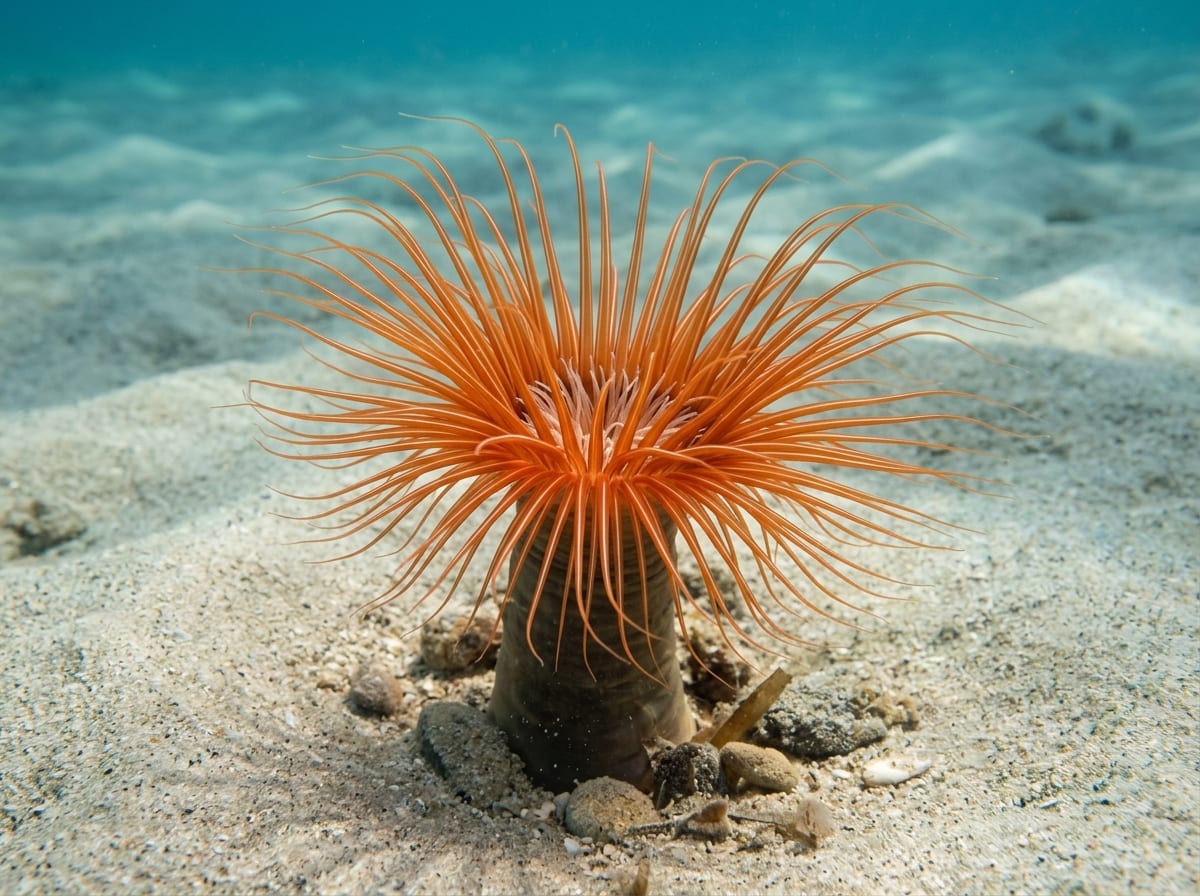
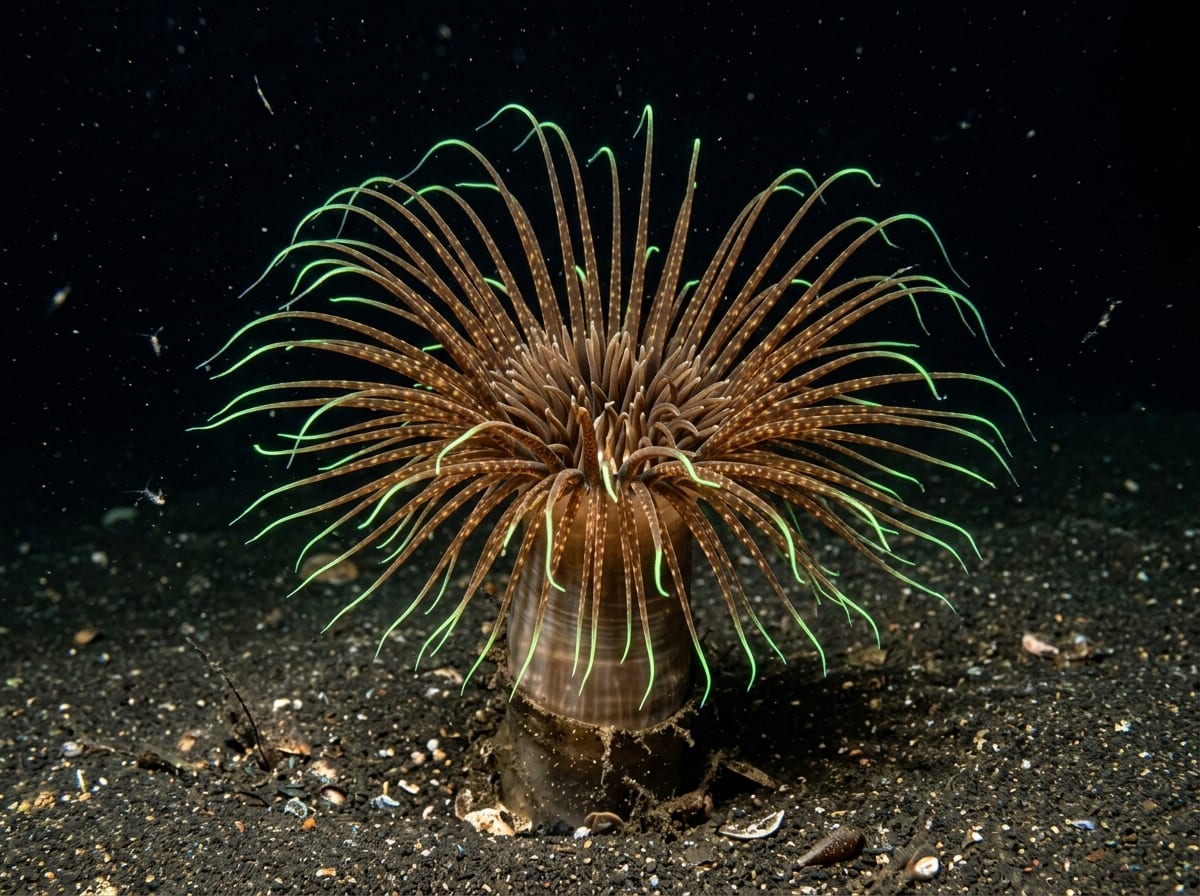
A tube anemone of shallow Japanese sand flats. By day it hides in its buried tube; at night it rises and spreads tentacles with fluorescent tips to catch plankton. Described in 1979.
Difficulty
Advanced
Temperature
24〜27℃
Lifespan
Tube anemones are generally long-lived, reportedly over 50 years (Nipponica)
Size
Little data available (described as growing fairly large)
Diet
Carnivore (plankton)
About
Cerianthus punctatus is a tube anemone (order Ceriantharia, family Cerianthidae) described in 1979. WoRMS records it from Japan, including the Kii Peninsula, and it has also been observed on the Izu Peninsula and in Hiroshima Bay. Tube anemones belong to a different order from sea anemones; they live in tubes of mucus and stinging threads buried in sand or mud and bear two whorls of tentacles, long outer ones and short inner ones around the mouth (Wikipedia). This species grows fairly large and occurs even in very shallow water. By day it hides in the sand; at night it stretches up and spreads its tentacles to catch plankton. The tentacle tips are fluorescent, and phoronid worms may live at the base of the tube (underwater photo records). Little has been published on its biology, and almost no husbandry figures are known. The related Pachycerianthus magnus can be recognised by the white stripe along the middle of each tentacle. In Japan, locally collected specimens appear in specialist shops only occasionally.
Lifespan of the Spotted Tube Anemone
The Spotted Tube Anemone lives Tube anemones are generally long-lived, reportedly over 50 years (Nipponica).
Basic Info
Origin
Japanese coastal waters (shallow sand and mud of the Kii and Izu peninsulas, Hiroshima Bay and elsewhere)
Lifespan
Tube anemones are generally long-lived, reportedly over 50 years (Nipponica)
Size
Little data available (described as growing fairly large)
Temperature
24〜27℃
Diet
Care Specifications
- Specific Gravity
- 1.023–1.025
- Salinity
- 33–35 ppt
With caution
Sources: WoRMS (Cerianthus punctatus) / Suichu shashin no sukima (field observation of Cerianthus punctatus, Hiroshima Bay) / Wikipedia (Tube-dwelling anemone) / Kotobank (Nipponica, Heibonsha World Encyclopedia): tube anemones
References & Sources
Edited & verified by: BreederDirect editorial team
The taxonomic, regulatory, and husbandry data on this page are compiled and verified against the authoritative primary sources below.
Primary sources
- Species+ (CITES search)
- Ministry of the Environment: List of Designated Invasive Alien Species
- e-Gov: Natural Parks Act (Art. 22, marine park zones)
- WoRMS (Cerianthus punctatus)
- Suichu shashin no sukima (field observation of Cerianthus punctatus, Hiroshima Bay)
- Wikipedia (Tube-dwelling anemone)
- Kotobank (Nipponica, Heibonsha World Encyclopedia): tube anemones
- GBIF
Taxonomy & Authority
Regulations & Conservation Status
Not CITES-listed
Domestic law: Collecting on the shore or in the sea may fall under fishing rights or prefectural fisheries rules, and taking designated species in marine park zones requires a permit (Natural Parks Act, Art. 22). Check local rules before collecting.
Not listed in the CITES Appendices (checked on Species+). Not designated as an Invasive Alien Species under Japanese law.
Sources: Species+ (CITES search) / Ministry of the Environment: List of Designated Invasive Alien Species / e-Gov: Natural Parks Act (Art. 22, marine park zones)
Regulations may change. Always verify the latest information with the relevant authorities.
Spotted Tube Anemone Listings
Loading latest listingsFind listings for this species