Spotted Tube Anemone
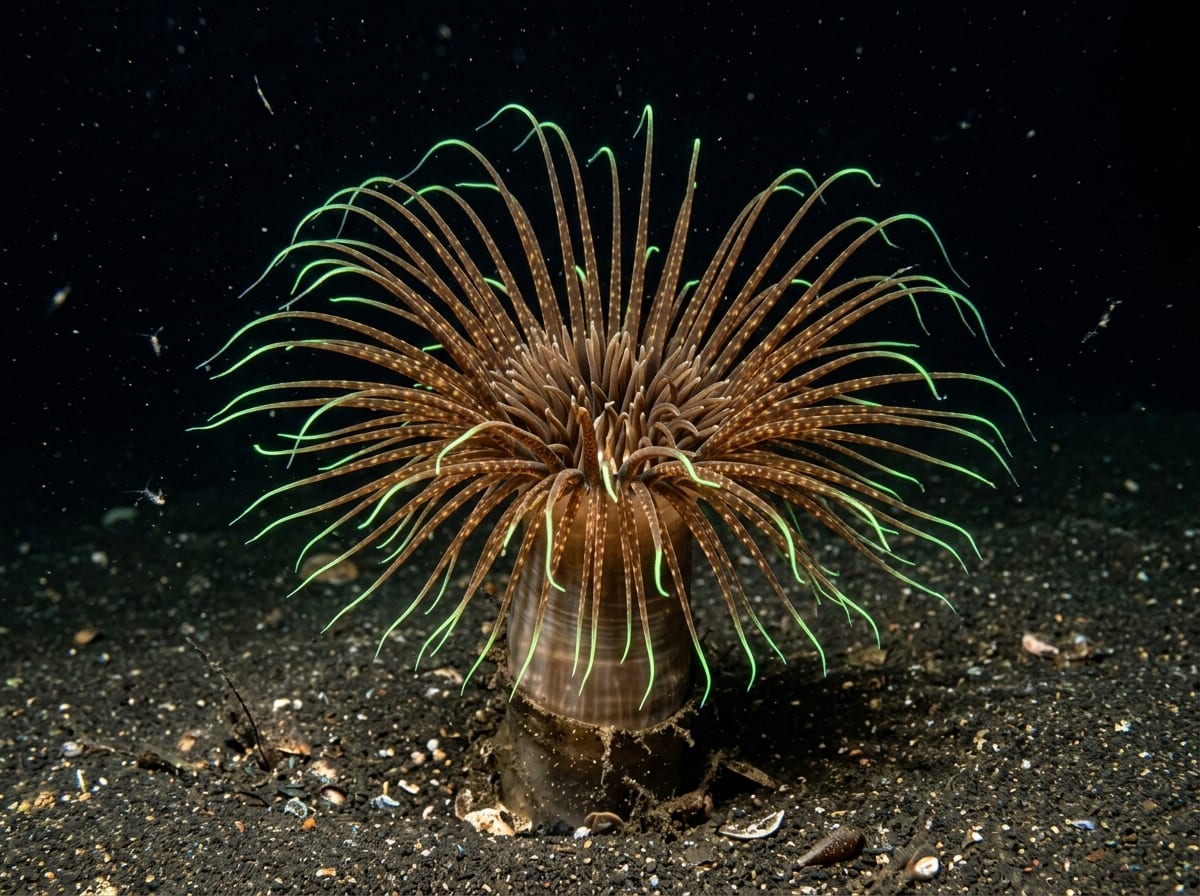
The spotted tube anemone is a tube-dwelling anemone found on shallow sandy bottoms around Japan. By day it stays hidden in a tube buried in the sand. At night it stretches upward and spreads wide tentacles whose tips glow with fluorescent color, catching plankton. The species was described in 1979, and reliable information on it is scarce. Tube anemones in general are long-lived, said to survive for more than 50 years, and this one is said to grow quite large. Its care level is advanced, and because it can catch small fish and shrimp it should not share a tank with them; it suits experienced keepers who understand its burrowing lifestyle and can give it a dedicated tank.
View Spotted Tube Anemone encyclopedia →Breeder Wanted!
List on BreederDirect and sell directly to customers nationwide!
BreederDirect's 6 Transparency Commitments
Our Breeder sellers disclose detailed care specs for all Coral listings. We prioritize Aquacultured/CB specimens, verify WYSIWYG photos, and provide difficulty ratings—avoiding wild-caught.
- Aquacultured
- WYSIWYG Photo
- Difficulty Disclosed
- Frag/Colony
- Care Info Included
- Trade name shown
Browse all 241 breeds
Difficulty
No listings match your filters
Adjust your filters, or get notified when new listings arrive.
Getting alerts is free with a member account. When new listings match your saved search, we'll notify you by email and in-app.
Browse other categories
Verified breeders (preview)
Spotted Tube Anemone key facts
- Care level
- Advanced
- Lifespan
- Tube anemones are generally long-lived, reportedly over 50 years
- Diet
- Carnivore (plankton)
- Lighting
- A nocturnal plankton feeder that opens at night; it does not rely on photosynthesis, so viewing light is enough.
- Flow & Placement
- It lives in a tube buried in sand, so provide fine sand deep enough for the tube and set it in upright. Keep corals and sessile animals out of tentacle reach.
- Water Temperature & Quality
- A species of temperate Japanese coasts, so avoid high temperatures and keep salinity at 33-35 ppt (SG 1.023-1.025).
- Diet & Feeding
- It feeds on plankton at night. After lights-out, offer fine frozen plankton while the tentacles are open.
- Health & Cautions
- Tube anemone tentacles are venomous and may catch small fish or shrimp, so do not house them together. Few cases of keeping it are known, so it suits experienced keepers with a dedicated tank.
About Spotted Tube Anemone
Learn about the spotted tube anemone, a sand-dwelling species from shallow Japanese waters that opens fluorescent-tipped tentacles at night. Advanced-level care in a dedicated tank. Includes what to know before you bring one home, plus FAQs.
7 things to know before welcoming a Spotted Tube Anemone
1Advanced-level care
Its care level is rated advanced, and because little has been written about this species, there is no well-established care routine to follow. Have the tank set up and the water stable before you bring one home. Prior experience that lets you judge changes in its condition on your own will help a great deal.
2Deep sand bed needed
It spends the day hidden in a tube in the sand, so it needs a sand layer deep enough to build a tube and settle into. A shallow bed may leave it unsettled and could affect its condition. It is worth asking an experienced seller about suitable sand type and depth beforehand.
3Active after dark
Because it hides in its tube during the day, you may see very little of it in daylight. Its main appeal comes at night, when it rises up and spreads tentacles with fluorescent-tipped ends. Planning some way to view the tank after dark will help you enjoy it more.
4Size is poorly documented
There are few sources on adult size, so no specific figure can be given, but it is described as a tube anemone that grows quite large. With its tentacles spread it may take up considerable room, so a tank with generous sand-bottom area is a safer choice. Choose the tank's location with future growth in mind.
5Be ready for a long commitment
Tube anemones in general are long-lived, said to survive for more than 50 years. Few people have kept this species, so observe it daily to catch any change in its condition. Think ahead about future changes such as moving or replacing the tank.
6No tank mates
Tube anemone tentacles are venomous and can catch small fish and shrimp, so do not keep it with them. Keep corals and other sessile animals out of the tentacles' reach, and house it in a dedicated tank.
7Feeding approach
It catches plankton with tentacles it extends at night. Detailed feeding guidance for aquariums is scarce, so the basic approach is to watch the individual and offer small, fine foods within reach of its tentacles. Uneaten food can degrade water quality, so remove it rather than leaving it in the tank.
Frequently asked questions about Spotted Tube Anemone
- Q.Can a beginner keep one?
- A.Its care level is advanced and information is limited, so it is hard to recommend as a first marine animal. It is more realistic to build tank-keeping experience and learn how burrowing animals live before considering one.
- Q.Why can't I see it during the day?
- A.It naturally hides in a tube in the sand by day and rises to spread its tentacles at night. Not seeing it in daylight does not necessarily mean something is wrong. If it stays closed even after dark for an extended time, review the water quality and its environment.
- Q.How long does it live?
- A.Tube anemones in general are long-lived, said to survive for more than 50 years. Few people have kept this species, so observe it daily so you can spot changes in its condition.
- Q.Can it share a tank with corals or fish?
- A.No. Small fish and shrimp can be caught, so do not keep them together, and keep corals and other sessile animals out of the tentacles' reach. Give it a dedicated tank.
- Q.What should I ask the seller first?
- A.It helps to ask about the individual's condition in the sand, whether it opens its tentacles at night, and how it has been fed and housed. If anything is unclear, ask the seller before you decide.
Useful tools for Spotted Tube Anemone care
Learn more about Spotted Tube Anemone in the encyclopedia
View Spotted Tube Anemone encyclopedia entry →
Care difficulty, lifespan, size and diet — all basics covered.
More in this category
Can't find the one you're looking for?
Post your wishes for free and breeders with matching animals will contact you with introductions.