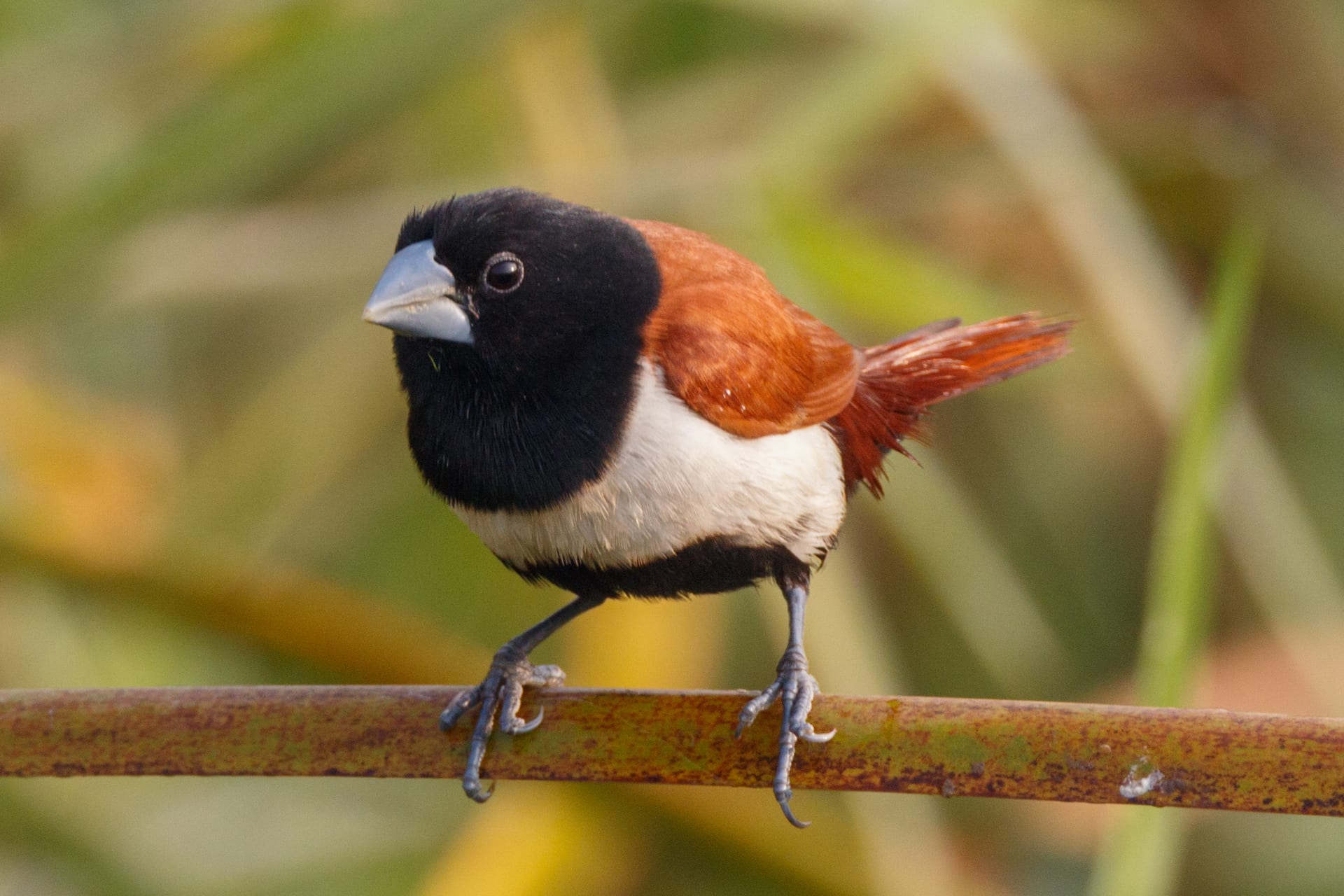
 © Nrik kiran / CC BY-SA 4.0
Tricoloured Munia
The Tricoloured Munia is a small finch prized for its striking three-tone plumage — a black head, white body, and chestnut back. Native to the wetland grasslands of the Indian subcontinent and Sri Lanka, it lives in flocks in the wild, feeding on grass seeds. Hardy and adaptable, it's considered a beginner-friendly species, making it a great choice for first-time bird keepers. At roughly 11.5cm as an adult, it's small enough to fit in your palm, and its quiet call makes it a practical option even in apartment living.
View Tricoloured Munia encyclopedia →0% commission on your first sales!Register by September 30, 2026 and your first 2 sales are commission-free!
Breeder Wanted!
List on BreederDirect and sell directly to customers nationwide!
Six Transparency Commitments from BreederDirect
All Birds listings include complete Breeder transparency: hand-raised status, DNA sex determination, and health certification details.
- Hand-Raised
- DNA Sex-Determined
- Health Certified
- Origin Disclosed
- Color Variation Specified
- Age in Months Disclosed
Browse all 247 breeds
Care Level
No listings match your filters
Adjust your filters, or get notified when new listings arrive.
Getting alerts is free with a member account. When new listings match your saved search, we'll notify you by email and in-app.
Browse other categories
Verified breeders (preview)
Tricoloured Munia key facts
- Care level
- Beginner-friendly
- Lifespan
- 5-8 years
- Size
- About 11.5cm
- Diet
- Small finch seed mix of millet and canary seed, greens, cuttlebone or oyster grit
- Cage
- A wide cage with several perches suits it. It likes to bathe, so keep a bath dish available.
- Temperament
- Strongly flock-living and best kept in small groups. It rarely becomes hand-tame.
- Vocalization
- Contact calls are short and subdued, and the volume is low, so it suits flats well.
- Notes
- Juveniles are easily confused with young chestnut and scaly-breasted munias.
About Tricoloured Munia
The Tricoloured Munia is a hardy, beginner-friendly finch with striking black, white, and chestnut plumage, growing to about 11.5cm.
7 things to know before welcoming a Tricoloured Munia
1A flocking species
In the wild, Tricoloured Munias live in flocks, so keeping more than one bird together tends to help them feel more settled than solitary housing. If keeping just one, extra attention to interaction and cage environment can help reduce stress.
2Small and delicate
At about 11.5cm as an adult, this bird is quite small and should be handled gently. It's sensitive to sudden temperature changes and drafts, so choose the cage location carefully.
3Primarily a seed eater
In the wild, this species feeds mainly on grass seeds in wetland grasslands. In captivity, a seed-based diet with attention to nutritional balance is the basic approach.
4Beginner-friendly by nature
Known for its hardy constitution and adaptability, this species is considered approachable even for those keeping birds for the first time, with manageable day-to-day care needs.
5A relatively quiet caller
This species tends to have a gentle, subdued call rather than a loud one, though individual variation exists. If you live in an apartment, it's worth checking your building's pet policies beforehand.
6Preparing the right cage setup
Providing perches and a bathing area, and keeping the cage clean, supports good health. Before bringing one home, prepare the basics — cage, food dish, and water dish.
7Watching for changes in condition
Small birds can show changes in condition quite suddenly. Keep an eye on feather condition, appetite, and activity level day to day, and consult an avian vet promptly if something seems off.
Frequently asked questions about Tricoloured Munia
- Q.Is the Tricoloured Munia suitable for first-time bird owners?
- A.Yes, it's considered beginner-friendly thanks to its hardy nature and adaptability, with manageable day-to-day care requirements.
- Q.Can I keep just one Tricoloured Munia?
- A.Since this species naturally lives in flocks, keeping more than one tends to help them settle better. If keeping a single bird, more frequent interaction with the owner can help.
- Q.How big does a Tricoloured Munia get?
- A.As an adult, it's a small bird at roughly 11.5cm — small enough to fit comfortably in the palm of your hand.
- Q.Do I need any special permit to keep a Tricoloured Munia?
- A.This species is not subject to CITES (the Convention on International Trade in Endangered Species of Wild Fauna and Flora).
- Q.What does a Tricoloured Munia sound like?
- A.Its call tends to be relatively gentle rather than loud, though this can vary between individuals, so it's worth checking your living situation beforehand.
Useful tools for Tricoloured Munia care
Learn more about Tricoloured Munia in the encyclopedia
View Tricoloured Munia encyclopedia entry →
Care difficulty, lifespan, size and diet — all basics covered.
More in this category
Can't find the one you're looking for?
Post your wishes for free and breeders with matching animals will contact you with introductions.