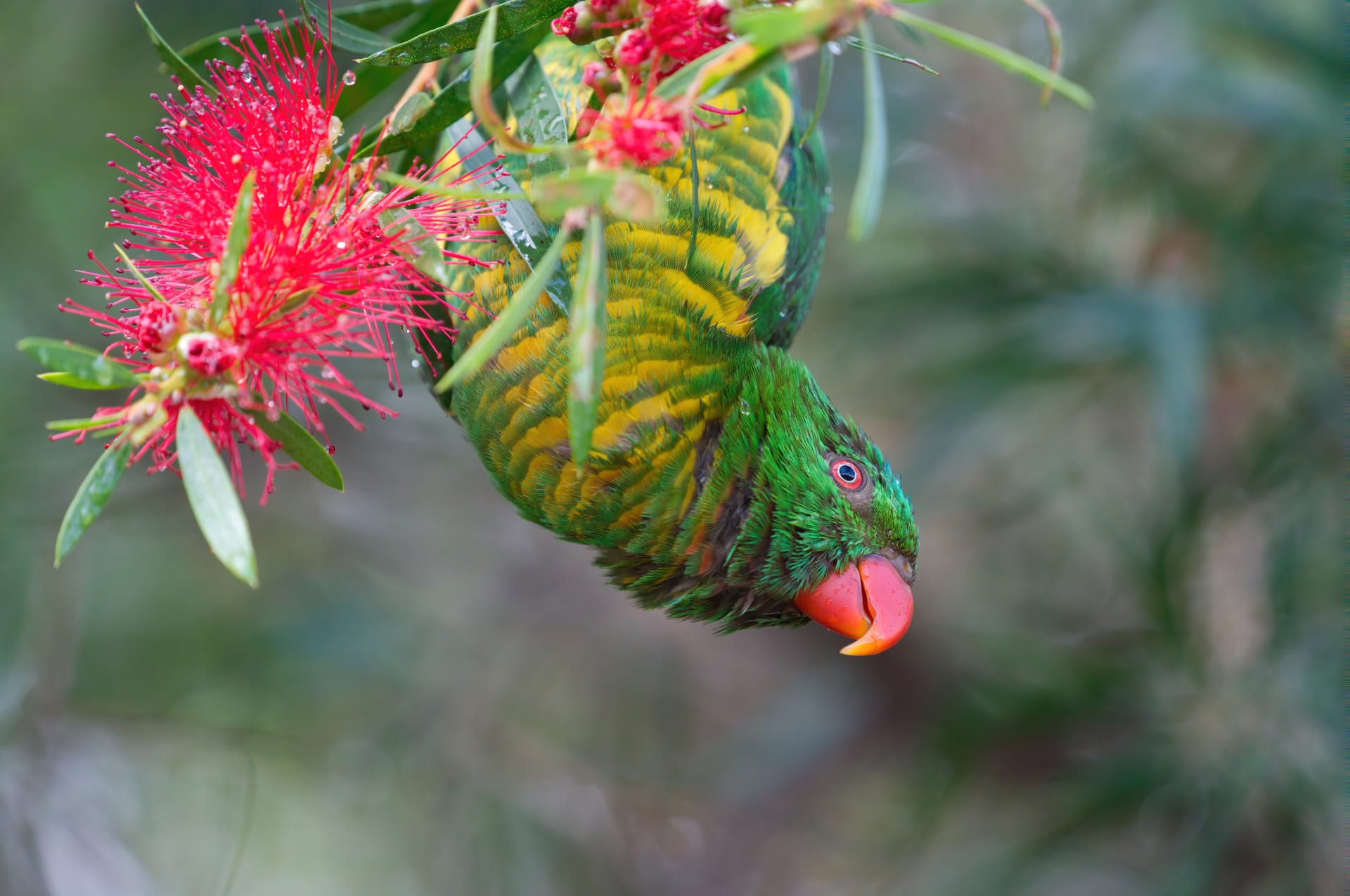
 © Andrew Mercer (www.baldwhiteguy.co.nz) / CC BY-SA 4.0
Scaly-breasted Lorikeet
The Scaly-breasted Lorikeet is a small, vividly green parrot native to the coastal regions of eastern Australia, reaching about 23cm in length. Its name comes from the scalloped pattern of yellow-edged feathers running from the nape to the chest, accented by a coral-orange bill and matching underwing coverts visible in flight. Playful, curious, and quick to bond with their keepers, these lorikeets have lively personalities that make them engaging companions. However, their nectar-and-pollen based diet calls for specialized food and enclosure care, making them best suited to keepers with some prior parrot-keeping experience.
View Scaly-breasted Lorikeet encyclopedia →0% commission on your first sales!Register by September 30, 2026 and your first 2 sales are commission-free!
Breeder Wanted!
List on BreederDirect and sell directly to customers nationwide!
Six Transparency Commitments from BreederDirect
All Birds listings include complete Breeder transparency: hand-raised status, DNA sex determination, and health certification details.
- Hand-Raised
- DNA Sex-Determined
- Health Certified
- Origin Disclosed
- Color Variation Specified
- Age in Months Disclosed
Browse all 247 breeds
Care Level
No listings match your filters
Adjust your filters, or get notified when new listings arrive.
Getting alerts is free with a member account. When new listings match your saved search, we'll notify you by email and in-app.
Browse other categories
Verified breeders (preview)
Scaly-breasted Lorikeet key facts
- Care level
- Intermediate
- Lifespan
- 15-20 years
- Size
- About 23cm
- Diet
- Lory nectar, specialist lory pellets, fruit and pollen
- Cage
- Though a small lory it is very active and needs a cage wide enough to fly in. Protect the surroundings, as the liquid droppings carry.
- Temperament
- A sociable species that lives in small flocks and is constantly on the move. A solitary bird needs plenty of play time.
- Vocalization
- It calls shrilly while flying fast and straight, and indoors the sharp voice carries well.
- Notes
- It feeds mainly on pollen and nectar, so a seed-based diet will not do. Nectar spoils quickly and must be replaced at least twice a day.
About Scaly-breasted Lorikeet
The Scaly-breasted Lorikeet is a 23cm nectar-feeding parrot from eastern Australia, known for its scaled yellow-green plumage and coral bill. An intermediate-level species with distinctive dietary needs.
7 things to know before welcoming a Scaly-breasted Lorikeet
1Nectar & Pollen Diet
Scaly-breasted Lorikeets feed primarily on nectar and pollen in the wild, so a standard seed mix alone won't meet their nutritional needs. Plan their diet around a specialized lorikeet nectar formula or pellet designed for nectar-feeding species.
2Watery Droppings
Because of their nectar-rich diet, these lorikeets produce noticeably wetter droppings than seed-eating parrots. Choose an enclosure setup and surrounding protection that make frequent cleaning easy.
3Vocal and Loud
Their curious, energetic nature comes with frequent, far-carrying calls. If you live in an apartment or shared building, it's worth considering noise timing and soundproofing beforehand.
4Highly Active
In the wild these lorikeets constantly move between flowers in search of nectar, and that energy carries over to captivity. Provide safe out-of-cage time and enrichment toys alongside regular perching space.
5Social and Intelligent
Many individuals bond closely with their keepers and enjoy interaction. Regular handling and conversation-like engagement help build a strong relationship over time.
6Prefers Warm Conditions
Native to the coastal warmth of eastern Australia, this species is adapted to mild, stable climates. Avoid sudden temperature swings and drafts, keeping conditions consistent year-round.
7Prepare Before Bringing One Home
Stock up on specialized nectar food, perches, and toys suited to a nectar-feeding lifestyle before your bird arrives. Arrange a health check soon after bringing them home for peace of mind.
Frequently asked questions about Scaly-breasted Lorikeet
- Q.Is the Scaly-breasted Lorikeet suitable for first-time bird keepers?
- A.This species is generally considered better suited to intermediate keepers. Their specialized nectar-based diet and highly active nature call for some prior experience with parrots.
- Q.How big do they grow?
- A.Adults reach roughly 23cm in length. While slender-bodied, their constant activity means they still need a reasonably spacious enclosure.
- Q.Can I feed them a standard parrot seed mix?
- A.Not on its own — their diet centers on nectar and pollen, so a seed-based mix alone won't provide adequate nutrition. They need a nectar formula or pellet made specifically for lorikeets as their main food source.
- Q.Are they noisy?
- A.Their curious, energetic personality comes with frequent, far-carrying calls. If you live in an apartment, it's worth thinking through noise considerations beforehand.
- Q.Is the Scaly-breasted Lorikeet subject to CITES?
- A.Scaly-breasted Lorikeet is listed in CITES Appendix II. International trade requires a permit from the exporting country, but as far as CITES is concerned, no registration is needed to buy or sell individuals already legally in Japan.
Useful tools for Scaly-breasted Lorikeet care
Learn more about Scaly-breasted Lorikeet in the encyclopedia
View Scaly-breasted Lorikeet encyclopedia entry →
Care difficulty, lifespan, size and diet — all basics covered.
More in this category
Can't find the one you're looking for?
Post your wishes for free and breeders with matching animals will contact you with introductions.