Source: Wikimedia Commons
Scaly-breasted Lorikeet
IntermediateTrichoglossus chlorolepidotus
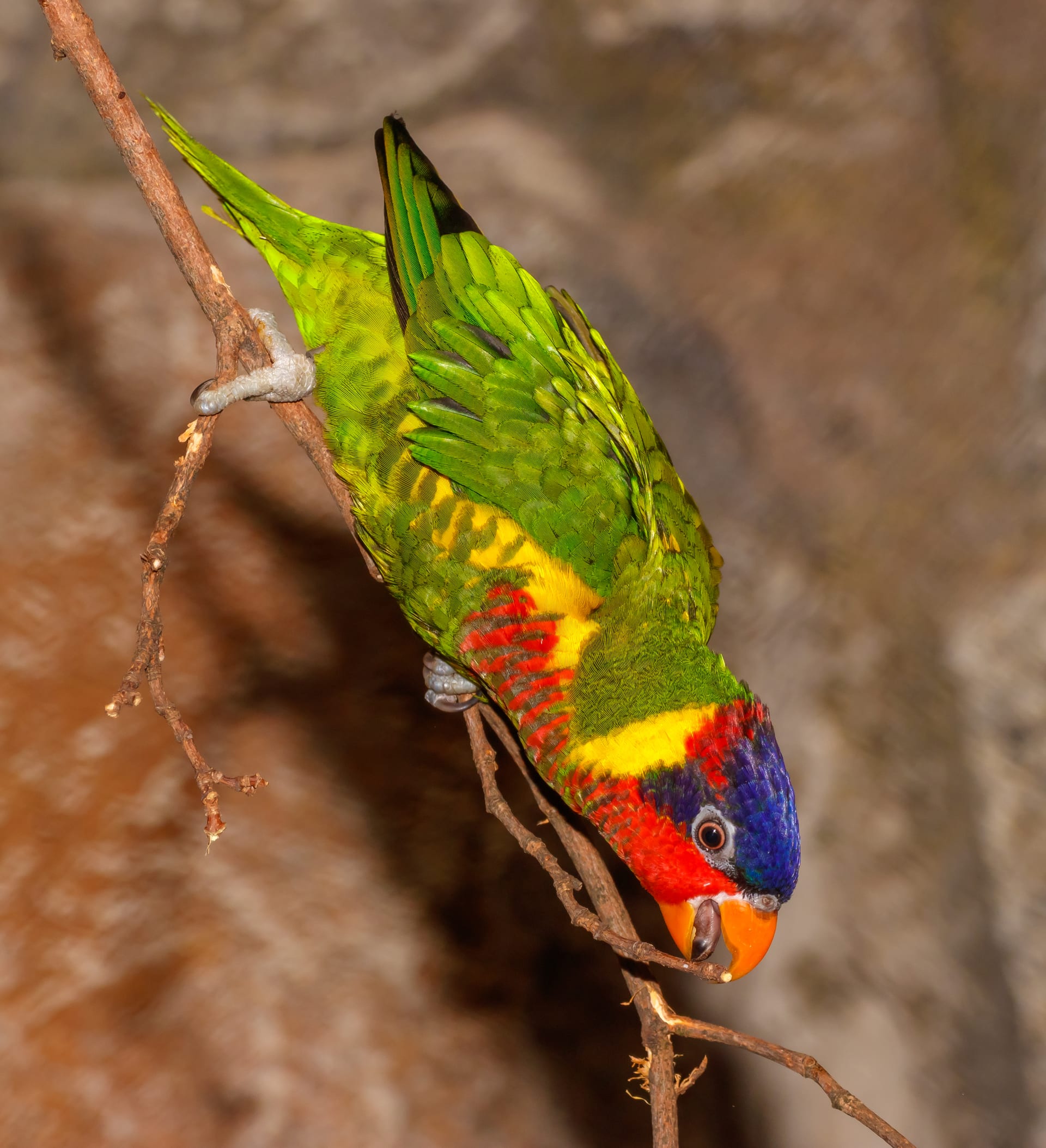
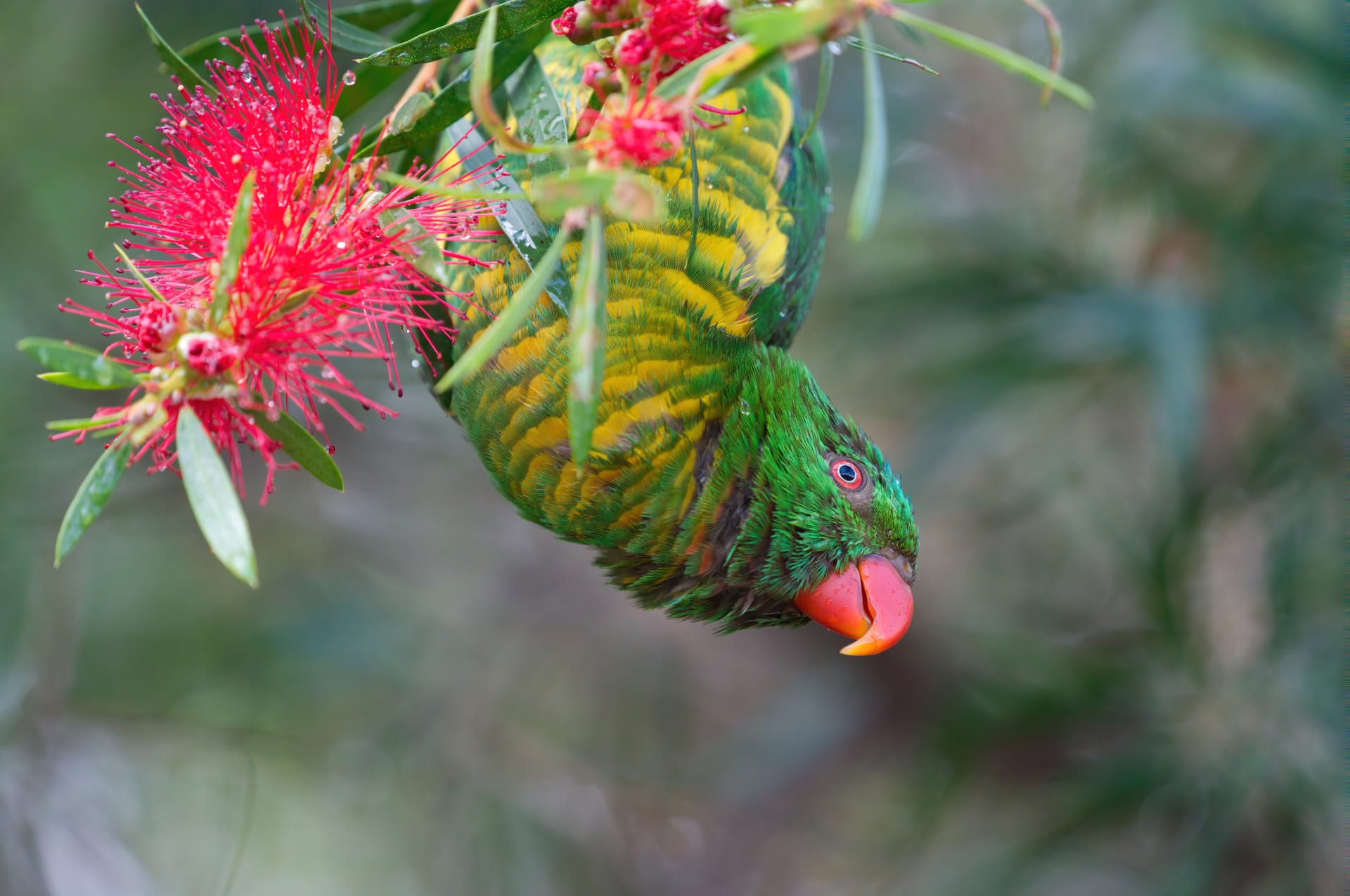
A lorikeet about 23 cm long, green throughout, with yellow feathers broadly edged in green from the nape to the breast giving a scaly look. It lives along the east coast of Australia; the coral-red bill and orange-red underwing coverts identify it.
Difficulty
Intermediate
Temperature
15〜30℃
Lifespan
15-20 years
Size
About 23cm
Humidity
40〜60%
Diet
Lory nectar, specialist lory pellets, fruit and pollen
About
The scaly-breasted lorikeet (Trichoglossus chlorolepidotus) lives in the timbered country of eastern Australia. It is about 23 cm long. The crown and sides of the head are emerald green faintly tinged with blue, while the feathers of the nape, throat and breast are yellow broadly edged with green, giving the scaly appearance behind both its English name and its specific epithet, from the Ancient Greek khloros for green and lepidotos for scaly. The tail is green with orange-red at the base of the outer feathers, and the underwing coverts are orange-red. The iris is orange-red, the bill dark coral-red and the legs grey-brown. The sexes look alike; juveniles have shorter tails and brownish bills. It ranges from Bamaga at the tip of North Queensland south to the New South Wales south coast, on coastal plains and adjacent tablelands, abundant and mostly sedentary in the north but scarcer and nomadic in the south. It favours open, lightly timbered country and melaleuca thickets, and also visits city gardens and parks.
Source: Wikipedia (CC BY-SA 4.0)
Lifespan of the Scaly-breasted Lorikeet
The Scaly-breasted Lorikeet lives 15-20 years.
Size of the Scaly-breasted Lorikeet
The Scaly-breasted Lorikeet grows to About 23cm.
Basic Info
Origin
Eastern Australia, from Bamaga at the tip of North Queensland south to the Illawarra district of New South Wales
Lifespan
15-20 years
Size
About 23cm
Care Specifications
References & Sources
Edited & verified by: BreederDirect editorial team
The taxonomic, regulatory, and husbandry data on this page are compiled and verified against the authoritative primary sources below.
Primary sources
- Wikipedia
- CITES Appendices (Psittaciformes spp. listed in Appendix II)
- Annex to Council Regulation (EC) No 338/97 as amended by Commission Regulation (EU) 2026/1383 (post-CoP20)
- IUCN Red List
- Japanese Wikipedia - Koseigai-inko (name, morphology, range, behaviour)
- IOC World Bird List v15.2 (scientific name, authority, English name, range)
- GBIF
Taxonomy & Authority
Accepted name: Trichoglossus chlorolepidotus (Kuhl, 1820)
Authority databases: GBIF
Nomenclature follows global taxonomic authority databases.
Regulations & Conservation Status
CITES Appendix IIIUCN LC · Least Concern
Trichoglossus chlorolepidotus. CITES lists Psittaciformes spp. as a whole in Appendix II, excluding only Agapornis roseicollis, Melopsittacus undulatus, Nymphicus hollandicus and Psittacula krameri, so this species is covered. International trade in an Appendix II species requires an export permit from the exporting state; it is not among the Appendix I derived species that require registration under Japanese law. The IUCN assesses it as Least Concern.
Sources: CITES Appendices (Psittaciformes spp. listed in Appendix II) / Annex to Council Regulation (EC) No 338/97 as amended by Commission Regulation (EU) 2026/1383 (post-CoP20) / IUCN Red List
Regulations may change. Always verify the latest information with the relevant authorities.
Scaly-breasted Lorikeet Listings
Loading latest listingsFind listings for this species