Source: Wikimedia Commons
Black-capped Lory
IntermediateLorius lory
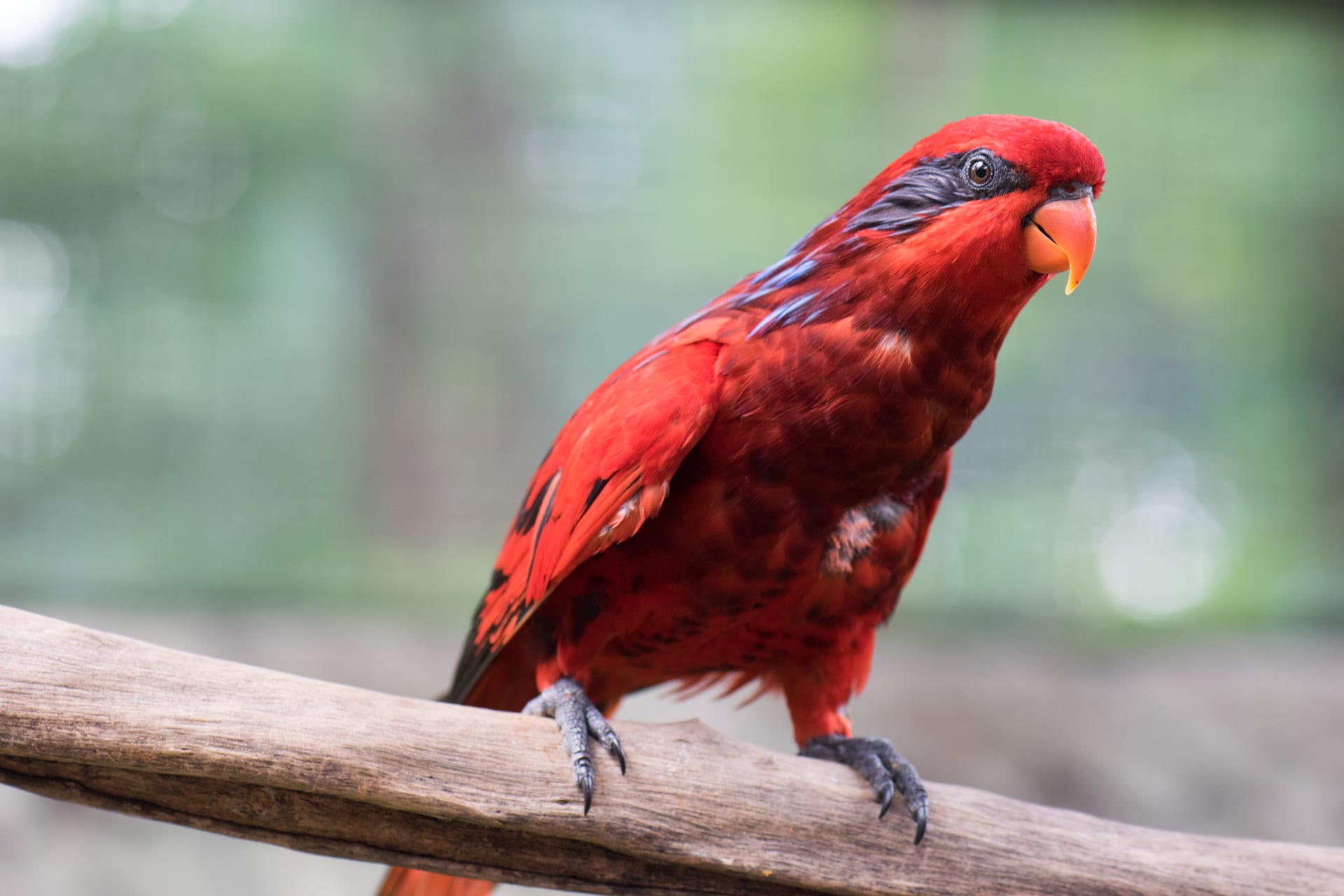
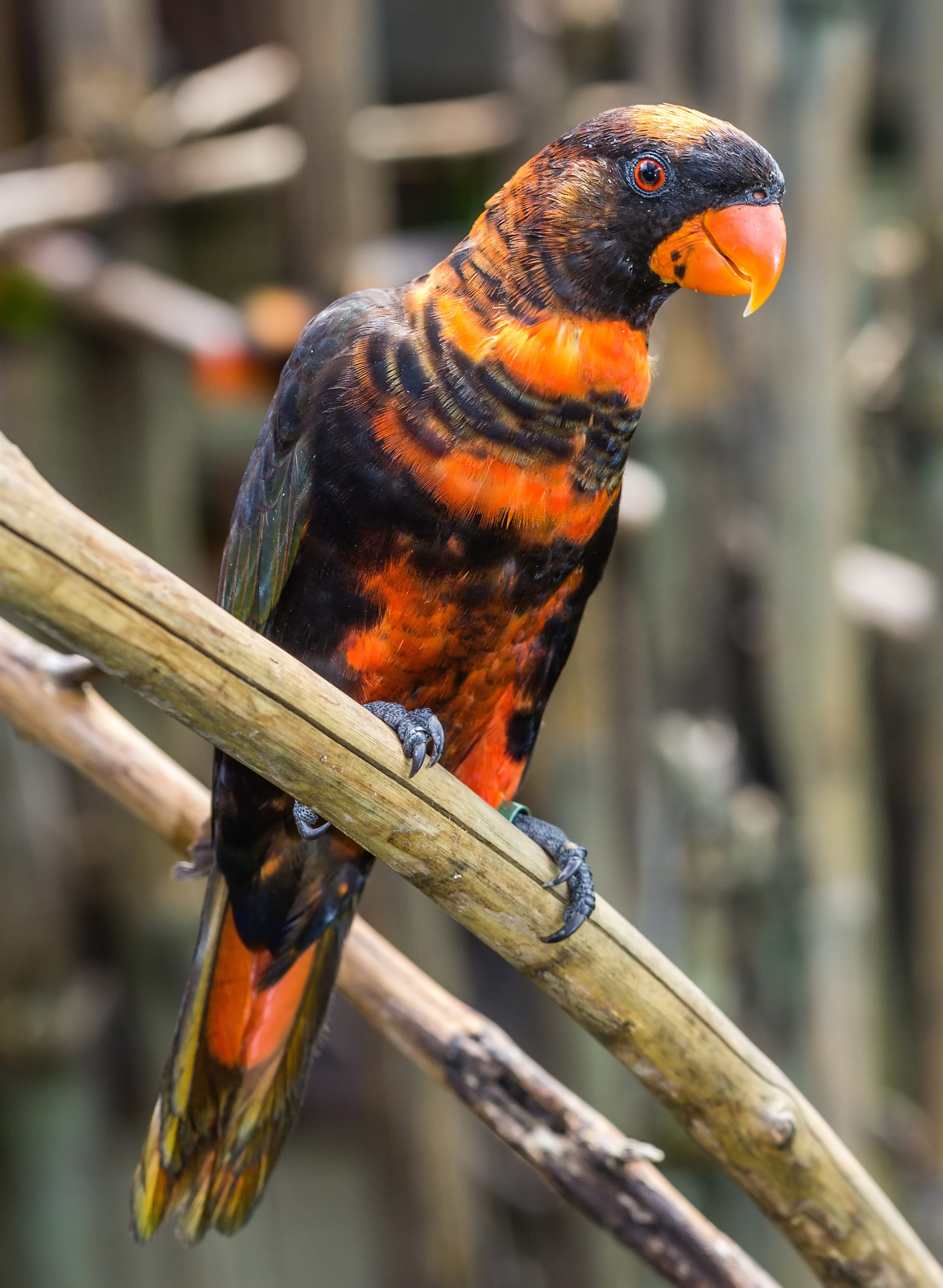
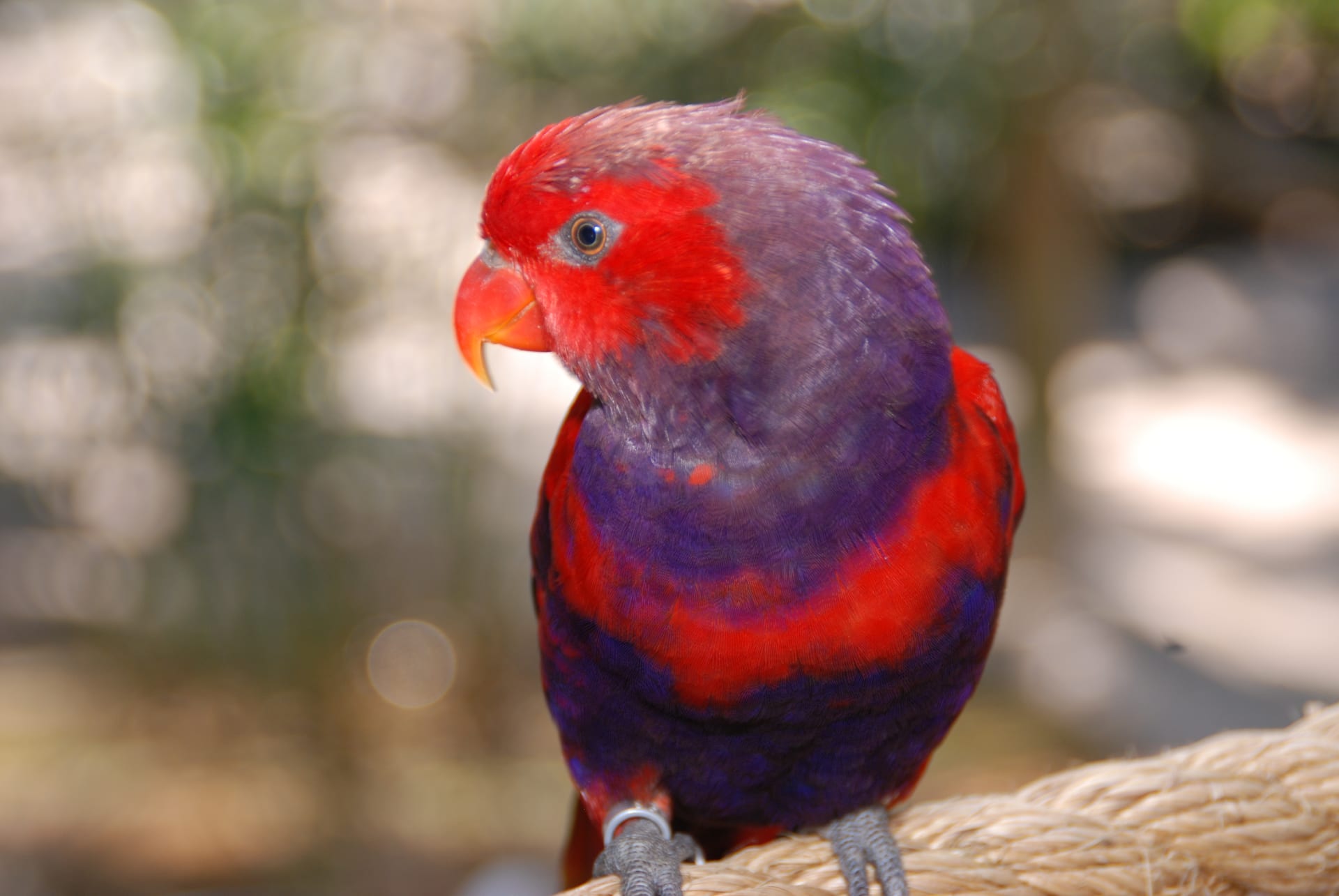
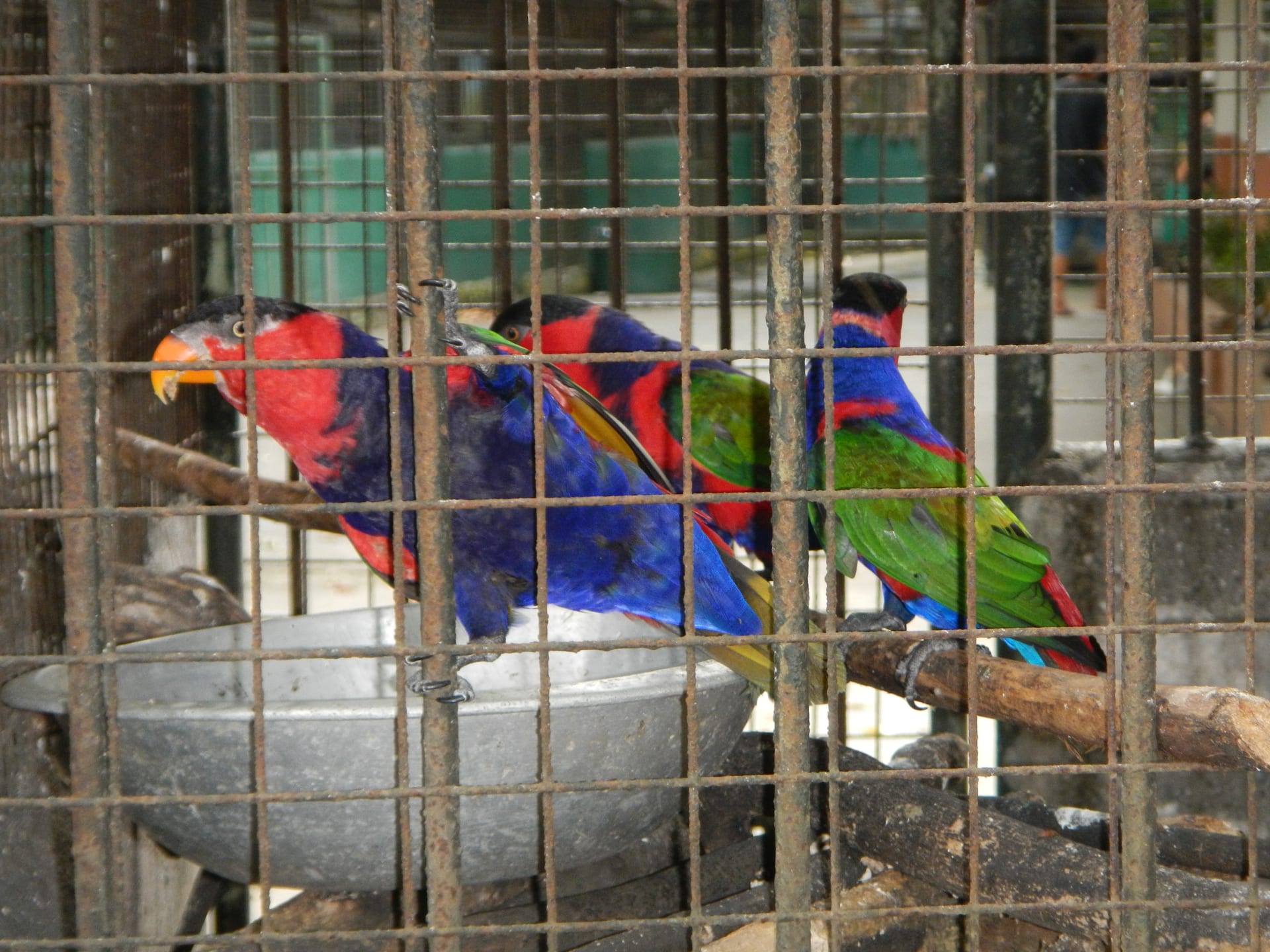
A vivid lory about 31 cm long, combining a red body, green wings, a black cap and a blue belly and legs. Seven subspecies occur across New Guinea and its islands, differing in how far the blue extends over the nape and mantle.
Difficulty
Intermediate
Temperature
15〜30℃
Lifespan
20-25 years
Size
About 31cm
Humidity
40〜60%
Diet
Lory nectar, specialist lory pellets, fruit, flowers, pollen and a little insect food
About
The black-capped lory (Lorius lory) is a lory of New Guinea and the adjacent smaller islands. It is about 31 cm long and relatively robust for a lory. All seven subspecies share green wings, a red head and body around the wing, a black cap, a grey-black cere, yellow underwings, and blue legs and belly; most also have a blue nape and mantle. It lives in primary forest and forest edges in lowland areas up to 1,000 m, sporadically to 1,750 m, but avoids monsoon forest and coconut plantations. It is usually found in pairs and occasionally in groups of ten or more, feeding on pollen, nectar, flowers, fruit and insects. The species as a whole remains widespread and common, but the Biak subspecies cyanuchen is scarce, with fewer than 5,000 individuals remaining.
Source: Wikipedia (CC BY-SA 4.0)
Lifespan of the Black-capped Lory
The Black-capped Lory lives 20-25 years.
Size of the Black-capped Lory
The Black-capped Lory grows to About 31cm.
Basic Info
Origin
New Guinea and adjacent smaller islands
Lifespan
20-25 years
Size
About 31cm
Temperature
15〜30℃
Humidity
Care Specifications
References & Sources
Edited & verified by: BreederDirect editorial team
The taxonomic, regulatory, and husbandry data on this page are compiled and verified against the authoritative primary sources below.
Primary sources
- Wikipedia
- CITES Appendices (Psittaciformes spp. listed in Appendix II)
- Annex to Council Regulation (EC) No 338/97 as amended by Commission Regulation (EU) 2026/1383 (post-CoP20)
- IUCN Red List
- German Wikipedia - Frauenlori (200-260 g, habitat, behaviour)
- IOC World Bird List v15.2 (scientific name, authority, English name, range)
- GBIF
Taxonomy & Authority
Accepted name: Lorius lory (Linnaeus, 1758)
Synonyms: Psittacus lory
Authority databases: GBIF
Nomenclature follows global taxonomic authority databases.
Regulations & Conservation Status
CITES Appendix IIIUCN LC · Least Concern
Lorius lory. CITES lists Psittaciformes spp. as a whole in Appendix II, excluding only Agapornis roseicollis, Melopsittacus undulatus, Nymphicus hollandicus and Psittacula krameri, so this species is covered. International trade in an Appendix II species requires an export permit from the exporting state; it is not among the Appendix I derived species that require registration under Japanese law. The IUCN assesses it as Least Concern, although the Biak subspecies cyanuchen is put at fewer than 5,000 birds.
Sources: CITES Appendices (Psittaciformes spp. listed in Appendix II) / Annex to Council Regulation (EC) No 338/97 as amended by Commission Regulation (EU) 2026/1383 (post-CoP20) / IUCN Red List
Regulations may change. Always verify the latest information with the relevant authorities.
Black-capped Lory Listings
Loading latest listingsFind listings for this species