Source: Wikimedia Commons
Ornate Lorikeet
IntermediateSaudareos ornata
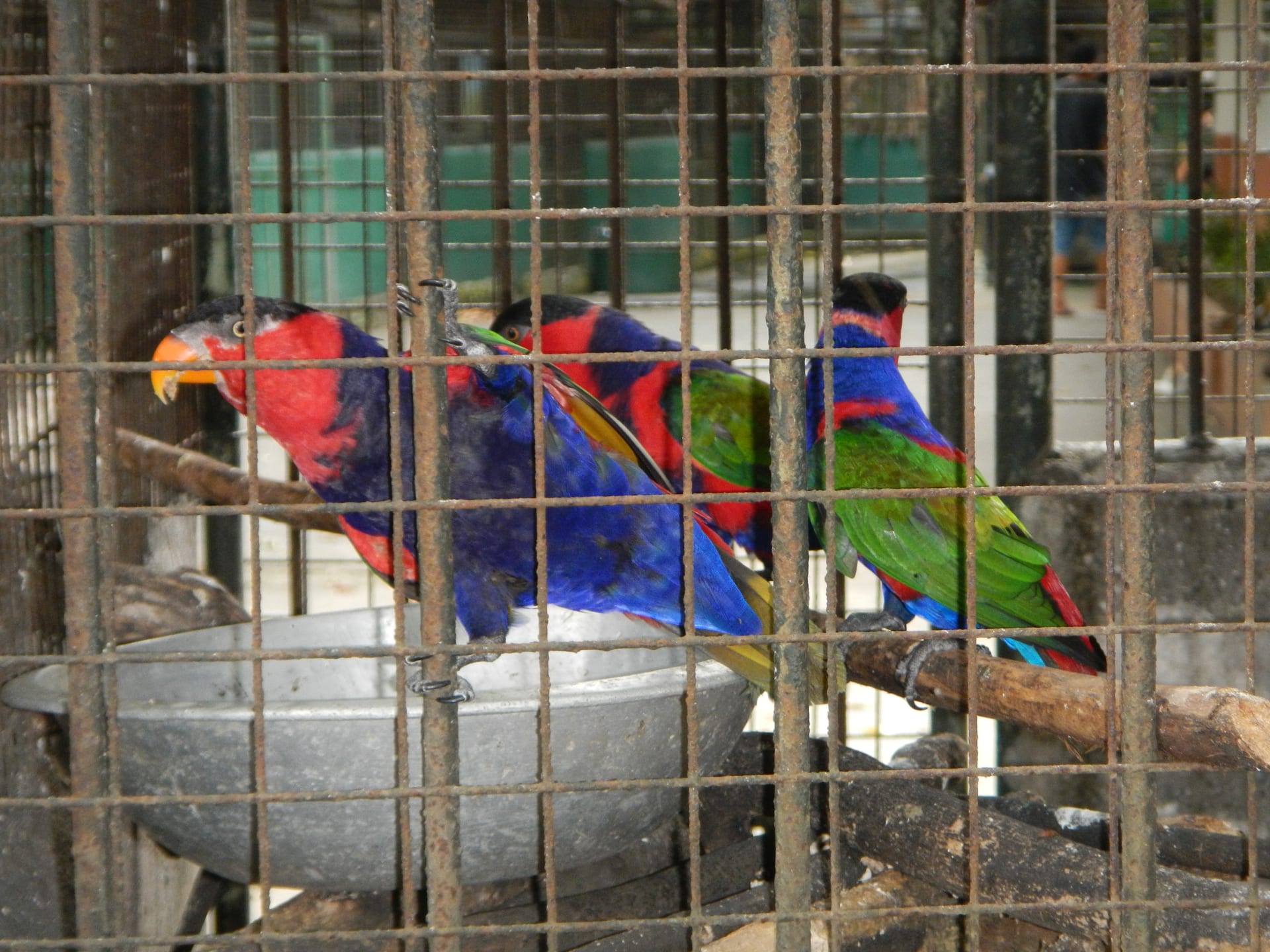
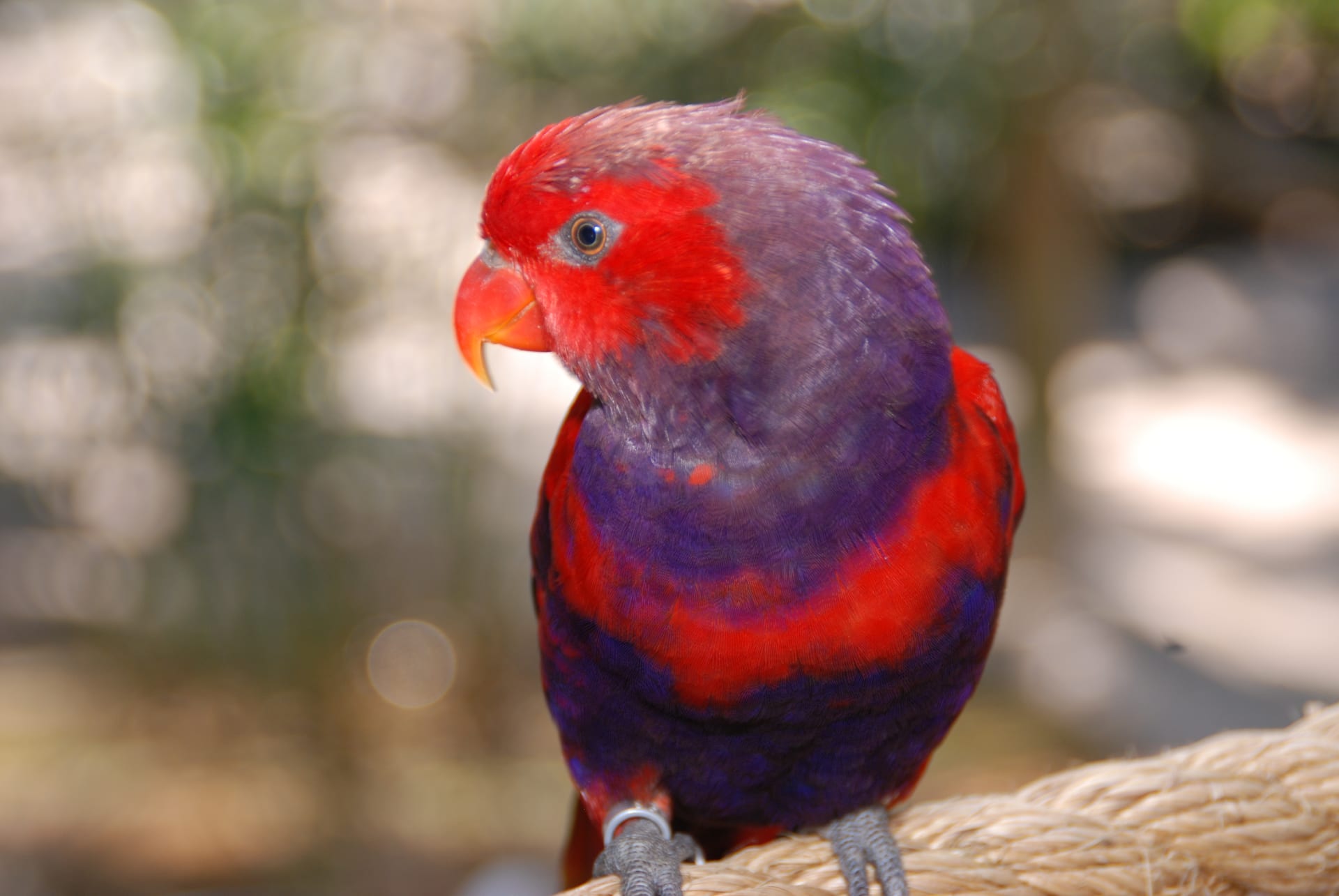
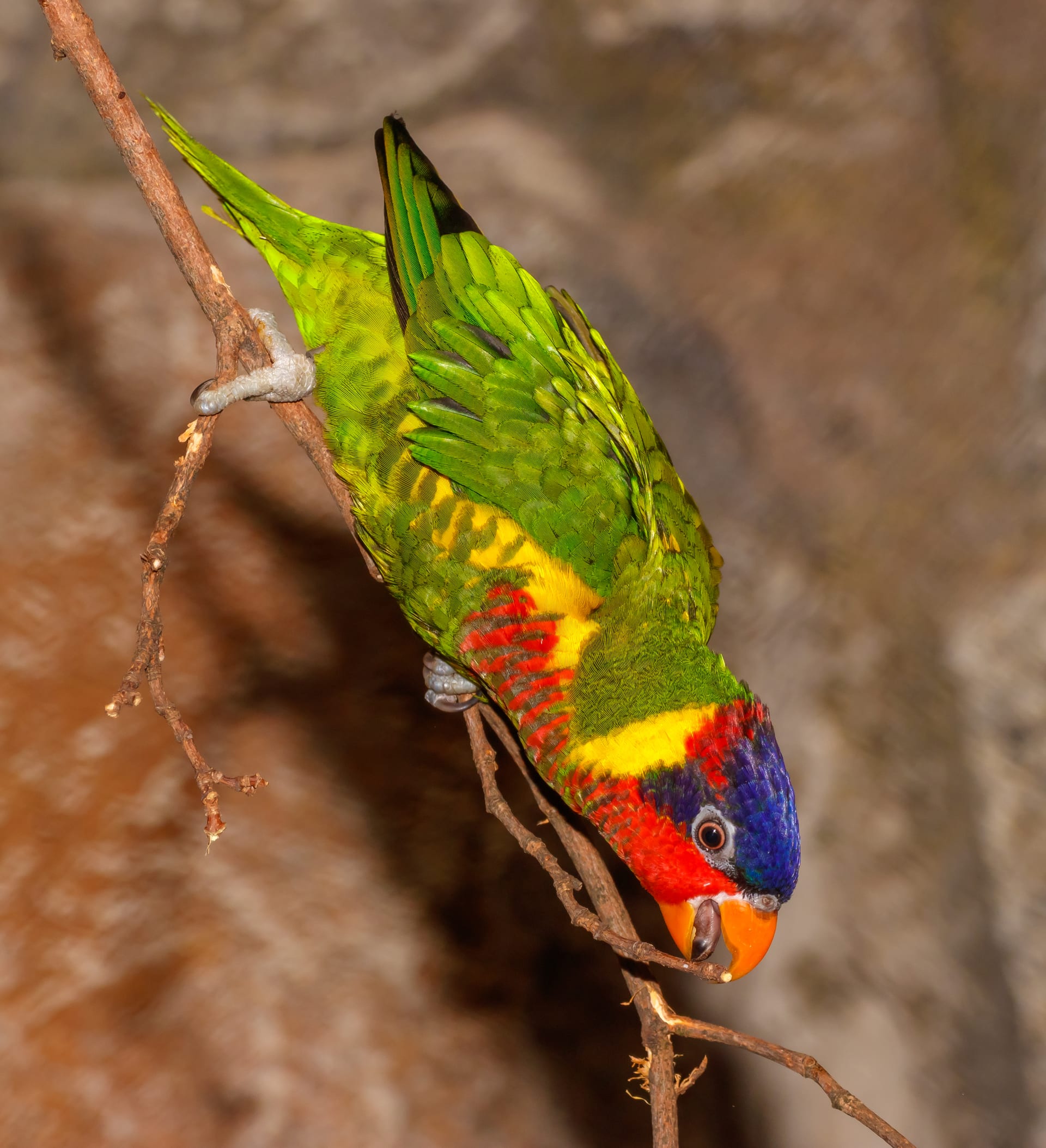
A mainly green lorikeet with a purple-blue crown, a red face below the eye and transverse red and blue barring from chin to chest. Endemic to Sulawesi and its neighbouring islands, it is 24 to 25 cm long and weighs 110 to 120 g.
Difficulty
Intermediate
Temperature
15〜30℃
Lifespan
10-15 years
Size
24-25cm
Humidity
40〜60%
Diet
Lory nectar, specialist lory pellets, fruit and pollen
About
The ornate lorikeet (Saudareos ornata) is endemic to Sulawesi and neighbouring islands such as the Togian and Banggai groups in Indonesia. The crown above the eyes is purple-blue, the face below the eyes is red, there is red at the back of the head and yellow behind the eyes, and it lacks the nape collar of the rainbow lorikeet. From chin to chest run transverse stripes and bars of red and blue, and the green abdomen carries sparse yellow scalloping. The bill is orange-red, the iris dark orange, the eye-ring dark grey and the legs grey. No subspecies are recognised. It occupies forest, woodland, mangrove and plantations, and is locally common in lowland and hill forest up to 1,000 m. It usually gathers in pairs or small flocks, though large flocks have been seen, and it sometimes forms mixed flocks with the yellow-and-green lorikeet.
Source: Wikipedia (CC BY-SA 4.0)
Lifespan of the Ornate Lorikeet
The Ornate Lorikeet lives 10-15 years.
Size of the Ornate Lorikeet
The Ornate Lorikeet grows to 24-25cm.
It is 24 to 25 cm long, weighs 110 to 120 g and is mainly green.
Basic Info
Origin
Sulawesi and neighbouring islands such as the Togian and Banggai groups, Indonesia
Lifespan
10-15 years
Size
24-25cm
Care Specifications
References & Sources
Edited & verified by: BreederDirect editorial team
The taxonomic, regulatory, and husbandry data on this page are compiled and verified against the authoritative primary sources below.
Primary sources
- Wikipedia
- CITES Appendices (Psittaciformes spp. listed in Appendix II)
- Annex to Council Regulation (EC) No 338/97 as amended by Commission Regulation (EU) 2026/1383 (post-CoP20)
- IUCN Red List
- German Wikipedia - Schmucklori (24 cm, 110-120 g, up to 1,000 m, no subspecies)
- IOC World Bird List v15.2 (scientific name, authority, English name, range)
- GBIF
Taxonomy & Authority
Accepted name: Saudareos ornata (Linnaeus, 1758)
Synonyms: Trichoglossus ornatus, Psittacus ornatus, Saudareos ornatus
Authority databases: GBIF
Nomenclature follows global taxonomic authority databases.
Regulations & Conservation Status
CITES Appendix IIIUCN LC · Least Concern
Saudareos ornata(Trichoglossus ornatus). CITES lists Psittaciformes spp. as a whole in Appendix II, excluding only Agapornis roseicollis, Melopsittacus undulatus, Nymphicus hollandicus and Psittacula krameri, so this species is covered. International trade in an Appendix II species requires an export permit from the exporting state; it is not among the Appendix I derived species that require registration under Japanese law. The IUCN assesses it as Least Concern. Because the CITES listing applies at the order level, the change of genus does not affect how it is treated.
Sources: CITES Appendices (Psittaciformes spp. listed in Appendix II) / Annex to Council Regulation (EC) No 338/97 as amended by Commission Regulation (EU) 2026/1383 (post-CoP20) / IUCN Red List
Regulations may change. Always verify the latest information with the relevant authorities.
Ornate Lorikeet Listings
Loading latest listingsFind listings for this species