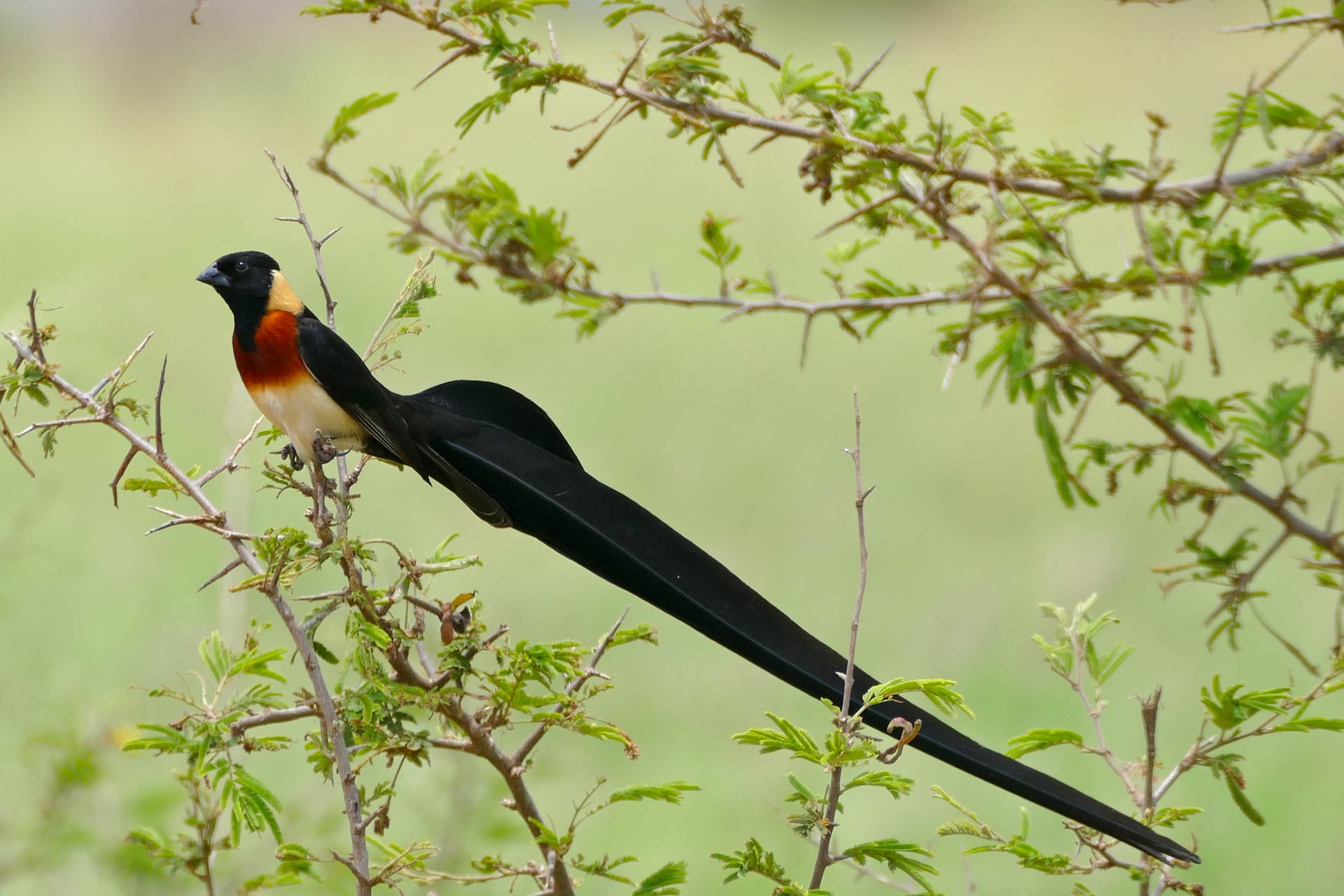
 © Bernard DUPONT from FRANCE / CC BY-SA 2.0
Long-tailed Paradise Whydah
The Long-tailed Paradise Whydah is a small songbird in the Viduidae family, best known for the male's dramatic breeding-season tail — a broad, black plume that can grow far longer than its own body. Paired with a black head and back, a rust-colored breast, and a pale yellow nape, the tail turns this bird into a striking sight in flight. Outside the breeding season, males molt into a plainer, sparrow-like plumage much like the females, so its appearance shifts dramatically with the seasons. It's also known for its brood-parasitic habit of laying eggs in the nests of other finches, leaving them to raise its young. Because of these specialized needs, it's generally considered a bird for experienced keepers rather than beginners.
View Long-tailed Paradise Whydah encyclopedia →0% commission on your first sales!Register by September 30, 2026 and your first 2 sales are commission-free!
Breeder Wanted!
List on BreederDirect and sell directly to customers nationwide!
Six Transparency Commitments from BreederDirect
All Birds listings include complete Breeder transparency: hand-raised status, DNA sex determination, and health certification details.
- Hand-Raised
- DNA Sex-Determined
- Health Certified
- Origin Disclosed
- Color Variation Specified
- Age in Months Disclosed
Browse all 247 breeds
Care Level
No listings match your filters
Adjust your filters, or get notified when new listings arrive.
Getting alerts is free with a member account. When new listings match your saved search, we'll notify you by email and in-app.
Browse other categories
Verified breeders (preview)
Long-tailed Paradise Whydah key facts
- Care level
- Advanced
- Lifespan
- 5-8 years
- Size
- About 13cm, the breeding male's tail feathers exceeding 36cm
- Diet
- Mixed seed, spray millet, greens, small livefood
- Cage
- A large aviary with height and depth is needed so the long breeding tail is not damaged.
- Temperament
- Males drive off rivals while in breeding plumage, and breeding requires host estrildids in the same flight.
- Vocalization
- The male mimics his host's song and calls a great deal while displaying, at moderate volume.
- Notes
- As a brood parasite it will not breed as an isolated pair, and the long tail is lost at the moult, leaving a female-like bird.
About Long-tailed Paradise Whydah
The Long-tailed Paradise Whydah is a small finch-like bird known for the male's dramatic long black breeding tail. Learn about its traits, temperament, and key care points before bringing one home.
7 things to know before welcoming a Long-tailed Paradise Whydah
1Space for the Long Tail
During the breeding season, males grow tail feathers over 36 cm long despite a body length of only about 13 cm. A cramped cage can easily damage or break these long feathers, so provide an enclosure with plenty of height and depth. Position perches so the tail doesn't drag against walls or the floor.
2Plumage Changes by Season
In breeding plumage, males show a black head and back, a rust-colored breast, a pale yellow nape, and long black tail feathers. Outside the breeding season the tail is molted out and males take on plainer, female-like coloring. Keep in mind that the bird's appearance can look very different depending on when you acquire it.
3Its Brood-Parasitic Breeding
The Long-tailed Paradise Whydah does not build its own nest — it is a brood parasite that primarily lays its eggs in the nests of the Green-winged Pytilia, leaving that species to raise its chicks. Anyone hoping to breed this bird needs to plan around this unusual reproductive strategy. For those simply keeping it as an ornamental bird, this trait isn't an everyday concern.
4Best Suited to Experienced Keepers
The Long-tailed Paradise Whydah is considered a bird for experienced keepers, not a good choice for someone's first bird. Managing the long tail feathers and understanding its brood-parasitic breeding habits require knowledge beyond typical finch care. It's worth researching thoroughly and consulting an experienced breeder before bringing one home.
5Housing with Other Birds
Housing this bird with others in the same cage risks the male's long breeding tail getting pecked at or tangled by cagemates. If you do keep multiple birds together, watch their behavior and compatibility closely, and have a way to separate them if needed. Avoid crowded multi-bird setups when space is limited.
6Diet and Nutrition
In the wild these birds feed mainly on grass seeds, and captive diets are typically built around a quality seed mix. During demanding periods such as the breeding season, supplementary foods can help round out their nutrition. Always provide fresh water and check regularly for leftover food or mold.
7Preparing the Environment
Being native to Africa, this species is sensitive to cold, so a temperature-controlled space is important. Prepare a cage with enough height to accommodate the tail before bringing the bird home. After arrival, give it a quiet, calm space to settle in and reduce stress from the change of environment.
Frequently asked questions about Long-tailed Paradise Whydah
- Q.Can beginners keep this bird?
- A.The Long-tailed Paradise Whydah is generally considered a bird for experienced keepers. Because of the care its long tail requires and its unusual brood-parasitic biology, it's best approached after you already have some finch-keeping experience.
- Q.Is the long tail always present?
- A.No — the long black tail only appears on males during the breeding season, when it can grow past 36 cm on a body only about 13 cm long. Outside the breeding season, males molt the tail out and look plainer, similar to females.
- Q.Can it be kept with other birds?
- A.It can be housed with other birds, but during the breeding season its long tail may get pecked at or tangled by cagemates. Watch compatibility and behavior closely, and have a way to separate birds if problems arise.
- Q.Does it raise its own chicks?
- A.No — this species doesn't build its own nest or raise its own chicks. It's known for brood parasitism, primarily laying its eggs in the nests of the Green-winged Pytilia for that species to raise.
- Q.Is it listed under CITES?
- A.No, the Long-tailed Paradise Whydah is not listed under CITES.
Useful tools for Long-tailed Paradise Whydah care
Learn more about Long-tailed Paradise Whydah in the encyclopedia
View Long-tailed Paradise Whydah encyclopedia entry →
Care difficulty, lifespan, size and diet — all basics covered.
More in this category
Can't find the one you're looking for?
Post your wishes for free and breeders with matching animals will contact you with introductions.