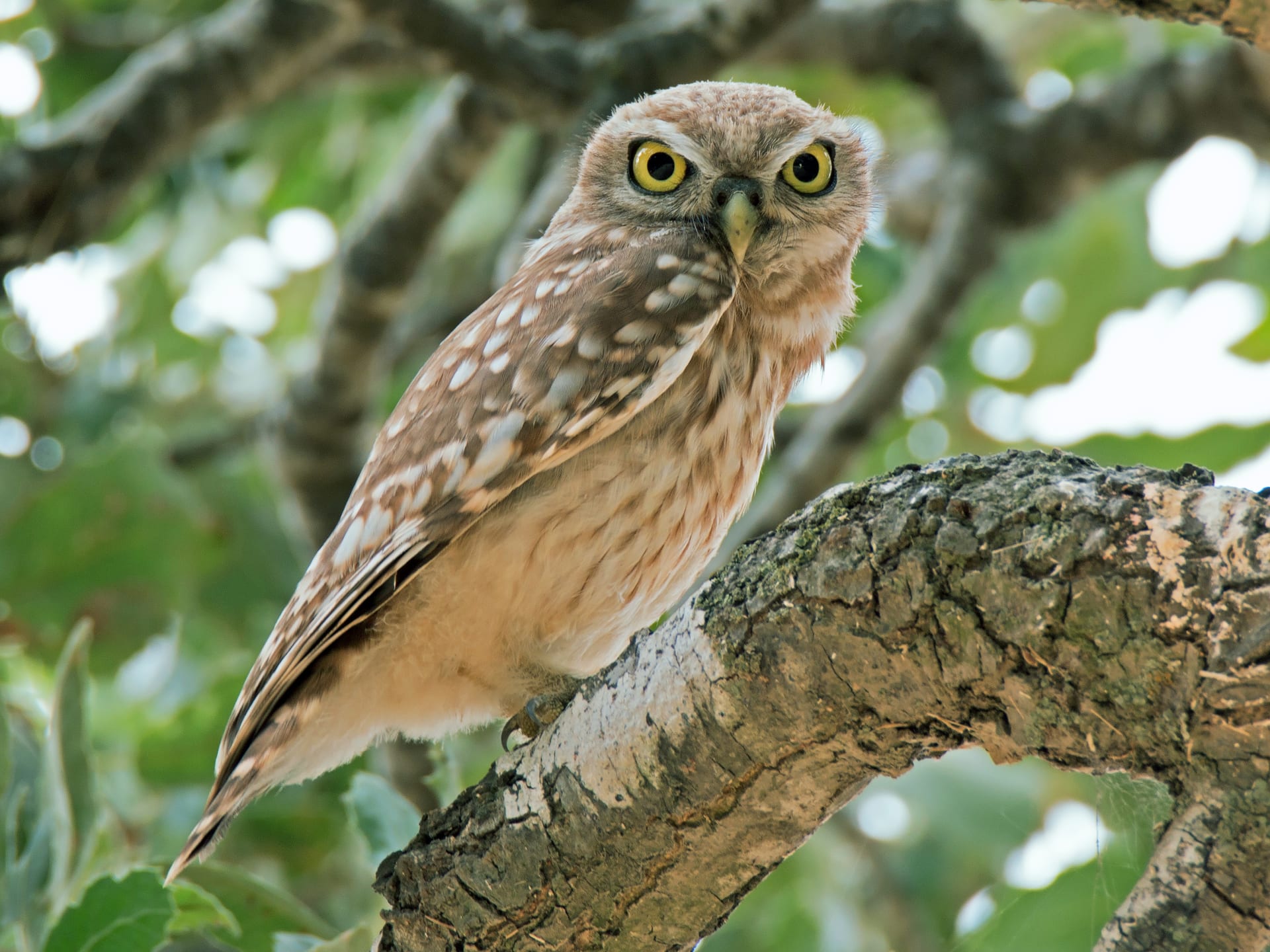
 © Artemy Voikhansky / CC BY-SA 4.0
Little Owl
The Little Owl is a small owl, reaching just 23 to 27.5cm as an adult, with a body length in the 20cm range overall. Its oversized head and legs, striking yellow eyes, and white eyebrow-like markings give it an unmistakably expressive face that has made it a favorite among owl enthusiasts. In Greek mythology, the Little Owl was the sacred bird of the goddess Athena, long associated with wisdom. Though mainly nocturnal, it's often seen active during the day as well, giving owners more chances to interact with it. That said, it retains the wariness and strong instincts of a bird of prey, so keeping one successfully requires real experience and specialized knowledge — this is very much a species for advanced keepers.
View Little Owl encyclopedia →0% commission on your first sales!Register by September 30, 2026 and your first 2 sales are commission-free!
Breeder Wanted!
List on BreederDirect and sell directly to customers nationwide!
Six Transparency Commitments from BreederDirect
All Birds listings include complete Breeder transparency: hand-raised status, DNA sex determination, and health certification details.
- Hand-Raised
- DNA Sex-Determined
- Health Certified
- Origin Disclosed
- Color Variation Specified
- Age in Months Disclosed
Browse all 247 breeds
Care Level
No listings match your filters
Adjust your filters, or get notified when new listings arrive.
Getting alerts is free with a member account. When new listings match your saved search, we'll notify you by email and in-app.
Browse other categories
Verified breeders (preview)
Little Owl key facts
- Care level
- Advanced
- Lifespan
- 15-20 years
- Size
- 23-27.5cm
- Diet
- Frozen mice, day-old chicks and insects such as crickets; in the wild insects, earthworms, other invertebrates and small vertebrates
- Cage
- Small though it is, it needs a weather-proof, predator-proof aviary. As a cavity nester it settles better with a nest box to retreat into, and since it is strong-legged and often comes to the ground, the floor should be usable space.
- Temperament
- Males hold territories and drive off intruders, so keeping several together needs ample space and cover, or should be avoided. Mainly nocturnal but also active by day, it is among the more observable owls.
- Vocalization
- It gives a drawn-out kiew call and short alarm notes. The volume is limited by its size, but it calls readily at night.
- Notes
- Listed on CITES Appendix II, so import requires an export permit. Introduced populations have established in Britain and New Zealand, so escape prevention matters.
About Little Owl
Compact owls reaching 23–27.5cm as adults, Little Owls are known for their yellow eyes, white brow markings, and ties to Greek mythology — a species best suited to experienced keepers.
7 things to know before welcoming a Little Owl
1An Advanced-Level Raptor
Little Owls retain the wariness and strong instincts typical of raptors, making them a species recommended for experienced keepers rather than first-time bird owners. Before bringing one home, it's important to build a solid understanding of raptor behavior and handling.
2Compact Size, Big Presence
Even as adults, Little Owls stay compact at roughly 23–27.5cm, but their proportionally large head and legs give them a presence bigger than their size suggests. Plan enclosure space and perch placement with their body shape in mind.
3Nocturnal, Yet Active by Day
While primarily nocturnal, Little Owls are often seen active during the day as well. Since they aren't strictly night-only, you can still observe and interact with them during daytime hours.
4Striking Eyes and Brow Markings
The Little Owl's face is defined by large yellow eyes and white markings that resemble eyebrows. This expressive look is part of their appeal, though their steady gaze also reflects the sharpness typical of a bird of prey.
5Understanding Their Carnivorous Diet
As a bird of prey, the Little Owl is carnivorous, with dietary needs quite different from typical ornamental birds. Before adopting one, research an appropriate diet and make sure you can sustain it long-term.
6Securing an Exotic-Capable Vet
Veterinary clinics equipped to treat owls and other raptors are limited, so it's wise to locate one within reach before bringing your owl home. Creating an environment where you can quickly notice changes in condition also matters.
7Research Thoroughly Before Adopting
Because Little Owls are considered suited to experienced keepers, it's best to thoroughly research their temperament, natural behavior, and housing needs before adoption. Use the chance to ask breeders questions and resolve any uncertainties beforehand.
Frequently asked questions about Little Owl
- Q.Can beginners keep a Little Owl?
- A.Little Owls aren't recommended for first-time bird keepers, as they retain strong raptor instincts and require specialized care. They're better suited to experienced keepers.
- Q.Do they sleep during the day?
- A.While primarily nocturnal, Little Owls are often active during the day too. Since they aren't strictly nighttime-only, you can observe them at various hours.
- Q.How big do they get?
- A.Adults typically reach about 23–27.5cm in length. That makes them one of the smaller owl species.
- Q.Are Little Owls regulated under CITES?
- A.Little Owl is listed in CITES Appendix II. International trade requires a permit from the exporting country, but as far as CITES is concerned, no registration is needed to buy or sell individuals already legally in Japan.
- Q.What is their temperament like?
- A.Little Owls display the wariness and strong instincts typical of raptors. They don't warm to people quickly, so building trust takes time.
Useful tools for Little Owl care
Learn more about Little Owl in the encyclopedia
View Little Owl encyclopedia entry →
Care difficulty, lifespan, size and diet — all basics covered.
More in this category
Can't find the one you're looking for?
Post your wishes for free and breeders with matching animals will contact you with introductions.